Why Now is the Time for Taiwanese Producers to Think Big
Source:Shutterstock
Chiling Tong, president and CEO of National ACE, argues that Taiwanese companies eyeing the US market are thinking too small, framing what is arguably the most favorable geopolitical and economic moment in US-Taiwan history as a compliance headache rather than a once-in-a-generation growth opportunity. Is caution the right instinct when the doors have never been more open?
Views
Why Now is the Time for Taiwanese Producers to Think Big
By Chiling Tongweb only
When I first arrived in the United States as a typical Taiwanese international student, I never could have envisioned the path that lay ahead of me. From entering public service to leading the National Asian/Pacific Islander American Chamber of Commerce and Entrepreneurship (National ACE), my journey has been defined by a single guiding principle: the power of a unified voice. Today, that voice represents over 3 million Asian American and Pacific Islander (AAPI) small businesses, commanding an astonishing $1.8 trillion in purchasing power.
Recently, I co-led a delegation from Central Texas to Taiwan to attend Computex Taipei 2026. From critical meetings and discussions with government officials, Taiwanese companies, and academia, we learned that we are living through an unprecedented golden era of US-Taiwan economic relations.
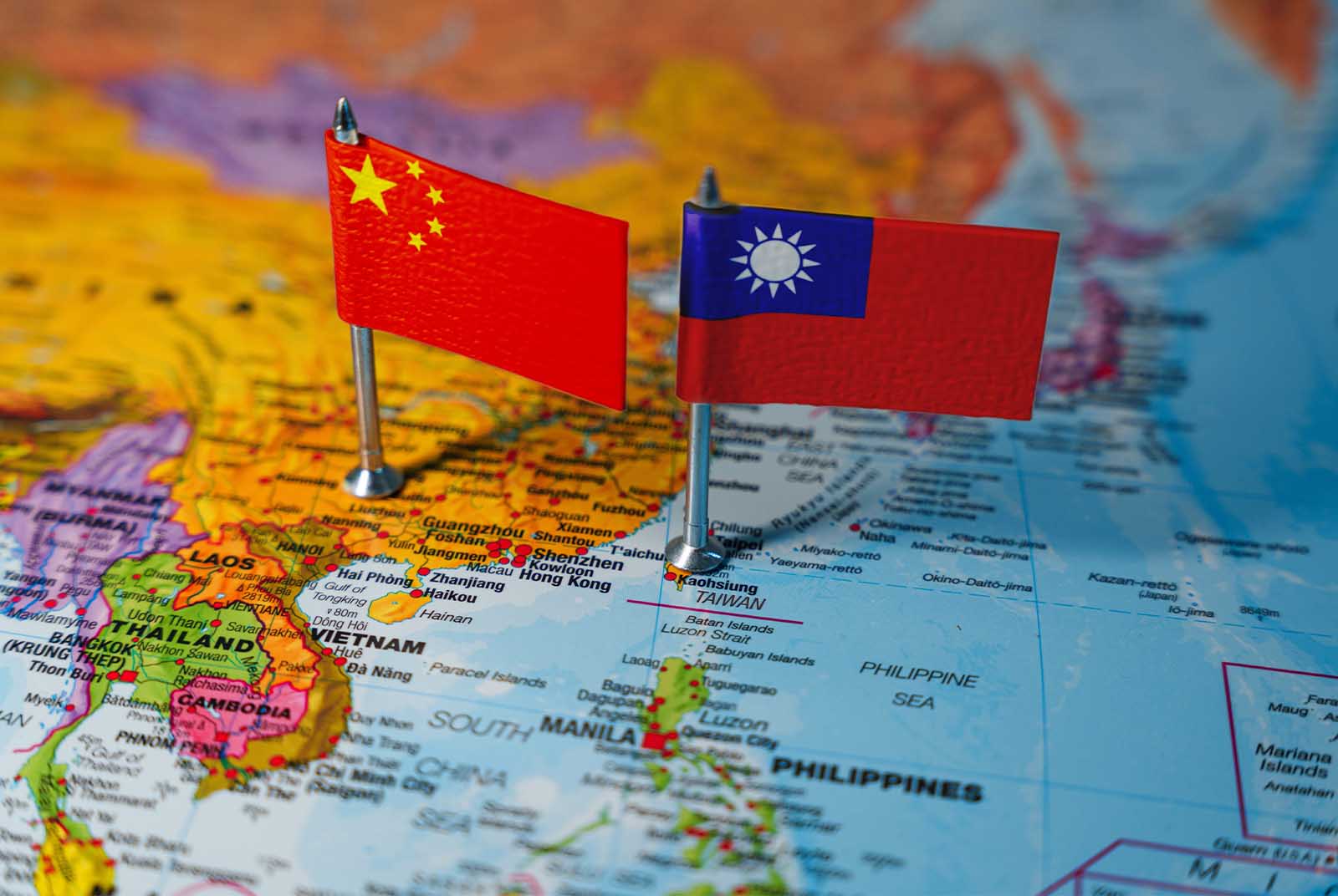
As of this year, Taiwan has risen to become the fourth-largest trading partner of the United States, surpassed only by Mexico, Canada, and China. For a small island with a population of 23 million, this economic footprint is nothing short of extraordinary. In my regular dialogues at the highest levels of American governance—including last month leading delegations to the White House and engaging in direct discussions with numerous Senators and Representatives on Capitol Hill—I have witnessed a profound shift over the past decades. The political environment in Washington is exceptionally friendly towards Taiwan. Today, foreign investment from Taiwan, proudly flying the "Taiwan banner," opens doors, commands respect, and attracts immediate strategic interest.
Given the current American political landscape, which emphasizes local production and the revitalization of domestic manufacturing, many Taiwanese executives are considering shifting their investments to the US. This move aims to alleviate their anxieties about expansion, particularly in relation to geopolitical compliance.
My message to them is simple: “Change your lens. This is not a burden; it is the single best moment in history to scale your business globally.”
Moving Beyond Compliance to Integration
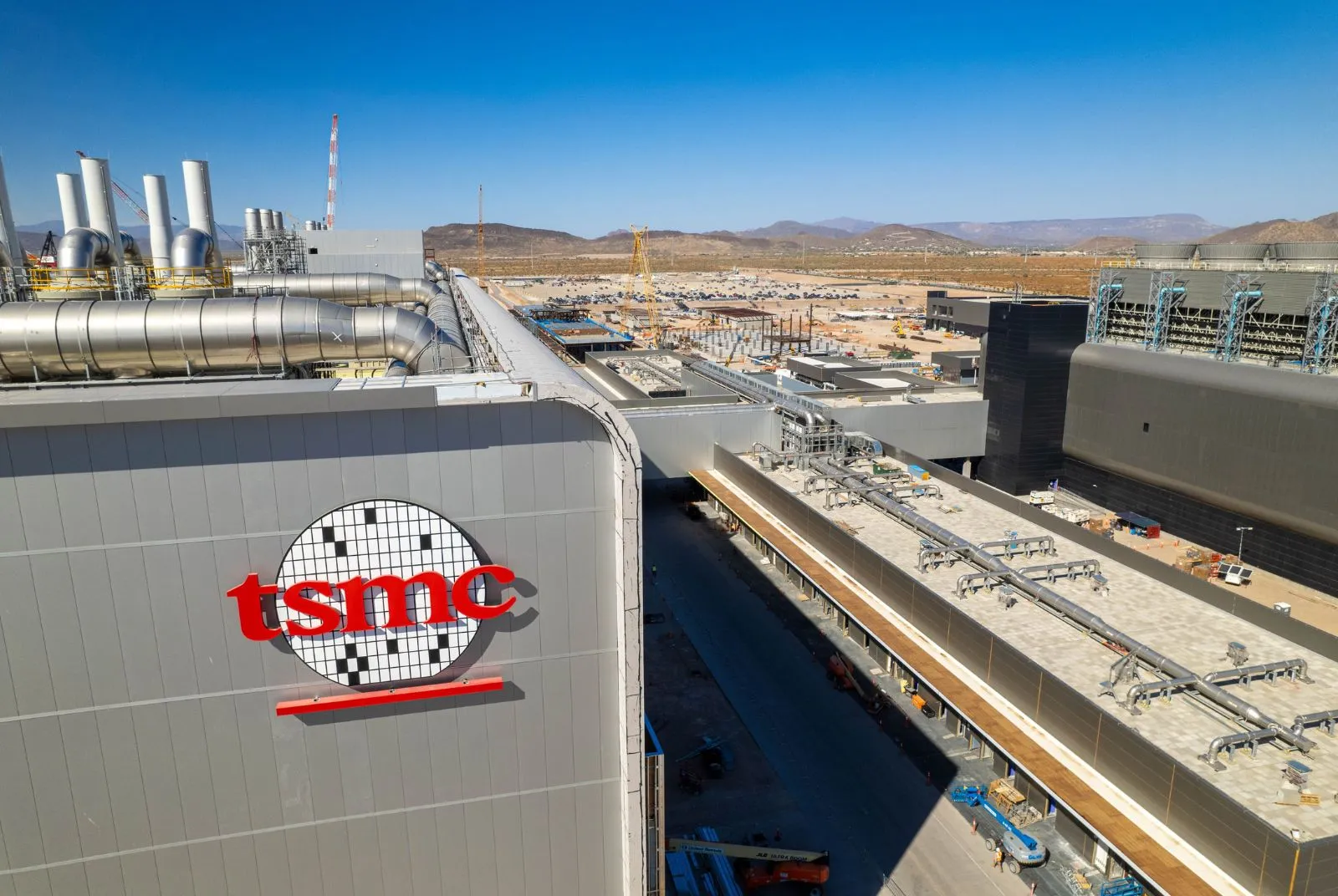
The massive waves of capital pouring into the US right now tell their own story. Driven by pivotal framework agreements, we are seeing roughly $165 billion committed to the TSMC-anchored ecosystem alongside an additional $36 billion from 20 other major Taiwanese enterprises.
But true success in the US market requires moving beyond a reactive mindset. If you are a Taiwanese supplier, you should not move to Arizona, Texas, or California simply because your primary customer told you to. You should move because localized supply chain integration is the ultimate catalyst for expanding your customer base.
When you anchor yourself in the American market, you position your business to capture massive local players—led by visionaries—such as Walmart, Apple, Alphabet, Tesla and, that are deeply entrenched in regions like California and Texas. Entering America isn't just about protecting your current revenue; it is about aggressively capturing your next potential customer.
Furthermore, the operational playbook has fundamentally evolved. Decades ago, early Taiwanese entrepreneurs had to endure grueling, isolated hardships to gain a foothold. Today, Taiwanese companies are well-capitalized, giving them the luxury of strategic choice. More importantly, you do not have to navigate this landscape alone. A robust ecosystem of peer support exists on the ground. Today, "Taiwanese businesses support Taiwanese businesses." The early movers are actively passing down their legal, accounting, and logistical playbooks to the next wave of entrants.
Navigating the Industrial Landscape: Power is the New Currency
For companies looking to plant their flags, understanding regional dynamics is critical, as every state offers distinct structural advantages.
- California offers unparalleled geographical proximity, the nation's largest consumer market, and a vibrant, deeply rooted Asian community that makes talent relocation feel like stepping into a home away from home.
- Arizona has transformed into a premier semiconductor cluster, offering powerful local incentives and serving as an essential hub for tier-1 and tier-2 supply chain vendors.
- Texas provides an incredibly business-friendly climate, lower operating expenses, and an abundance of land split across distinct economic engines—from Austin's tech ecosystem to Houston's mature hubs and direct flights to Taiwan.
However, regardless of the geography you choose, modern producers must confront a critical bottleneck: Energy.
We are in the midst of a massive structural shift where 70% of American small businesses have adopted AI in some capacity. As data centers and localized factories multiply, the strain on the electrical grid has become a universal challenge. As Nvidia's Jensen Huang bluntly stated: "Power, Power, Power."
This infrastructure deficit is a stark warning for factory builders, but it is also a massive window of opportunity for Taiwanese solution providers. Early movers who specialize in smart power components, efficient automation, and grid management have unlocked exponential growth precisely because they arrived early to solve this exact American crisis.
The Capital is Ready. Are You?
At National ACE, our mission is to ensure that small and mid-sized businesses have the tools to survive and thrive. Through our corporate roundtables and accelerator programs alongside platforms like Amazon, TikTok, and major financial institutions, we actively bridge the gap between emerging businesses, corporate partners, and capital. For tech-driven and solution-oriented firms, localized city and state economic development plans are aggressively funding foreign innovation. The money and the market are there waiting for you.
Setting up an administrative office in the United States has never been easier or more virtualized. But scaling into a global manufacturer requires bold vision, upfront infrastructural diligence, and a willingness to step onto the playing field.
My closing advice to Taiwan's business leaders is to shed any hesitation. It is never too late to enter the American market. The business environment is welcoming, the consumer base is the most tech-forward in the world, and the geopolitical alignment has never been stronger. Take the leap, capture the first-mover advantage, and turn this historic economic tailwind into your company's global future.
(This piece reflects the author's opinion and does not represent the opinion of CommonWealth Magazine.)
CommonWealth Magazine welcomes op-ed submissions. Please send your article proposals to [email protected]
About the author:

Chiling Tong is one of the most prominent female Chinese American politicians since Elaine L. Chao. Her career spans the private, nonprofit, and public sectors. She is the President and CEO of the National Asian & Pacific Islander American Chamber of Commerce & Entrepreneurship (National ACE), representing the interests of 3 million Asian American & Pacific Islander (AAPI) small business owners and entrepreneurs. National ACE collaborates with over 130 affiliate AAPI chambers and partner organizations across the country to advocate for AAPI small businesses, enhance capacity building, and foster the next generation of AAPI entrepreneurs and executives.
She has been appointed by Presidents George W. Bush, Barack Obama, Joe Biden, and Donald Trump in various economic, trade, and treasury advisory capacities, including as the Deputy Assistant Secretary of the International Trade Administration, and was subsequently the Chief of Staff and Associate Director for the Minority Business Development Agency in the U.S. Department of Commerce.
Have you read?
- China’s Influence Machine Is No Longer Just Propaganda
- Taiwan's Decision… After All This Time? Always.
- Taiwan’s Economy Is Soaring. Its Energy Strategy Could Hold It Back.
Uploaded by Ian Huang
Views

Subscribe to CWE Newsletter (every Thursday)
Stay abreast of what's happening in Taiwan with our weekly digest.
Keywords: