How Machine Manufacturer Ta Liang Became a Hidden AI Champion
Source:Chien-Ying Chiu
How did equipment manufacturing, long stigmatized as a 'dirty-hands industry,' break into AI and advanced packaging? Unwilling to remain dependent on foreign vendors, the company chose to develop its own critical software in-house, spending decades in preparation to claim the top global market share, proving that only by planting deep technological roots can a company forge a new path out of the supply chain.
Views
How Machine Manufacturer Ta Liang Became a Hidden AI Champion
By Kai-yuan Tengweb only
While much of Taiwan’s machinery sector remains mired in a downturn, Ta Liang Technology, headquartered in Bade, Taoyuan, has successfully ridden the wave of AI and advanced packaging. Its revenue nearly doubled in 2025, profit increased 4.8-fold, and gross margin reached 42% in the first quarter of this year.
Once considered part of Taiwan’s traditional manufacturing sector, Ta Liang was known primarily for producing printed circuit board (PCB) molding and drilling machines. Today, its equipment has entered advanced semiconductor packaging cleanrooms through its expertise in precision control and vision measurement technology, making the company an important part of the AI supply chain.
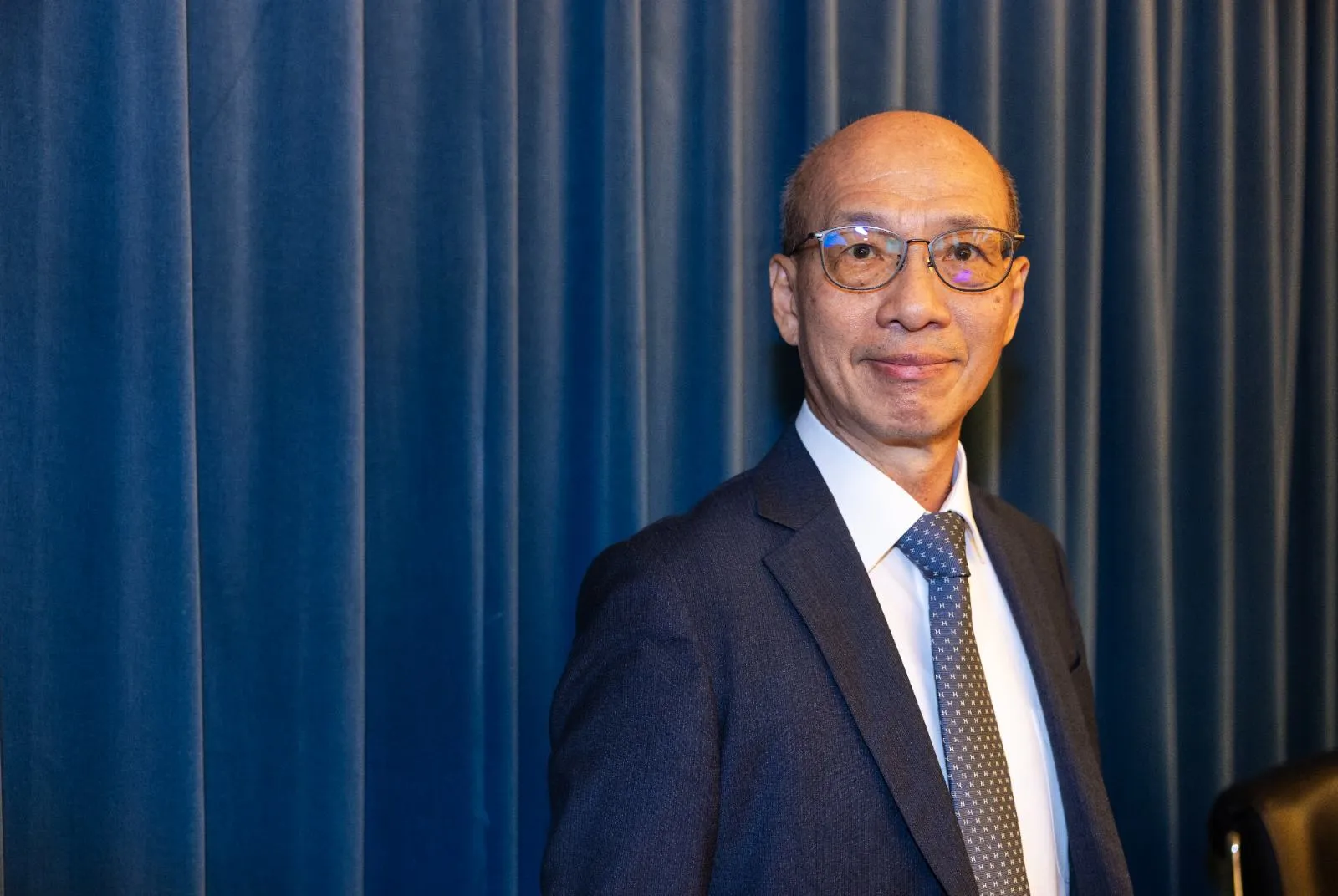
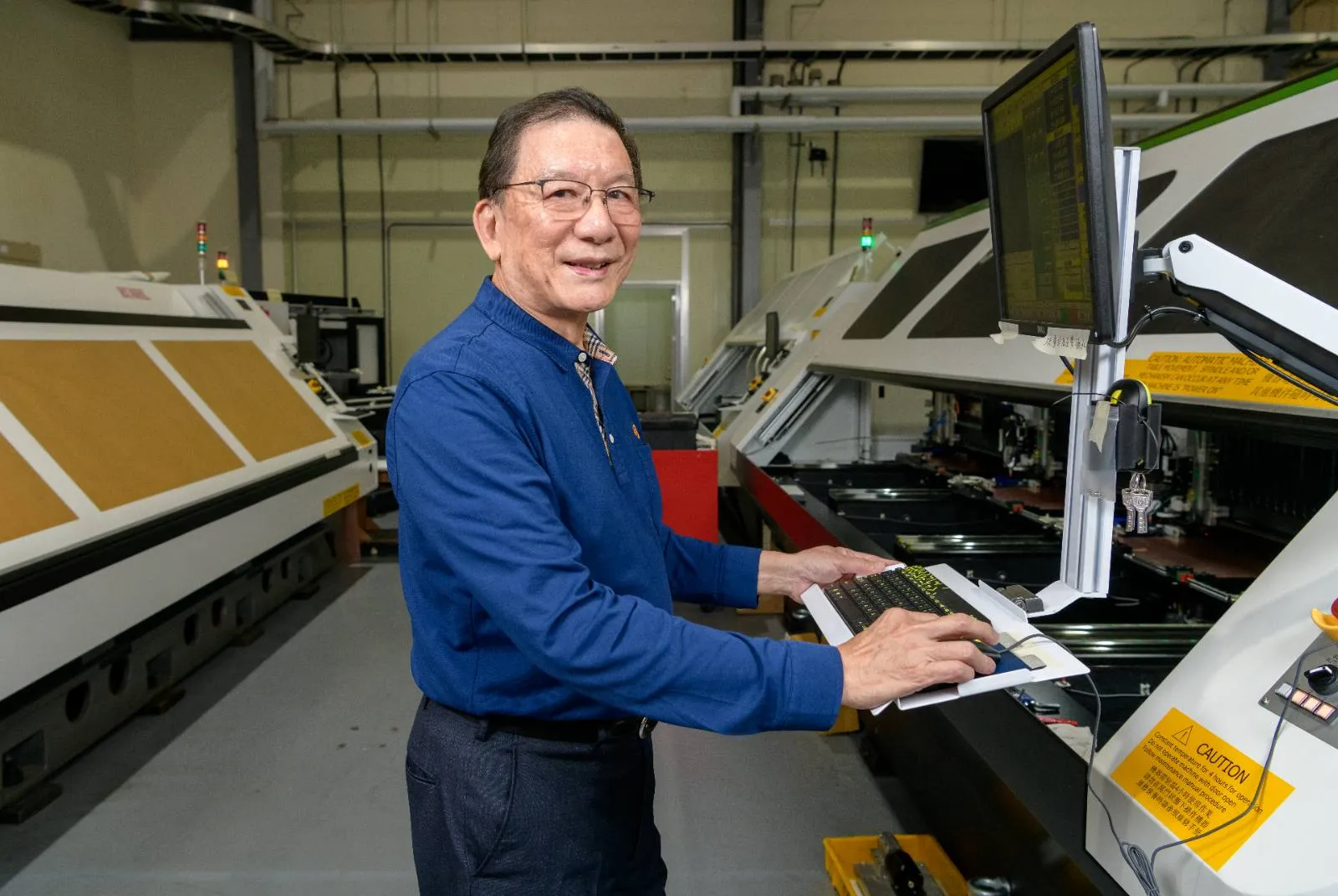
Ta Liang chairman Laurie Wang (王作京), 80, graduated from the Department of Marine Engineering at National Taiwan Ocean University.
The company’s transformation from a traditional equipment maker was built on three core capabilities: mechanical design, software control, and vision measurement. The most important turning point came 26 years ago.
At the time, although Ta Liang had gained market share through cost advantages, it still relied on German suppliers for the controllers that served as the brains of its equipment. These systems were expensive and difficult to customize. To reduce that dependence, Ta Liang partnered with National Tsing Hua University to develop its own controller systems, completing the project after four years of research.
President Jackie Chien (簡禎祈) recalled that few machinery companies were willing to make long-term investments in software R&D, but Wang insisted on committing resources to the effort. The decision made Ta Liang one of Taiwan’s earliest developers of PCB equipment controllers and helped build its hardware-software integration capabilities.
The successful development of proprietary controllers not only reduced costs but also enabled the company to tailor equipment to customer needs. Over time, Ta Liang became a hidden champion and global market leader in PCB molding equipment.
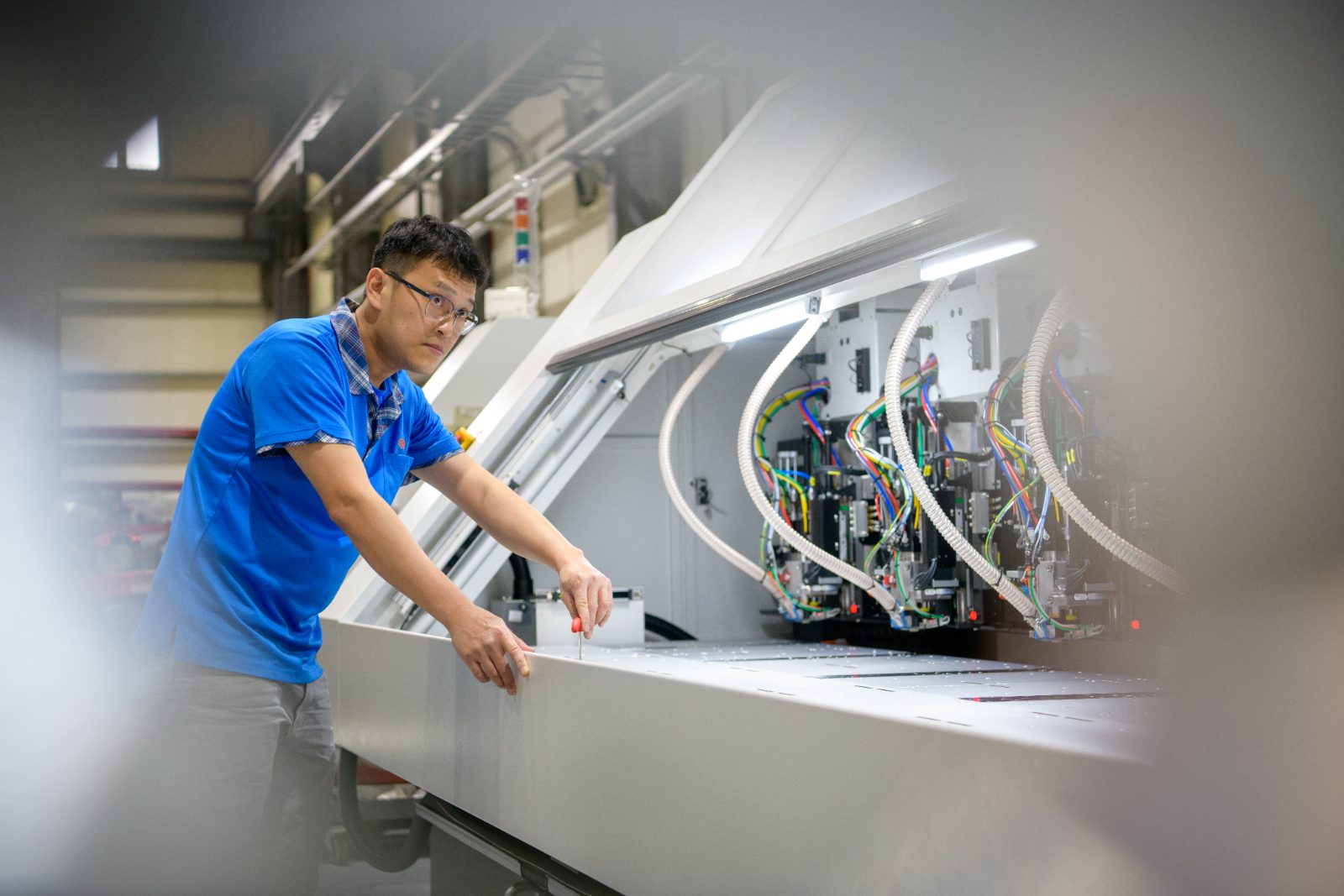 Facing software technology monopolized by major foreign players, Taio pursued industry-academia collaboration and seized the top global market share through hardware-software integration. (Photo: Chien-Ying Chiu)
The importance of software capabilities has become even more evident in the AI era. As AI servers require increasingly complex circuit boards, manufacturing precision has become critical. PCB production involves drilling numerous holes and filling them with copper to transmit signals, while unwanted residual copper must be removed through a process known as back drilling.
Traditional back-drilling machines lacked precise vision systems and relied heavily on operator experience, resulting in yields of around 80%. Ta Liang combined its proprietary controllers with vision measurement technology to achieve highly accurate positioning. The system removes residual copper with near-perfect precision, helping the company win customers such as Gold Circuit Electronics.
In recent years, Ta Liang has also successfully expanded into semiconductor equipment.
About a decade ago, while serving as chairman of the Taiwan Electronic Equipment Industry Association, Wang observed the rapid growth of Taiwan’s semiconductor industry and the limited role played by local equipment suppliers. He therefore participated in the government’s semiconductor equipment validation program and recruited Gary Lee (李賢銘), who had extensive experience developing semiconductor packaging and testing equipment, to build the company’s semiconductor team.
The barriers to entry were high. In the early stages, Ta Liang’s equipment remained largely in laboratories while undergoing testing and modification based on customer requirements. Over time, the company developed expertise in precision positioning, optical inspection, and mechanical design.
When demand for advanced packaging and CoWoS surged, Ta Liang finally began to reap the rewards of those long-term investments, successfully entering the market for semiconductor measurement and inspection equipment.
Ta Liang’s transformation from a PCB equipment maker into a supplier serving AI and advanced packaging did not happen overnight. It was built through proprietary software technology, long-term investment in talent, and a sustained focus on customer needs.
Wang’s experience demonstrates that in the equipment industry, companies can secure a place in the global supply chain only by mastering core technologies and maintaining a long-term commitment to research and development.
Have you read?
- Is Taiwan’s Offshore Wind Supply Chain Doomed? Why YGG Is on the Brink of Delisting
- Why Giant Is Betting on Retail Transformation as Revenue Hits a Seven-Year Low
- How Taiwan’s Bicycle Industry Can Break Out Amid Rising Chinese Competition
Translated by Jack Chou
Uploaded by Ian Huang
Views

Subscribe to CWE Newsletter (every Thursday)
Stay abreast of what's happening in Taiwan with our weekly digest.
Keywords: