Why France Chose Foxconn to Build Europe’s Most Advanced Packaging Plant
Source:David Shen
Foxconn’s advanced semiconductor packaging plant, a joint venture with Thales and Radiall, will be built near Bordeaux. What does this location reveal about France’s strategic ambitions? And for TSMC’s wafer fab investment in Germany, will this packaging facility be a competitor or a partner?
Views
Why France Chose Foxconn to Build Europe’s Most Advanced Packaging Plant
By David Shenweb only
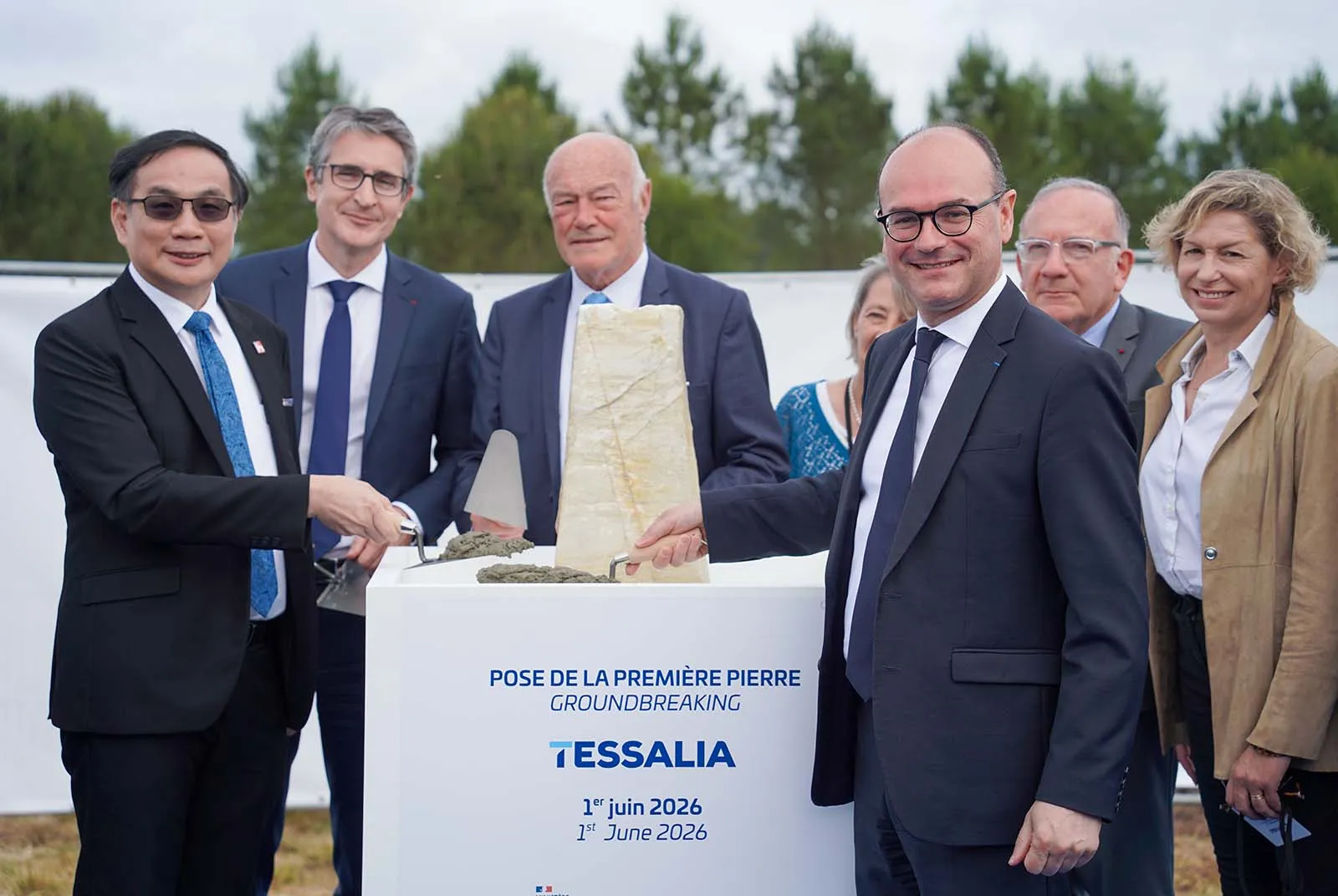
“We are celebrating a new project today, and its name is Tessalia,” said French Minister Delegate for Industry Sébastien Martin, gesturing toward a screen behind him as he unveiled the name of what is expected to become Europe’s most important advanced semiconductor packaging facility.
In early June, French officials and business leaders gathered in the forests of Le Barp, a small town in southwestern France, to break ground on the new plant. Located about an hour from the wine capital of Bordeaux, the project takes its name from a traditional local mosaic-making technique.
“The strength of mosaic art comes from assembling different pieces together. The strength of advanced packaging comes from the same principle,” Martin explained.
That strength comes from the combination of three companies: Taiwan’s Foxconn, which brings packaging expertise and large-scale manufacturing capabilities; French defense and aerospace giant Thales; and French connector manufacturer Radiall, known for its expertise in radio-frequency (RF) and microwave connectors.
The facility will be Europe’s most advanced semiconductor packaging plant. Foxconn Chairman Young Liu (劉揚偉) personally attended the Choose France summit in Paris and met with French President Emmanuel Macron to support the investment.
Although Tessalia’s investment of €250 million is relatively modest, the project has attracted significant attention because it reflects France’s determination to strengthen the resilience of its semiconductor supply chain.
The plant is scheduled to begin operations in 2029 and will focus on outsourced semiconductor assembly and testing (OSAT). By 2033, it aims to produce more than 50 million System-in-Package (SiP) components annually for applications in aerospace, telecommunications infrastructure, automotive, and medical industries.
“This is more than a factory,” said Bob Wei-ming Chen (陳偉銘), general manager of Foxconn’s S Business Group, at the groundbreaking ceremony. “It is an important strategic platform for advanced manufacturing, semiconductor resilience, and Europe’s future technological development.”
The project, one of the most closely watched industrial collaborations between Taiwan and France in recent years, was first disclosed publicly at Macron’s flagship Choose France investment summit last year. In reality, however, preparations had been underway for years.
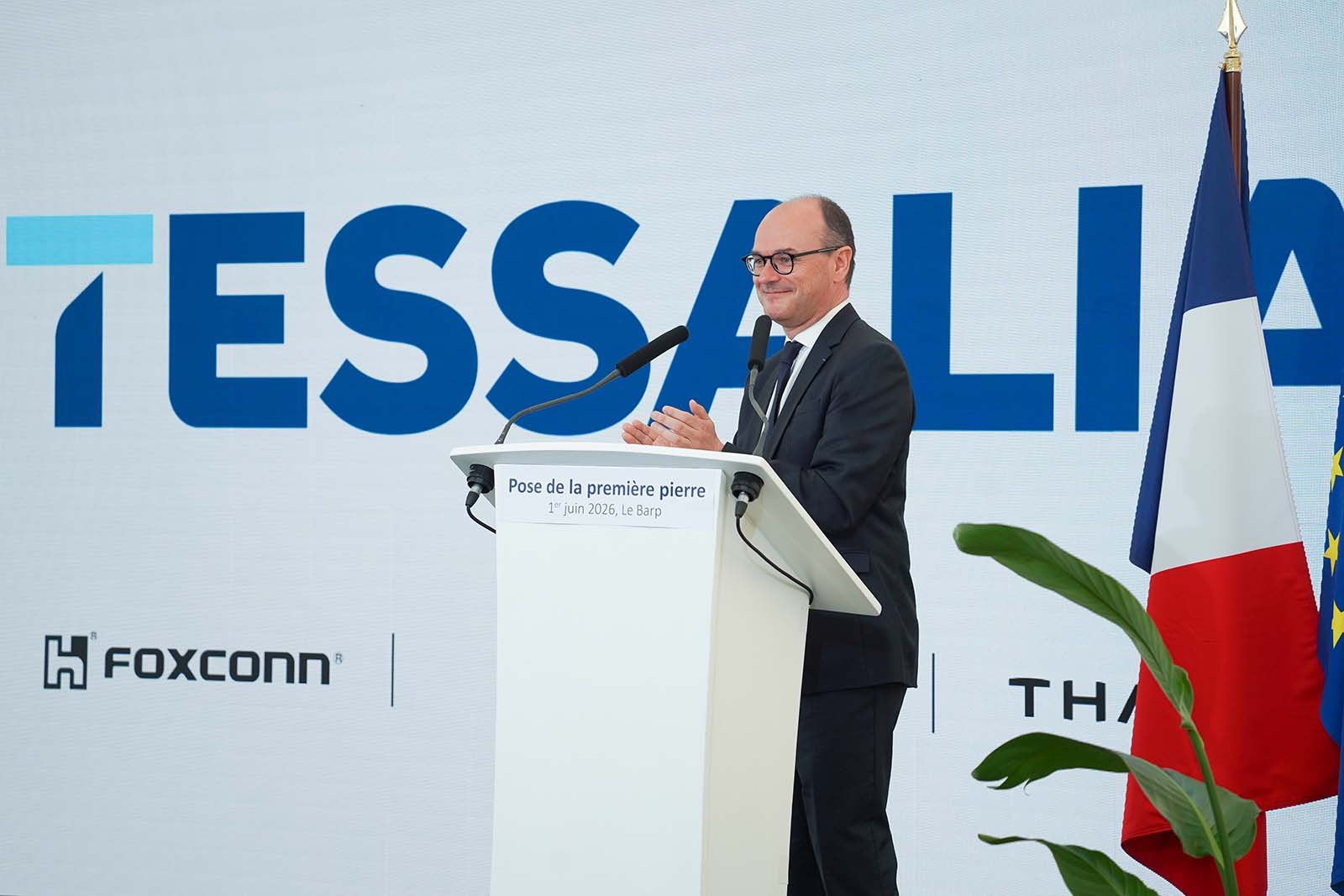 French Minister Delegate for Industry Sébastien Martin introduces the advanced packaging facility named Tessalia, inspired by the region's centuries-old traditional mosaic-making technique. (Photo: David Shen)
Will Foxconn’s Packaging Plant Complement TSMC’s German Fab?
“We started this journey about five years ago,” Didier Floriot, Strategy Director for Land and Air Systems Technologies at Thales, told CommonWealth Magazine.
According to Floriot, the Taipei Representative Office in France helped connect Thales with Taiwan’s Ministry of Economic Affairs and Foxconn’s strategy team, leading to years of planning and discussions.
“From the beginning, the objective has remained the same: to build a long-term and sustainable industrial partnership between France and Taiwan,” he said.
European concerns about semiconductor supply chains intensified during the COVID-19 pandemic. At the time, roughly 60% of global chip manufacturing and packaging capacity was concentrated in Taiwan, South Korea, and China. Pandemic-related disruptions and subsequent geopolitical tensions repeatedly exposed Europe to shortages of automotive and defense-related chips.
These concerns led to the European Union’s Chips Act, aimed at building a semiconductor supply chain under European control. Within this context, TSMC announced in 2023 that it would invest in the European Semiconductor Manufacturing Company (ESMC) fab in Dresden, Germany.
France had also sought to attract a TSMC investment but was unsuccessful. It subsequently shifted its attention to advanced packaging.
“There is no need to compete with existing investments. We chose complementarity,” said Jacques Perrocheau, former executive director of JEMI-France, the French semiconductor equipment industry association, describing Tessalia’s positioning. “The ideal scenario is to integrate chips with advanced packaging capabilities within Europe.”
Germany’s semiconductor community has welcomed the project.
Frank Bösenberg, CEO of Silicon Saxony, noted that “advanced packaging and OSAT have long been the part of the value chain where Europe was most dependent on Asia,”
He believes Tessalia will help close this strategic gap.
“The Tessalia joint venture is good news for Europe,” Bösenberg said. “Resilience in semiconductors is never built by one region or one company alone.” Different industrial clusters must complement one another and move forward together.
How Foxconn’s Investment Could Deepen Taiwan–France Cooperation in Dual-Use Technologies
“Sovereignty” and “strategic autonomy” were recurring themes throughout the groundbreaking ceremony, emphasized repeatedly by French officials and business leaders.
Martin argued that Tessalia’s importance lies in its alignment with France’s national strategy of strengthening sovereignty in critical sectors. “True sovereignty means ensuring that we are not dependent on others and that we retain strategic production capabilities on our own territory,” he said.
According to Martin, Tessalia’s packaging products will primarily serve strategic niche markets, particularly the aerospace and space industries.
These sectors are core businesses for Thales, which maintains a significant presence around Bordeaux. Le Barp is also home to a laser-industry ecosystem closely linked to both civilian and defense applications.
The site selection therefore reflects the project’s role in serving some of Europe’s most security-sensitive and highest-value industrial sectors.
This development marks a major step forward in industrial cooperation between Taiwan and Europe.
“Taiwanese and European industries are deepening integration in dual-use technologies,” said Mathieu Duchâtel,describing the development as strategically significant for both sides.He is the Director of International Studies at the Institut Montaigne, a French think tank that researches European-Taiwan semiconductor diplomacy.
Europe’s ongoing rearmament efforts have increased demand for defense electronics and drones.
Although the EU has not formally adopted a “non-China supply chain” narrative, Duchâtel said European policymakers still seek to reduce excessive dependence on China. This has created new opportunities for co-production in industry between Taiwan and Europe and strengthened bilateral ties.
Taiwan’s representative to France, Hao Pei-chih, noted that strategic autonomy is a central objective of Macron’s “France 2030” reindustrialization agenda. In addition to semiconductors, France places particular emphasis on quantum computing and artificial intelligence, areas where Taiwan is also viewed as a key partner.
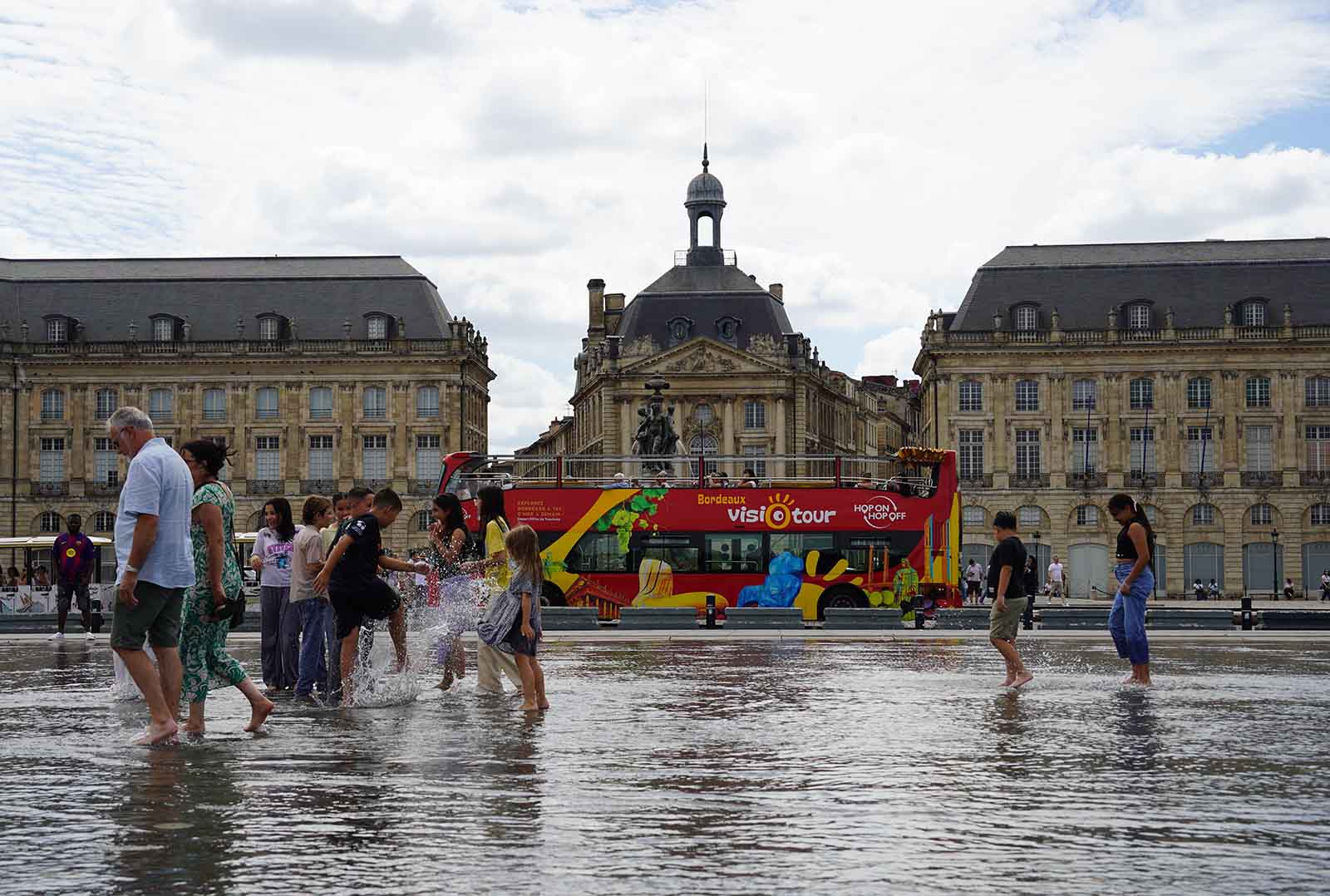 Tessalia is located in Le Barp, southwestern France, about an hour's drive from the wine-renowned city of Bordeaux.Tessalia is located in Le Barp, southwestern France, about an hour's drive from the wine-renowned city of Bordeaux. Pictured: Place de la Bourse in Bordeaux. (Photo: David Shen)
Can Foxconn’s “3+3 Strategy” Help Europe Achieve Technological Autonomy?
For Foxconn, the trend also creates new opportunities for international expansion.
Following his meeting with Macron in Paris, Liu announced a partnership with French AI and advanced computing company Bull to jointly develop and manufacture next-generation AI servers. The project will involve an initial investment of €120 million.
From semiconductors to AI, Foxconn’s moves reflect its “3+3 Strategy,” targeting sectors where European countries are seeking greater resilience and technological autonomy. The approach positions Foxconn as more than a contract manufacturer simply following its customers.
At the groundbreaking ceremony, Chen stressed that Tessalia is only one part of Foxconn’s broader technology cooperation strategy in France. He suggested that additional projects could emerge in France and elsewhere in Europe in the future.
“This is a win-win situation for Taiwan and France,” Franck Paris, Director of the French Office in Taipei, said in an earlier interview. He noted that Tessalia represents the second-largest investment by a Taiwanese company in France over the past two years.
Some observers have questioned whether establishing advanced packaging capacity in Europe could reduce Taiwan’s strategic importance.
Paris dismissed such concerns.
“Europe is still a long way from being able to replicate Taiwan’s supply chain,” he said.
Foxconn’s investment in France marks an important step in the internationalization of Taiwan’s manufacturing capabilities. It also illustrates how Europe is accelerating its pursuit of technological autonomy in the name of security and resilience—a goal that is likely to require even deeper cooperation with Taiwan in the years ahead.
Have you read?
- How Machine Manufacturer Ta Liang Became a Hidden AI Champion
- Inside the AI Rack War: MediaTek and Foxconn Race Toward the Copper-to-Optics Era
- Chips, Chops, and Chessboards: How Computex 2026 Proved Tech is More Than Just Servers
Uploaded by Ian Huang
Views

Subscribe to CWE Newsletter (every Thursday)
Stay abreast of what's happening in Taiwan with our weekly digest.
Keywords: