Robots Join the First Half-Marathon

Source:Getty Images
April 21. 2025 -- Today's top stories: Robots Join the First Half-Marathon, Tariff Tensions Ripple Through the Global Economy, and China Eyes Brazil Amid U.S. Soybean Standoff.
Views
Robots Join the First Half-Marathon
By CommonWealth Magazineweb only
Humanoid robots compete against humans in half-marathon in China
Twenty-one two-legged robots competed in a first-of-its kind humanoid half-marathon in China on Saturday, but technical breakdowns left them in the dust.
The winning robot, Tiangong Ultra, was built by the government-backed research institute X-Humanoid and finished the race in two hours and 40 minutes, two hours longer than the world record. About 12,000 people competed in the race and ran side by side on a fenced path, but the robots, like humans, had to overcome inclines, ups and downs.
Beijing’s E-Town Tech Hub hosted what it described as the world’s first humanoid half-marathon on Saturday, with 21 Humanoid robots competing alongside thousands of humans.
The robots from Chinese manufacturers such as Droidup and Noetix robotics came in all shapes and sizes, some shorter than 120 cm (3.9 ft), others as tall as 1.8 M (5.9 ft).
One company boasted that its robot looked almost human, with feminine features and the ability to wink and smile.
Reference Sources
- upi - Robotic runners hobbled by breakdowns in first half-marathon against humans
- israelnationalnews - Watch: Humanoid robots compete against humans in half marathon
- techcrunch - Robots run a half marathon, slowly
- newyorkpost - Humanoid robots compete against humans in half-marathon in China
- newsweek - Robots Race Humans in World's First Bipedal Half-Marathon
First shockwaves of Trump’s tariffs are about to hit the world economy
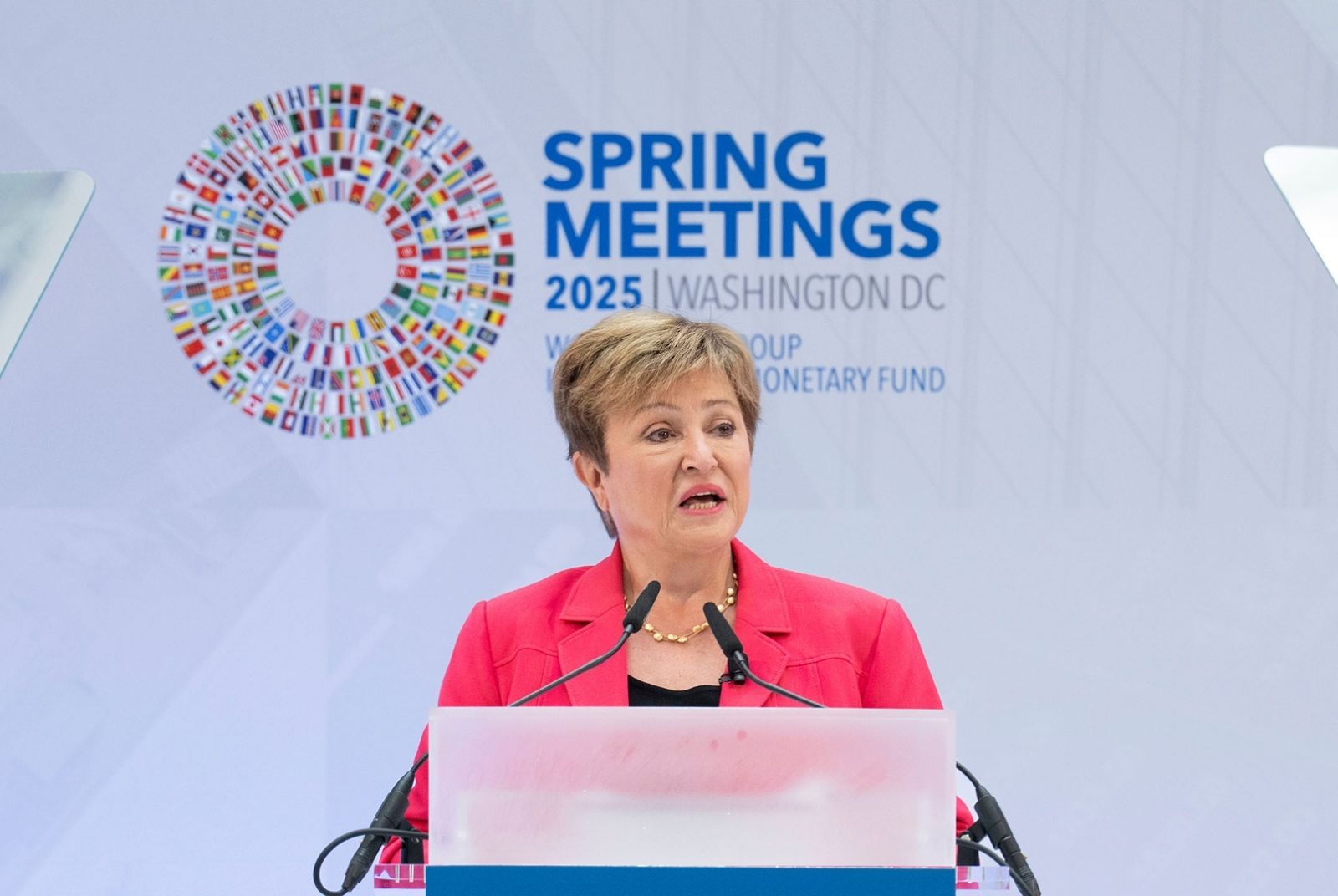 (Source: International Monetary Fund)
New economic forecasts and surveys are set to point to the initial fallout of U.S. President Donald Trump's trade war with the world.
The International Monetary Fund (IMF) is set to lower its outlook for economic growth in new projections released on Tuesday.
The following day, purchasing manager indexes (PMI) from Japan to Europe to the US will offer the first coordinated glimpse of manufacturing and services activity since Trump's global tariffs, now partly on hold, were unleashed on April 2. Business surveys from major economies are also on the calendar.
The combined picture is set to offer finance ministers and central bankers assembled in Washington a chance to make initial damage assessments on Trump's attempt to rewire the global trade system.
IMF managing director Kristalina Georgieva said on Thursday that their new growth projections will include notable markdowns, but not recession.
She added that they will also see markups to the inflation forecasts for some countries.
The IMF's projections tend to Skew optimistic during potentially disruptive crises.
This week, a lot of economists will be in Washington for the annual IMF and World Bank spring meetings.
Economics will be earning its moniker of the dismal science given the current Trump tariff trauma.
There will be global growth forecasts updated and much discussion about the impact of trade wars and the actions of the U.S. President.
Reference Sources
- thestarmy - First shockwaves of Trump’s tariffs are about to hit the world economy, as according to forecasts and surveys
- fortune - First shockwaves of Trump’s tariffs are about to hit the world economy
- ft - Gloomy mood ahead of IMF and World Bank spring meetings
China is finding ways to replace US farmers in response to trade war
 (Source: Reuters)
The United States and China have imposed enormous tariffs on soybeans, which are one of the world's most lucrative commodities.
The U.S. sells more soybeans to China by value than any other single product, and last year, that amounted to more than 27 million metric tons, worth $12.8 billion, or about 9 cents of every dollar of goods the U.S. sold to China.
However, with the enormous tariffs erected between the two countries over the past two weeks, those sales are likely to suffer soon.
This is bad news for American soybean farmers who grow soybeans and the Chinese chicken and hog farmers who buy them – potentially very good news for the nation ready to step in: Brazil.
American soybean farmers are worried about whether their biggest customer will keep buying. More than half of U.S. soybean exports went to China in 2024, but the price just went up 135% under the tariffs China installed in response to President Donald Trump's 145% tax on Chinese imports.
The tariffs are a threat to the continued way of life for American farmers, who deal with bad weather, pests, and tractors breaking. Soybeans are high in fat and protein, and they are what much of the world's livestock eat.
Reference Sources
- nytimesen - How Trump’s Tariffs Could Hurt US Farmers and Benefit Brazil
- straitstimes - How China is finding ways to replace US farmers in response to trade war
The CommonWealth English daily news digest is a service curated by the CommonWealth English team with the help of AI tools.
Have you read?
- TSMC Shuts Down Intel Tie-Up Talk
- Nvidia & AMD Brace for Billions in Charges
- China Halts Rare Earth Exports
Uploaded by Fiona Lin
Views

Subscribe to CWE Newsletter (every Thursday)
Stay abreast of what's happening in Taiwan with our weekly digest.
Keywords: