Why Hungary’s China Bet on Batteries Faces Voter Backlash

Source:Kuan Hsieh
Hungary, long known for vetoing EU measures on behalf of China and Russia, has elected a new government. As livable cities became hubs for Chinese battery factories, bringing more pollution without advancing industrial upgrading, citizens made their choice at the ballot box, putting China's strategic foothold in Europe to the test.
Views
Why Hungary’s China Bet on Batteries Faces Voter Backlash
By David Shenweb only
Hungary’s general election has produced a major upset. On April 12, Prime Minister Viktor Orbán, who had governed for 16 years, was defeated by Péter Magyar, leader of the Tisza (Respect and Freedom) Party, which rose to prominence only two years ago. The election drew attention because Orbán had long been regarded as a key ally of China and Russia within the European Union, and Hungary had become one of the largest destinations for Chinese investment in Europe.
Chinese investment in Hungary totals €3.97 billion, ranking first among foreign investors and largely concentrated in batteries, electric vehicles (EVs), and electronics manufacturing. After the pandemic, Hungary absorbed one-third of China’s total European investment, 90% of which is related to the battery industry.
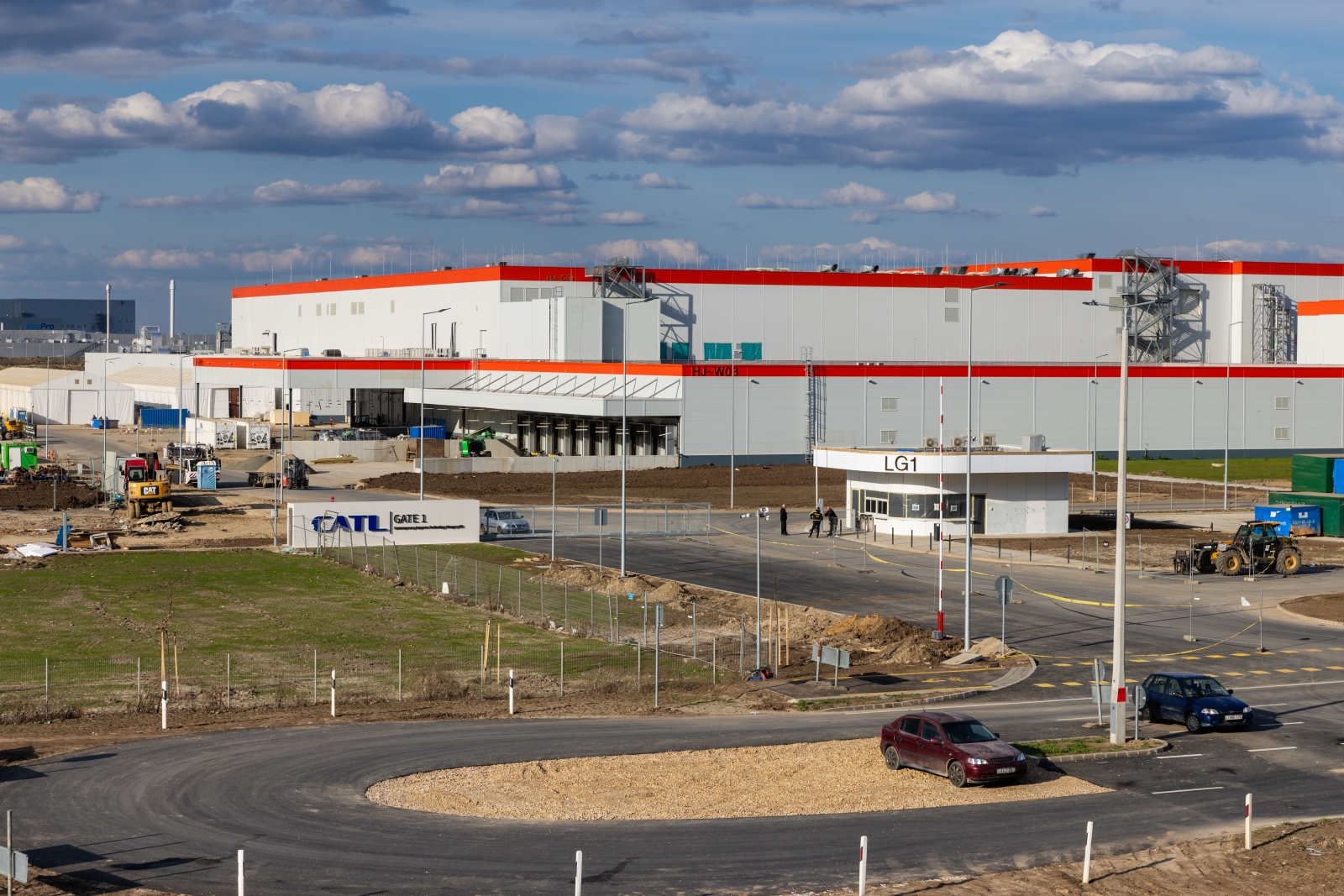 The new CATL plant in Debrecen is China's largest battery investment in Hungary. (Photo: Kuan Hsieh)
The most dramatic changes have taken place in Debrecen, Hungary’s second-largest city. This university town has seen the establishment of four Chinese-invested battery facilities over the past five years, gradually transforming it into a battery industry hub. The largest is a new plant by CATL, the world’s leading EV battery maker. Spanning 221 hectares—equivalent to more than 300 football fields—it is scheduled to begin production in the second quarter of this year. A 15-minute drive away, another Chinese company, EVE Energy, is building a 45-hectare facility.
Rapid industrial expansion, however, has generated a backlash. In the village of Mikepércs, on the southern outskirts of Debrecen, once a middle-class residential area, housing prices have declined due to concerns over chemical wastewater and air pollution. Nineteen-year-old university student Máté Gali said his family is considering moving away. Residents have formed self-preservation groups to monitor water and air quality and have even filed lawsuits against the government, yet factory expansion has continued.
Concerns about pollution have made battery investment a national political issue. Earlier, a workplace accident at Samsung SDI’s plant in Göd exacerbated public anxiety. Foreign investment, once viewed as an economic boon, has become a political liability, contributing to Orbán’s defeat.
Behind these investments is China’s Belt and Road Initiative 2.0 strategy, shifting from large-scale infrastructure to electric vehicles and green energy supply chains.
This direction aligns with Hungary’s own policies. Five years ago, the Orbán government introduced a “2030 Battery Industry Strategy,” aiming to raise annual production capacity to 250 GWh, making Hungary the second-largest battery producer in Europe and placing it among the global top five.
Hungary is already a major automotive manufacturing hub, with the sector accounting for 14% of GDP. The policy aims to attract Asian battery makers to Europe to compete with Tesla. At the same time, Hungary serves as a gateway to the EU market for Chinese companies, helping them bypass tariff barriers.
To that end, Hungary has offered substantial subsidies. Studies indicate that government support can reach 10% to 15% of total investment, amounting to billions of euros. For instance, CATL received €800 million in support.
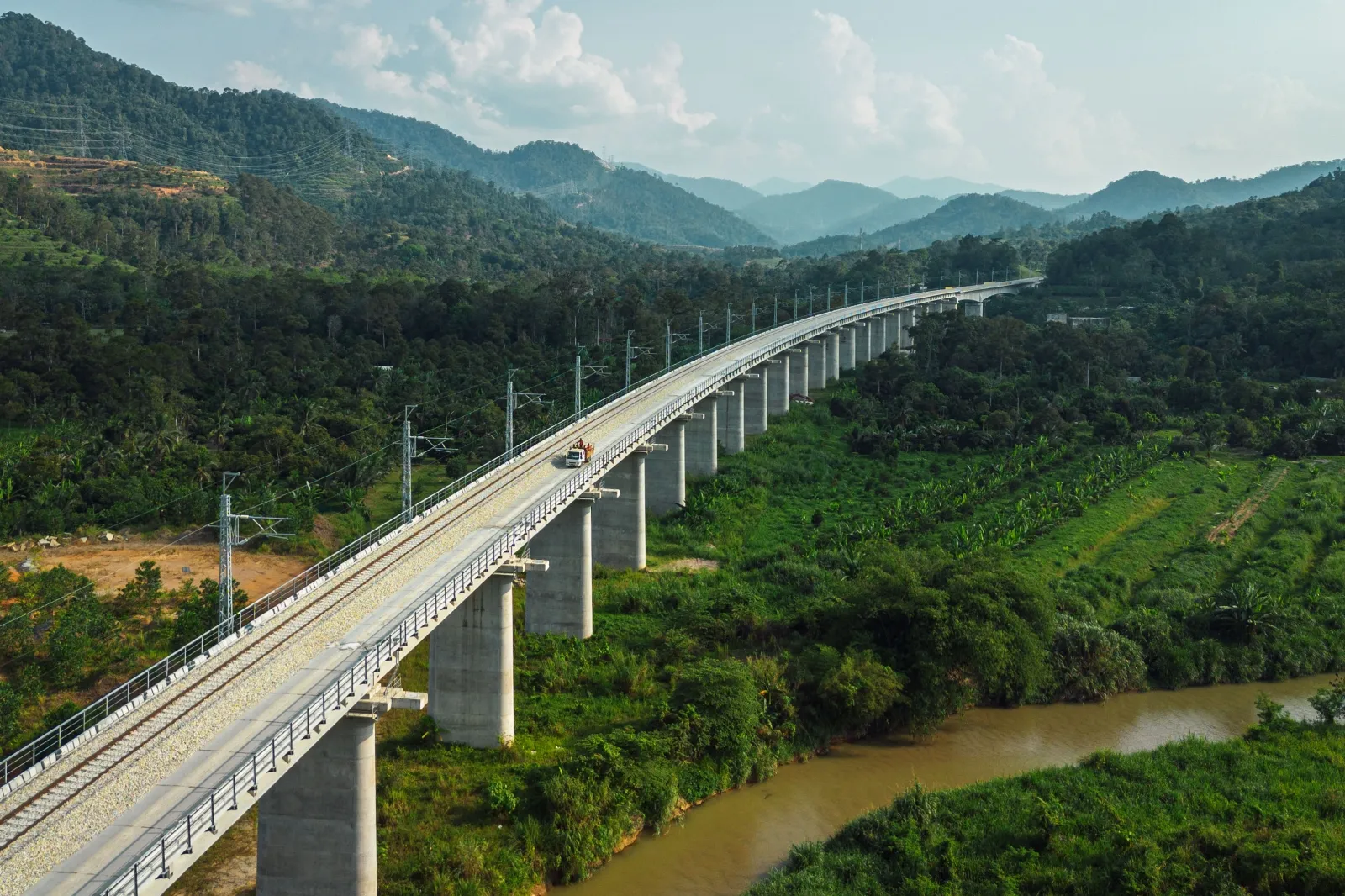
 The Hungary-Serbia Railway, a flagship project of Belt and Road Initiative 1.0, links Hungary and Serbia, though Hungarians have opposed it. (Photo: Kuan Hsieh)
However, debate continues over whether these investments truly promote industrial upgrading. Scholars note that Hungary’s battery sector relies heavily on Chinese and South Korean firms, while policies do not require technology transfer or integration with local supply chains. This raises concerns that the country may remain in low value-added segments over the long term.
Employment benefits have also fallen short of expectations. Hungary faces an aging population and labor shortages, with local talent migrating to Western Europe, making it difficult for foreign firms to fill positions. Some battery plants have been accused of bringing in migrant workers from Asia, sparking controversy. Reporters encountered Chinese workers from Henan and Jiangsu provinces, indicating that foreign labor has already entered local communities.
On the campaign trail, Magyar argued against using taxpayer funds to subsidize foreign companies while offering limited benefits to local small and medium-sized enterprises. He advocated ending indiscriminate subsidies, strengthening environmental impact assessments, and restricting non-EU migrant labor.
China’s soft power in Hungary also appears limited. Polls show that about half of the public holds negative views of China. From Budapest’s “Europe Square,” once associated with early Chinese communities, to the Hungary–Serbia railway, a flagship Belt and Road project, such initiatives have not significantly improved public perception.
This helps explain why, despite the government’s long-standing pro-China stance, public sentiment has remained cautious. Experts note that China has primarily engaged political elites, with limited outreach to broader society.
 The Tisza Party has secured a two-thirds parliamentary majority, putting its new government's foreign policy direction under the spotlight. Pictured: Hungary's iconic Parliament Building. (Photo: Kuan Hsieh)
With Magyar taking office, policy may shift. Analysts do not expect a wholesale withdrawal of foreign investment, but anticipate stricter labor and environmental regulations.
In fact, adjustments have already begun. Subsidies for Chinese investment have declined in recent years, while Hungary has actively sought U.S. investment. In 2025, U.S. investment in Hungary reached €480 million, a record high.
Hungary is recalibrating its geopolitical position. The new administration has proposed a “return to Europe.” Whether China can continue to use Hungary as a gateway into Europe will depend on future policy dynamics and the level of acceptance within Hungarian society.
Have you read?
- Belt and Road Initiative: Is China Calling the Shots in Malaysia?
- Former Malaysian Deputy Minister: ASEAN Doesn’t Want to Depend on China Alone
- Why Foreign Investors Like Warren Buffett Are Flocking to Japanese Stocks
Translated by David Shen
Uploaded by Ian Huang
Views

Subscribe to CWE Newsletter (every Thursday)
Stay abreast of what's happening in Taiwan with our weekly digest.
Keywords: