The U.S.-Europe Realignment and What It Means for Taiwan
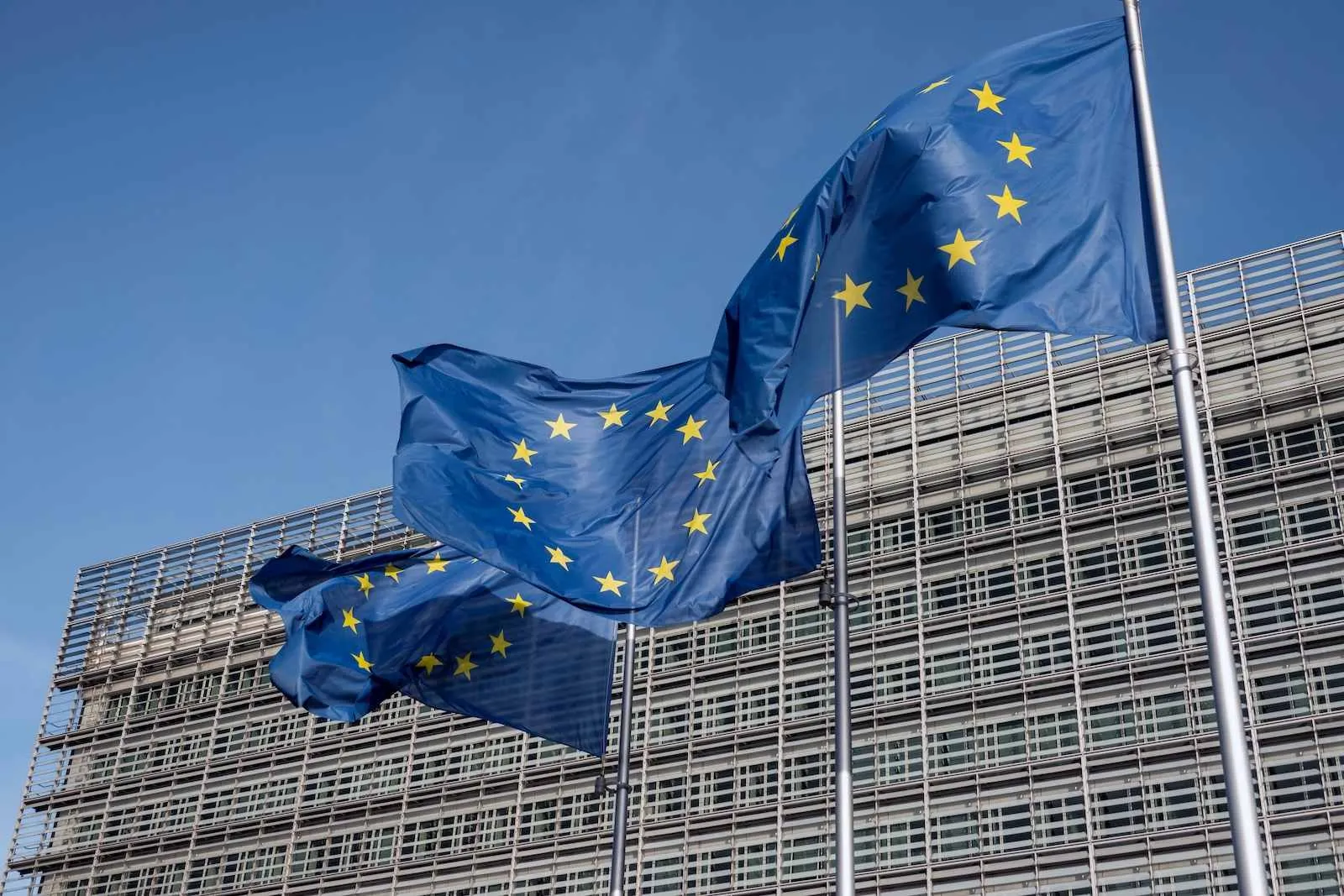
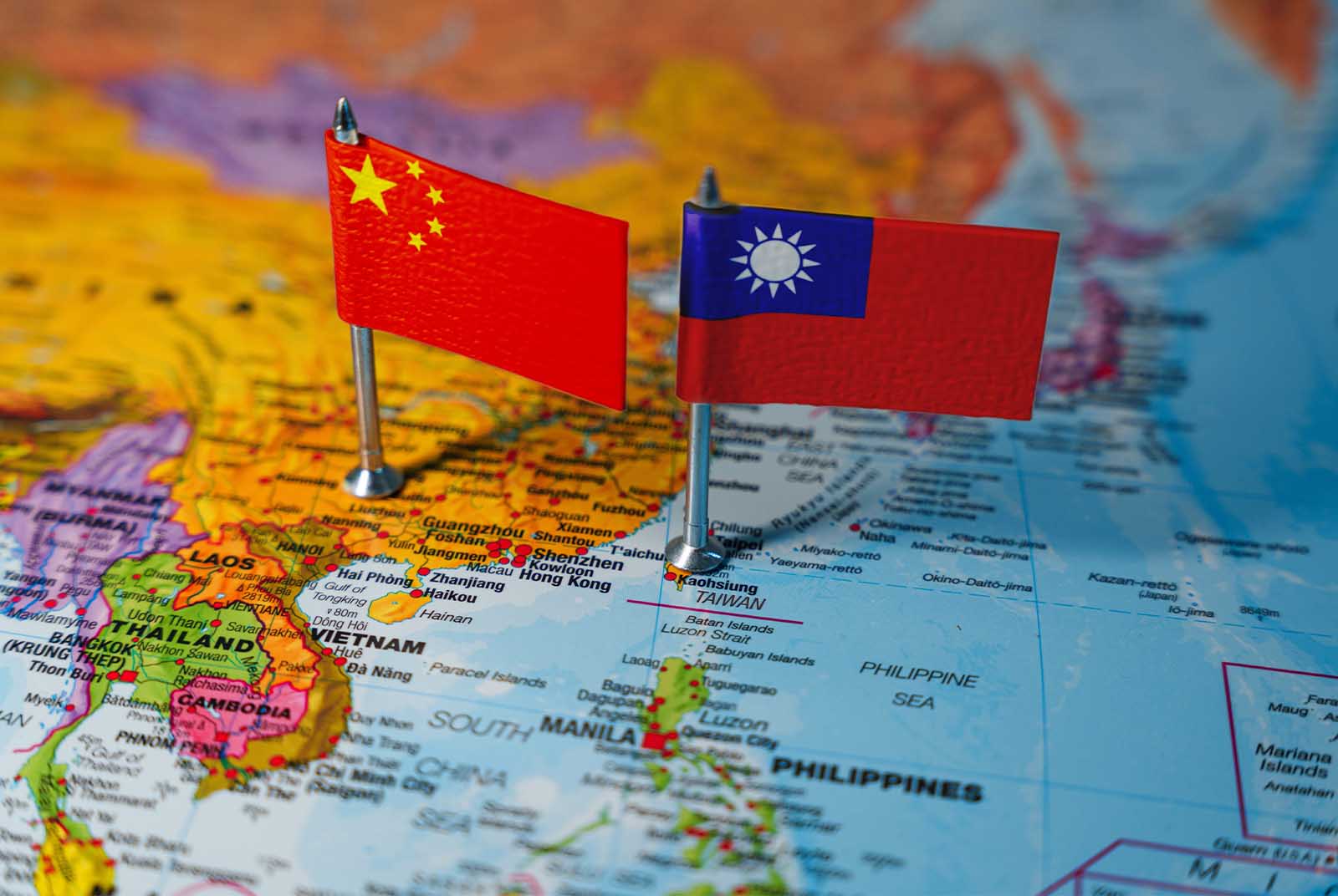
Source:shutterstock
In this op-ed, the author examines the evolving transatlantic relations and Europe's need to redefine its global role following a pivotal meeting between U.S. and Ukrainian leaders. Will Europe's new direction enable it to influence outcomes in the Asia-Pacific, particularly in the volatile Taiwan Strait?
Views
The U.S.-Europe Realignment and What It Means for Taiwan
By Gunter Schubertweb only
Europe is in the midst of a turning point. After the unprecedented showdown in the Oval Office on February 28 between US President Donald Trump and his Vice President J.D. Vance on the one hand and Ukrainian President Volodymyr Zelenskyi on the other, even the most US-friendly European politician has realized that transatlantic relations are about to change fundamentally.
The US is moving away from Europe. If Europe wants to play a role in the emerging new world order in the future, it must now reinvent itself at breakneck speed. It must learn to stop swimming in the wake of the US superpower and make itself comfortable there. You can be outraged by the Trump administration and castigate US “deal diplomacy” as unworthy bullying - at the end of the day, the main thing that remains on the old continent is the realization that Europe must take its fate into its own hands in future: Either the European countries pull themselves together and want to become a cohesive and strong global political player. Or Europe will disintegrate into its individual states, and be subjected to the national interests of the US, Russia and China. In addition, it would probably experience right-wing populist regime changes in many places. This is Europe's historic moment, the most important since the end of the Second World War!
Germany is a paradigmatic example of European thinking and action to date: It concentrated on its economy, benefited from the EU single market and was largely able to hand over the costs of its own security to the US. For the Europeans, NATO was a security guarantee with which the US paid for its claim to global leadership. Transatlantic relations were an expression of a hegemonic order led by Washington, whose legitimacy was linked to the willingness of the US to ensure the well-being and security of Europeans. That is a thing of the past. Washington is now working on its own account and is, obviously, taking the US a long way back to its isolationist tradition of the 19th and early 20th centuries.
Even fierce critics of this reorientation say that Europe must grow up and learn to walk on its own. It is reasonable to assume that, in view of the domestic political climate in the US, future presidents will ask the same question with regard to foreign policy as Trump does: What's in it for us? In essence, Trumpism can be seen as an expression of a paradigm shift, with the US seemingly abandoning the belief that the promotion of democracy and freedom worldwide is in its own national interest.
Europe is therefore fighting for its future. What specifically needs to be done? Great Britain, France and Germany will have to take over the political leadership on the old continent. The European Union, of which the UK is no longer a member, must adopt new structures and remove the opportunity for individual states to create political blockades in order to cook their own nationalist soup.
Countries such as Hungary under the Orban government, which abused the EU by tapping into its various subsidies while at the same time questioning the democratic values of the community and even opposing them, must be effectively sanctioned. Even the threat of these countries leaving the EU should no longer be a spectre: After all, what would Hungary be without the EU? A small country in Eastern Europe that neither Putin nor Trump would pay attention to if it could no longer contribute to the political division of the European Union. Countries that do not share the idea of a European community of values should not have a say in the fate of it.
In order to become a united and strong global political player, Europeans must also succeed in putting right-wing populism, which is gaining strength everywhere and wants to turn Europe into a patchwork of nation states, in its place. Europe has a lot at stake. Only if it presents itself as a united community of values, for which freedom and democracy are the objectives and normative basis of all political action, will it generate the necessary consensus for its own security structures and a self-confident stance vis-à-vis the US, Russia and China.
Whether this can be achieved is an open question. But the first signs, with proposals from the European Commission for a new common arms policy and positive signals from the two nuclear powers, Great Britain and France, that they want to participate in the creation of a European nuclear umbrella, give cause for hope. Germany, too, now seems ready to leave behind the last few years of European policy paralysis under the failed government of Chancellor Olaf Scholz and take a leading role in shaping a new, strong Europe.
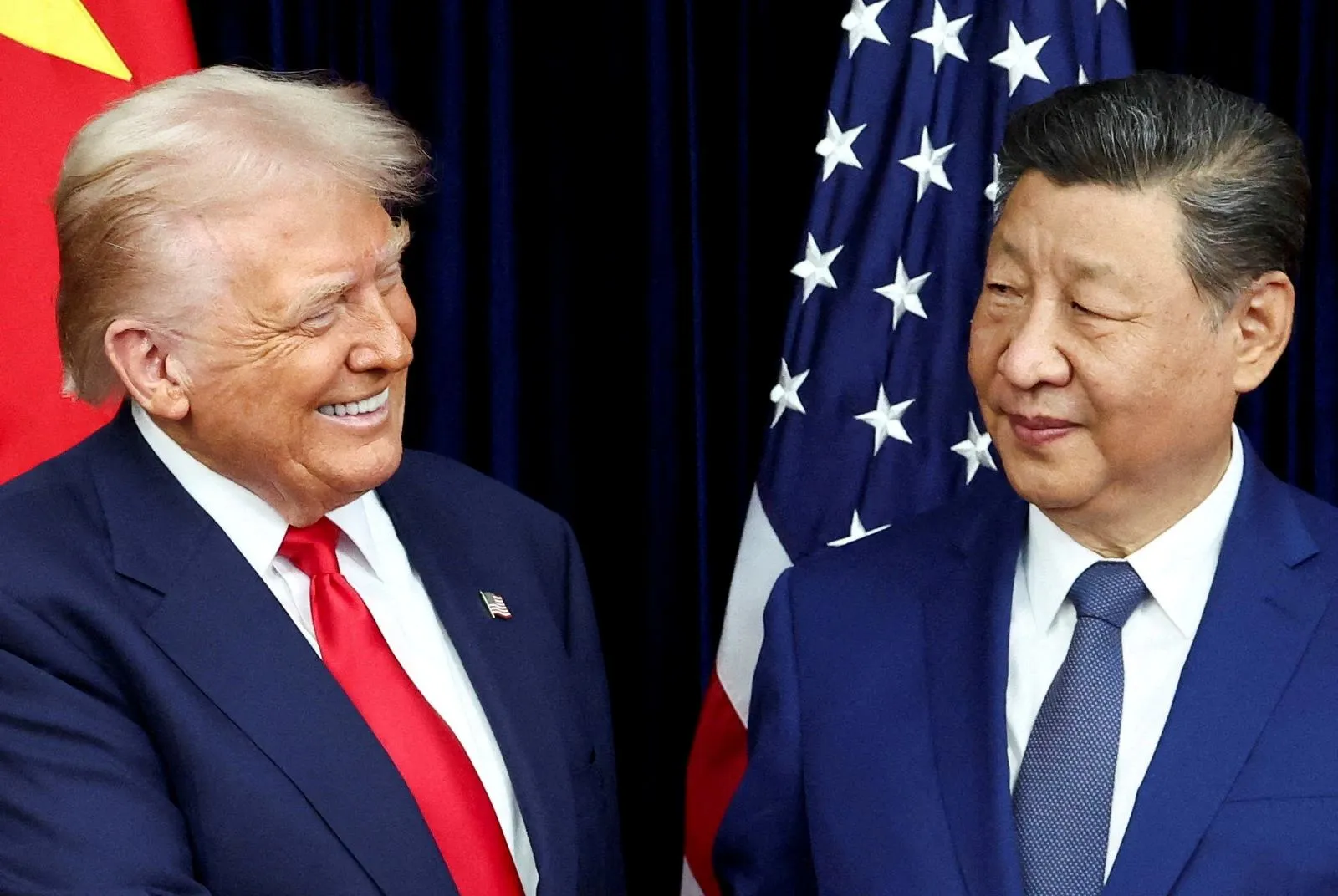
What will the changes in transatlantic relations mean for political dynamics in the Asia-Pacific region? It is still unclear what China policy the second Trump administration will pursue. In his first term of office (2017-2021), Trump largely followed the course of his predecessor Obama: the clear aim was to strengthen alliances with allies and exert more pressure on the Asian states to keep their distance from China. By sending warships to the South China Sea and the Taiwan Strait, the US also demonstrated its readiness for conflict with Beijing.
The Biden administration has maintained this course - but many observers are now wondering whether Trump wants to switch to “deal mode” with China. The question would then be: what kind of deal? What could, for example, Taiwan be sensibly exchanged for? Rationally speaking, nothing - as long as the Trump administration does not come to the conclusion that the Asia-Pacific region is a Chinese zone of influence and that the US would be better off withdrawing from it. Such a strategic shift would be extremely dangerous for Taiwan. But until reality proves otherwise, it is unlikely to happen. However, increasing tensions in Sino-American relations are to be expected as a result of the ongoing efforts of both sides to win a military conflict. Stability in Asia will therefore remain precarious.
Up to now, the European states have mainly dealt with China bilaterally, based on their own economic interests. The European Union's China strategy was and is a waste of paper, a document of mainly symbolic value. It will be interesting to see whether this situation will change as a result of Europe's historic moment, i.e. whether Europe will finally arrive at a coordinated and effective China policy and what form this will take. Up to now, China itself has essentially seen Europe as a recipient of Washington's orders and has campaigned for Europe's emancipation from the US, primarily with the aim of tying the old continent more closely to itself.
This emancipation will now come, but it does not necessarily mean that Europe will move closer to the “Middle Kingdom”. If Europe wants to become a global political player, it will have to speak a clear language not only to Washington and Moscow, but also to Beijing. What that language will be remains to be seen. But Europe will draw its political legitimacy from the “Western community of values” and will therefore not be able to profile itself as a value-neutral “dealmaker”. It will therefore not be any easier for China to handle Europe - not least because the “limitless” friendship between Beijing and Moscow is and will remain unacceptable to Europe.
Finally, what does all this mean for Taiwan?
Currently, not much: the situation in the Taiwan Strait remains tense, and this in view of the steady increase in People's Liberation Army aircraft and ships in and around Taiwan with an upward trend. Taiwan's room for maneuver in foreign policy is approaching zero in view of the potentially heated confrontation between Washington and Beijing - especially as the domestic political camps are locked in a power struggle that makes a national consensus on issues such as an effective arms and security policy impossible.
There is no doubt that Taiwan enjoys great sympathy in Europe. But only a strong Europe could campaign for a peaceful solution to the Sino-Taiwanese conflict and be taken seriously. Only if Europe successfully repositions itself on the old continent and achieves real global political influence will it be able to become a political factor in the Asia-Pacific region that could effectively influence the “Taiwan conflict”. At present, however, Taiwan's fate remains tied to the confrontational intensity of Sino-US relations and the military protection of the US and its partners in Asia.
(This piece reflects the author's opinion, and does not represent the opinion of CommonWealth Magazine.)
About the author:

Gunter Schubert is Professor of Greater China Studies and Director of the European Research Center on Contemporary Taiwan (ERCCT) at the University of Tübingen, Germany.
Have you read?
- Taiwan’s Semiconductor Industry in the “Chip Wars” Era
- How Europe Looks at Taiwan – And How Taiwan Fails to Send out a Clear Message
- Europe’s Dream of Strategic Autonomy
Uploaded by Ian Huang
Views

Subscribe to CWE Newsletter (every Thursday)
Stay abreast of what's happening in Taiwan with our weekly digest.
Keywords: