South Africa's Coalition Government Divided Over Deepening Ties with China
Source:shutterstock
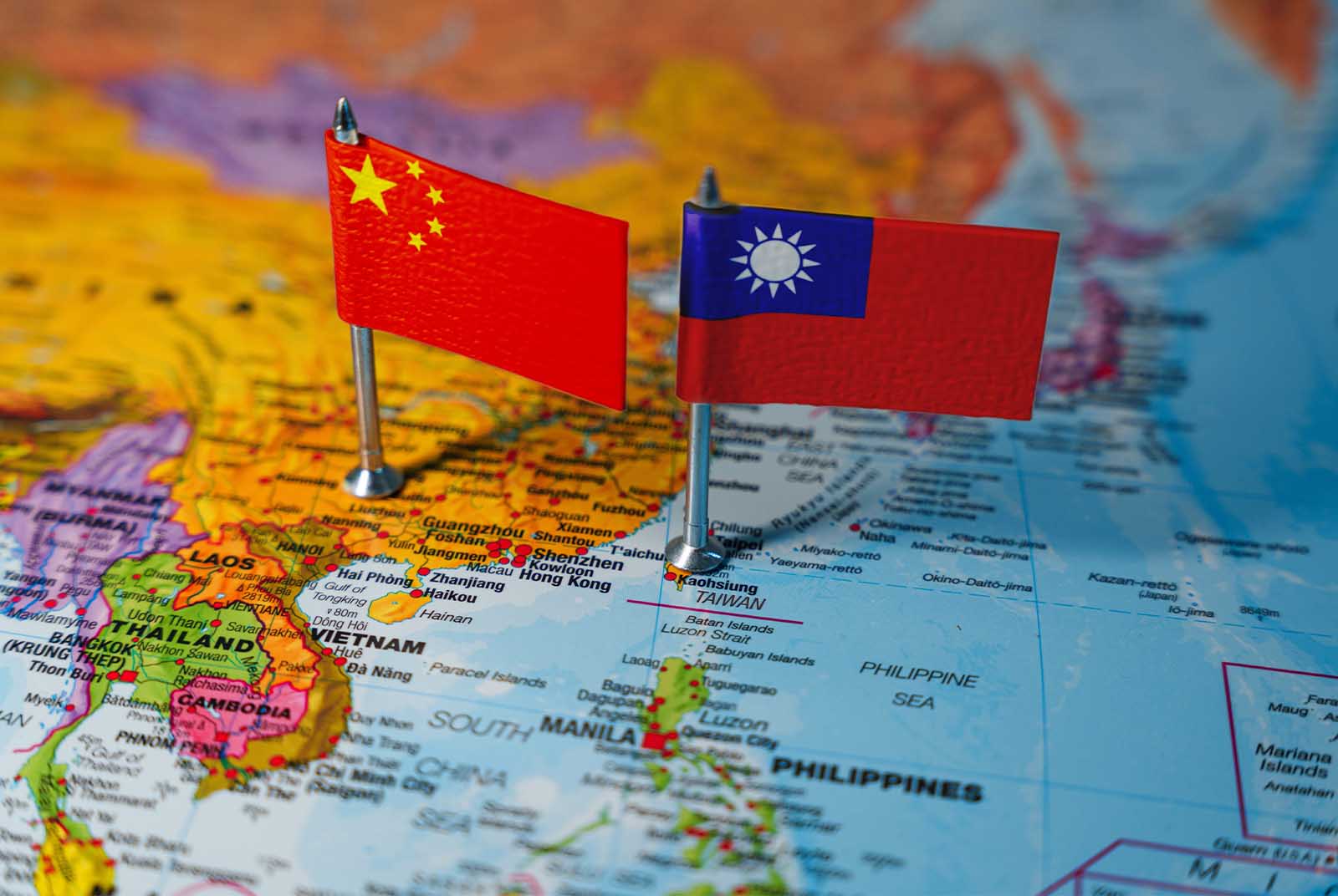
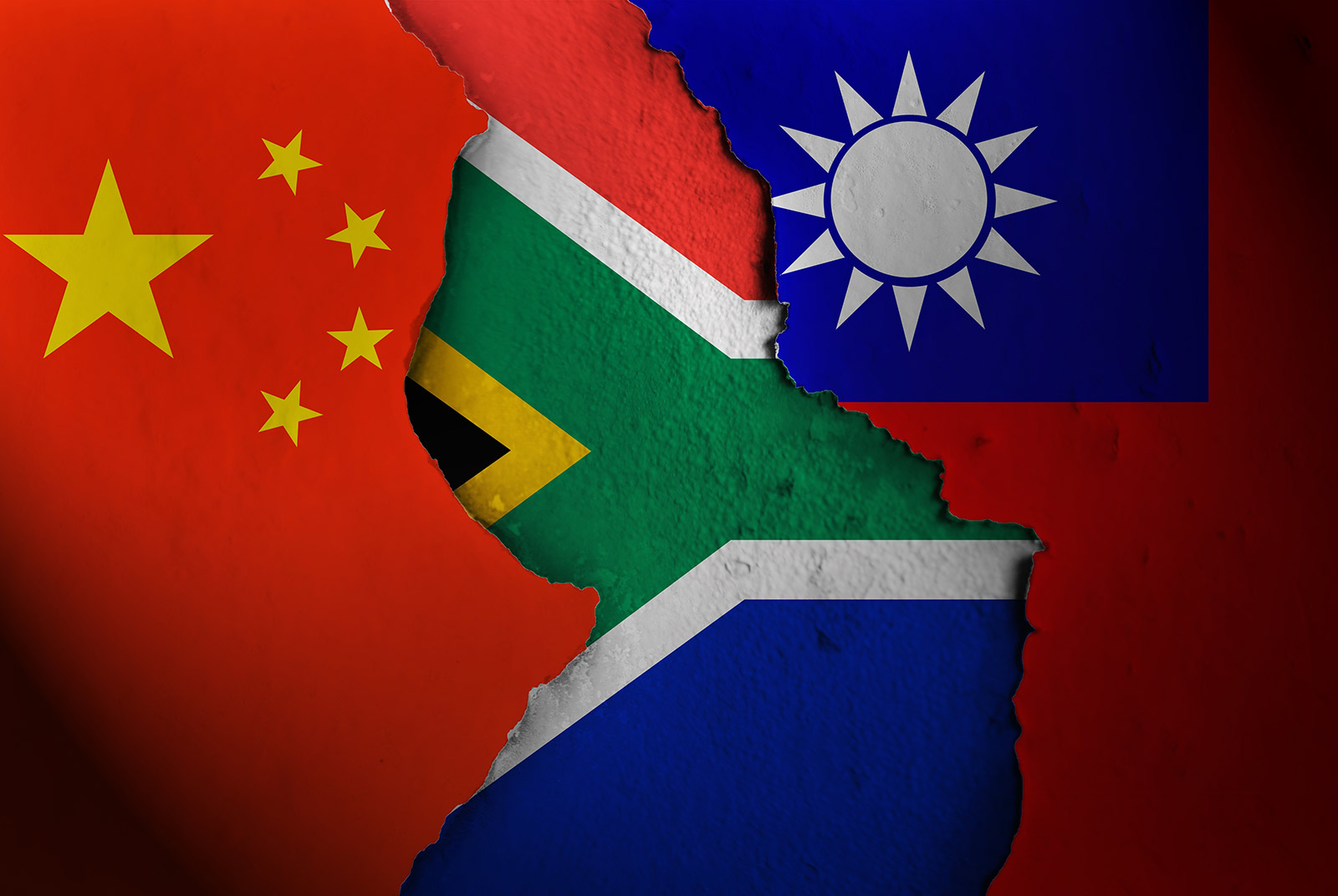
As South Africa orders Taiwan to relocate its unofficial embassy by the end of March, the move signals growing Chinese influence amid the ANC’s fragile coalition. With Beijing tightening diplomatic pressure, Taiwan faces yet another setback in its global standing. In this op-ed, Jun Kajee explores how South Africa’s shifting foreign policy reflects China’s leverage—and what it means for Taiwan.
Views
South Africa's Coalition Government Divided Over Deepening Ties with China
By Jun Kajeeweb only
Key takeaways:
- Coalition Crisis: The ANC's pursuit of closer relations with China, exemplified by the demand for Taiwan's office relocation, has exacerbated tensions with coalition partners.
- Economic Risks: South Africa's deepening alignment with China could jeopardize its trade relationships with key Western partners, impacting its already struggling economy.
- Sovereignty Concerns: Critics argue that China's growing influence undermines South Africa's political autonomy and its ability to pursue an independent foreign policy.
South Africa’s repeated calls for Taiwan to relocate its unofficial embassy away from the capital, Pretoria, has sparked debate about China’s growing influence in the country. The ordered move to Johannesburg, first announced on October 7th 2024 and reiterated in late January 2025, includes rebranding the Taipei liaison office as a trade office. This is in keeping with China’s desires to isolate Taiwan diplomatically - a consequence of the One China principle which asserts that there is only one China and that Taiwan is an inalienable part of it.
These calls come at a time of groundbreaking political change in South Africa. The 2024 elections marked a watershed moment in the nation’s politics, ending the decades-long African National Congress (ANC) absolute majority and ushering in a fragile coalition government. Some analysts suggest that the ordered move of the Taipei liaison office may be an attempt by the ANC to reassure China of its continued commitment to their relationship during this period of heightened volatility.
Lessons from the Past
Historically, South Africa and Taiwan shared strong diplomatic ties during the Apartheid era, as their mutual international isolation provided conducive conditions for political, economic, and military cooperation. Despite aligning with the Apartheid government, Taiwan also provided support to the ANC in the waning days of white minority rule. Having gone through its own democratization over the same period, Taiwan recognized the changing political landscape and sought to maintain its influence as South Africa moved towards universal suffrage. Taiwan's diplomatic overtures to win favor with the ANC, including approximately $10 million of financial support towards their electoral campaign, represented a pragmatic attempt to preserve its interests in post-Apartheid South Africa. The relationship appeared mutually beneficial, with Taiwan becoming South Africa's largest foreign investor and seventh-largest trading partner by 1995.
For a brief period after Apartheid, Taiwan’s approach seemed successful. When Nelson Mandela assumed the presidency in 1994, he pioneered an unprecedented diplomatic approach in South Africa's relations with the People’s Republic of China (PRC) and Taiwan. In a novel concept never before attempted, the ANC pursued a flexible policy officially recognizing both Taiwan and China, which allowed Taiwan to maintain considerable bargaining power. This unique “dual recognition” strategy was unheard of in international diplomacy and South Africa became the only country to simultaneously maintain official ties with both governments.
Geopolitical pressures, particularly around the 1997 handover of Hong Kong to China, complicated this “dual recognition” strategy as the Chinese government ultimately threatened to prevent South Africa from maintaining a consulate in Hong Kong should the country continue to maintain its official ties with Taiwan. Moreover, Chinese officials repeatedly warned their South African counterparts that access to Hong Kong's markets and airspace would be restricted. These threats were particularly significant given Hong Kong's role as a key international financial center and driver of global growth at the time. This forced Mandela’s hand and led to South Africa officially recognizing the PRC in 1998, severing formal diplomatic ties with Taiwan.
South Africa’s close relationship with China has intensified under the ANC’s watch. China's significant investments in South African state-owned enterprises (SOEs) have raised alarms regarding potential influence over government decisions. As China’s role as Africa’s largest trading partner continues to grow, concerns persist about how these economic ties might affect South Africa’s sovereignty and policy-making processes.
Convenient Timing
The timing of South Africa's demand for Taiwan to relocate its representative office from Pretoria to Johannesburg appears to be closely linked to strengthening ties between South Africa and China. South African president Cyril Ramaphosa’s state visit to China in September 2024 marked a significant step in strengthening bilateral ties, elevating the relationship to an “all-round strategic cooperative partnership”. This visit focused on enhancing economic cooperation, with China being South Africa's largest trading partner since 2023. Agreements were signed to boost infrastructure projects, address South Africa's debilitating energy crisis, and expand agricultural exports.
Shortly after this visit, South Africa intensified its demands for Taiwan to relocate its office. While South African officials have been at pains to reassure the public that the relocation aligns with standard diplomatic practices, many see it as part of a broader pattern of Chinese pressure on African nations. Similar moves have occurred elsewhere on the continent, such as Nigeria's 2017 order for Taiwan to move its office out of Abuja.
The recent shift in South Africa's stance towards Taiwan bears striking similarities to the events of 1997-1998. In both cases, Beijing’s economic leverage dictated South Africa's foreign policy decisions. These economic pressures were coupled with clear diplomatic ultimatums - from jeopardizing South Africa's consulate in Hong Kong to pushing for the relocation of Taiwan's office in Pretoria. Both instances coincided with pertinent geopolitical developments: the 1997 handover of Hong Kong and the 2024 elevation of Sino-South African relations.
South Africa’s Chameleon President
Cyril Ramaphosa's political trajectory has been marked by stark contradictions, especially in navigating South Africa's position between China and the West. Once hailed as a reformer within the ANC, Ramaphosa's career trajectory presents a striking irony. After leaving politics and labor activism following the fall of Apartheid, he built his vast fortune through extensive business interests defined by his partnerships with American companies. However, in recent years he has shunned his Western benefactors in favor of cultivating ties with Chinese enterprises, recognizing China's growing influence in Africa.
While he has praised China's Belt and Road Initiative as a catalyst for African development, in a February 2025 address he declared "we will not be bullied" in response to US concerns over the direction of his administration’s domestic and foreign policy. This is emblematic of the increasingly confrontational stance Ramaphosa has adopted towards the West - particularly the United States. Ramaphosa has also co-authored a strongly worded article charging the US with complicity in Israel’s Gaza offensive.
The Trump administration has responded swiftly to Ramaphosa's hostility, imposing sweeping sanctions on South Africa including freezing $440 million in aid and halting PEPFAR funding for HIV/AIDS programs. Additionally, Secretary of State Marco Rubio boycotted the G20 foreign ministers' meeting in Johannesburg, a move that underscored the deterioration in South Africa–United States relations, as Rubio criticized Ramaphosa's policies as "anti-American".
While Ramaphosa has sought to present himself as a moral leader on international issues—such as his vocal stance on Israel-Palestine—he has neglected urgent domestic concerns such as youth unemployment (one of the highest globally), inequality, and corruption. South Africa has also echoed Moscow's narrative in its war on Ukraine and conducted joint naval exercises that opposition figures say amount to an endorsement of the invasion. This approach mirrors that of leaders like Viktor Orban, who have benefited from Western economic systems while openly contradicting Western values.
Taiwan's South African Allies
Ramaphosa and his partners in the coalition government do not speak with one voice when it comes to foreign policy. Within South Africa, several parties participating in the GNU have taken strong positions supportive of Taiwan and its right to maintain its representative office in Pretoria. This stance contrasts sharply with the ANC’s China-friendly position.
The Inkatha Freedom Party (IFP), a key member of the coalition, stands out as a long-time supporter of Taiwan, a position rooted in significant Taiwanese investments in KwaZulu-Natal that provided employment for hundreds of thousands of struggling black South Africans during the Apartheid era. The IFP's support for Taiwan was championed by its late leader, Prince Mangosuthu Buthelezi, who admired Taiwan's democratic progress and drew from it inspiration for South Africa’s own democratic transition. As Minister of Home Affairs from 1994 to 2004, he refused to impose visa restrictions on Taiwanese citizens despite ANC pressures. In an IFP press release celebrating Taiwan’s National Day in 2021 he stated “I have never forgotten the investment made by the Taiwanese into KwaZulu when our people were under the worst oppression of Apartheid. To me, that assistance cemented a life-long friendship.” The IFP's current leadership, under Velenkosini Hlabisa, maintains this pro-Taiwan stance.
The Freedom Front Plus (FF+), led by Dr. Pieter Groenewald, has vocally opposed the ANC's actions. The FF+ views this move as evidence of China's improper sway over South Africa and criticizes the ANC for disregarding its coalition partners' perspectives. Dr. Groenewald emphasizes the economic implications of this decision, pointing to the significant trade volume between South Africa and Taiwan and warning of potential job losses, “it represents numerous job opportunities, and South Africa may very well be the biggest loser should Taiwan decide to sever its trade ties with the country”. The party has pledged to push for a reconsideration of the decision within the GNU.
The Democratic Alliance (DA), under the leadership of Helen Zille, aligns more closely with allies of the US and has consistently criticized China's meddling in South African affairs. The DA emphasizes maintaining South Africa's sovereignty and non-aligned policy, highlighting the economic significance of Taiwanese trade relations including annual exports of $540 million in coal, $180 million in grain, and $180 million in automobiles. They question the motivation behind the ANC’s order, suggesting external pressures from China. The DA has repeatedly called for a reassessment of South Africa's ties with BRICS, arguing that the country's interests are better served by stronger relationships with democratic nations and calling into question China’s human rights record. This stance has not been without consequences; recently, China sanctioned Ivan Meyer, a prominent DA figure, for visiting Taiwan.
These parties collectively advocate for a foreign policy that prioritizes human rights and democratic values, even at the potential cost of economic ties with Beijing. Their stance reflects a growing concern in the coalition regarding the extent of Chinese influence on South Africa's policy positions.
The Looming Collapse
The coalition government finds itself at a crossroads, grappling with a perfect storm comprising both domestic and international challenges. The unprecedented cancellation of the 2025 Budget Speech due to coalition disagreements has laid bare deep fissures within their ranks. Internationally, South Africa's demand for Taiwan to relocate its representative office from Pretoria by March 2025 has not only drawn criticism from the US but also risks jeopardizing valuable trade benefits under AGOA.
The ANC's unilateral approach to foreign policy and controversial domestic initiatives have strained relations among coalition partners, pushing the GNU to its breaking point. Despite modest economic growth projections, the persistently high unemployment rate of 31.9% looms large over the nation's prospects.
An outright disintegration of the GNU would trigger massive upheaval in South Africa's political scene. The Social Research Foundation’s latest polling shows ANC support down to just 32% nationally, raising concerns of the ANC splintering once again. The rise of radical pro-China factions like the Economic Freedom Fighters (EFF) and uMkhonto weSizwe (MK) party further complicates this scenario, as they prioritize ideological alignment with China over national interests.
South Africa can ill afford a deterioration in relations with Taiwan and its allies. As the March 31 deadline for Taiwan's office relocation approaches and coalition tensions escalate, the coming weeks will be crucial in determining whether the GNU can weather this storm or if South Africa is indeed headed towards a new and uncertain political era. The GNU's inability to reconcile divergent policy positions among its members, coupled with the ANC's reluctance to share power, sets the stage for a seemingly inevitable collapse of the coalition. This impending fracture will not only have political ramifications but also imperil South Africa’s sovereignty, as Chinese influence challenges the nation’s ability to maintain an independent foreign policy in line with democratic values.
(This piece reflects the author's opinion, and does not represent the opinion of CommonWealth Magazine.)
About the author:

Jun Kajee, Jun is a lecturer and adjunct faculty member at Ling Tung University in Taiwan, where he specializes in internationalization and intercultural communication. He has contributed to the academic field through various publications focused on bilingual education, international program development, and cross-strait relations. His research has received funding from the European Commission, the Erasmus Mundus Association, Salzburg Global Seminar, the United States Bureau of Educational and Cultural Affairs, and the United Nations Sustainable Development Solutions Network (UN SDSN).
Have you read?
- The U.S.-Europe Realignment and What It Means for Taiwan
- Why and How China Would Struggle to Invade Taiwan
Uploaded by Ian Huang
Views

Subscribe to CWE Newsletter (every Thursday)
Stay abreast of what's happening in Taiwan with our weekly digest.
Keywords: