Christmas Light Entrepreneur Spends Millions Repurposing Historic Rice Mill and Old Hotel in Rural South
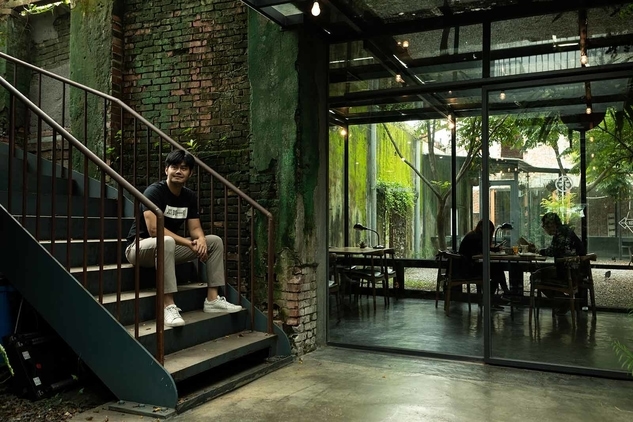
Source:Justin Wu
Situated next to the village’s Japanese-era railway station, the Yamato Barn posts annual revenue worth NT$8 million although less than 20,000 people live here.
Views
Christmas Light Entrepreneur Spends Millions Repurposing Historic Rice Mill and Old Hotel in Rural South
By Monica Wangweb only
In Zhutian, a small village in Pingtung County, a historic rice mill has gotten a new lease on life as a coffee shop and community space. Bright sunlight floods the interior on sunny days, while on rainy days the complex is wrapped in a cloud of mist and a mass of lush vegetation. Situated next to the village’s Japanese-era railway station, the Yamato Barn posts annual revenue worth NT$8 million although less than 20,000 people live here. This is not just another sightseeing spot that has become famous because of Internet buzz. Opposite Pingtung railway station, a historic hotel, also named the Yamato, is slated to reopen in old splendor at year’s end. Behind the renovation and repurposing of these two historic sites is a family that made its fortune making Christmas lights. What made them see the potential in such long-neglected buildings? How did they unearth the stories behind these hidden gems?
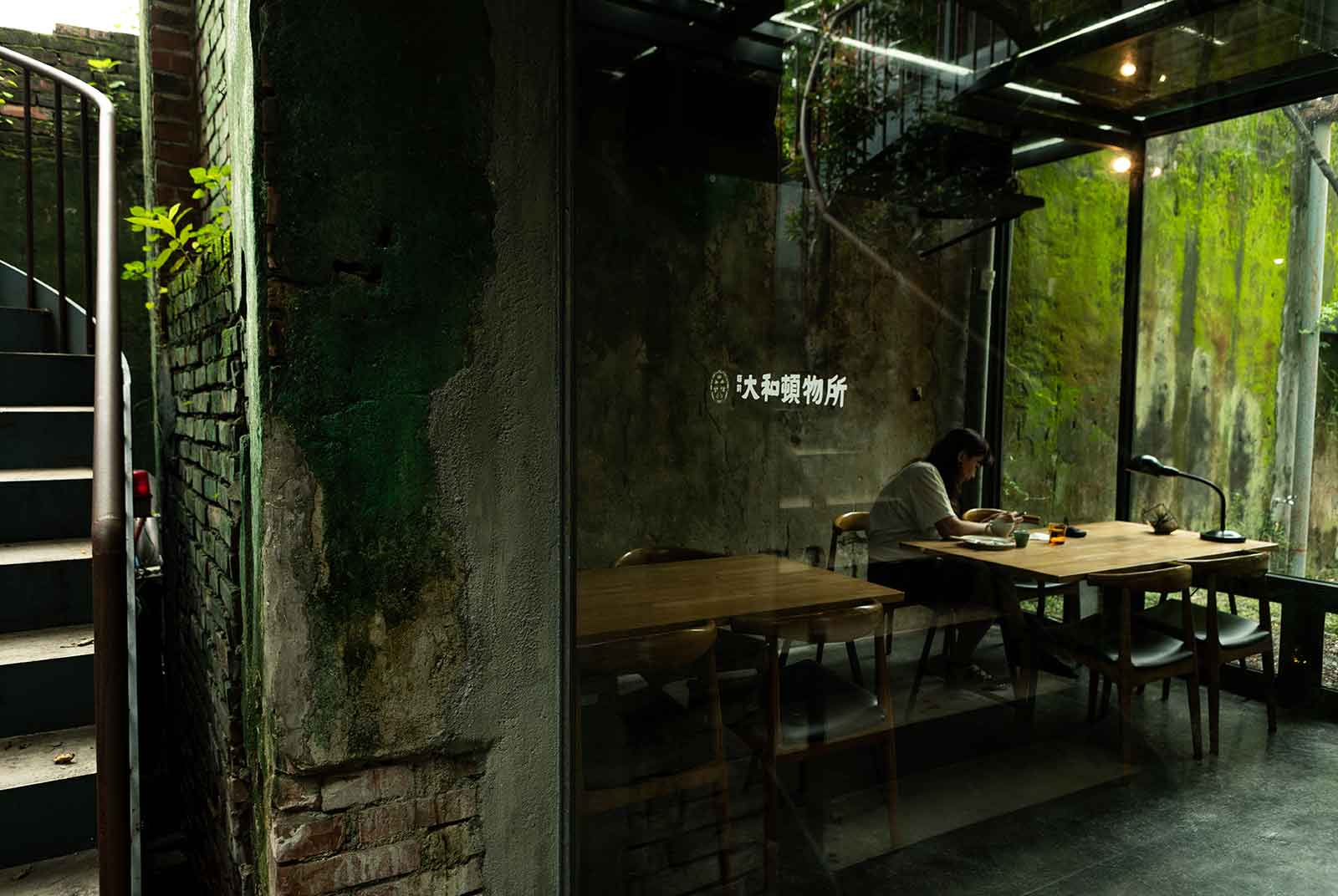 Photo by Justin Wu/CW
It takes about an hour by local train from Zuoying high-speed railway station in Kaohsiung to get to Zhutian.
In former times, this small Hakka community in Taiwan’s green, tropical south used to be a vibrant rice storage and distribution center. Today, it has a population of just 17,000 people, a small wooden railway station that dates back to the Japanese colonial era, and a few small museums that occasionally attract a few tourists. The place looks to us as remote and desolate as it can get.





Yet from 2017, the number of tourists visiting Zhutian began to grow. While an average of 451 passengers per day took the train to Zhutian in 2016, that figure had risen more than 25 percent to 613 in 2018, according to Taiwan Railway statistics. On Instagram, it is mainly young people and Internet celebrities who have added Zhutian railway station as a location to visit.
It was the Yamato Barn, surrounded by old trees and located in the renovated remains of abandoned Dexing Rice Mill next to the railway station, that turned the town’s image around.
“When our old customers heard that we were planning to open a coffee roastery and café in Zhutian, they were dumbstruck and asked us doubtingly, “Are you sure you aren’t making a mistake?” says manager Lai Yuan-feng, who also goes by the name Paul.
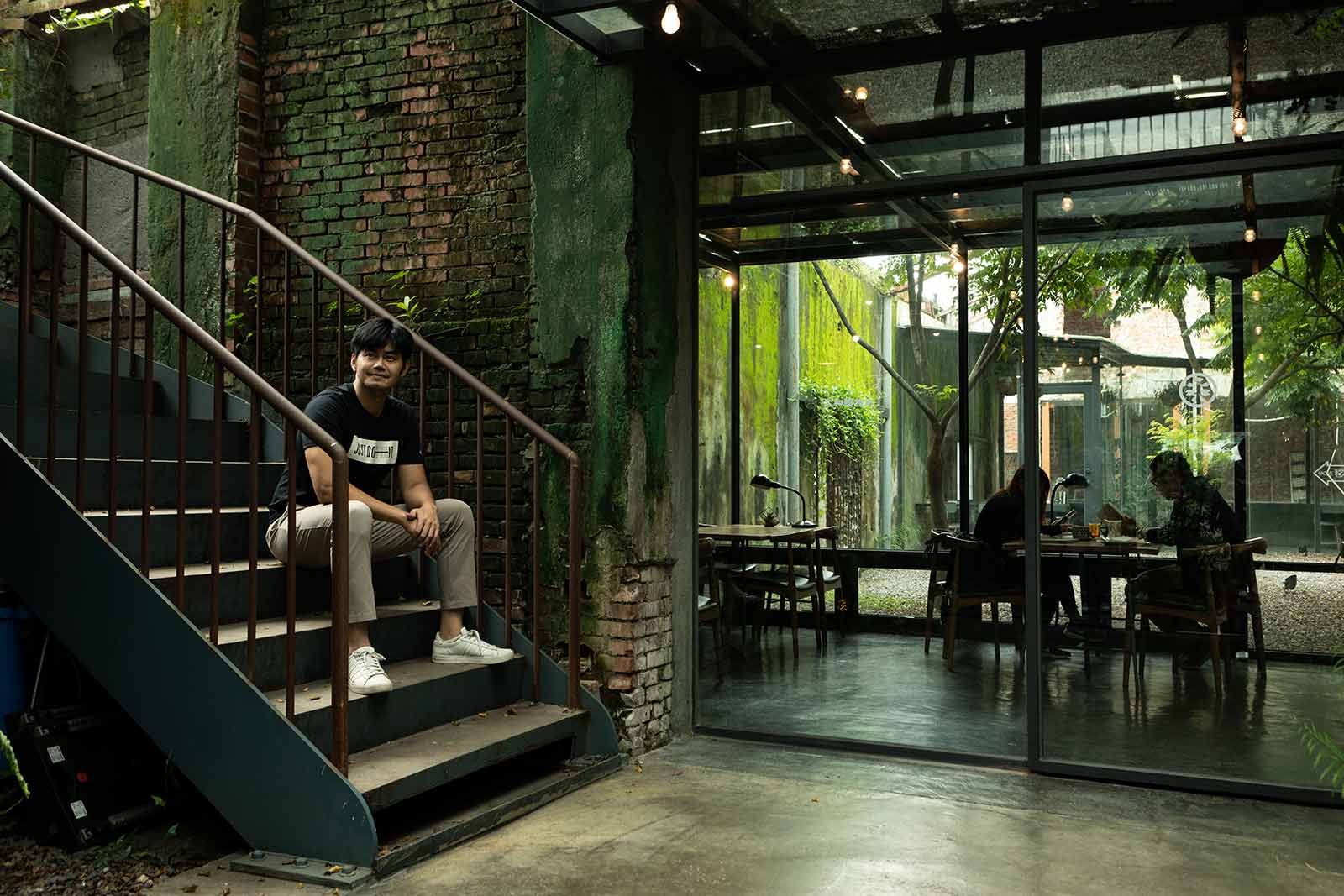 Paul Lai, manager of Yamato Barn, used to work in international sales in the conventional industry. Subsequently he started from scratch, learning the ins and out of coffee roasting and brewing. After earning a certificate, he slowly built a reputation, in the beginning often selling only one cup of coffee per day. (Photo by Justin Wu/CW)
Spending Two Years Sorting out Ownership Issues
The Yamato Barn, which opened in 2017, is actually the third object in the “Yamato” portfolio.
In 2011 Lai’s boss and father-in-law, Hsu Yuan-shun, chairman of the Hsinchu-based decorative lightbulb manufacturer Yuan Shun Industrial Co. Ltd., bought the corner building opposite the railway station with NT$88 million in cash. In 2014, Hsu applied for the restoration and repurposing of the historic building. Built in 1939, it was known as the “Yamato Hotel”. The transaction caused a stir in cultural heritage conservation circles because after its renovation it would be the first commercial hotel in a historic building.
“In the beginning we did not have such big ambitions; my boss only loved old houses. His wife is from Wandan in Pingtung County. Each time they went back to see relatives they could not find a proper place to stay. That’s why they thought they might as well buy a hotel where they could stay themselves during visits,” explains Lai.
However, after learning about the story behind the Yamato Hotel, Hsu recognized the old building’s historic value. Buying it posed a challenge since it had dozens of owners. While other potential buyers had eventually given up, Hsu stood firm. With the help of a real estate broker, he spent two years to buy out the building’s numerous owners, some of whom lived in places as far flung as Panama, Austria and Brazil. Once the ownership transfer was complete, Hsu immediately got offers from interested parties to the tune of more than NT$100 million, but he refused to sell.
Hsu, who made his fortune manufacturing Christmas lights for export, hoped to use the Yamato as a starting point to build a lifestyle brand that revolves around excellent coffee, Taiwanese architecture, design and esthetics, and had the potential to develop and thrive for half a century.
 Noticing the unique historic value of old buildings, Hsu Yuan-shun, chairman of Yuan Shun Industrial Co. Ltd., bought the abandoned Dexing Rice Mill in Zhutian and repurposed it after renovation as the Yamato Barn coffeeshop. (Photo by Justin Wu/CW)
The brand-building exercise fell onto the shoulders of Lai. In 2015, Lei began to run the Station-Front Yamato Café in Shengli Village, a Japanese era historic complex in Pingtung City. Lai, whose background was in international sales, learned coffee roasting and brewing skills from scratch. After earning relevant certification, he built the brand’s reputation cup by cup until his coffee roasting machine, which had a capacity of just one kilogram, could not keep up with demand anymore. Since the lease for the coffeeshop was about to expire, he decided to relocate to the site of the Dexing Rice Mill.
“I still remember how I stood outside the ruined building with Huang Cho-jen of JR Architects and Pa Li of Studio APL; the three of us were speechless at the sight, wondering ‘Is this really the place?” recalls Lai.
Creating a Store that Fills Locals with Pride
The three men, who all belong to Generation X, had left Pingtung to launch their careers elsewhere, but now had a change of heart. They were, however, aware that if they opened a café in such a remote location, the place needed to be quite special to attract visitors. The project provided an opportunity to return and do something for their home county. So they decided to “open a shop that all Pingtung people would be able to boast of.”
From outside, the Yamato Barn seems to have been kept in the dilapidated state that the rice mill has been in since 1942. Its outer walls were painted with everyday scenes from Pingtung by Taiwanese artist Lee Ming-tse. The inside, however, holds a spacious modern coffeeshop.
Interestingly, the café does not have walls hung with artsy, Japanese-style or Korean-style paintings or other interior decoration. Instead it features an open floor plan with large glass walls that provide a full view of the lush vegetation outside. Visible are golden rain trees and giant elephant’s ears, while liverworts, hornworts, mosses and ferns grow on the mottled brick walls, their appearance changing with the seasons. Even the rice mill’s original steel structure, red with rust, add a unique touch to the repurposed site.
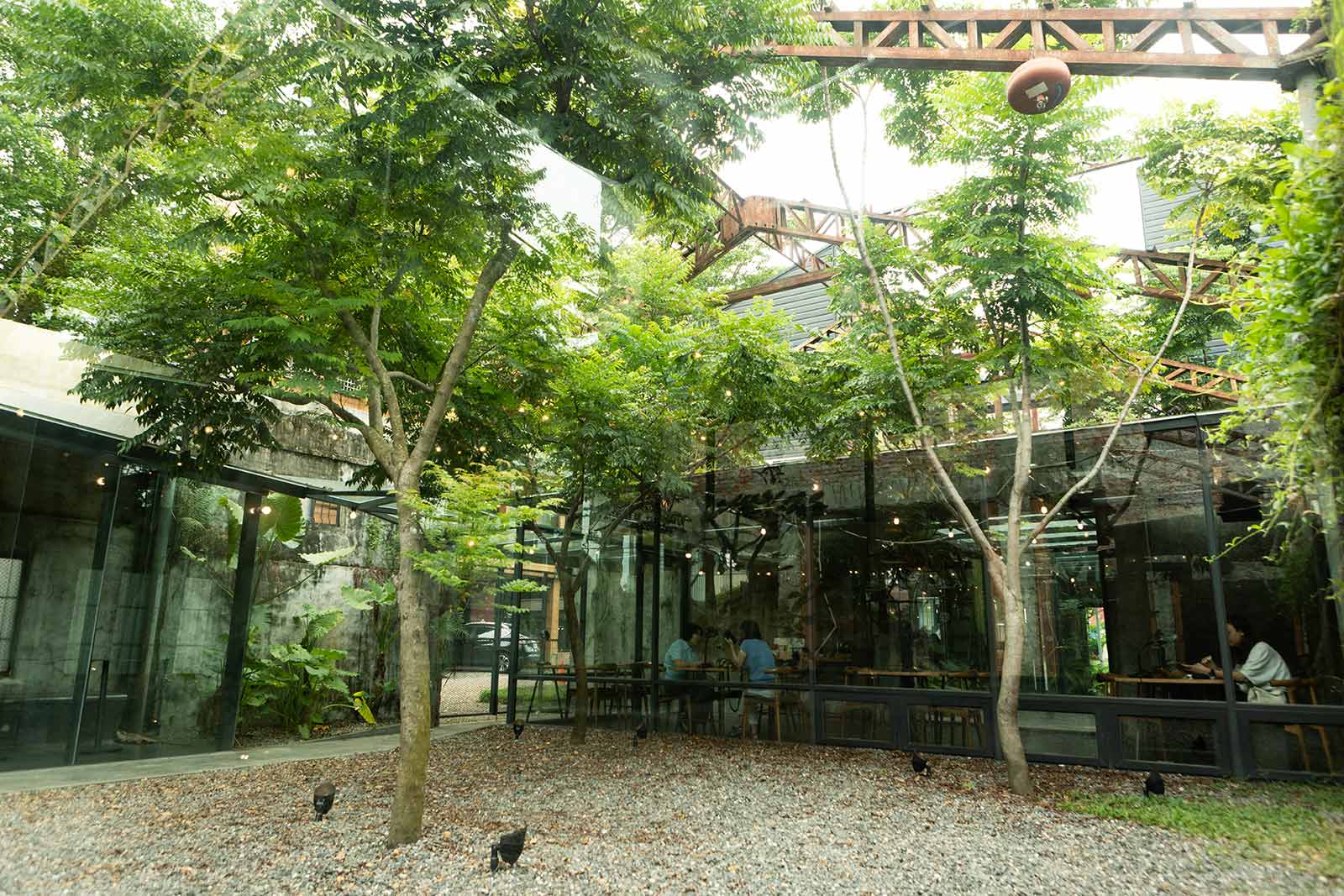 Photo by Justin Wu/CW
“Tearing everything down and building anew would, of course, be most economical, but we fit the coffeeshop inside to set the old house and the new building apart from each other. Thus, the construction could be done easily, and we were able to retain the original history,” explains Lai. A heavenly bamboo shrub grows in the middle of the barn in a hole that was carved into the ground over time by rice bran that was ejected from the rice mill. It grew from a seed, symbolizing the revival of the rice mill. “This building told us what kind of design it wants,” says Lai.
Doesn’t the glass structure heat up like a greenhouse when the sun shines? “The outer walls help us block the heat,” answers Lai with pride. The glass roof is covered with coffee bean bags that provide shading and reduce glare, while the natural light still trickles through from above. On rainy days, raindrops run down the large glass panes, giving those inside the feeling that they are in the midst of a misty forest. The glass structure does not completely block out the elements as in some places where glass panels connect, a drizzle might come through. Outside, the rain splashes onto the connecting walkways. For visitors this creates an opportunity to live the southern spirit of letting nature take its course. “This is life; this place offers a very beautiful view, but it comes with certain inconveniences,” admits Lai.
No one involved in the Yamato ventures had a background in the cultural and creative industries sector, but they hoped to create a place with a distinct Taiwanese touch. Aside from reviving the old rice mill as a community space that coexists with nature, they were planning to roast their own coffee inside the café. Against this backdrop, coffee from Alishan, which is famous for its aftertaste reminiscent of high-altitude tea, had to be among the offerings, and also because it highlights the coffee-growing skills of Taiwan’s indigenous Tsou people.
Have you read?
♦ Traditional Agricultural Knowledge of Taiwan Indigenous People
♦ Taiwanese Chocolate Seduces the World
♦ Old House, New Soul
The Yamato visual identity system, such as the logo and product packaging, was designed by Antlers Artisans, a local graphic designer workshop. Originally, a nearby school for special needs kids had hoped to have their students work at the café as interns, cleaning the glass panes and keeping the surroundings in order. However, the Yamato team decided to pay the students regular hourly wages in exchange for long-term collaboration.
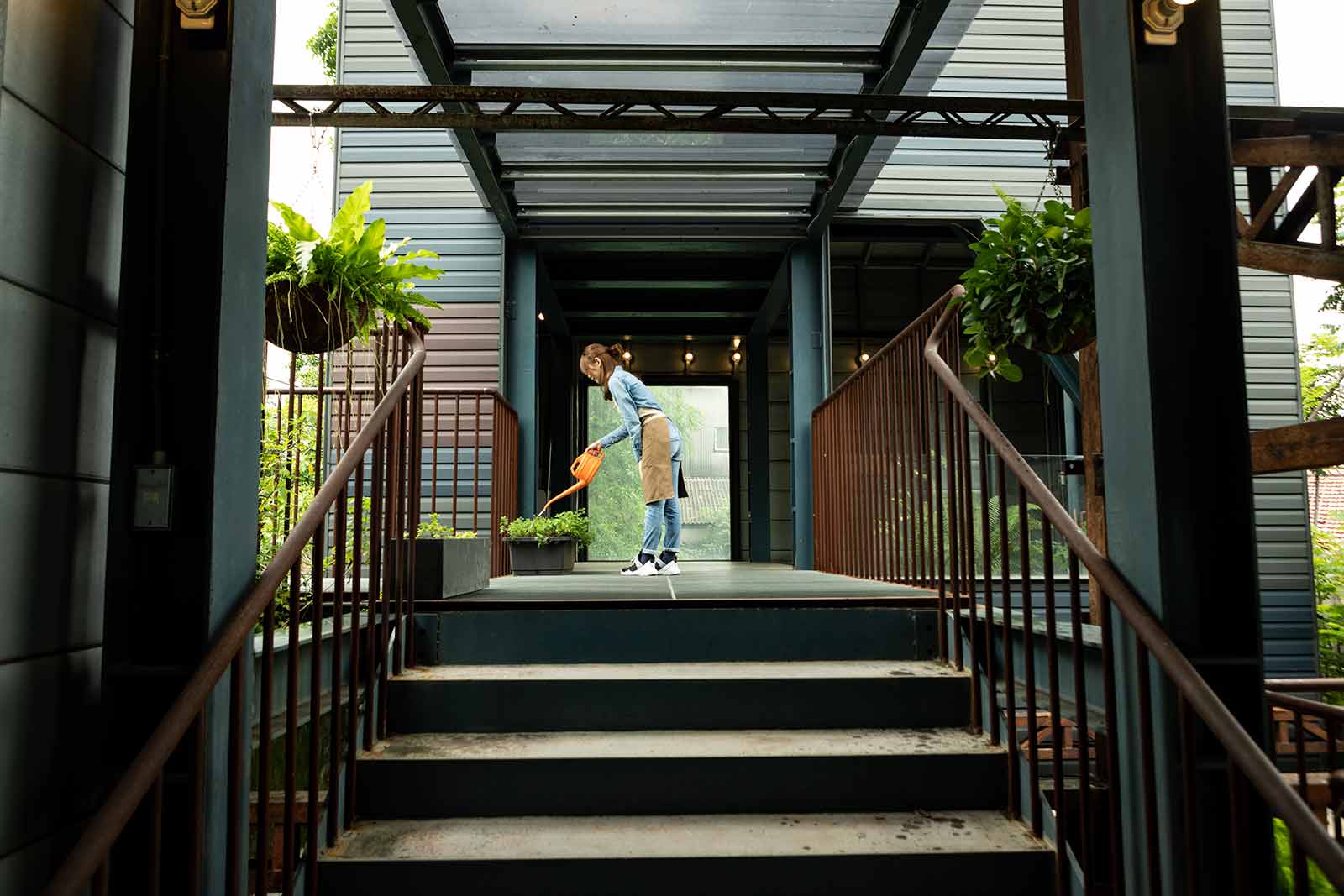 Photo by Justin Wu/CW
Investing Time to Incubate a Living Space With Character
Having positioned itself in the market and cultivating loyal customers with own brand coffee roasts, which are also sold online, the Yamato Barn now attracts more than 3,000 customers per month. Last year, revenue hit NT$8 million.
“Before the Yamato, you couldn’t find any comparable place in Pingtung…for the past five years I’ve been able to do what I love and have kept growing all the time,” notes Lin Hsueh-lin, a 33-year-old Yamato employee from nearby Linluo. Lin, who studied early childhood education, worked in Tainan and Taipei after graduation but never felt that she was in the right place. Since she liked coffee, she hung out with like-minded people, eventually joining the Station-Front Yamato Café in Pingtung. Step by step, she learned professional coffee skills such as brewing, sensory skills, roasting and cupping. Now she can’t wait for the Yamato Hotel to open to tackle new challenges.
Hsu points out that aside from the Yamato Hotel, which is slated to open at year’s end, he plans to open shops in Hsinchu and in Chiba, Japan. He says he is already in the process of sorting out ownership issues there.
Hsu jokingly admits that he is rather conservative when it comes to starting new ventures; rather than jumping into the fray, he prefers to stay on the sidelines, gradually building up strength. That’s also how Hsu, a self-made entrepreneur, started his business from nothing. During the economic boom, when Taiwan supplied the world with Christmas lights, he successfully conquered the European market with outdoor lighting that had to fulfill much stricter safety requirements than indoor lights. The lights on the Avenue des Champs-Élysées in Paris used to be manufactured in Hsu’s factory.
The traditional business model of the past followed a clear logic of managing costs to increase profit. After many conversations with the second generation in the family business, Hsu gradually came to accept the concept of building a brand. “It’s not that you won’t see profits, but it will take time,” he says. By incubating one unique space after the other Hsu hopes to leave the best legacy for Taiwan and his offspring.
【More on Pingtung】
♦ The 23-Year-Old Girl Who Put Pingtung Back on the Map
♦ A Canadian-Born Realizing His Green Dream in Taiwan
♦ Taiwan's Global Noah’s Ark of Plants
Translated by Susanne Ganz
Edited by TC Lin, Sharon Tseng
Views

Subscribe to CWE Newsletter (every Thursday)
Stay abreast of what's happening in Taiwan with our weekly digest.
Keywords: