How golf champion Yani Tseng faced her inner demons
Source:Ming-Tang Huang
Her meteoric rise to the top of world rankings at 22 was matched only by her spectacular fall back outside the top 100. Having spiraled into the depths of depression, she eventually managed to regain her grounding.
Views
How golf champion Yani Tseng faced her inner demons
By Jowen Liweb only
Yani Tseng is still here.
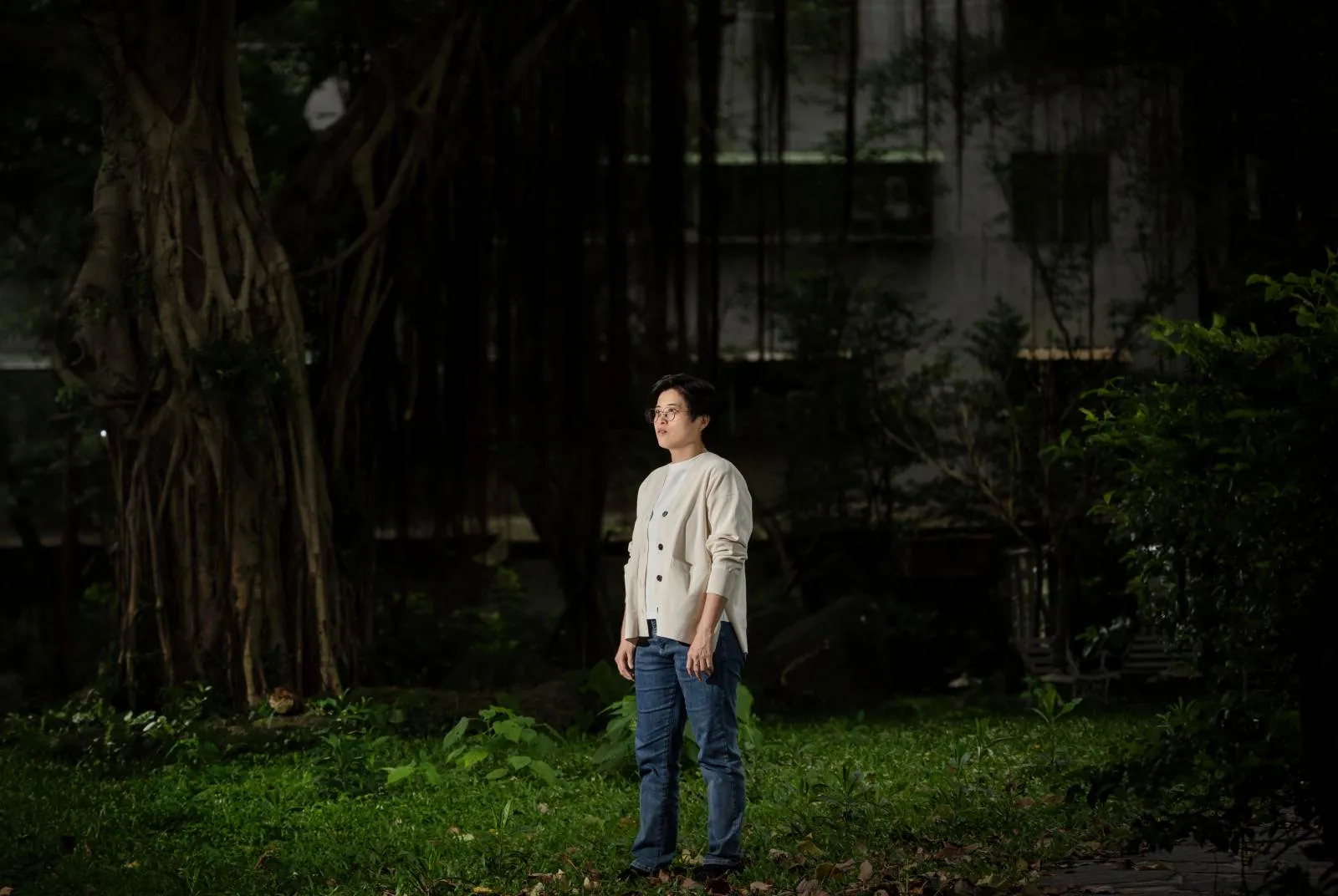
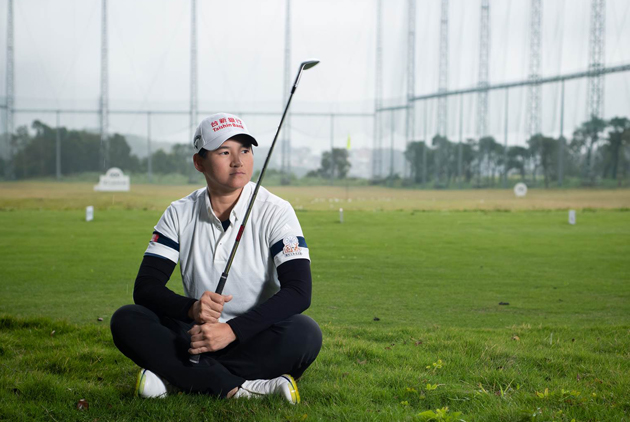
One day in early 2021, Tseng is alone on the fairway of a golf course in Linkou, retrieving the balls she hit. She remains there practicing, long after the crowd has dispersed.
At the age of 22, Tseng established a world record as the youngest ladies’ golf champion in history, becoming Taiwan’s world number one athlete.
Loneliest place on earth
Annika Sörenstam, a retired former queen of the LPGA tour, told her that it would be the loneliest place on earth.
The Taiwanese public adulated her. Once when she was competing in Taoyuan in 2011, crowds eager to watch her jammed the freeway ramps to a standstill. One publisher turned her story into an illustrated children’s book. And late former President Lee Teng-hui and his wife, Tseng Wen-hui, absolutely adored her.
Her intrepid poise on the links gave her an air of invincibility.
After becoming famous, the world of the girl whose life outside of her studies had consisted only of training since the age of five, was no longer limited to the golf links, her parents, and coach. Other than training, fans, sponsors, and the media swarmed around her. And while her coach instructed her on golf, no one taught her how to be a public figure.
She enjoyed making friends and was quite sociable, but she never really knew how to say “no.”
And the crowds were tough on her. Having won championships, she was no longer a young girl from Taoyuan barely into her twenties, but the face of Taiwanese sports, whose every move seemed to come under public scrutiny.
Weekly papers started reporting that she went to nightclubs and hobnobbed with celebrities, and finally overslept once on the morning of a competition.
Nobody could foresee that Tseng would plummet from ranking first in the world to outside of the top 100 in less than three years.
Inner demons trigger spectacular fall
What went wrong? Tseng recalls that, sometime during her second year as the reigning queen of the LPGA Tour, she started feeling that her hitting stance was “all weird,” and her feel for the ball was off. “

My coach said I was overthinking; what was there to think so much about when I was playing so well?” But her inner demons started to show, and Tseng’s results plummeted, first once, then twice, as the memories of defeat built up and became a monkey on her back. “When you doubt yourself, everything tightens up,” she says.
“Her confidence was gone then,” says seasoned journalist Wang Li-chu, who watched Tseng grow up. She observed the golfer’s later competitions, in which Tseng would often take an early lead, only to lose momentum and fall behind. This happened because confident athletes are able to maximize their power and hit the ball very far. However, once they lose their confidence, and become tentative with their club, they can only muster around 60 percent of their strength.
“It really pained me to see her that way,” admits Wang, who at first was under the impression that Yani was having a hard time juggling her schedule. However, with the passage of time, she has taken on a different perspective. “No one knew how to protect a world number one,” she says, her voice full of lament.
The LPGA queen’s long wait
Even Tseng’s idol, Sörenstam, once candidly offered, “You can practice for seven hours a day to win a competition. But after you win, there’s no way to practice how to deal with the expectations of those around you.”
At first the spectators cursed her, and then they forgot abuot her.
Tseng began her long wait; waiting for the naturally gifted young lady she had been to return. She practiced day and night, and it was as if the balls she lofted into the air were searching for signals to pick up.
Past glories became her shackles, to the extent that when she walked on the street she was afraid of being recognized.
Once, when she missed a shot at a competition, she heard the voice of an older gentleman from amidst the crowd loudly mocking her, saying, “Come on, can’t you even make that shot?” Anger boiled up inside her as she thought to herself, ‘Maybe you should try it for yourself.’ But she did not say this out loud.
Torn up by her trevails, her parents counseled her many times to quit. And the thought had certainly crossed her mind. After all, if she kept playing and her performances failed to improve, people would only look down on her even more. Despite those thoughts, even as many of her athlete peers retired, she never gave up. Instead, she waited to make her comeback.
A ray of hope flashed for her in 2018, when Tseng took third place in the Hitachi Ladies Classic Taiwan LPGA tournament, her best result in recent years. Unfortunately, a hip injury sidelined her, as she experienced great pain with every stroke, seemingly erasing all hope. Then Covid-19 hit, and international competitions were put on hold.
She knew then that it was really time for a break.
Longing for peace of mind, Yani tried vipassana: Ten full days with no talking and no smartphones. She would have to rise at 4:30 a.m. each day to meditate, and she would sit still for 11 hours a day.
At first, sitting in the lotus position made her legs go numb, upsetting her greatly. But the meditation teacher told her to focus her attention on her bodily feelings to understand what is meant by “impermanence”: Pain is temporary, as is joy; sensations and emotions can be separated. Do not hate sensations of pain, and do not get attached to the comfort of sitting at length.

Astonishingly, once the displeasure at her physical discomfort dissipated, an inner voice emerged from the depths, saying: “You really are done. You’ve got no chance. It’s no use after trying for so long…” It was the demons of her subconscious that had tormented her for the last decade coming to the fore, no longer suppressed by the cares of the world.
Forty people sit quietly and neatly in the meditation chamber. She cries. At first she could feel the pain in her heart, and even though it gave way to numbness, the tears continued to flow uncontrollably. Tseng would spend her evenings crying into her pillow. She ended up crying for five straight days.
The image of the young lady adored by the crowds, hoisting a heavy trophy, weighed on her for far, far too long.
Finally, the demons quieted down. And in that meditation chamber, she finally felt liberated.
After the meditation retreat, she felt tranquility like never before, and experienced happy moods easier. Tseng relates that confronting herself took a great deal of courage.
Many people miss Yani Tseng. According to Wang Li-chu, golf industry companies and athletes miss the popularity and passion she brought to golf. “If she could confront herself after a meditation retreat and reset everything, then the old Yani Tseng could definitely return,” says Wang. Wang hopes that Tseng understands that she is “a blessed athlete.”
There is a video on YouTube from the 2012 Honda LPGA Thailand tournament, where Yani went up against top-ranked Japanese star Ai Miyazato. Yani lofts the crucial shot in the air, and after the little white ball traces a perfect arc against the blue sky, Champagne soaks her jacket. It was her finest hour. She was just 23 years old.
Nearly a decade has passed since then, and she is still practicing hard, preparing for that comeback shot.
Have you read?
♦ The Man Behind the Queen of Golf
♦ Taiwan should Host more World-class Sporting Events in the Post-pandemic World
Translated by David Thoman
Edited by TC Lin
Uploaded by Penny Chiang
Views

Subscribe to CWE Newsletter (every Thursday)
Stay abreast of what's happening in Taiwan with our weekly digest.
Keywords: