Two-Way Pursuit in Greater Bay Area
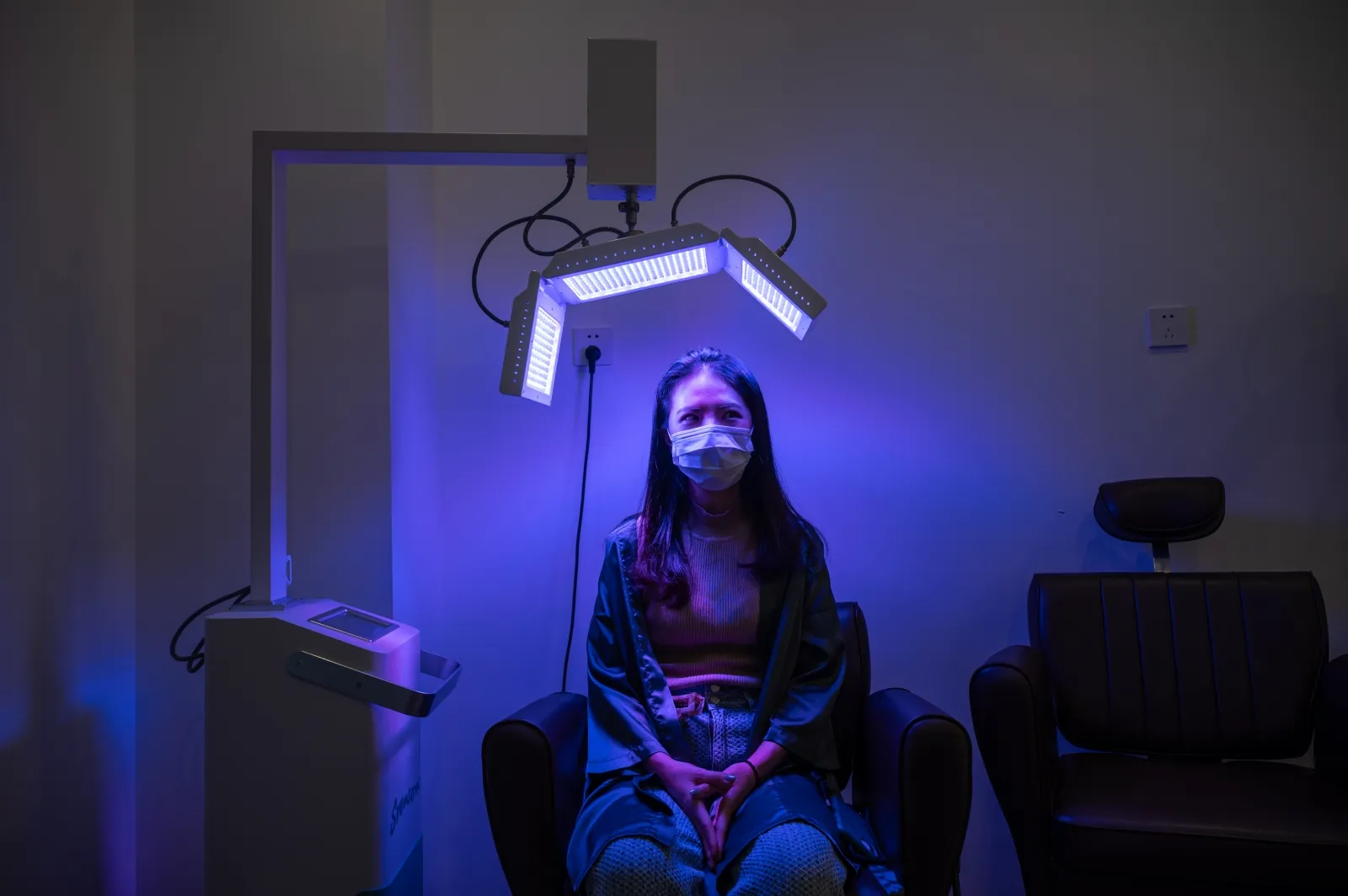
Source:Pei-Yin Hsieh
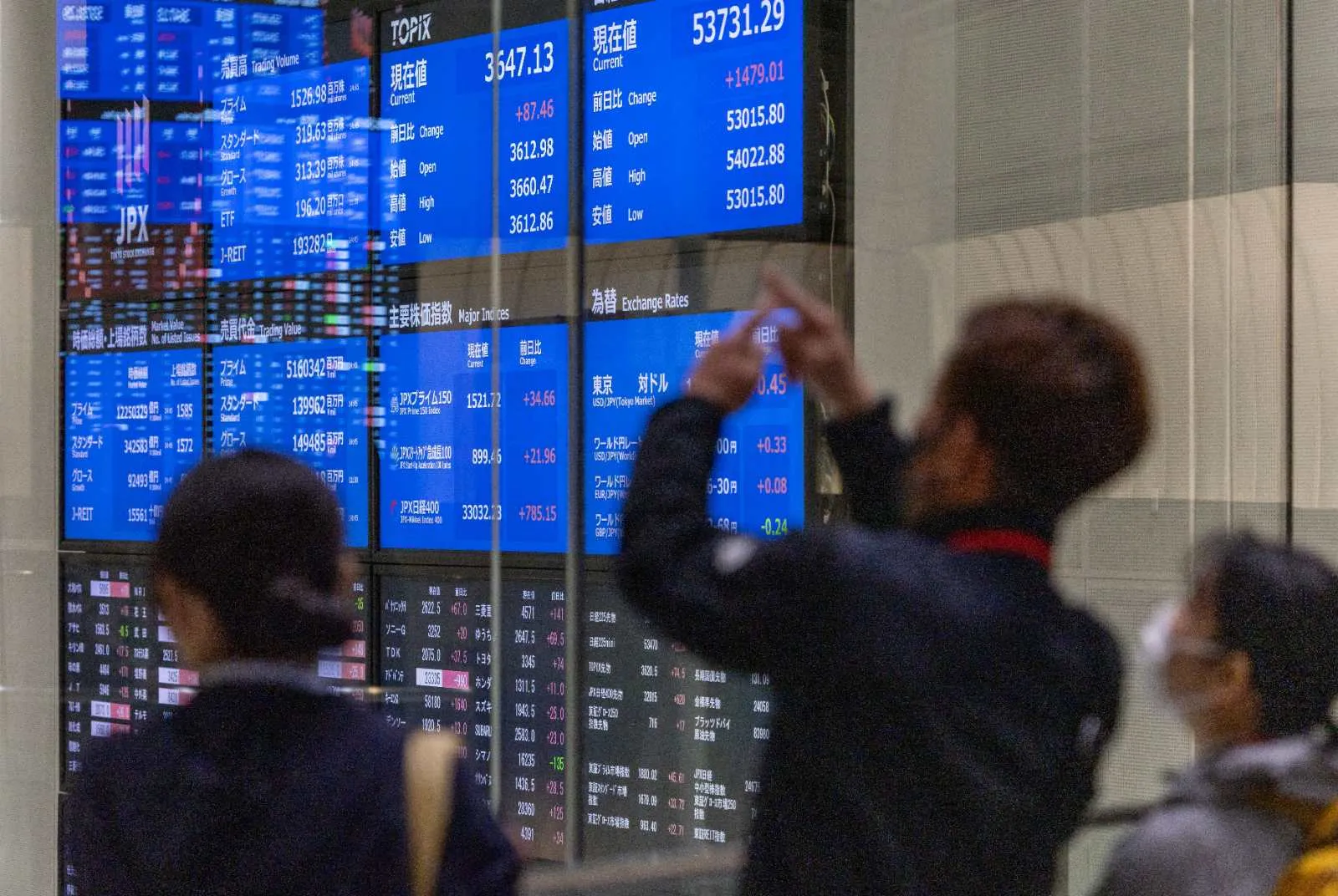
Within the increasingly connected 1-hour Greater Bay Area living circle, CommonWealth Magazine interviewed four sets of cross-border commuters on-site.
Views
Two-Way Pursuit in Greater Bay Area
By SylviaFrom CommonWealth Magazine (vol. 802 )
The 2019 anti-extradition bill protests, followed by Beijing's imposition of the sweeping national security law, led to Hong Kong's largest population decline since the 1997 handover - a sudden drop of 100,000 people in just one year.
After the COVID-19 pandemic, Hong Kong's population has gradually rebounded, but the "Hong Kongers" are now strikingly different. While the number of foreign nationals applying for work visas has returned to pre-protest levels, the number of applicants from mainland China has exploded, increasing fivefold.
The long-touted Greater Bay Area integration has now accelerated, coalescing into a "1-hour living circle". For those who remain in Hong Kong, practical considerations and the need for respite have become paramount; for the new arrivals, the relative freedoms and rule of law are worth cherishing with care.
At the Hong Kong-Shenzhen border checkpoints, CommonWealth Magazine documented four sets of northbound and southbound commuters, who represent the evolving new face of Hong Kong.
Early on a weekday morning, the traffic is already bustling between Hong Kong and the adjoining mainland Chinese city of Shenzhen.
This scene is the realization of the "Guangdong-Hong Kong-Macau Greater Bay Area" plan, which Chinese President Xi Jinping had grandly unveiled back in 2015.
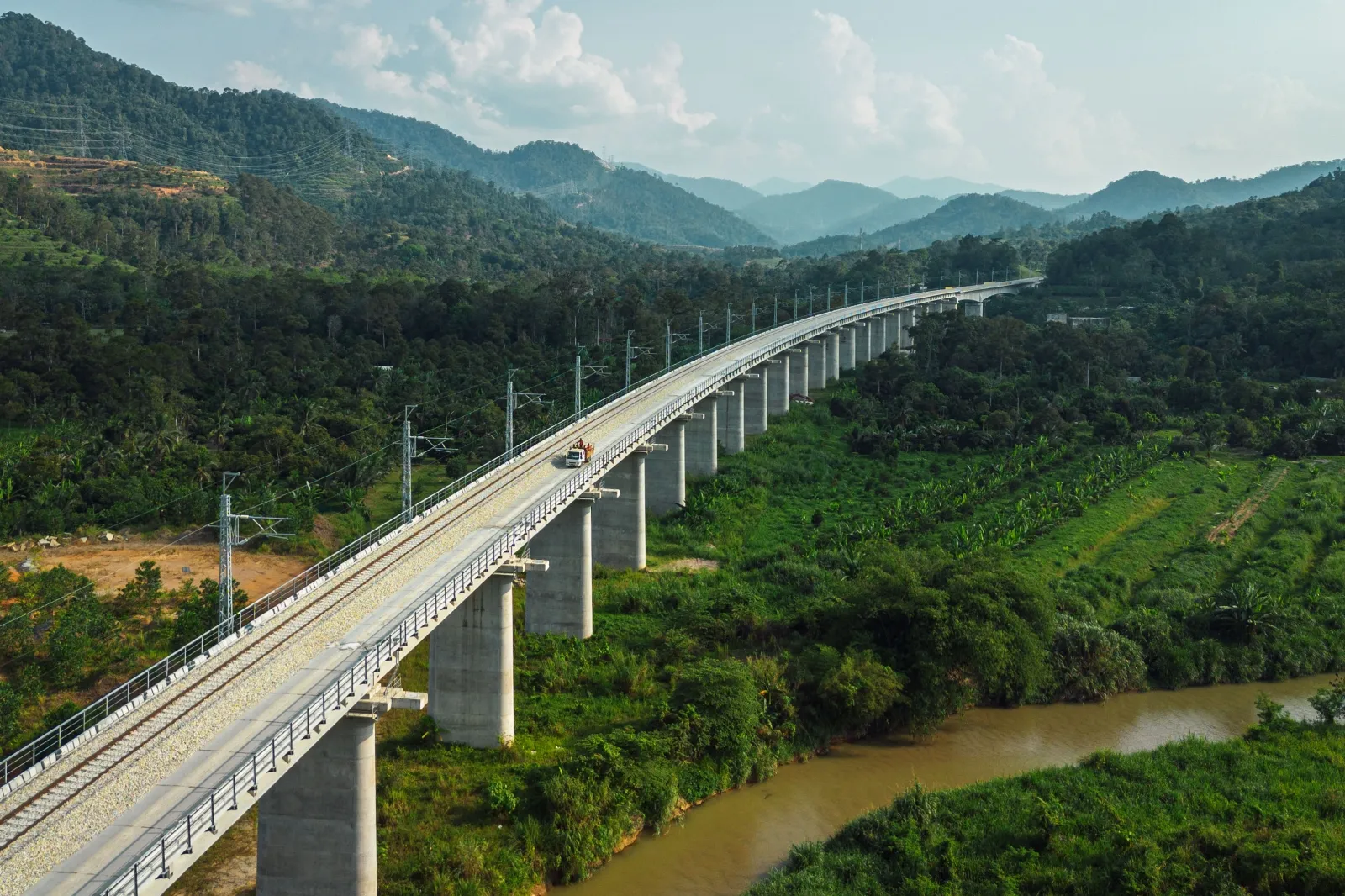
The newly constructed Guangzhou-Shenzhen-Hong Kong High-Speed Rail and the Hong Kong-Zhuhai-Macau Bridge have become the vital circulatory systems linking this dynamic region. A 14-minute high-speed rail ride, or a 50-minute train journey to Shenzhen have fundamentally transformed the character of Hong Kong.
Consumers Heading North: Finding Joy for Those Left Behind
Jia Xin, 25-year-old Hong Kong resident, met up with her aunt at an MTR East Rail Line station on a recent Saturday morning. Carrying backpacks to stock up on supplies and smartphones to bypass internet censorship, they made their way from Hong Kong's northern Lok Ma Chau to the Futian checkpoint in Shenzhen.
According to the Hong Kong Immigration Department, around 400,000 Hong Kong residents crossed the border that day — a trend that has continued to rise since pandemic restrictions were lifted last year.
Just a decade ago, the situation was reversed, with Hong Kongers complaining about mainland Chinese coming to their city to buy essentials like baby formula. But after the pandemic, with the renminbi's depreciation and associated deflation, weekend shopping trips northbound have become more economical for Hong Kong residents.
But it's not just about saving money. "It's like going on vacation, there's a lot of fun," Jia Xin said. "I thought the mainland was backward and unsanitary, but that's not the case anymore."
Jia Xin and her aunt first had lunch at a Japanese restaurant near the Hongshan station of Shenzhen Metro, where the chatter was dominated by Cantonese-speaking Hong Kong customers. They ordered the chef's specials — charcoal-grilled chicken, live-slaughtered eel, and sea urchin — for just over 300 yuan. In Hong Kong, a similar meal would have cost two to three times as much.
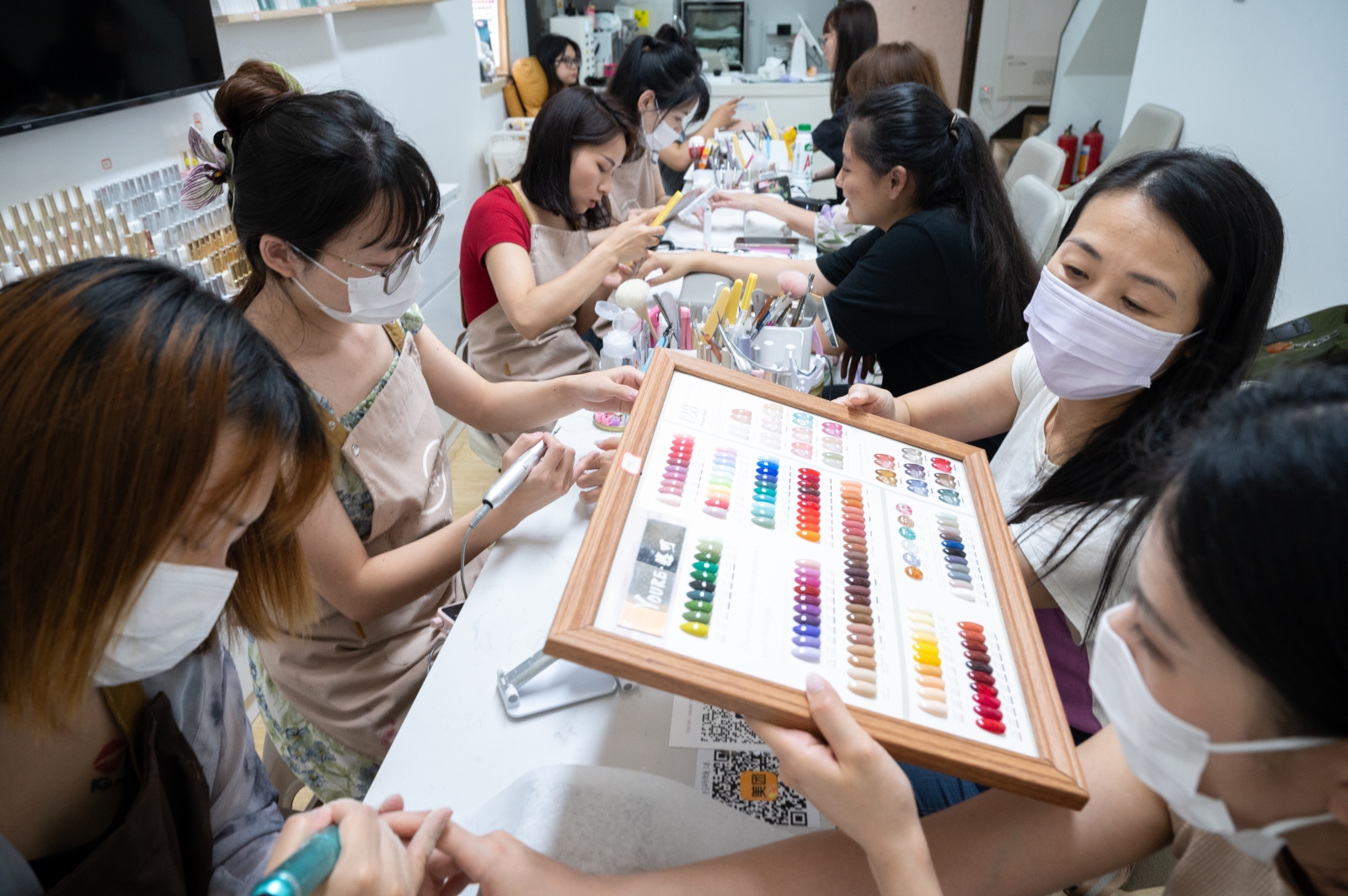 Phototherapy nails only cost 47 RMB in Shenzhen, while in Hong Kong it often costs more than 200 HKD. (Photo: Pei-Yin Hsieh)
After a hearty meal, the aunt and niece proceeded to nail salons and hair treatment shops in the Longhua district. Getting a gel manicure costs only 47 yuan, compared to over 200 Hong Kong dollars in Hong Kong.
"The shops in Hong Kong are very small and cramped, and the staff are always in a rush, often making me bend my hands and feet at the same time," Jia Xin observed. "In Shenzhen, all the spaces are much more spacious, and the service is also better."
The main event of the day was a supermarket shopping spree. At a store specializing in Russian goods as well as Alibaba's Hema Fresh, they bustled about, filling their baskets with fruits, snacks, and daily necessities that cost less than half the Hong Kong prices.
 Weekend trips to Shenzhen have become a daily routine for Hong Kong people. The picture shows a Russian supermarket recommended by Xiaohongshu. (Photo: Pei-Yin Hsieh)
At the Hema Fresh entrance, salesman Ren Xue noted, "I'd estimate that around 40% of our customers on weekends are from Hong Kong." To facilitate easier access for Hong Kong residents, major Shenzhen supermarkets have even begun offering "direct bus" services connecting multiple Hong Kong stations to their stores.
As the day drew to a close, their final stop was the magnificent Shenzhen Library and the adjacent Reading Mi, a Japanese Tsutaya-inspired bookstore. Their brief excursion had been packed with diverse experiences - from dining and beauty to household goods and cultural attractions. Fully immersed, the group rode the metro back to Hong Kong feeling enriched and fulfilled.
"For those who remain in Hong Kong, they still need to find ways to be happy," Jia Xin reflected, alluding to the social unrest from a few years prior. "Those who couldn't accept the changes have emigrated, but for someone like me, I simply try to experience more of the positive aspects here (on the mainland)."
Entrepreneurs Heading North: Shenzhen's Energy Outshines Hong Kong
Zhen Jing, software startup founder, crossed the border from Hong Kong's Lo Wu MTR station and boarded a bus dispatched by state-owned China Resources Group on a typical workday. His destination was the Digital Technology Park in Shenzhen.
Zhen Jing was among over 20 new startup founders from Hong Kong's Cyberport incubation center on this bus ride.
Their first stop was Yuejiang Technology, where the group was treated to a demonstration of AI robotic arms capable of writing and drawing. Graduated from a prominent U.S. tech university, Zhen Jing was amazed, "I just saw a demo of this functionality online last month, and now it's already here in Shenzhen — that's really fast!"
This visit was part of the Joint Accelerator program, launched by the China Resources Technology Research Institute and Cyberport last year. With China Resources as the major sponsor, the program targets Hong Kong's leading tech startups.
Under the Greater Bay Area plan, Cyberport has become a focus for cultivation on the mainland. Similarly, the Hong Kong Science Park opened a Shenzhen branch just last year. Furthermore, an increasing number of young Hong Kong entrepreneurs are heading north to start their businesses, with 228 Hong Kong companies setting up shop at the Youth Dream Factory in Qianhai, Shenzhen alone in the previous year.
When it comes to utilizing mainland China's financial resources, entrepreneurs must navigate a complex set of rule.
During the turbulent anti-extradition law protests in Hong Kong, Zhen-jing, dressed in black, inadvertently offended Mainland Chinese investors at a proposal event, leading them to refuse cooperation. Yet, this ambitious entrepreneur has gradually forged ahead over the past few years, and hopes to be selected for this accelerator program.
Zhen Jing revealed that in addition to the China Resources plan, he and his co-founder have made five trips to Shenzhen this year. Beyond the capital and market opportunities, the city also boasts a larger pool of young tech talent compared to Hong Kong.
What Zhen Jing finds most compelling is that "Shenzhen has more 'Bok Lik' than Hong Kong does" - the Cantonese term is akin to "energy." He is particularly optimistic about the AI and biotech industries, which have synergies with his software company. "The competitive environment is incredibly intense, but I feel I can thrive on the Mainland and succeed anywhere," he said with confidence.
The surge in cross-border industrial activities and consumer flows has sparked concerns on the Hong Kong side.
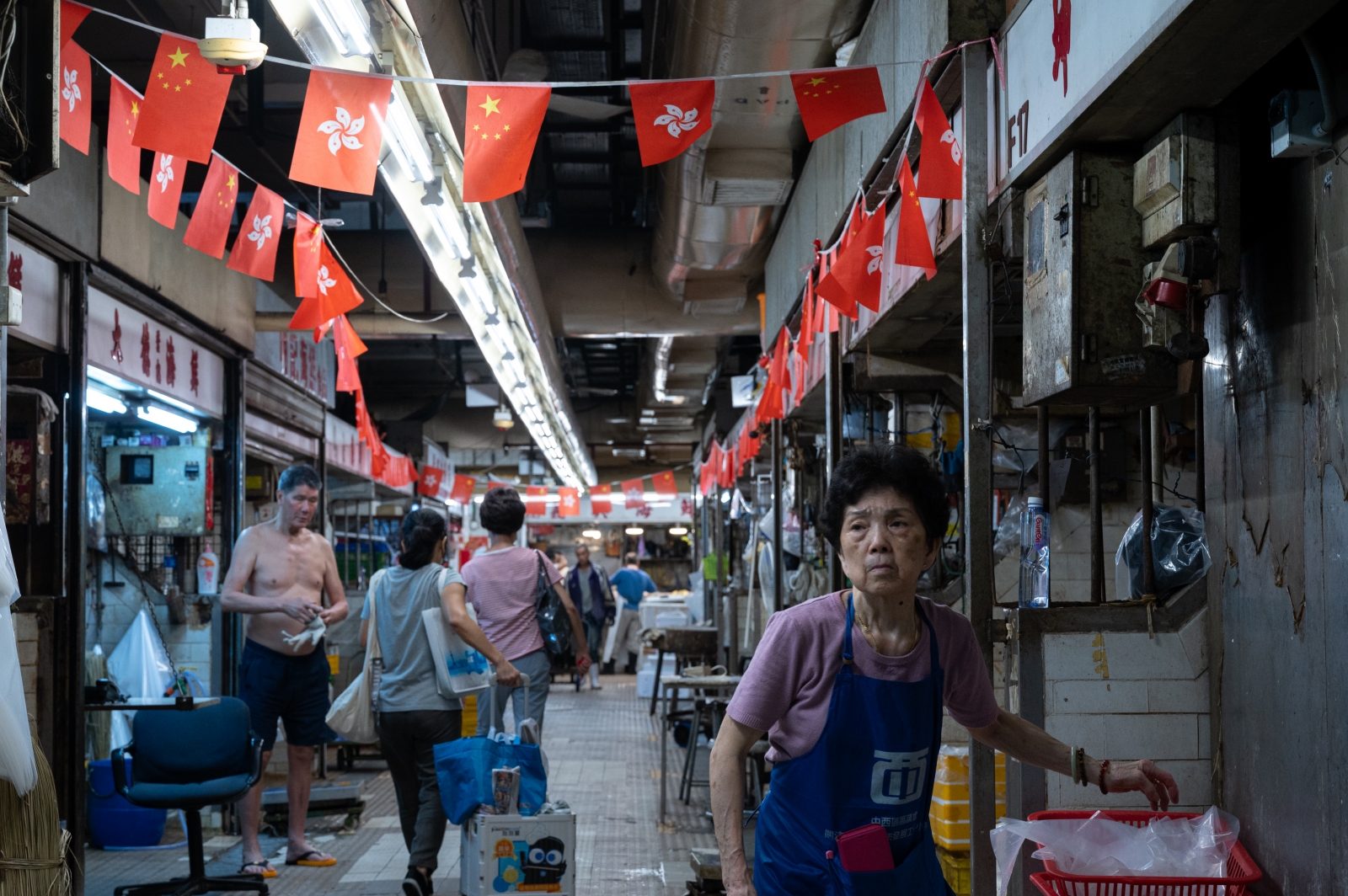 Business in Hong Kong's traditional markets is becoming increasingly deserted, as more Hong Kong people prefer to go north to buy cheaper fresh fruits and vegetables in Shenzhen supermarkets. (Photo: Pei-Yin Hsieh)
While consumption and investment trends northward are not entirely novel, the scale and pace have intensified. Prior to the pandemic, Hong Kong residents made 70 million trips annually to Shenzhen for shopping - already 1.5 times the mainland visitor count to Hong Kong. But in the post-COVID era, this ratio has further widened to 2.5 times, and since March this year, the monthly figures have exceeded 3 times.
Consequently, Hong Kong's first-quarter consumption growth rate managed only a meager 1%, while investment growth languished at a mere 0.1%.
Hong Kong legislator Hung Man had earlier voiced apprehension that if Hong Kong's scientific research capabilities increasingly migrate to Shenzhen, the city’s effort may be futile. Local Hong Kong businesses have also formed online communities opposing the northward consumption trend.
Yet these voices often find themselves drowned out by the surging cross-border tide.
Workers Heading South: Hong Kong's Rule of Law, No Involution or Burnout
A steady flow of workers commuting from the south comes alongside the northward migration.
Shi Han, insurance training instructor and resident of Futian, Shenzhen, must wake up at 6 AM, get ready, and take a taxi, high-speed rail, and metro to reach his workplace in Wan Chai, Hong Kong.
He takes the Huanggang Shuttle Bus back to Futian at 6 PM in the evening, then a taxi home. This Shenzhen-Hong Kong commute consumes 3-4 hours of his day and costs 170 RMB.
As a respite, Shi Han also spends one day a week staying in a Hong Kong hotel, at 500 HKD per night.
Shi Han's commuter life has been ongoing since the beginning of this year. "I take a lot of vitamins and supplements like B, C, E, and collagen, to maintain my energy for the commute," he says with a chuckle, but seems unfazed by the arduous routine.
The rigors of this cross-border commute allow him to enjoy a 15-square-meter modern luxury apartment in Shenzhen. A comparable unit in Hong Kong would cost at least 25,000 HKD in rent, around 100,000 TWD, while in Shenzhen it's only 31,000 TWD.
Mainland Chinese talents working in Hong Kong on various employment visas have filled the gaps left by departing foreign workers in recent years. Many, like Shi Han, have chosen the Shenzhen-Hong Kong commute, sharing their experiences on Chinese online forums.
In fact, Shi Han had been working in Shenzhen over the past five years, where he could simply walk to the office without the need to endure a grueling commute. However, he had been actively seeking to switch jobs and move to Hong Kong, openly admitting that "workplace culture" is the biggest driving force for this decision.
Shi Han cites several examples in frustration, explaining that in mainland China: personal connections are more important than work competence; the "involution" phenomenon is the norm, with work encroaching on personal life; class hierarchy prevails, making it impossible to communicate equally with supervisors; and professionalism is not respected, with employees often being arbitrarily assigned tasks outside their duty.
"The overtime culture, office politics, and mental exhaustion in Hong Kong are overall lower than in the mainland," Shi Han compares.
For financial and insurance industry professionals, another major pull factor is the rule of law in Hong Kong.
"The financial industry in the mainland has many gray areas, where if the company crosses the line, you can't speak up, and you have to go along with the flow," Shi Han shares his painful experience. In contrast, in Hong Kong, "there is Independent Commission Against Corruption that can address issues of corruption and non-compliant business practices."
In the composite portrait of people blending between Hong Kong and Shenzhen, the last vivid figure is the mainland Chinese student studying in Hong Kong.
Students Heading South: Degrees Open Doors, Freedom Without Firewalls
Xue En, a graduate student from Guizhou, China, is currently pursuing a Master's degree in Business Analytics at the Chinese University of Hong Kong. To balance economic considerations, she has also chosen the Hong Kong-Shenzhen commute, crossing the border from Lo Wu four days a week to attend classes in Hong Kong via the East Rail Line.
Xue En previously studied at a university in Shenzhen, which was part of the first batch to benefit from the Greater Bay Area policy. The Chinese University of Hong Kong established a campus in Shenzhen in 2016, which is now one of the most competitive universities in Guangdong Province.
Despite the prestige of her undergraduate institution, Xue En lost confidence when she graduated last year. "Seeing news reports saying employment is getting more and more difficult, I suddenly felt anxious, and wanted to pursue a Master's degree first," she illustrates.
While she had considered studying in Europe or the United States, Xue En ultimately chose the Chinese University of Hong Kong. This decision was influenced by the university's Western academic system and English-medium instruction, as well as the cultural and culinary similarities to mainland China.
Aother crucial factor in Xue En's decision was the importance that Chinese companies place on the QS World University Rankings during the recruitment process. Aspiring to join a top internet company, Xue En rejected an offer from King’s College London in favor of the higher-ranked Chinese University of Hong Kong.
Xue En's experience reflects a broader trend. Data from the University Grants Committee shows that the growth rate of mainland Chinese students studying in Hong Kong has accelerated in the past five years, as many share similar motivations and considerations.
During her one-year cross-border study experience, Xue En feels she has gained substantial academic benefits. Furthermore, the diverse aspects of Hong Kong's everyday life, from avant-garde art exhibitions to the pedestrian crossing sound cues for the visually impaired, have deeply resonated with her.
In particular, Xue En cherishes the ability to access Korean celebrity content on YouTube channels in Hong Kong, as well as the privileges of her one-year Hong Kong resident status, which allows her to travel to Taiwan and other countries.
Recalling the Hong Kong protests in 2019, Xue En remembers being sternly warned by her parents and teachers: as a mainland Chinese, her identity was considered sensitive, and had better not step into Hong Kong.
Nowadays, although she still occasionally hears of mainland Chinese students being treated with indifference, she shares, "I no longer feel any sense of discrimination or division in Hong Kong."
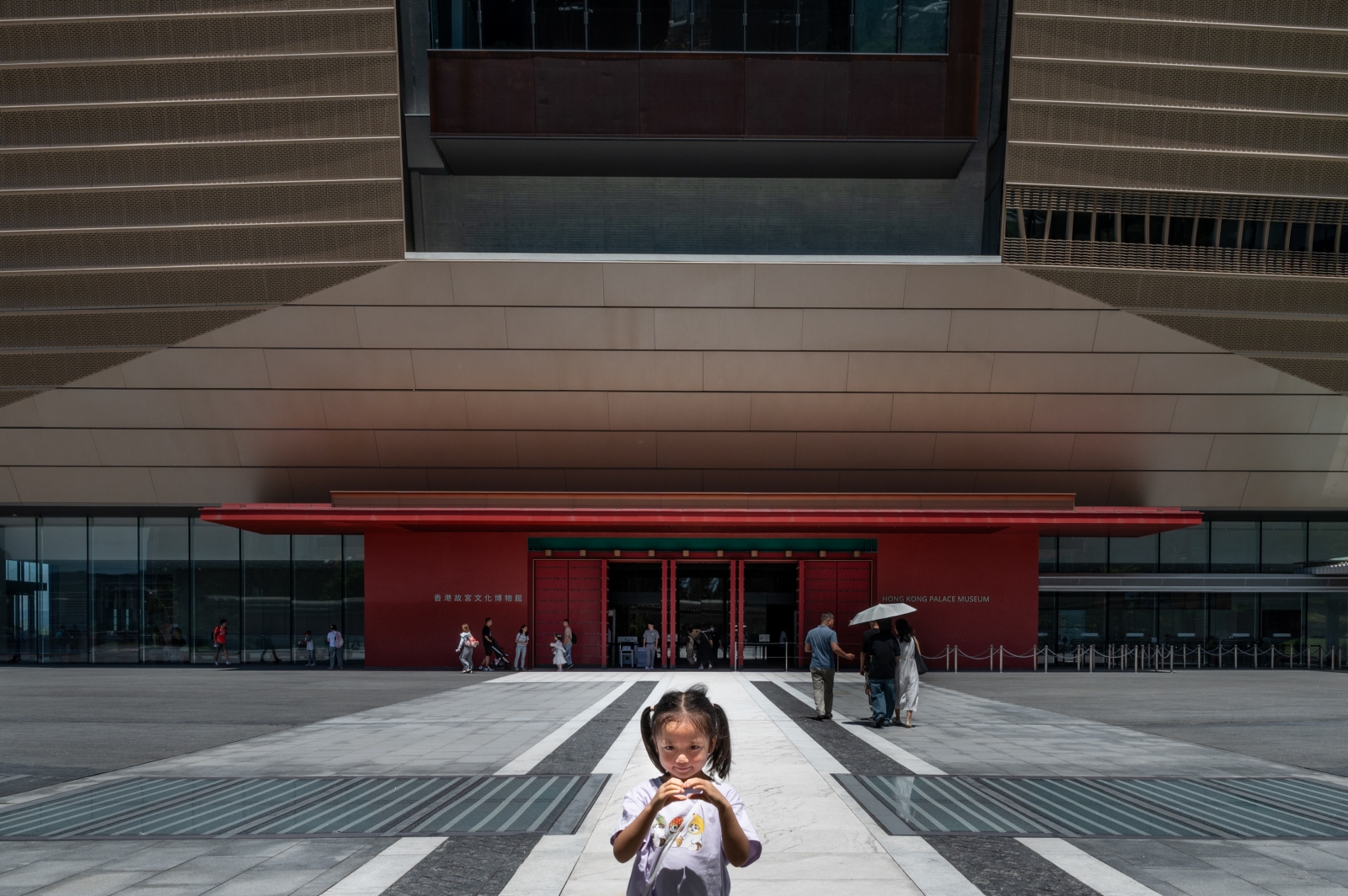 The Hong Kong Palace Museum Cultural Museum, to be completed in 2022, displays more than 900 cultural relics from the Palace Museum in Beijing and has become a new landmark in West Kowloon, Hong Kong. (Photo: Pei-Yin Hsieh)
Living near the Shenzhen-Hong Kong border and regarding herself as a witness to the exchanges between the two places, Xue En has observed that since her enrollment in September last year, the border crossing has become bustling. She notes, "The commuters like me who queue up to cross the border are growing every day!"
The cross-border commuters, including President Xi Jinping.
During his most recent trip to the city in 2022, Xi adopted the "live in Shenzhen, visit Hong Kong" model, a move interpreted by many as politically significant.
The popular Chinese phrase "Two Way Pursiut" aptly captures the future outlook for Hong Kong, Shenzhen, and other Greater Bay Area cities as they grow ever closer.
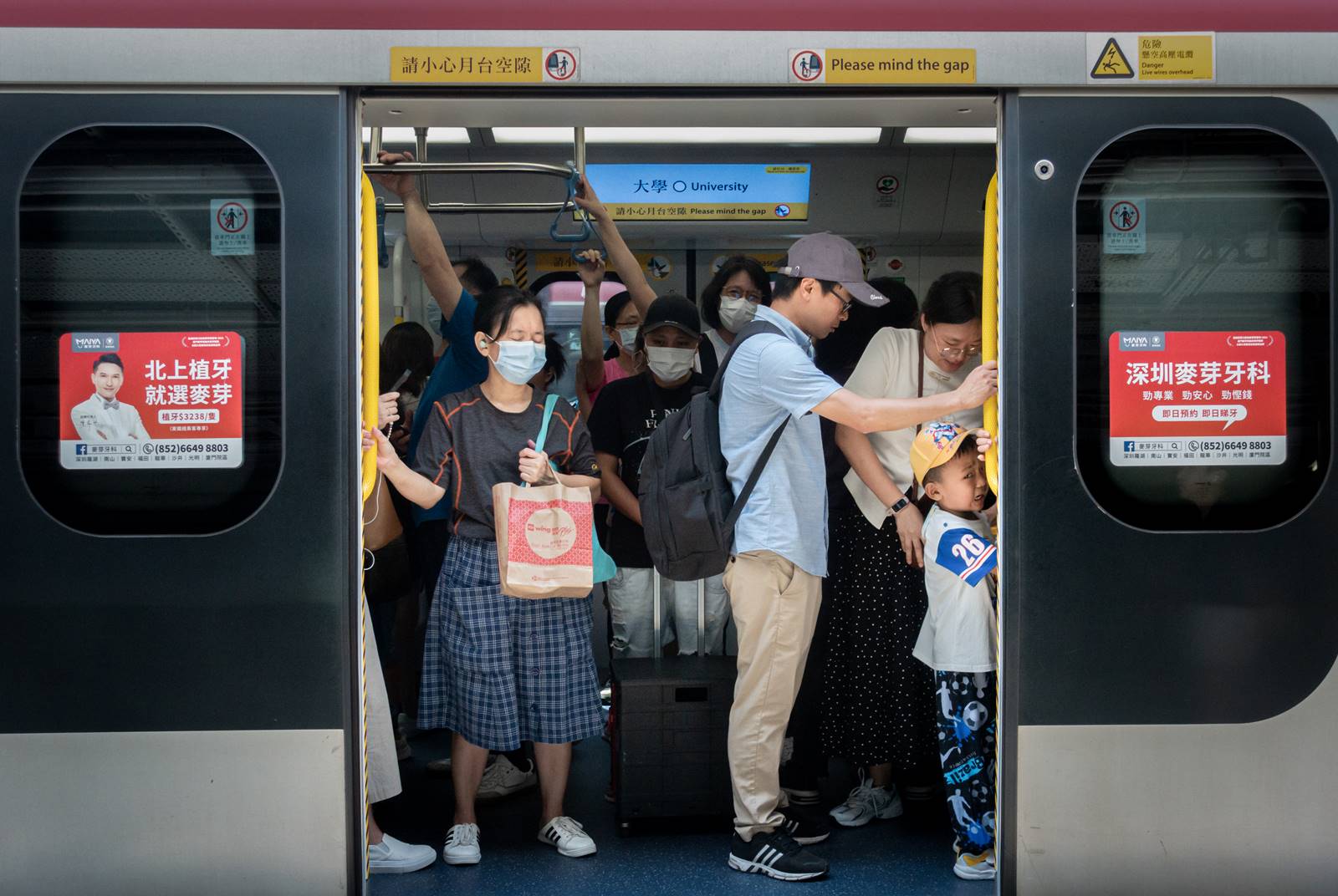 One after another Shenzhen consumer advertisements attract Hong Kong people to go north, which is a daily routine in the carriages of the MTR East Rail Line. (Photo: Pei-Yin Hsieh)
Just last June, the new Shenzhen-Zhongshan Channel transportation hub slashed the travel time between the two cities from two hours to just 30 minutes, effectively linking Hong Kong directly to Zhongshan. More such connectivity projects are in the works, forging stronger physical ties between the coast and inland regions.
In the aftermath of the 2019 anti-extradition protests, the number of Hong Kong residents applying for immigration to the UK, Canada, Taiwan, and Australia totals around 240,000. To these diasporas, a Hong Kong that is becoming more fused into mainland China and the anti-US camp will, in the opposite direction, move further and further away.
Have you read?
- What Is the New Path for "China's Hong Kong"?
- How can China maintain 5% GDP growth with 'new productive forces'?
Listen to Taiwanology Podcast on Hong Kong
Uploaded by Ian Huang
Views

Subscribe to CWE Newsletter (every Thursday)
Stay abreast of what's happening in Taiwan with our weekly digest.
Keywords: