Beyond the Trade War: France’s Envoy to Taiwan on Europe’s Strategic Reset
Source:Pei-Yin Hsieh
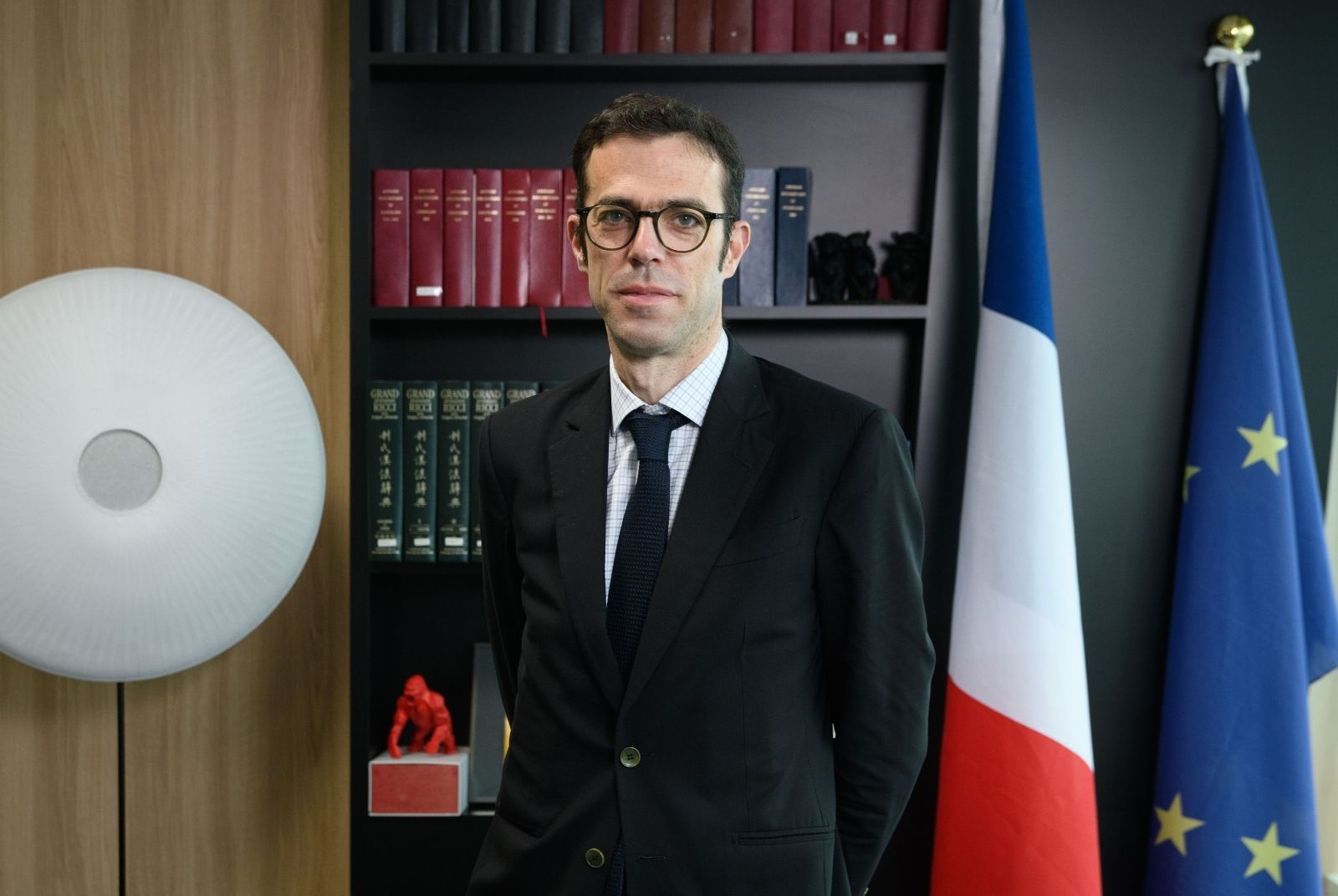
As America becomes a less predictable ally, how should Europe respond? Franck Paris, French Representative to Taiwan and former diplomatic advisor to the French President, shares how the Trump era is reshaping European strategy—and why Taiwan remains a key partner in the shifting global landscape.
Views
Beyond the Trade War: France’s Envoy to Taiwan on Europe’s Strategic Reset
By David Shenweb only
As the U.S. and China escalate their trade war, France—one of the EU’s leading powers—is reassessing the global landscape. In an exclusive interview with CommonWealth Magazine, Franck Paris, France’s Representative to Taiwan, shares his insights on how the EU is responding to this new world order.
Having served for years as a diplomatic advisor to President Emmanuel Macron and maintaining a close relationship with him, Paris emphasizes that the EU remains firmly committed to multilateralism despite the shifting geopolitical winds.
He also cautions that evolving transatlantic relations do not necessarily mean improved ties between Europe and China; for the EU, building a fair and reciprocal trade relationship with Beijing remains the top priority.
Below is a summary of the interview.
Europe’s Cautious Response to Trump’s Tariffs
From the European perspective, it’s still too early to assess the consequences of the new U.S. tariffs. There’s a great deal of uncertainty about what they really mean—whether these are part of tough negotiations, a temporary move to gain leverage, or a long-term effort to rebalance trade exchanges. No one can give a definitive answer yet.
What is clear, though, is that the impact of the Trump administration on Europe goes well beyond tariffs.
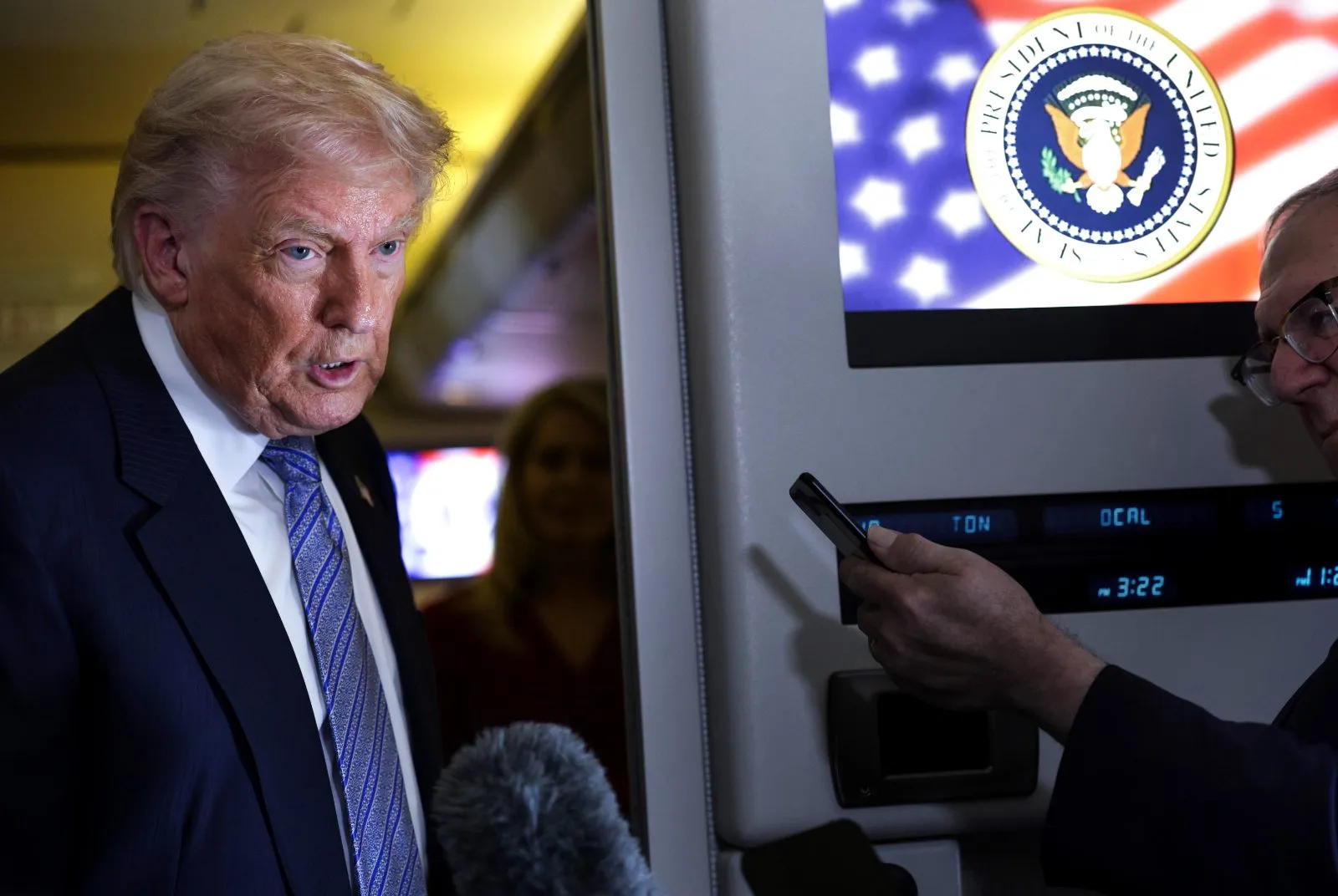
Since taking office, Trump has sent a series of signals that have reshaped the way Europe thinks about its place in the world. These messages are not entirely new—they were already voiced during the first Trump administration, and even under the Biden administration, though in different terms.
The main message has been this: the U.S. is focusing more on domestic issues, and Europe must take greater responsibility for its own security. That message has been received. We’ve seen, for example, Germany now seriously considering raising its defense budget. More broadly, across Europe, there’s been a significant political shift toward managing our own security and being more autonomous. That trend will continue, regardless of how the tariff issue evolves.
This broader context matters. The European response to the U.S. tariffs has been firm and, I would say, responsible. We have implemented targeted countermeasures—focused primarily on specific products, such as some U.S. food exports. These measures were carefully calibrated and limited in scope. They were designed to send a signal: we are capable of responding. But we made sure to do so in a way that avoids escalation and preserves space for dialogue and negotiation. I believe that’s a sound and balanced approach.
At the same time, we remain deeply committed to multilateralism. For France and for the EU, there’s really no alternative. Without multilateralism, we are left with power struggles—disorder and instability. Multilateralism is essential for peace and security. That belief is central to French foreign policy and to our longstanding support for European integration.
COVID-19 and Europe’s Supply Chain Awakening
The COVID-19 pandemic, more than any single trade policy, was the turning point in how we think about economic security. It exposed vulnerabilities in our supply chains and forced us to rethink our dependencies.
Since then, the EU has been working to secure certain key capabilities within Europe. We realized we were too dependent on other parts of the world for essential supplies. As a result, we’ve made real progress in strengthening our resilience.
Taiwan’s Role in a Dual Strategy
But resilience also means building strong, long-term partnerships. The U.S. remains one of our key partners—and so does Taiwan. The pandemic revealed just how critical Taiwan is in global supply chains, particularly in semiconductors. Taiwan is also a key partner in artificial intelligence. In fact, Taiwan is close to holding a monopoly in AI server production, which positions it at the heart of this new economy.
Since COVID, we’ve been pursuing a dual strategy: developing essential capabilities within Europe, and partnering with trusted allies for capabilities we cannot build alone. That’s where Taiwan fits in.
Our Indo-Pacific strategy also reflects this shift. President Macron has defined three key regions for French foreign policy: Europe, Africa, and the Indo-Pacific. In this third region, we are pursuing a global strategy, one that includes deepening our partnership with India and promoting sustainable development. More than economics, this is about geopolitics and about defending international law.
We want the Indo-Pacific to become a region that actively supports peace and stability.
Within the EU, this regional focus is mirrored—but of course, the EU also has its own political vision. France plays a leading role, but other member states contribute to shaping that vision.
Right now, the strategic focus for the EU is Ukraine. Russia’s aggression is not just a threat to security—it’s an existential challenge for Europe. The outcome of that war will shape the future of our continent and of global geopolitics.
We’re now having very concrete discussions about how to ensure Ukraine’s long-term security, including military commitments. And notably, these discussions include the UK. Since Brexit, we’ve seen a renewed intensity in UK-EU dialogue on security. In fact, I would say the UK has never been more integrated into European security conversations than it is now. That’s a very strategic development.
EU-China Trade Talks: Fairness Above All
On the topic of China, we continue our dialogue. We want a fair economic relationship—one that ensures a level playing field. This is particularly relevant in areas like electric vehicles, which are strategically important for Europe’s industrial future. A great deal of investment is now flowing into Europe’s EV and battery industries, including from Taiwan. To make these investments viable, we need fair competition.
We have not yet reached any major breakthrough with China. And I don’t believe the U.S.-China trade war will have any direct impact on our EU-China discussions. As for the EU-China Comprehensive Agreement on Investment, which was concluded in 2020 but never ratified—there are a number of reasons for that, including growing skepticism among the European public about large trade agreements. There’s also a stronger demand for fair trade conditions—not just with China, but with all partners. That sentiment is shaping the political landscape and makes ratification more difficult.
A Multipolar World and the Importance of Taiwan
Still, we remain committed to building partnerships. We are living in a multipolar world, and we need allies. That’s the only viable strategy for Europe.
In this context, Taiwan is an important partner—not just for economic reasons, but also for what it represents. Taiwan is a democratic society in a non-Western context. That matters. At a time when democracy is often portrayed as fragile or declining, Taiwan proves otherwise. It stands as an example of democratic success outside of Europe and North America.
I understand that Taiwan wants to maintain a strong relationship with the U.S.—that’s perfectly natural. On our side, we’re doing the same. But France and the EU are also working to expand global partnerships. And from what I’ve observed, Taiwan is doing that too. Taiwan’s outreach to Southeast Asia has been impressive, and its relationship with Europe has grown stronger in recent years. I’m confident that this trend will continue, even as attention temporarily focuses on the U.S.
The Defining Word for Europe: Unity
If I had to sum up Europe’s response to recent global crises in one word, it would be “unity.” I’ve never seen European countries so aligned in their understanding of the strategic context—whether it’s the war in Ukraine, tensions in the Taiwan Strait, or broader geopolitical shifts. The level of coordination, including with the UK, is unprecedented. That’s the big change we’re living through today.
Have you read?
- [Exclusive] Will the U.S. Fight for Taiwan? Stephen Wertheim Says There’s Another Way
- 24 Nautical Miles: Taiwan's Maritime Guardians on the Front Line
- Interview with AIT Director Raymond Greene: "We Expect Our Allies to Contribute"
Edited by Kwangyin Liu
Uploaded by Fiona Lin
Views

Subscribe to CWE Newsletter (every Thursday)
Stay abreast of what's happening in Taiwan with our weekly digest.
Keywords: