Amid the Rise of the Far Right, Japan’s Uneasy Dance with Immigration
Source:Shutterstock
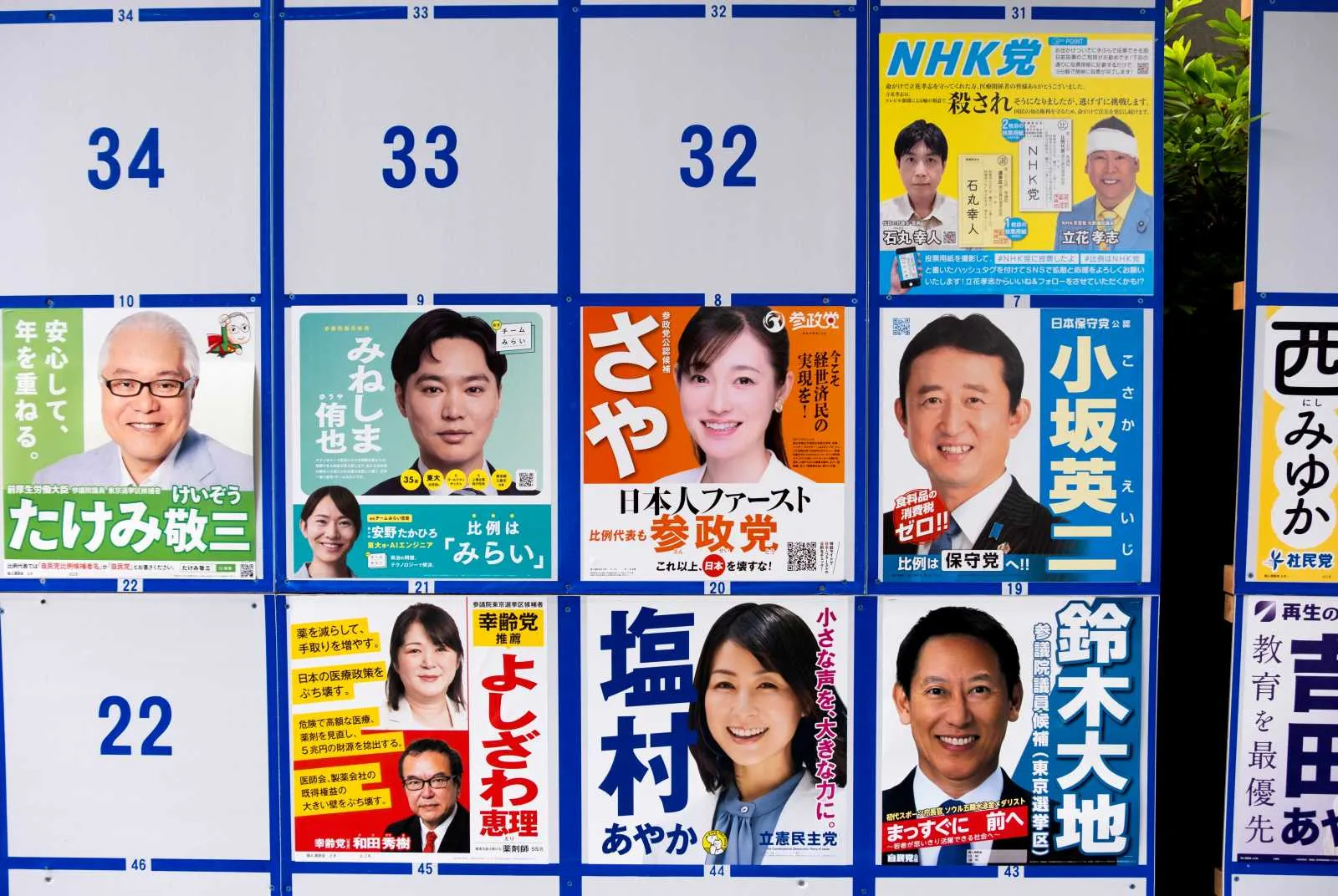
As Japan headed into its House of Councillors election, far-right slogans such as “Japan First” gained traction, exposing a contradiction in Japanese society: the economy needs foreign labor, but society remains uneasy about immigrants.
Views
Amid the Rise of the Far Right, Japan’s Uneasy Dance with Immigration
By Annie ZhangFrom CommonWealth Magazine (vol. 828 )
While chatting with a Chinese friend on a Tokyo train, I suddenly noticed a Japanese man across from us raising his middle finger at me. His unforgettable stare only added to the strange vibes I had been feeling in Japan recently and made me suspect that our foreign identity had triggered the hostility.
Later, when discussing the incident with University of Tokyo professor Tomoko Ako — an expert on China who once studied in Hong Kong — she shared a similar sense of feeling “a coldness in the air” around her when speaking Chinese with friends in public.
Record Number of Foreign Residents, Society Unprepared
At the end of 2024, the number of foreign residents in Japan hit a record 3.76 million, or roughly 3% of the population. While this is low compared to immigrant nations such as Australia (30%), Canada (23%), Sweden (20%), or the United States (16%) — it represents a major cultural and social shift for Japan, where societal order is built on unspoken rules and collective discipline.
Japan has never considered itself an immigrant nation. But with a rapidly aging society and plummeting birth rates, even this ethnically homogenous country can no longer ignore the question of immigration. The national population shrank by 898,000 people in 2023 alone — the sharpest decline since 1950.
Meanwhile, government debt has soared to 235% of GDP. Fewer people and more debt — what to do? Nearly every expert and policy paper points to the same answer: immigration.
China’s Migration Wave Meets Japan’s Walls
Having lived in Tokyo for the past six months while studying at the University of Tokyo, I have seen firsthand how Japan has become one of the top destinations for the latest wave of Chinese emigration, known online as the “run” (潤) movement.
Friends often ask me, “Why are so many Chinese moving to Japan?” The truth is, migrants do not have that many choices. They often end up in the places that are the easiest or the only places they can go. In an era of de-globalization, few countries are still loosening immigration rules, and Japan is one of them.
So immigrants are following a path of least resistance. Around 2020, the number of Chinese from all walks of life migrating to Japan increased rapidly. Entrepreneurs were hedging their assets in Japan while keeping one foot in the Chinese market. Students found that once they overcame the language barrier, Japan offered near-guaranteed employment. Middle-class families sought safety, education, and a better quality of life. For many Chinese, from the wealthy to blue-collar workers, Japan became the top choice for relocation.
However, China’s sensitive role in East Asian geopolitics, its growing military threats in the Taiwan Strait, and the snapping up of land and property by wealthy Chinese have hit raw nerves in Japanese society.
Invisible Walls: When Policy Meets Social Friction
Some Japanese have discovered, for example, that under-regulated land and natural resources — such as mountains, water, or remote islands — are being purchased by private foreign buyers.
Yet, many immigrants are finding that Japan may not be as welcoming as they thought. Some new immigrants, even those holding business manager visas that are intended for people who want to set up a company and do business in Japan, find they cannot open bank accounts at major institutions.
Renting apartments or storefronts is another uphill battle. The real estate market has started to split into two spheres: one for Japanese landlords and tenants, and another for foreigners.
From an economic standpoint, opening the door to immigration may be a necessity for Japan’s survival. But culturally, socially, and institutionally, Japan is not yet ready to absorb large-scale immigration, and geopolitical tensions in East Asia are only fueling further suspicion.
As a result, immigrants, drawn by policies and opportunity, find themselves excluded from Japan’s tight-knit networks of trust and subjected to growing social pressure.
The latest election results underscored this contradiction. The far-right Sanseito Party, which pushed a “Japan First” narrative, was the big winner, seizing a record 14 seats in the Upper House (to increase its total to 15) and nearly 16 percent of the vote (the second highest of any party) in constituency races. With their votes, the Japanese electorate sent a clear message — not just to the government, but to immigrants as well.
Have you read?
- Japan Prepares for a Taiwan Crisis with Offshore Isle Evacuation Plan
- A New Reality Emerges from Taiwan's Largest Defense Drill
- Taiwan Tightens Security on Chinese Ships, Offshore Wind Also Hit
Edited by Luke Sabatier
Uploaded by Ian Huang
Views

Subscribe to CWE Newsletter (every Thursday)
Stay abreast of what's happening in Taiwan with our weekly digest.
Keywords: