Climate Adaptation and AI Collaboration in Taiwan
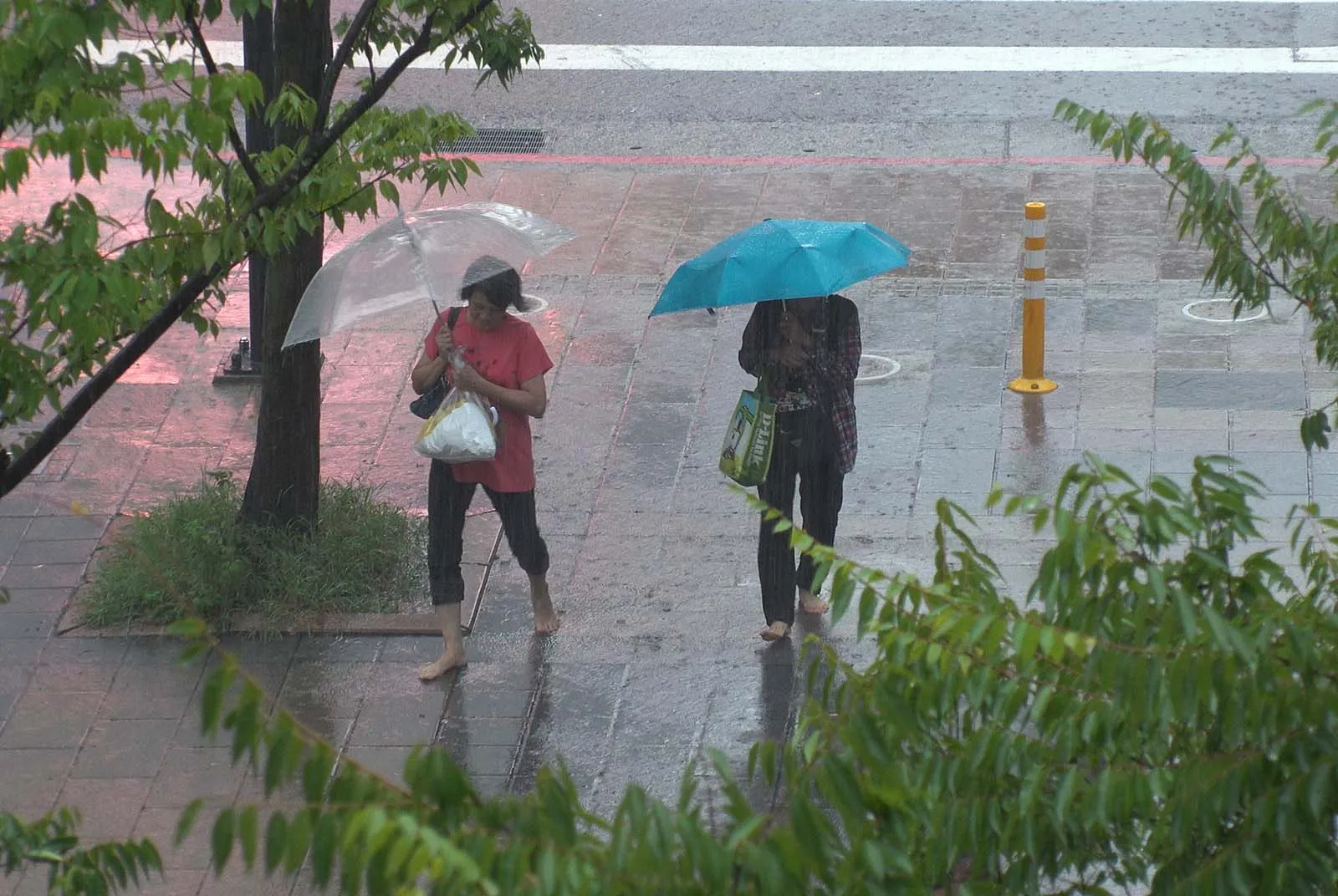
Source:Shutterstock
As the world moves beyond the 1.5°C climate target, traditional forecasting struggles to keep pace with unpredictable storms. Taiwan, long shaped by natural disasters, is turning to AI to bridge the gap. Can this tech-human partnership become the future of climate adaptation?
Views
Climate Adaptation and AI Collaboration in Taiwan
By Gita T.web only
Recent climate model updates now indicate what many analysts hinted at years ago: the 1.5°C target is, for all practical purposes, gone. Governments repeated that number like a mantra, but new projections show that even if every country somehow completes its remaining SDG commitments, the world simply isn’t on that path anymore. Climate stewardship is collective, and the collective effort wasn’t enough.
The world is now drifting toward 2°C to 3°C and this shift is not a minor technical adjustment. It means new meteorological patterns, more extreme events, and greater unpredictability, especially for Asia, the most disaster-prone region on earth. Water-related hazards and heatwaves already hit Asia the hardest, and a less stable climate only intensifies every point of vulnerability.
As the climate moves beyond 1.5°C, the foundations of modern forecasting are starting to crack. Most typhoon models still rely on historical patterns from a cooler world, but those patterns no longer hold. Rapid intensification events are becoming more common, storm tracks are drifting, and seasonal behavior is shifting in ways the old baselines cannot anticipate. The gap between what models predict and what storms actually do has widened noticeably over the past decade—and that gap will only grow in a 2°C or 3°C climate.
In this environment, forecasting is no longer about getting every detail right in advance—it is about recognizing, quickly, when reality begins to diverge from the model. This is where a hybrid system becomes essential. AI can scan enormous datasets, compare storms across decades, and flag deviations from old 1.5°C patterns in real time. Human meteorologists bring the judgment needed to interpret those deviations, discard false signals, and translate them into meaningful, city-level guidance. Neither can do the full job alone, but together, they can react fast enough to keep surprises from becoming disasters.
Taiwan understands climate anxiety. Earthquakes, typhoons, and rapid shifts in weather have long shaped public expectations. Warmer oceans and unstable pressure systems now mean storms that intensify more quickly or behave less predictably. But Taiwan also has a quiet strength: a culture of preparedness, built over generations of dealing with nature at its loudest.
Taiwan’s forecasting system is strong, but it was built for a world with more stable patterns.
Traditional models assume storms will behave according to the past 40 years of typhoon behavior, yet the last decade has already broken those assumptions. Rapid intensification is happening closer to land, rainfall volumes have become harder to bracket, and storms are appearing outside their usual season. Typhoon Fung-Wong, arriving well outside the usual typhoon season and intensifying quickly before being downgraded, underscored how far reality has drifted from historical baselines.
The response was efficient: early evacuations, activated shelters, and coordinated action across agencies. But Fung-Wong’s timing and trajectory also revealed the limits of a forecasting architecture built for a more predictable climate. Preparedness helps Taiwan respond; what it now needs is a system designed to detect when storms stop behaving like storms used to.
One of Taiwan’s cultural advantages is its ease with technology. The balance between tradition and modernity is simply part of daily life. A population that treats technology as a practical tool, rather than something to fear, naturally enables more ambitious adaptation.
This mindset is already visible in small-scale projects. At the recent SDG expo, one exhibitor displayed a looping demo showing how AI could coordinate citywide traffic by optimizing routes, adjusting signals in real time, and mapping congestion as it happens. If AI can help manage something as chaotic and reactive as urban traffic, it is not difficult to imagine similar systems assisting meteorological warnings.
Taiwan has also begun adopting AI for marine and coastal hazards, such as predicting dangerous waves. These targeted projects are promising, but their scope is narrow. They address single hazards, rely on localized datasets, and operate independently from city-level or national disaster-response systems. They are not designed to track how typhoons behave under 2°C or 3°C warming, or compare new storm behavior with older 1.5°C models. In other words, Taiwan has several useful pilots, but not yet a unified climate-adaptation architecture. What comes next is connecting these individual tools into a coordinated warning network, where AI flags emerging deviations and human experts guide the response.
With enough comparative data from recent decades, AI could detect where typhoons are shifting course, intensifying faster, or stalling longer than expected. Experts would then determine how those deviations should inform evacuation timing, flood preparation, or local alerts. Taiwan’s scale makes this energy-efficient and logistically feasible, allowing sophisticated models without the overwhelming computational burden faced by larger countries.
Taiwan has the culture, capacity, and coordination needed to adapt quickly—it has proved that many times. Speed alone is no longer enough; Taiwan also needs a system that can interpret a shifting climate in real time. But the climate it trained for is not the climate it faces now. A unified early-warning system, where AI detects emerging climate divergence and meteorologists guide the response across cities and the national center, is not a luxury upgrade. It is the natural evolution of Taiwan’s existing strengths, and the tool it needs for the era we have already entered, not the one we hoped to remain in.
(This piece reflects the author's opinion, and does not represent the opinion of CommonWealth Magazine.)
CommonWealth Magazine welcomes op-ed submissions. Please send your article proposals to [email protected]
About the author:

Gita T. is a writer and researcher exploring how culture, ESG, and strategy intersect in East Asia. Her work examines how sustainability and heritage can translate into design, high-value cultural tourism, and preventive policies that feel both efficient and human—systems that care without waste.
Have you read?
- Taiwan’s Moment to Lead: Managing Overtourism with Agility
- Taipei on Foot: A Food Lover's Bib Gourmand Tour
- Jiufen at Night: Complete Guide to Evening Tours, Cafés, and Bars
Uploaded by Ian Huang
Views

Subscribe to CWE Newsletter (every Thursday)
Stay abreast of what's happening in Taiwan with our weekly digest.
Keywords: