
European Allies Decline To Join Hormuz Military Mission

Source:sana
March 17, 2026 -- Today’s top stories: European Allies Decline To Join Hormuz Military Mission, Lynas Moves Closer to Rare-Earth Supply Deal With Pentagon, and China’s Rising Energy Demand Reshapes Global Supply Routes.
Views
European Allies Decline To Join Hormuz Military Mission
By CommonWealth Magazineweb only
European countries decline participation in military operations in Strait of Hormuz
Several European countries have signaled they will not participate in military operations in the Strait of Hormuz, amid growing tensions in the region and calls by the United States to form a coalition to secure shipping through the strategic waterway.
Greece announced it would not join any military mission in the Strait, which has been largely closed following the escalation of the U.S.-Israeli war against Iran.
Spain also rejected involvement in military operations in the area.
Foreign Minister José Manuel Albares said the priority for European countries should be International efforts aimed at ending the war and preventing further escalation, rather than launching military missions in the Gulf.
Spanish Defense Minister Margarita Robles likewise dismissed a request by U.S. President Donald Trump for Allied countries to provide military support to secure navigation through the Strait, stressing that temporary security measures would not address the root cause of the crisis.
Trump has been pressuring U.S. allies to send military forces to get oil exports flowing through the Strait. Tanker traffic through the narrow sea route has plunged due to Iranian attacks, which have triggered the largest oil supply disruption in history, with crude prices surging about 40% since the war began.
Reference Sources
- france24 - Trump laments US allies' lack of 'enthusiasm' to help secure Strait of Hormuz
- sana - European countries decline participation in military operations in Strait of Hormuz
- cnbc - Trump signals coalition to force open Strait of Hormuz is not ready yet: 'Some are less than enthusiastic'
Rare-Earth Miner Lynas Advances Plans to Supply Pentagon

Australian Rare-Earth miner and refiner, Lynas Rare Earths Ltd., has signed a binding letter of intent to supply the US Department of Defense with Rare-Earth oxides over four years.
The arrangement is worth $96M and will cover heavy and light Rare-Earth products. The floor price for Neodymium-Praseodymium oxide will be $110 per kilogram.
Lynas is one of only two major Rare-Earth miners outside China, which holds a near monopoly over the supply chain.
It currently has a mine and processing plant in Western Australia and another facility in Malaysia.
The company has plans to develop a heavy Rare-Earth processing facility at Seadrift in Texas; however, there is "significant uncertainty" as to whether construction will go ahead.
The letter of intent sets out the framework for an agreement that would see Lynas supply the Department of Defense over four years, supporting the US's "national security and supply chain resilience objectives." The US government has moved in recent years to reduce its reliance on China for rare Earths and the technology they underpin.
Reference Sources
- bloomberg - Rare-Earth Miner Lynas Advances Plans to Supply Pentagon
- nikkei - Australia's Lynas closes in on rare earth supply deal with Pentagon
Rising Chinese energy demand reshapes global oil and gas supply routes
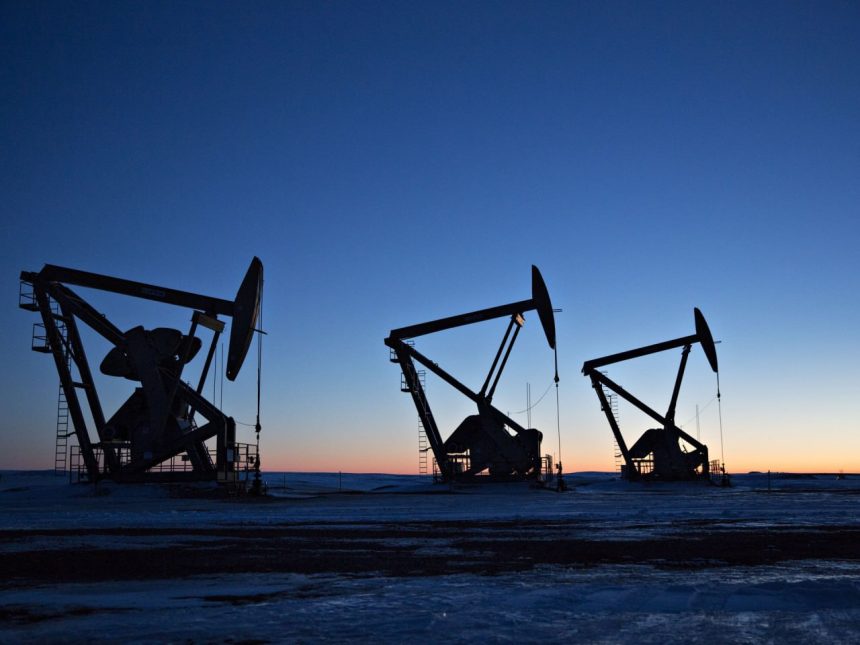
China's growing demand for energy is influencing global oil and gas supply routes as Beijing moves to diversify imports and reduce reliance on vulnerable Maritime Chokepoints amid rising geopolitical tensions.
China is the world's largest oil importer, consuming roughly 14-16 million barrels per day. At the same time, domestic production covers less than 30% of its needs. As a result, more than 70% of its oil demand is met by imports, making energy security a central strategic priority for Beijing. Security concerns in the Middle East, particularly risks to shipping through the Strait of Hormuz, a key corridor for global energy flows, have pushed China to strengthen energy partnerships with Russia and Central Asian countries while expanding Land-based supply networks.
Russia has become China's largest oil supplier in recent years, aided by discounted crude offered after Western sanctions on Moscow.
The two countries have also expanded cooperation through major infrastructure projects such as the Power of Siberia pipeline, which delivers Russian natural gas directly to China through overland routes that avoid Maritime risks.
Central Asia has also emerged as a key alternative energy corridor.
Turkmenistan, for example, supplies large volumes of natural gas to China through pipelines crossing Uzbekistan and Kazakhstan into China's Xinjiang region.
Reference Sources
The CommonWealth English daily news digest is a service curated by CommonWealth English team with the help of AI tools.
Views

Subscribe to CWE Newsletter (every Thursday)
Stay abreast of what's happening in Taiwan with our weekly digest.
Keywords: