Harmony or Autonomy? The KMT’s China Visit and the Search for Openings Across the Strait
Source:Kai-Cheng Chuang
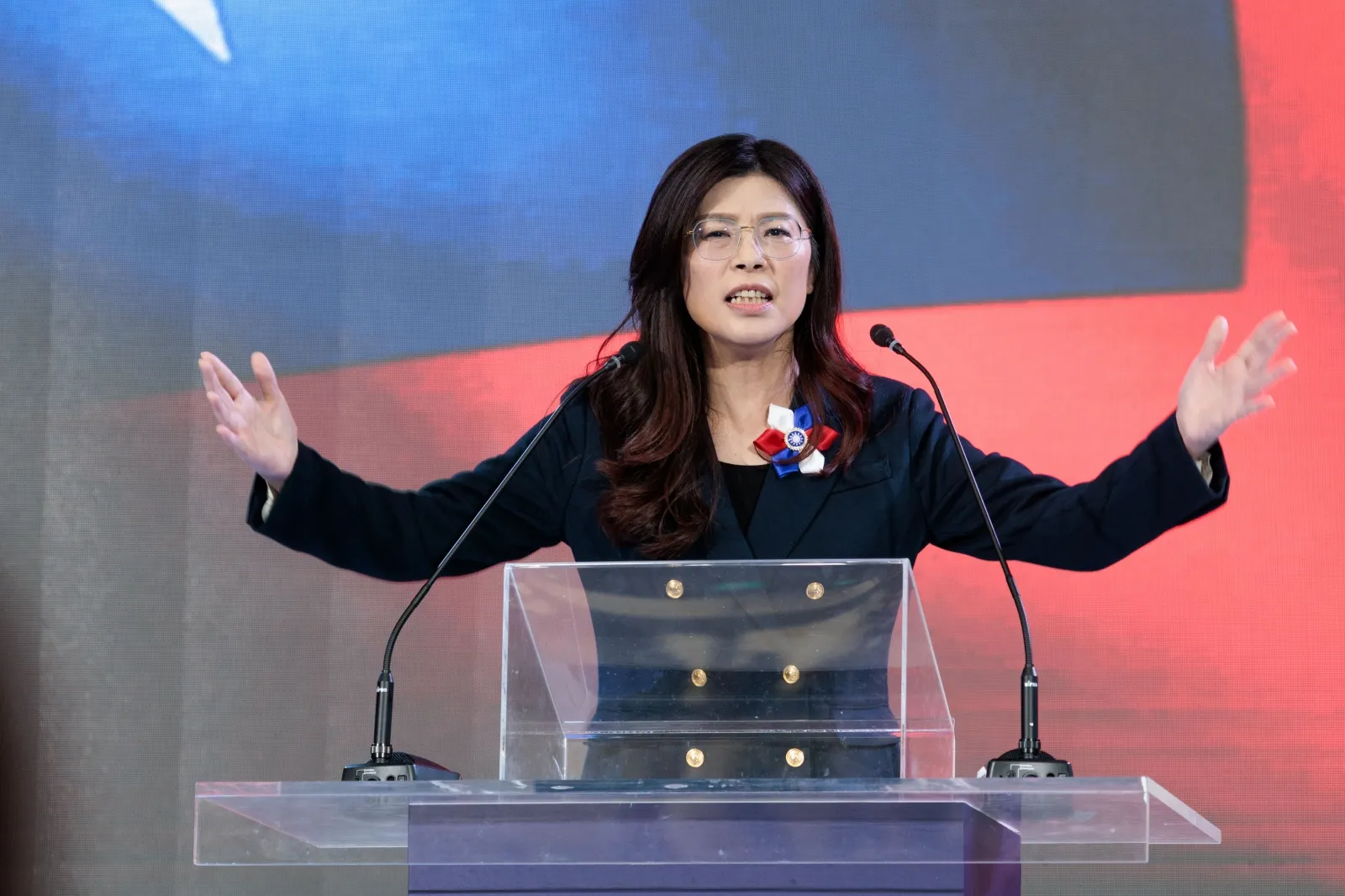
On April 7, a KMT delegation led by chairperson Cheng Li-wun made the first visit to mainland China by a sitting KMT chair in a decade — reopening a channel that official cross-strait dialogue cannot provide. But beneath the shared language of peace and the 1992 Consensus lay two incompatible visions, exposing a structural asymmetry that constructive ambiguity can only paper over for so long. How much longer can it hold?
Views
Harmony or Autonomy? The KMT’s China Visit and the Search for Openings Across the Strait
By Meng Kit Tangweb only
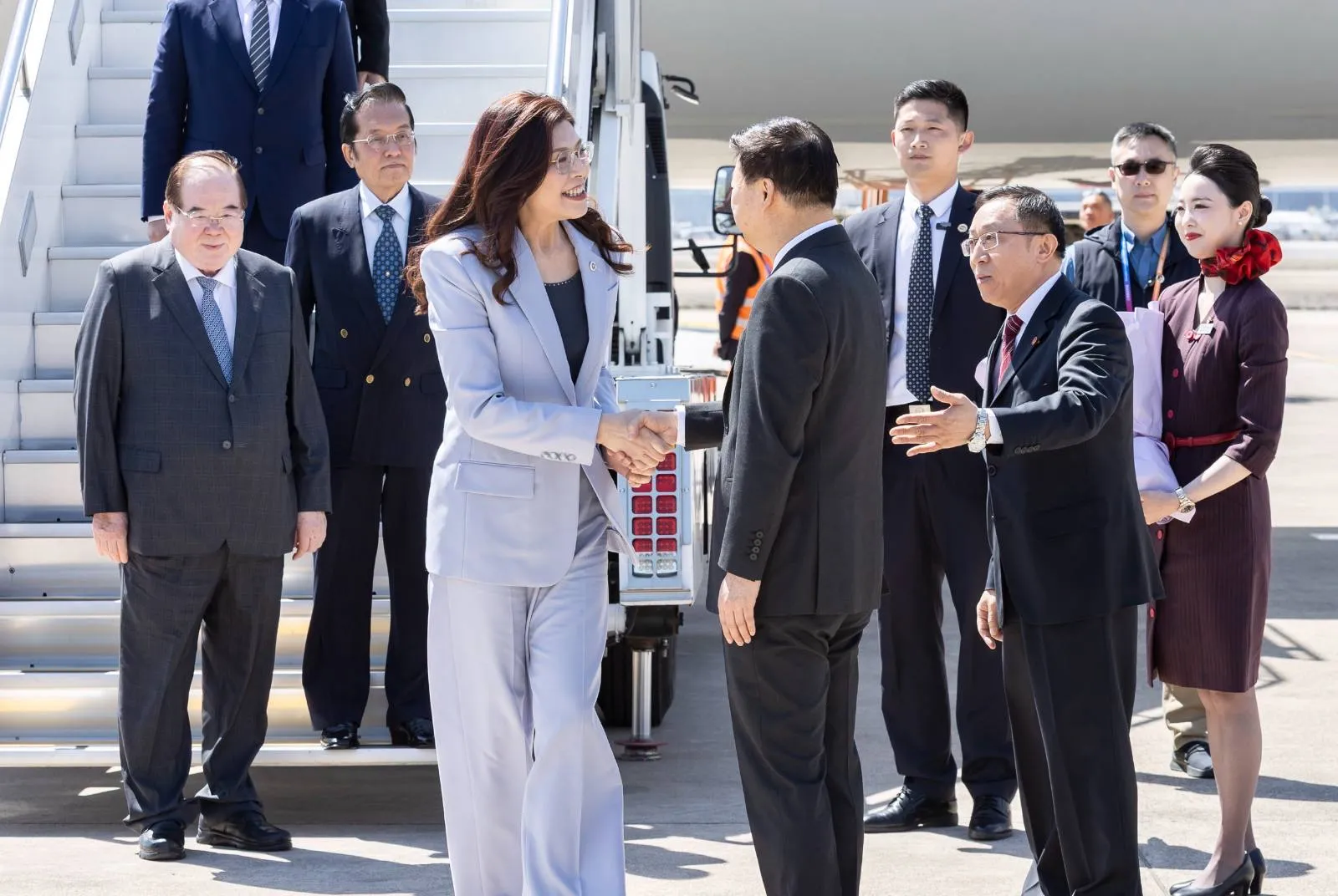
On April 7, 2026, at Nanjing’s Peace Hall in the Dongjiao State Guesthouse, Song Tao hosted a welcome banquet for a senior Kuomintang (KMT) delegation led by chairperson Cheng Li-wun (Zheng Li-wen). It marked the first visit to mainland China by a sitting KMT chair in a decade.
The symbolism was immediate. Official cross-strait channels remain frozen, while PLA pressure has become routine. Against that backdrop, the revival of KMT–CCP party-to-party dialogue was never mere ceremony. Beijing sought to show that communication remains possible but only on terms it sets. The KMT sought to show that it can still do what the ruling Democratic Progressive Party (DPP) cannot: keep a channel open and lower tensions.
Both speeches projected civility and familiar language, invoking peace, stability, and the “1992 Consensus.” Yet beneath that shared vocabulary lay two incompatible political visions. Song spoke in the language of national unity and familial reconciliation. Cheng answered with a language of agency, choice, and protection against geopolitical instrumentalization. The banquet therefore revealed more than whether the meeting was “successful.” It exposed the structural asymmetry that still defines cross-strait dialogue.
The Two Speeches: Surface Harmony, Subtle Divergence
Song Tao delivered a structured, policy-oriented address built around three “expectations”: peace in the Taiwan Strait, well-being for compatriots, and national rejuvenation. Framed through a historical narrative invoking Sun Yat-sen, his tone was warm but distinctly paternalistic, reflecting Beijing’s preferred discourse.
The emotional center of the speech was a familiar line:
“中國人歷來崇尚和為貴,最看重家和萬事興。” (The Chinese people have long treasured harmony, and most value the idea that when the family is harmonious, all things prosper.)
This was more than rhetoric. Song cast cross-strait relations as a “family matter” (自己家裡的事) within a shared “Chinese national homeland” (中華民族共同家園), reinforced by references to “deep affection” (深情厚意) between compatriots. The implication was clear: the dispute is internal, intimate, and ultimately bounded by a single national community.
Cheng Li-wun responded with a different structure and purpose. Organizing her remarks around four “historical significances,” she foregrounded Taiwan’s agency—across regional dynamics, cross-strait relations, party ties, and its own trajectory. Her tone was more calibrated to a domestic audience, emphasizing autonomy alongside engagement. Her key lines set clear boundaries:
“台灣人是可以擺脫悲情、掌握自己命運的強大自主性。” (Taiwanese people possess the strong autonomy to move beyond historical grievance and take hold of their own destiny.), and “不應該淪為地緣政治的棋子、甚至於是棄子。” (Taiwan should not be reduced to a pawn, or even a discarded piece, in geopolitics.)
This was deliberate boundary-setting. Cheng endorsed dialogue but rejected absorption into any external strategic script. She presented engagement as a path to “和平跟繁榮” (peace and prosperity) without surrendering agency.
Both sides reaffirmed “九二共識、反對台獨” (The 1992 Consensus, Oppose "Taiwan independence") as the “定海神針” (stabilizing anchor) of cross-strait relations. That phrase created the appearance of convergence.
Yet the underlying frameworks diverged sharply: Song’s vision cantered on unity within a single civilizational family, while Cheng’s emphasized a self-governing society with the right to choose. The exchange held together through ambiguity and relied on it.
The Enduring Structural Asymmetry
The banquet’s significance lies less in what was said than in the unequal positions from which each side spoke.
Beijing entered with overwhelming structural advantages. It controls escalation pressure through military activity. It can vary economic inducements, tourism, market access, and regulatory treatment. It can selectively reward Taiwanese constituencies. It also controls the symbolic environment: the venue, protocol, optics, and language of “national rejuvenation.” Even when Beijing sounds conciliatory, it speaks from a position of coercive superiority.
The KMT enters from a narrower space. It is an opposition party, not the elected government. It cannot sign binding agreements on behalf of Taiwan. It must show usefulness without appearing pliant. It needs enough engagement to claim relevance, but enough distance to avoid validating the DPP’s charge that it is facilitating united front politics.
This asymmetry allows shared language to mask divergent aims. For Beijing, “peace” preserves conditions for long-term integration under a one-China framework. For the KMT, it reduces immediate risk, sustains economic space, and reassures voters. “Stability” for Beijing reflects strategic patience; for the KMT, political credibility and risk management.
This gap is the central constraint on dialogue. Party-to-party engagement can lower tensions and create openings, but it cannot alter the underlying imbalance: Beijing treats the KMT as an intermediary, while the KMT must justify engagement to a democratic electorate increasingly skeptical of Beijing.
Contested Reception and Strategic Implications
Taiwan’s response was predictable. The blue camp frames the visit as a pragmatic channel in the absence of official ties; the green camp sees it as a political bypass that sidelines the elected government while enabling Beijing’s united front efforts under the language of peace.
Both interpretations capture part of the reality. In Taiwan, cross-strait dialogue is judged less by what is said than by who speaks, under what framework, and at what cost to domestic legitimacy.
This sensitivity is rooted in historical experience. Comparisons to Lien Chan’s 2005 visit are inevitable, but the lessons are sobering. That earlier thaw did not produce lasting political trust, and the Sunflower Movement showed how quickly elite-driven engagement can lose legitimacy when democratic oversight appears thin. The KMT in 2026 cannot simply replay that script. Cheng’s emphasis on autonomy reflects this constraint, signalling not only to Beijing but to a far more sceptical electorate.
The stakes also extend beyond Taiwan. Amid intensifying U.S.–China competition and persistent concerns over crisis stability, even limited cross-strait engagement carries broader signalling effects. Beijing can use the visit to argue that the Taiwan issue remains manageable within its preferred framework. The KMT can present it as evidence that alternatives to deadlock still exist. Washington, however, is likely to view it more cautiously with a welcome if it reduces immediate tensions, but concerning if it sidelines Taiwan’s official institutions or fragments its political cohesion.
Ultimately, the visit raises a familiar test. The KMT must demonstrate that engagement delivers tangible benefits without eroding political autonomy. Beijing, for its part, seeks to extract symbolic and strategic value while keeping the terms of dialogue within its own narrative. Absent concrete outcomes, the episode risks reinforcing the DPP’s core critique: that Beijing rewards dialogue primarily when it can be used as leverage.
Critical Gaps and Unanswered Questions
Therefore, the real test begins after the banquet. If the visit produces only photographs, warm language, and a predictable communiqué, its political value in Taiwan will fade quickly. If it yields visible benefits like eased pressure on key sectors, renewed tourism, agricultural openings, business or student facilitation, or even a modest reduction in military signaling, the KMT can claim practical utility.
Another question is how much autonomy language Beijing will tolerate. Cheng’s rhetoric was carefully calibrated, but it still asserted Taiwanese agency in ways that sit uneasily with the “one family” frame. Beijing may accept that language for now to preserve the optics of engagement. Whether it tolerates repetition is less certain.
The deeper issue is whether constructive ambiguity around the 1992 Consensus still holds. For years, the formula endured because different actors could project different meanings onto it. But ambiguity narrows as distrust deepens and strategic stakes rise. More broadly, it remains unclear whether this will become a durable mechanism or simply another episodic performance. Cross-strait history is full of rare moments that looked consequential in real time but proved far less transformative in hindsight.
Conclusion: The Limits of Symbolic Harmony
The April 7 Nanjing banquet succeeded on its own limited terms. It reopened a dormant high-level channel, staged a carefully managed display of civility, and gave both sides room to claim prudence.
Its real significance, however, lies in what it could not bridge. Song Tao spoke in the language of kinship, hierarchy, and eventual national closure. Cheng Li-wun replied in the language of choice, dignity, and political agency. Those frameworks can coexist in a banquet hall, where ceremony is meant to soften contradiction. They are far harder to reconcile in the realities of Taiwanese democracy and cross-strait power politics.
This was neither a breakthrough nor empty theater. It was a reminder that cross-strait dialogue still depends on ambiguity, but ambiguity no longer carries the weight it once did. The more harmony must mask fundamentally different political meanings, the more every smiling photograph reveals the limits of the peace it seeks to project.
(This piece reflects the author's opinion, and does not represent the opinion of CommonWealth Magazine.)
CommonWealth Magazine welcomes op-ed submissions. Please send your article proposals to [email protected]
About the author:

Tang Meng Kit is a Singaporean and works as an aerospace engineer. He graduated from the S. Rajaratnam School of International Studies (RSIS), Nanyang Technological University (NTU), Singapore. His research interests include cross-Straits relations, Taiwan politics, policy issues and aerospace technology.
Have you read?
- Taiwan's Freedom Is Not a Fixation
- [Exclusive] Will the U.S. Fight for Taiwan? Stephen Wertheim Says There’s Another Way
- Why the World Will Not Have a Second TSMC
Uploaded by Ian Huang
Views

Subscribe to CWE Newsletter (every Thursday)
Stay abreast of what's happening in Taiwan with our weekly digest.
Keywords: