Belt and Road Initiative: Is China Calling the Shots in Malaysia?
Source:Kai-Cheng Chuang
Ten years ago, Beijing’s Belt and Road Initiative bludgeoned its way into Southeast Asia. Ten years later, Chinese investment has evolved from infrastructure to complete industrial parks, but Beijing is no longer able to impose its order as it once did.
Views
Belt and Road Initiative: Is China Calling the Shots in Malaysia?
By Silva ShihCommonWealth Magazine
Though Malaysia was home to China’s first national-level demonstration zone in Southeast Asia, labeling the country as “pro-China” would misconstrue the true nature of Beijing’s influence.
That was evident at the end of March, when a CommonWealth Magazine team visited Forest City in Johor Bahru and observed how China’s influence in the region has evolved.
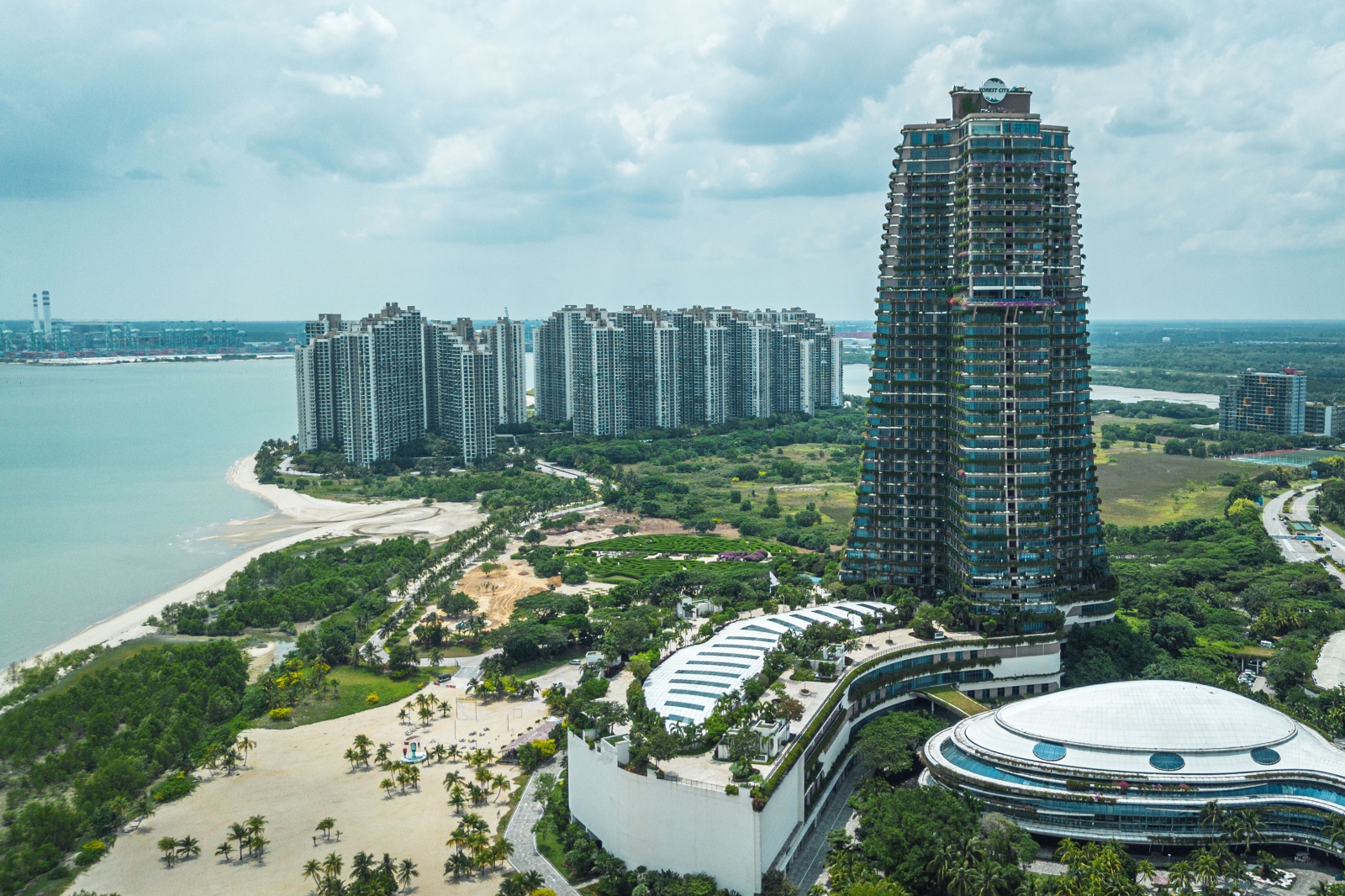 Country Garden's "Forest City," a mega-development bankrolled by the Chinese real estate giant in Johor, looks out directly onto the Strait of Malacca. (Photo: Kai-cheng Chuang)
Forest City was a project supported under the Belt and Road Initiative, drawing US$100 billion in investment in 2016 from Chinese real estate company Country Garden Holdings to create a city for 700,000 people.
It was a failed project that is now being reborn. Even after the COVID-19 pandemic, its occupancy remained below 1 percent, earning it the moniker “ghost town.” Now, it has been converted into a special financial zone open to family offices, attracting Singaporean and Japanese buyers and raising occupancy to nearly 30 percent.
Standing on an artificial beach within the city, one can see the Strait of Malacca, the main waterway for transporting energy between the Middle East and Asia, highlighting the project’s strategic location.
In 2025, Malaysia was China’s second-largest export market among ASEAN countries, second only to Vietnam. China was also the country’s second-largest source of investment after Singapore. However, because many Chinese companies register in Singapore, their investment in Malaysia may be understated in official data.
Stop 1: East Coast Rail Link (ECRL)
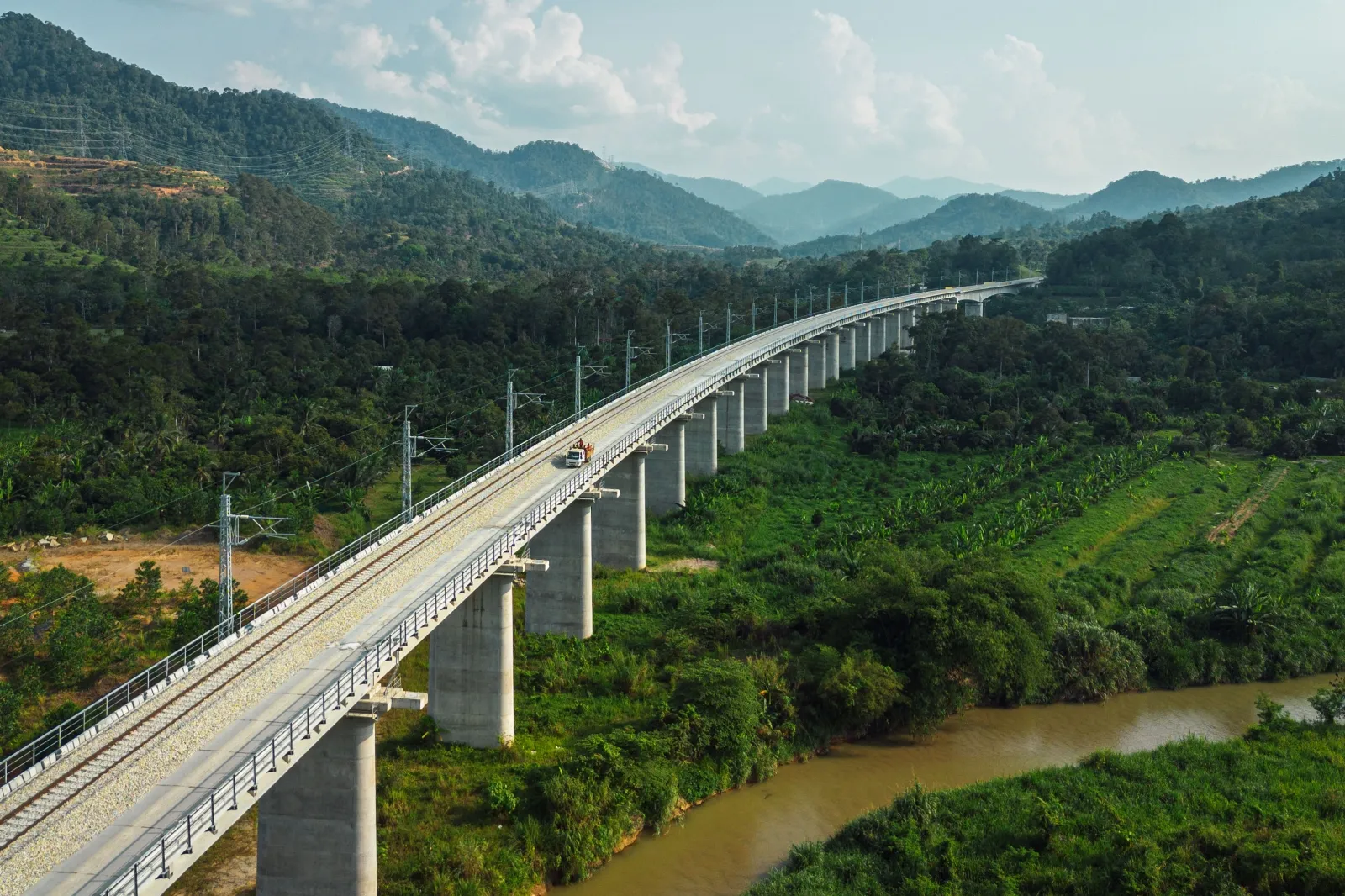
The CommonWealth team examined three key projects to assess Beijing’s influence. The first was the East Coast Rail Link (ECRL), a railway spanning over 600 kilometers, built over 10 years and expected to begin operations in January 2027.
 Malaysia's East Coast Rail Link, a decade in the making, is finally set to open. (Photo: Kai-cheng Chuang)
As the most expensive infrastructure project in Malaysia’s history, it significantly improves transportation along the underdeveloped east coast. The line connects Kota Bahru to Port Klang, passing through Kuantan Port.
Businesses stand to benefit. Taiwanese companies with factories in Kuantan say transport costs and delivery times will fall once the railway becomes operational.
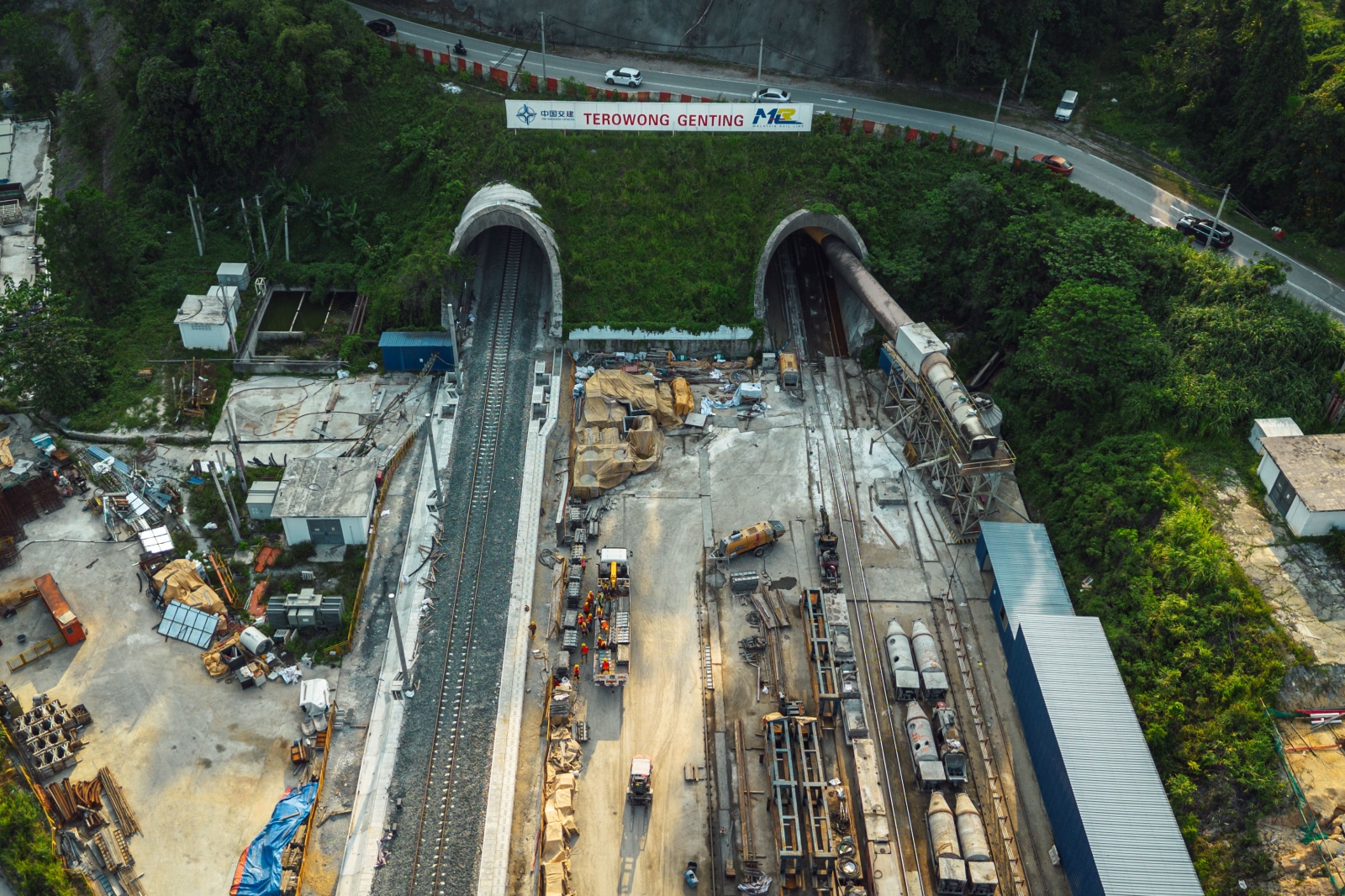
However, the ECRL also reflects early Belt and Road characteristics: heavy Chinese control, with contractors from China responsible for tracks, trains, and systems. The project was suspended for about 10 months in 2018 after Prime Minister Najib Razak was voted out amid corruption allegations.
Under a renegotiated agreement, Malaysia will receive 80 percent of profits while sharing losses equally with China. Still, doubts remain about profitability and passenger volume, given the east coast’s small population and lack of an international airport.
Stop 2: Kuantan Port and Industrial Park
The Kuantan area reflects even greater Chinese ambition, extending beyond infrastructure to a full “port–logistics–industry” system.
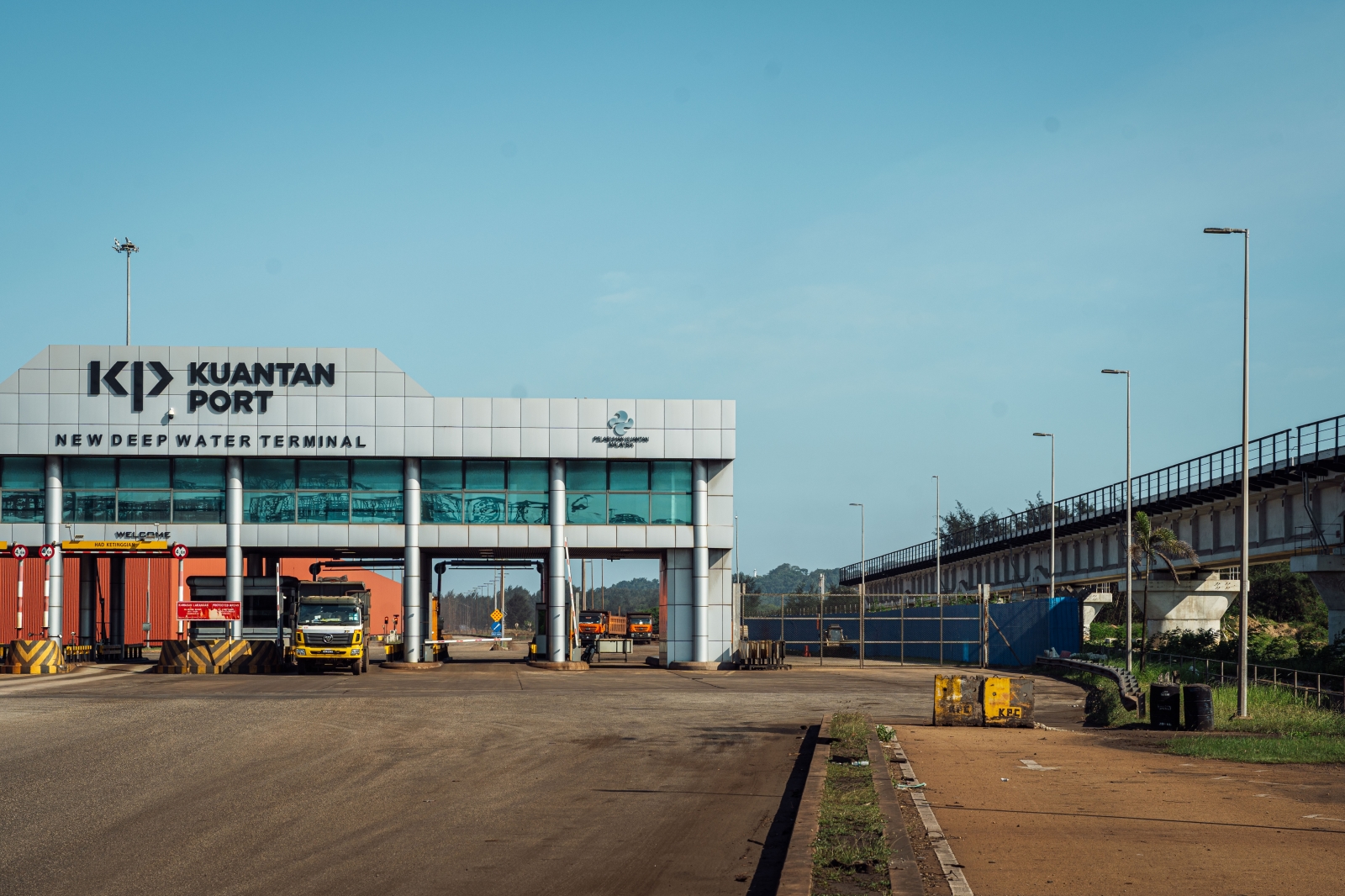 The East Coast Rail Link (right) includes a dedicated stop at Kuantan Port, designed to link overland and maritime routes. (Photo: Kai-cheng Chuang)
Jointly operated by Malaysian entities and state-owned firms from China’s Guangxi region, Kuantan Port mainly serves Chinese-owned steel plants in the Malaysia-China Kuantan Industrial Park. Its most prominent feature is not container traffic but stockpiled iron ore.
The port includes dedicated pipelines connecting directly to factories, and a railway station under construction will further integrate the supply chain.
Local stakeholders are not unaware of these dynamics. Malaysian steel companies have filed anti-dumping lawsuits against Chinese firms. In March, the government revised investment rules to require higher levels of local hiring and stronger supply chain integration.
“These rules were directed at Chinese investment,” one official said.
The developments highlight mounting challenges for the Belt and Road Initiative, including concerns over debt, industrial overcapacity, and dumping, all of which have slowed its expansion.
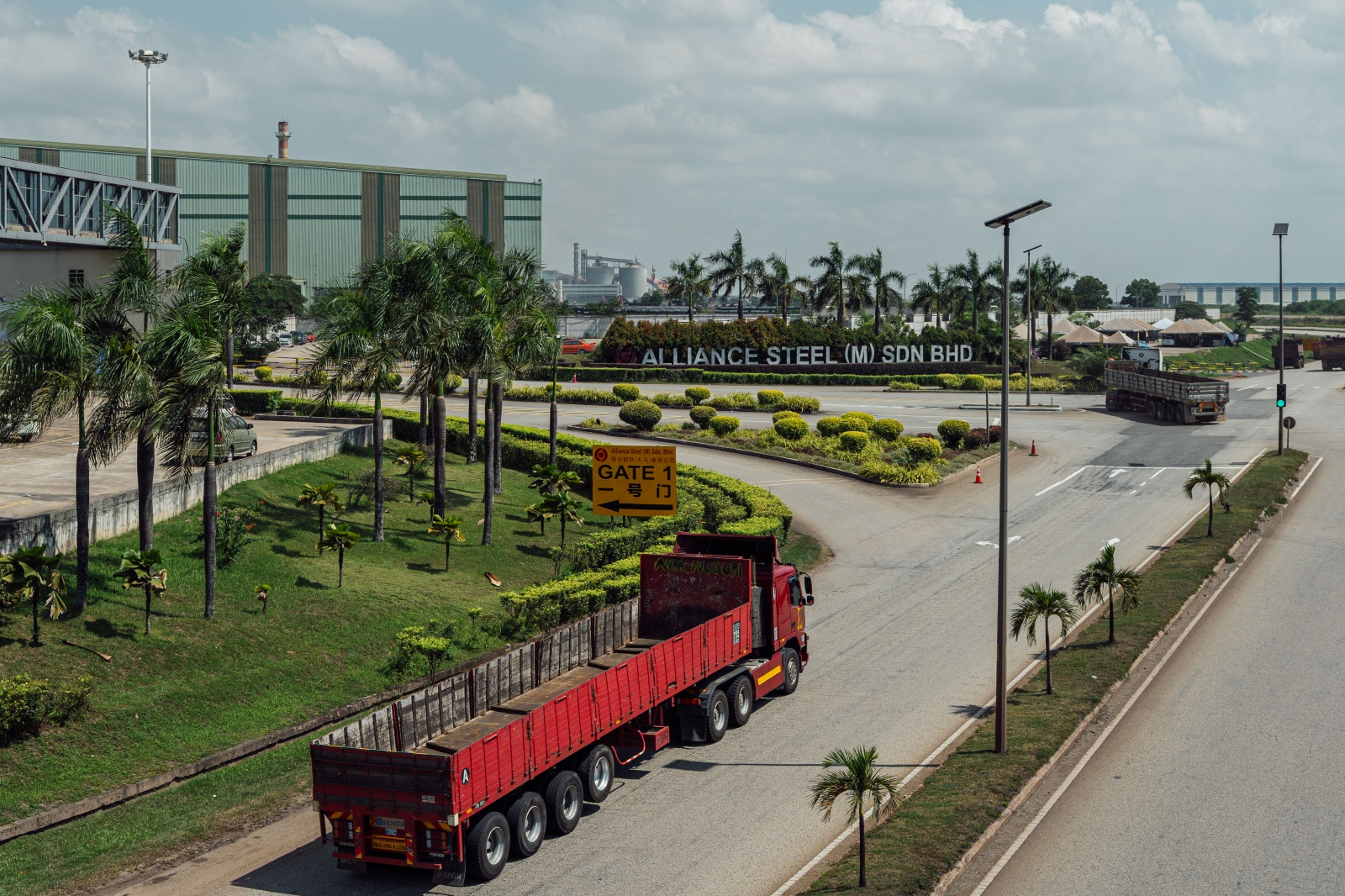 The Malaysia-China Kuantan Industrial Park, located near the eastern port of Kuantan, is China's first national-level cooperation demonstration zone in ASEAN. (Photo: Kai-cheng Chuang)
Stop 3: Johor Bahru
The final stop was Johor Bahru, where the “Green Belt and Road” and digital economy intersect.
Located just two kilometers from Singapore, Johor Bahru has become a major investment hotspot over the past two years due to a rapid influx of data centers. It attracted a quarter of Malaysia’s total foreign investment in 2025.
Chinese firms have moved especially quickly, completing projects in as little as 11 months.
A local official noted that Chinese companies are no longer simply engaging in “origin washing,” but are pursuing regional integration—using Singapore as an operations hub and Johor as a computing base to serve broader Asian markets.
Infrastructure expansion is proceeding in parallel. More than half of Malaysia’s submarine communication cables are being built by subsidiaries of Chinese tech company Huawei.
 A wave of Chinese and American data center investments is fueling Malaysia's digital economy, with subsea cable expansions expected to handle growing data transmission demands. (Photo: Kai-cheng Chuang)
At the same time, Malaysia is actively diversifying risk. Four new submarine cables are planned to connect Singapore, Hong Kong, and the broader Asia-Pacific, with funding from both U.S. and Chinese sources.
“Both systems are acceptable. The market will decide,” the official said.
Academics describe this strategy as “hedging,” reflecting Southeast Asia’s historical caution toward dependence on any single power.
As a result, Chinese capital continues to flow into Malaysia, but not as a one-sided force. Instead, it operates within Malaysia’s broader national strategy.
The Belt and Road Initiative has not disappeared, but its trajectory is no longer dictated solely by Beijing. Host countries now have greater agency in shaping how that investment unfolds.
Have you read?
- Former Malaysian Deputy Minister: ASEAN Doesn’t Want to Depend on China Alone
- Why Foreign Investors Like Warren Buffett Are Flocking to Japanese Stocks
- The Taiwan-Inspired AI Revolution: How a Sci-fi Writer Led Team Mirai into Japan’s Parliament
Translated by Luke Sabatier
Uploaded by Ian Huang
Views

Subscribe to CWE Newsletter (every Thursday)
Stay abreast of what's happening in Taiwan with our weekly digest.
Keywords: