
The Taiwan-Inspired AI Revolution: How a Sci-fi Writer Led Team Mirai into Japan’s Parliament
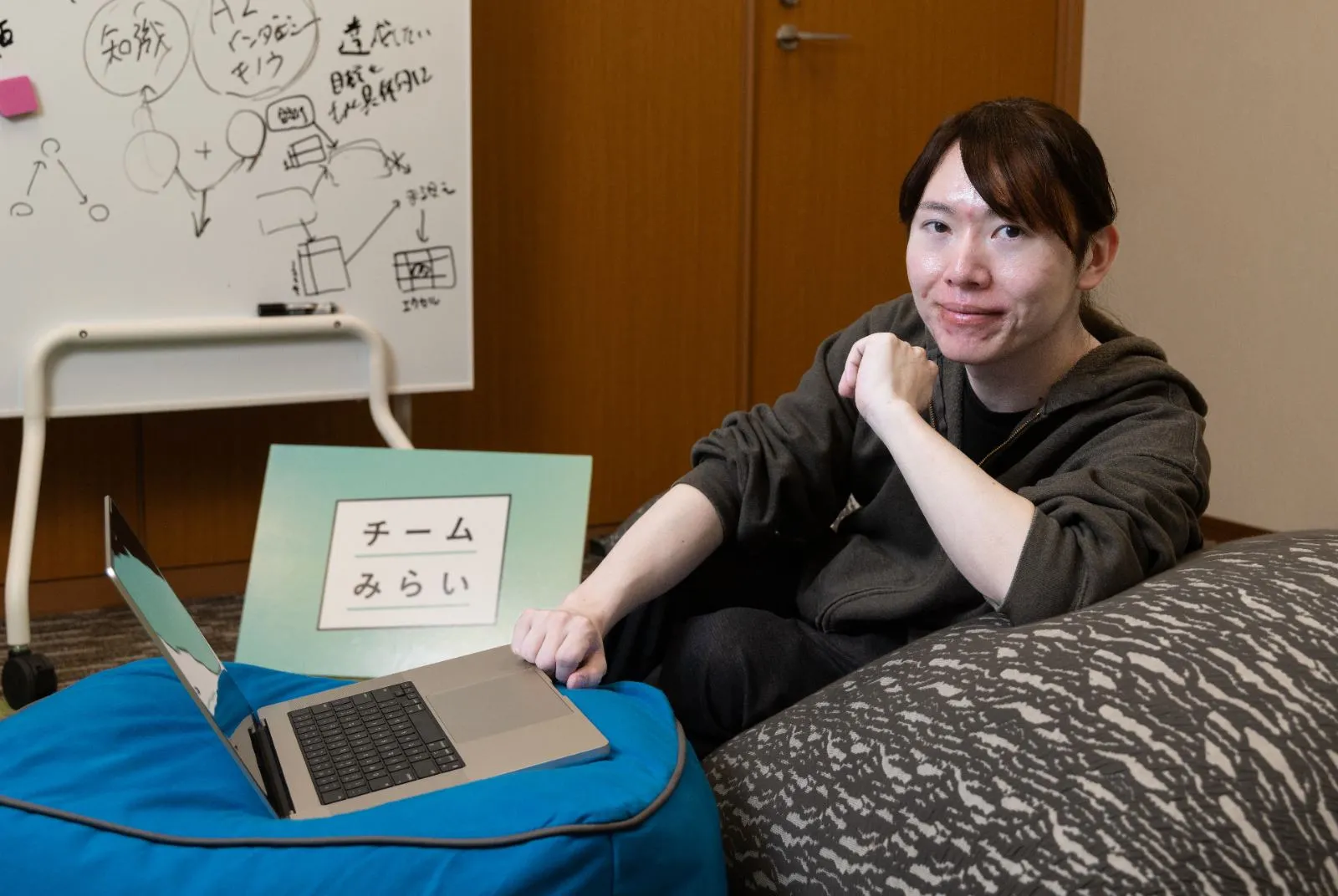
Source:Chien-Tong Wang
Founded in 2025, Team Mirai secured 11 seats in its first House of Representatives election, becoming Japan's eighth-largest party. Inspired by Audrey Tang, founder Anno Takahiro went from engineer to rising political star — how is he using AI to listen to the voice of the people?
Views
The Taiwan-Inspired AI Revolution: How a Sci-fi Writer Led Team Mirai into Japan’s Parliament
By Kwangyin LiuCommonWealth Magazine
In Tokyo’s Nagatacho, within the hallowed halls of the House of Councillors, the atmosphere is defined by stiff black suits and conservative neckties.
Walking against this tide is a man with a long ponytail and thick-rimmed glasses. Dressed in a hoodie and carrying a lunch box, he looks more like a sleep-deprived graduate student heading to a lab than a national legislator.
This is 35-year-old Member of the House of Councillors Takahiro Anno, Leader of Team Mirai (Team Future). His ascent to power is the stuff of legends. A protégé of the University of Tokyo’s AI pioneer Yutaka Matsuo, both teacher and student serve on the Tokyo Metropolitan Government’s AI Strategy Council.
Calling Anno a "star academic" is an understatement. After graduating from the University of Tokyo, he joined the Boston Consulting Group (BCG) and later became a partner in two AI startups. His sci-fi novel, Circuit Switcher, which explores the intersection of AI and law, won the prestigious Hayakawa SF Contest.
His transition to politics was sparked two years ago, inspired by Taiwan’s former Digital Minister Audrey Tang, which led him to run for Governor of Tokyo as an independent.
At the time, Anno encountered Tang’s book Plurality online and was deeply moved by the concept of "broad listening".
"It’s like the opposite of broadcasting: one person listening to the voices of millions, synthesizing common ground and differing opinions," Tang recalls of their online dialogue.
"He asked me if running for Tokyo Governor was a viability. I told him: just go for it," Tang says.
Thus began a new era. Although Anno lost the gubernatorial race, he secured the fifth-highest vote count. In May last year, he founded Team Mirai with a vision to "create a Japan through technology where no one is left behind". Two months later, Anno was elected to the House of Councillors.
In February’s House of Representatives election, the team made its debut, garnering 3.81 million votes and winning 11 seats, instantly becoming Japan’s eighth-largest party.
"I really didn't expect to win so many seats," Anno says bashfully. "I was initially hoping for five." Many of the party's candidates are his former classmates from university and high school.
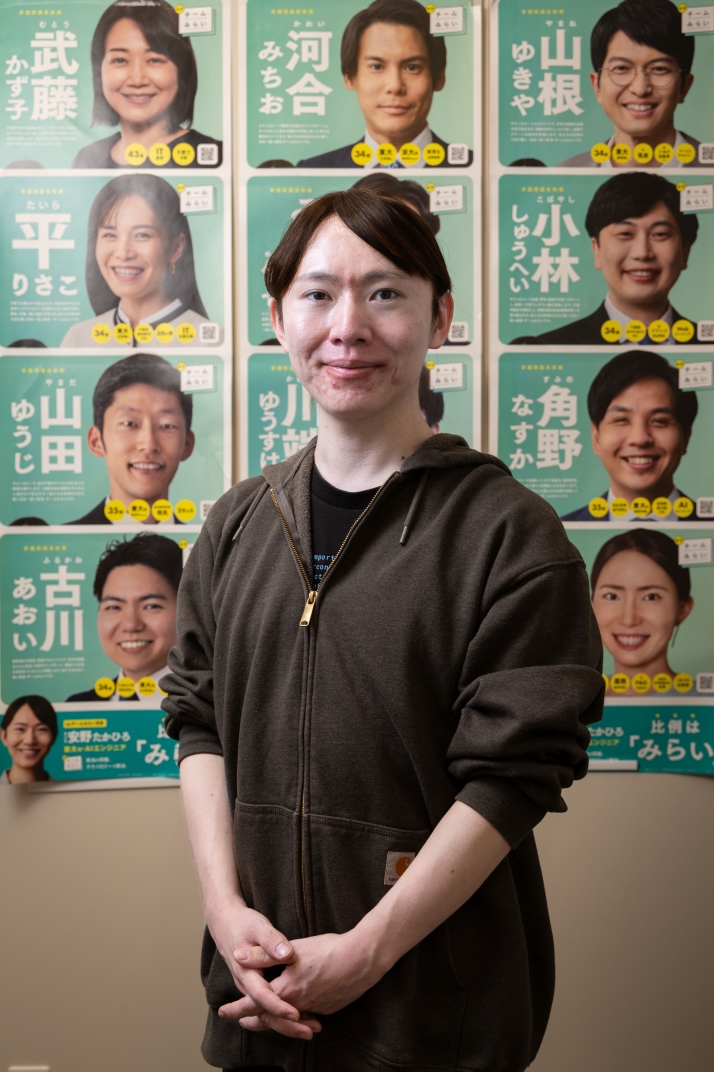 Non-confrontational and free from mudslinging, Takahiro Anno is upending the traditional campaign playbook. (Photo: Chien-Tong Wang)
His campaign style is equally atypical. He has attracted comrades-in-arms ranging from former BCG colleagues to tech elites from Amazon. Their creed: no incitement of conflict, no mudslinging.
With Team Mirai capturing 11% of the non-partisan vote, what does this signal about the change in Japanese society?
"General political discussions are usually framed as left versus right," Anno explains. "The viewpoint we prioritize is 'the present' versus 'the future'."
The best example is the consumption tax. During the February elections, almost every party promised tax cuts to win votes—including Sanae Takaichi’s LDP, which proposed a two-year tax waiver on food and daily necessities.
Amidst this flurry of promises, Team Mirai was the only party to oppose the reduction. They argued that tax cuts are not a long-term solution and that fiscal sustainability is what truly benefits the economy. "This wasn't an electoral strategy, it was a natural outcome of our core value of 'prioritizing the future'," says Anno.
Furthermore, Team Mirai advocates for a political culture distinct from the status quo.
"We emphasize avoiding social polarization. Instead, we listen to diverse opinions." Anno believes debate is essential but must remain constructive. "Attacking one another is unnecessary."
To better understand voter needs, Team Mirai utilized AI to create a chatbot, "AI Anno", which engaged voters in deep policy discussions lasting up to 40 minutes. The AI asked voters for the reasoning behind their policy preferences, challenged their assumptions, and explored their underlying concerns.
After the team launched "AI Anno" on X (formerly Twitter) late last year, they received over 1,000 hours of interview data in a single day. Large language models were then used to analyze and categorize voter concerns, transforming the data into parliamentary inquiries and policy foundations.
"This is the 'broad listening' that Audrey Tang emphasizes," Anno notes, mentioning that his use of AI interviews was inspired by Taiwan’s "Join" (Public Policy Online Participation) Network Platform.
Currently, their primary supporter base consists of people in their 40s and 50s. When asked why Team Mirai is only emerging now, Anno attributes it to the expanding influence of social media.
"In the past, the online and real worlds were separate, but now the internet has begun to influence elections." He believes the heavy use of YouTube by those over 40 has had a profound impact.
Six months into his term in the House of Councillors, Anno is already exerting influence. Toshihiro Nagahama, Executive Chief Economist at the Dai-ichi Life Research Institute, notes that the LDP invited Anno to join the cross-party "National Council on Social Security" specifically to leverage Team Mirai’s tech-driven listening skills to integrate public sentiment into policymaking.
However, some observers remain skeptical about their growth potential. Senior journalist Tsuyoshi Nojima argues that while Team Mirai secured 6% of the vote based on popularity, increasing that share will be difficult. "People with a long-term mindset are always a minority in society," he says.
Anno is not discouraged by being in the minority. On his office bookshelf sits his book published last year, 1% Revolution. "Looking back at history, it is always a minority with innovative ideas that shakes the lives of the other 99%."
"We are like a catalyst in Nagatacho," Anno says with a smile. "Other parties have started saying they will use AI to catch up with us. That is a good development."
Whether Team Mirai can continue to grow in the next general election and prove that Japanese society is ready to "invest in the future" will be their greatest test.
Have you read?
- Sakana AI Wants to Reshape Japan’s Corporate Future
- Khamenei Dead: Is China the Loser? Why Didn’t Beijing Immediately Rally Behind Iran?
- Amid the Rise of the Far Right, Japan’s Uneasy Dance with Immigration
Edited by Jack Chou
Uploaded by Ian Huang
Views

Subscribe to CWE Newsletter (every Thursday)
Stay abreast of what's happening in Taiwan with our weekly digest.
Keywords: