Taiwan’s Mass Recall Movement: A Stress Test for Democracy
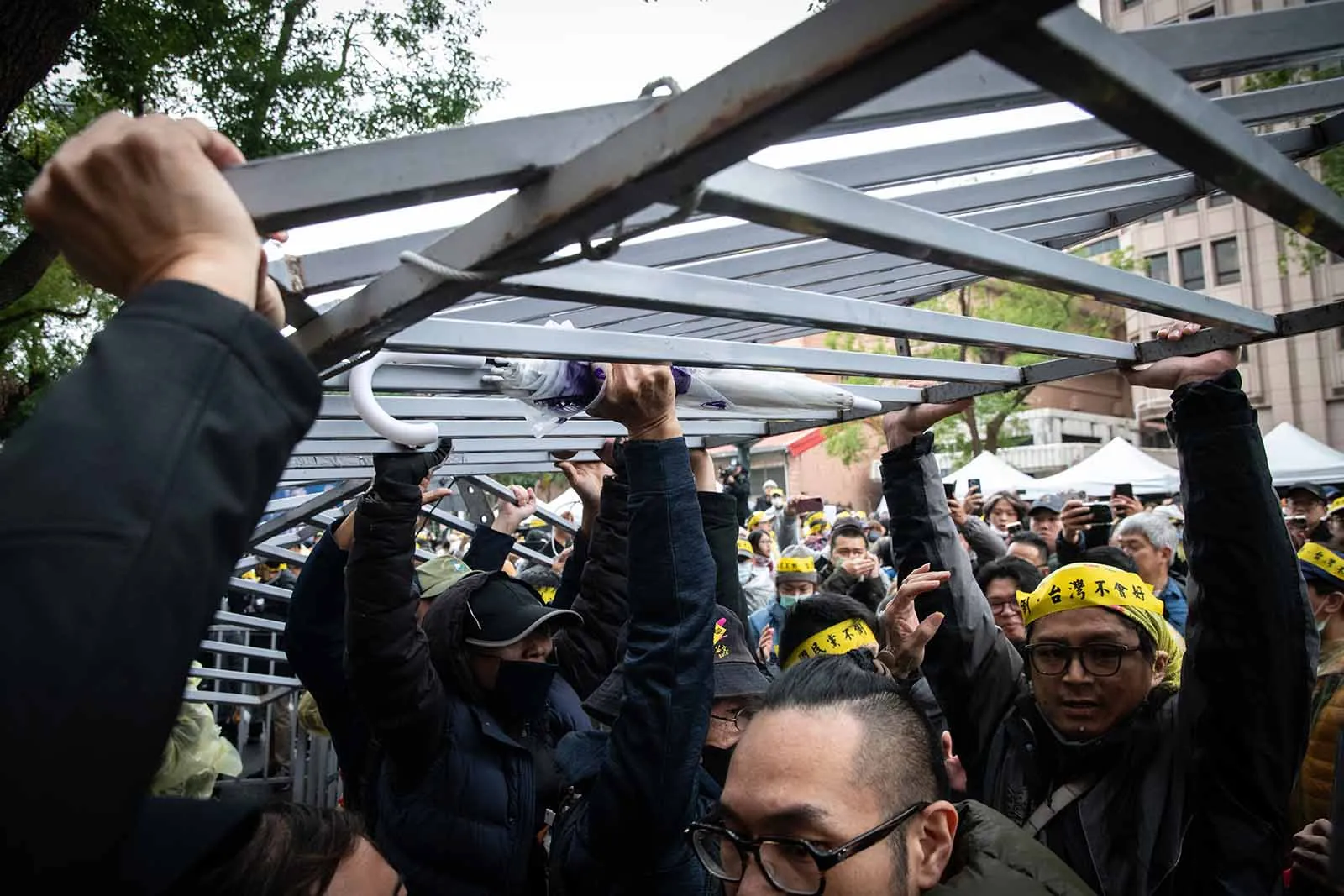
Source:Pei-Yin Hsieh
This episode of Taiwanology podcast with Academia Sinica's Nathan Batto explores the meanings of Taiwan’s unprecedented surge of recall campaigns. This offers a vivid case study of civic resilience and evolving norms of accountability in a maturing presidential system—yet the open question remains: will these recalls reshape Taiwan’s political culture or simply sharpen partisan divides?
Views
Taiwan’s Mass Recall Movement: A Stress Test for Democracy
By Kwangyin Liuweb only
The following is the transcript of the 49th episode of the Taiwanology podcast. It was produced by CommonWealth Magazine, hosted by Kwangyin Liu, and was first aired June. 24, 2025. The guest was Nathan Batto, associate research fellow at the Institute of Political Science, Academia Sinica.
Listen to the episode:【Taiwanology Ep.49】How Taiwan's Mass Recall Movement Is Reshaping Politics
Q: Could you please introduce yourself and your blog, Frozen Garlic? Why does it focus on Taiwan?
Batto: I first came to Taiwan in the summer of 1989—entirely by accident. I was supposed to study abroad in Beijing, but the Tiananmen crackdown led us to cancel those plans. Taiwan became my unexpected alternative, and in hindsight, that twist of fate shaped my entire career.
During the 1990s, I lived here, first as an English teacher, then as a political science student at NCCU. After earning a PhD in the U.S. and teaching there for a few years, I returned to Taiwan in 2009 to work at Academia Sinica. That’s when I started the blog Frozen Garlic—a casual space for my thoughts on Taiwanese politics. It lets me write about things that don’t always fit into academic papers, especially Taiwan’s elections, which I find endlessly fascinating.
The blog name itself comes from a Taiwanese chant heard at rallies: “Dong suan!” (凍蒜), meaning “We’re going to win!” Early on, newspapers struggled to transcribe this in Mandarin, and it ended up as “frozen garlic”—a quirky phonetic translation that stuck. It’s memorable and deeply local, so I adopted it for the blog.
Q: Why are you so interested in Taiwanese elections, and how do they differ from those in the U.S.?
Batto: Taiwanese elections are electric. There’s a carnival-like atmosphere—rallies, music, banners, and intense participation, especially from younger voters. It’s so different from the U.S., where elections were, at least when I lived there, more mediated through TV ads and less about street-level engagement. In Taiwan, politics is visceral and alive.
Q: Could you explain how a recall election works in Taiwan?
Batto: Before 2016, recall elections were nearly impossible. The rules required 50% voter turnout, making them extremely hard to pull off. But after the Sunflower Movement, young activists pushed for reform. Their recalls failed, but once they entered the legislature—especially figures from the New Power Party—they changed the law.
Now, it only takes 25% of eligible voters in a district voting “yes,” as long as that’s more than the “no” votes. It’s a three-step process: first, you gather signatures from 1% of eligible voters to propose a recall; then 10% to initiate it officially; and finally, the 25% threshold in the vote itself. That’s why this is happening now. The barrier is no longer insurmountable.
Q: What triggered the current wave of recalls?
Batto: There are two narratives, depending on who you ask.
From the pro-DPP, or “green” camp’s perspective, this is a grassroots backlash against legislative overreach. After taking control of the legislature, the KMT and TPP coalition passed sweeping bills to expand their power—some of which were ruled unconstitutional. They then tried to paralyze the Constitutional Court by requiring nine justices for a ruling, even though seven seats were vacant. That meant nothing could be declared unconstitutional. They also slashed the national budget, including cuts to military programs, and used procedural tricks like shutting off mics and lights to silence opposition.
This triggered the Bluebird Movement—protests that then morphed into recall campaigns. Social activists, not political parties, led the charge initially. The DPP jumped on board later, realizing this could become a nationwide push.
On the other hand, the KMT sees it differently. They argue this is just typical hardball politics. Their position is: "We won the legislature fair and square. Now the DPP is trying to overturn that through recalls, just like they did during the Sunflower Movement." Their recalls, by contrast, have largely been party-driven—less grassroots, more mechanical.
Q: You wrote that at first you saw this mostly as a partisan fight, but you changed your mind. What happened?
Batto: Initially, I assumed parties would dominate. After all, organizing a rally is easy if you’re a political party—you bus in supporters, hand out banners. But what I learned is that recalls are a different beast.
They require sustained, backbreaking work. Activists have to stand at MRT stations, collect thousands of signatures, verify them, sort them by district and neighborhood, and re-check every detail. One group in Hualien had to re-verify 3,000 signatures—by hand. That’s not something parties can just command. It takes real conviction and a massive time commitment.
On the flip side, the KMT’s attempt to run recalls through party machinery backfired. They relied on outdated supporter lists, submitted petitions with names of people who had moved—or even died. That led to allegations of forgery and legal risk, which discouraged volunteers. So the green side’s civic energy outpaced the blue side’s party machine.
Q: What does this moment tell us about voter expectations and the political system?
Batto: This recall wave is unique because it's targeting individual legislators, not entire parties. Voters get to judge specific behavior—like blocking debate or slashing budgets—not just party labels. That’s rare in Taiwan, or anywhere.
It could set a precedent. Imagine voters ousting an extreme legislator but then voting the same party back in during the by-election—just with someone more moderate. That could reshape behavior in the legislature, signaling that voters want civility and accountability.
Q: What could happen in the by-elections?
Batto: It’s hard to say. No one knows how many recalls will succeed. We’ve never seen anything like this. Some say six to eight legislators may be removed; others guess three to five. By-elections are unpredictable. The TPP has won surprise victories in unlikely districts before. And turnout will be key—there’s no presidential race this time to drive voters.
Even if the DPP flips a few seats, that doesn’t guarantee a majority. But it may change legislative dynamics, if only by shaking up expectations.
Q: Some critics say that democracy is about compromise. Isn’t mass recall a drastic move?
Batto: Sure, in a presidential democracy like Taiwan, gridlock is built in. Unlike parliamentary systems, where the executive and legislature are usually aligned, Taiwan’s structure requires negotiation between separate powers.
But when parties refuse to compromise, there’s no easy fix. That’s why recalls—however messy—are one way for voters to intervene. It’s not ideal, but it’s legal, democratic, and maybe even healthy, if it forces accountability.
Q: What about the geopolitical impact—does this send a message to China or the U.S.?
Batto: Honestly, I doubt it. Big countries like China or the U.S. make foreign policy based on their own interests, not on internal politics in small countries like Taiwan. Beijing isn’t going to recalibrate based on recall results, and Washington probably won’t either—unless it leads to big changes in defense spending or security policy.
This is, above all, a domestic story. But it's one that reveals a lot about Taiwan’s political maturity and democratic resilience.
Final Thoughts
Batto: Taiwan’s mass recall movement may not transform the geopolitical map, but it’s certainly rewriting the rules of political accountability at home. Whether this moment ends in real change or just reinforces existing divides, it will remain a defining chapter in Taiwan’s democratic journey.
Have you read?
- Taiwan’s “Mass Recall” Movement Explained
- National Security Pushes Taiwan to Rethink Nuclear Exit
- Taiwan Economic Minister on Tariffs and Taiwan’s New Export Strategy
Uploaded by Ian Huang
Views

Subscribe to CWE Newsletter (every Thursday)
Stay abreast of what's happening in Taiwan with our weekly digest.
Keywords: