From Data to Drills: How Taiwan Is Re‑Imagining National Defense
Source:Chien-Tong Wang
From midnight tank parades across downtown bridges to supermarket basements moon‑lighting as bomb shelters, Taiwanology’s latest episode turns civil‑defense gloom into a gripping thrill ride. Can Taiwan’s new all‑hands‑on‑deck spirit can outpace the PLA’s daily pressure cooker?
Views
From Data to Drills: How Taiwan Is Re‑Imagining National Defense
By Kwangyin Liu, Silva Shihweb only
The following is the transcript of the 50th episode of the Taiwanology podcast. It was produced by CommonWealth Magazine, hosted by Kwangyin Liu, and was first aired July 22nd, 2025. The guest was Silva Shih, the defense correspondent of CommonWealth Magazine.
Listen to the episode:【Taiwanology Ep.50】What Taiwan’s Largest Drills Reveal About Its Defense Strategy
Q: “So why do you think there are more and more people talking about Taiwan's defense these days?”
I see two principal drivers. First, Beijing’s People’s Liberation Army (PLA) has expanded the tempo and reach of its operations. Aircraft and vessels now venture well beyond the Taiwan Strait, probing the entire First Island Chain and even approaching the Second, home to America’s Guam base. Their presence no longer spikes only during political flash‑points—it has become routine. Second, Washington is pressing its Indo‑Pacific partners to shoulder greater defense burdens. U.S. officials openly encourage Taipei, Tokyo, and Canberra to boost military spending; for Taiwan that could mean tripling our current outlays to three percent of GDP. The combination—rising PLA pressure and louder U.S. expectations—has raised the global volume on Taiwan’s security conversation.
Q: Why did you make this dashboard?
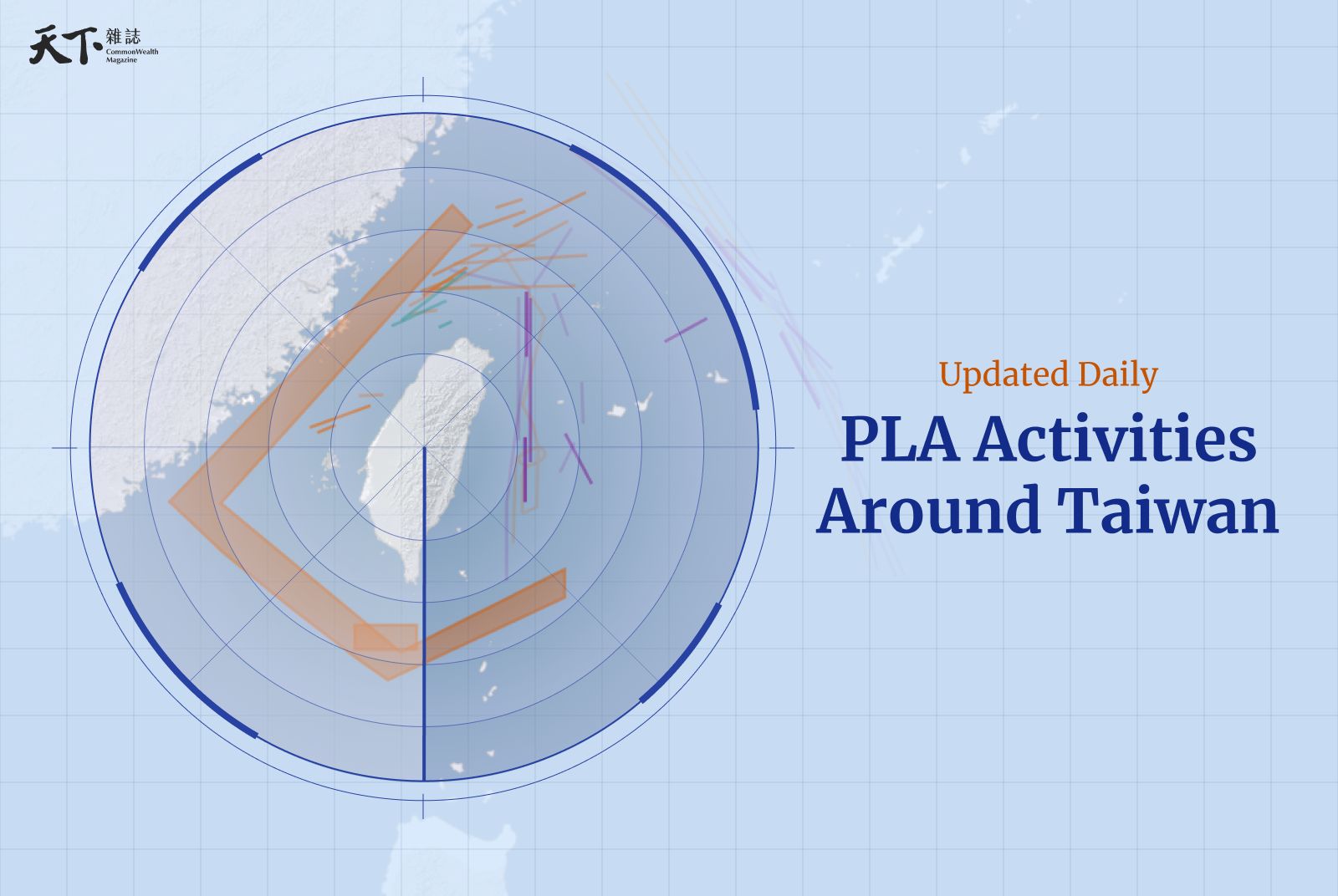
Read: PLA Activities Around Taiwan and First Island Chain
For years I tracked PLA flights and sailings anecdotally, but I lacked a continuous, comparable dataset. My team and I therefore built a public dashboard that merges official Taiwanese and Japanese reports into a single daily record stretching back three years. The numbers reveal patterns at a glance: sorties that once looked like “spikes” now form a steady baseline, median‑line crossings that were rare are a near‑daily occurrence, and unmanned aerial vehicles—drones—have become fixtures in the PLA’s toolkit. By putting hard data behind the headlines, we hope to ground the debate in evidence rather than impressions.
Q: “What's your observation of that? Do you think we do have that growing interest?”
Internationally, absolutely: foreign correspondents covering security have multiplied in Taipei, and their copy is laser‑focused on cross‑Strait risks. At home, interest is more complicated. We Taiwanese have lived under missile threat for four decades; permanent high alert is emotionally impossible. Yet something is changing. Sales of household emergency kits are up, and companies are quietly drafting contingency plans. The government’s new “Whole‑of‑Society Resilience” agenda—encouraging everything from civil‑defense training to business continuity planning—reflects and reinforces this mood. Preparedness is emerging as a civic duty rather than a fringe hobby.
Q: “Could you share with us a few interesting or key moments of these drills that you have witnessed around Taipei City?”
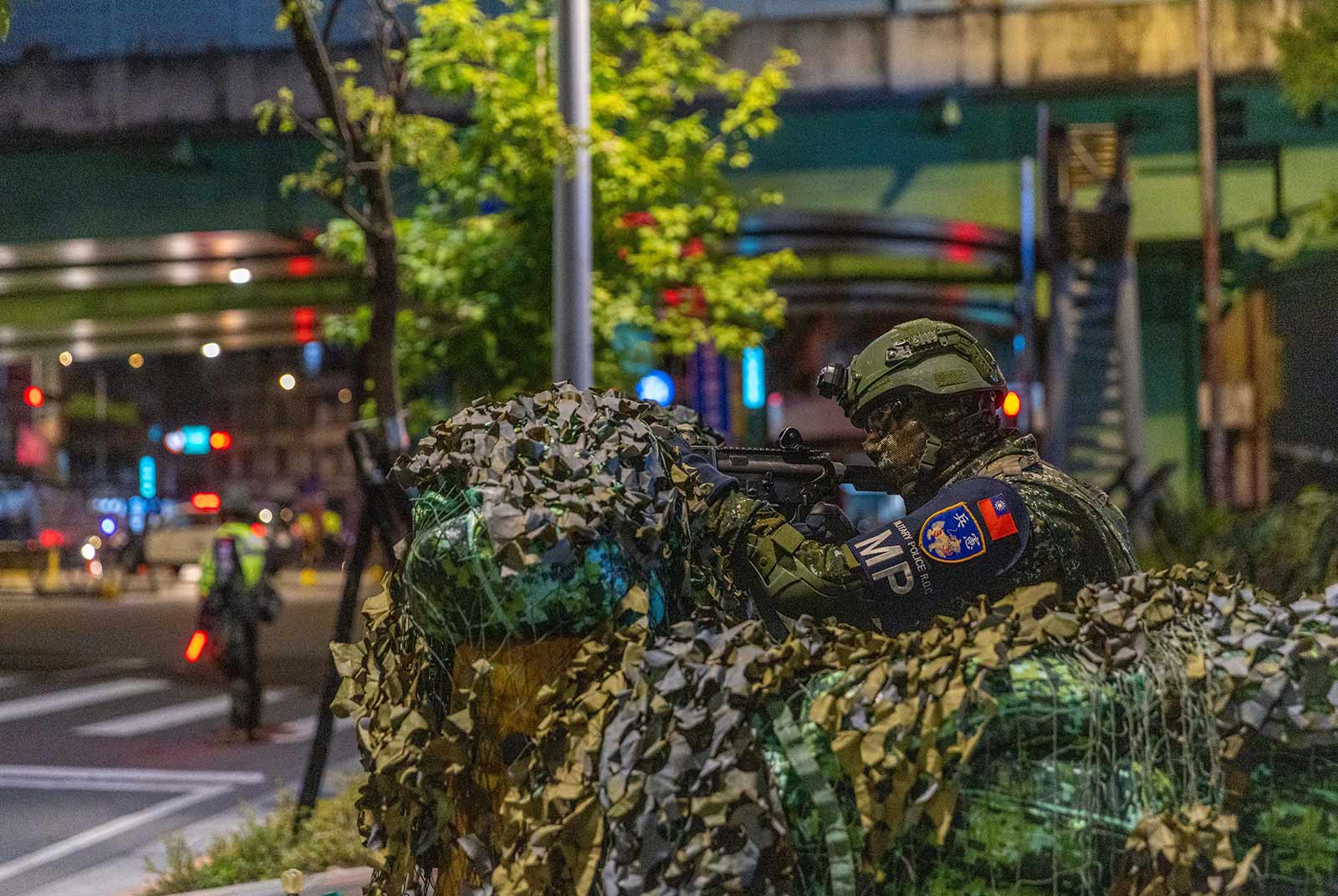
This year’s Han Kuang exercise surprised me in three ways. First, many scenarios unfolded in the heart of Taipei instead of on remote beaches—soldiers with assault rifles patrolled a midnight MRT station to test rapid urban deployment. Second, armored vehicles, including a frontline tank, rumbled across a river bridge linking Taipei and New Taipei City, practicing denial of key choke‑points. Third, the drills were officially “unscripted”: units learned their tasks only moments before execution, forcing real‑time decision‑making and exposing weaknesses. Following these maneuvers on foot, in sweltering heat and even at 2 a.m., was exhausting but invaluable; they showed how a modern fight for Taiwan could spill directly onto city streets.
Q: “Why is this supermarket chain part of this drill this year?”
PX Mart, Taiwan’s largest home‑grown supermarket, volunteered to help because its nationwide stores sit atop vast basement storage areas. In wartime those spaces could double as community shelters and logistics hubs for food distribution. Integrating a private retailer into a military drill is unprecedented here, but it illustrates the government’s push to involve corporate assets—warehouses, fleets, telecom networks—in resilience planning. Other firms are drafting their own playbooks, so PX Mart is likely a harbinger of deeper public‑private cooperation.
Q: “What do you think are the scenarios that Taiwan should be preparing for?”
Analysts fixate on three main contingencies. Blockade involves PLA warships and aircraft isolating Taiwan to strangle trade and morale. Quarantine is similar but carried out by coast‑guard‑type forces, offering Beijing “gray‑zone” deniability. Both would test our stockpiles of fuel, food and fresh water—current estimates suggest we must endure at least two weeks with normal shipping cut. The most extreme scenario is an amphibious landing, something many once deemed unfeasible but is increasingly discussed as PLA capabilities grow. Preparing for an urban battlefield is why this year’s drills pivoted into subway stations and bridges. Civilian readiness—knowing where to shelter, how to keep basic services running—matters as much as military hardware.
Q: “Going forward this year what kind of development would you be watching closely in defense?”
If I could monitor only one trend, it would be the evolving U.S. footprint in the Indo‑Pacific. American deployments, joint exercises with Japan and Australia, and any summit between Xi Jinping and a new U.S. president will shape Taiwan’s strategic calculus—and, by extension, our domestic politics. Parties here seize on every signal from Washington to score points, so regional moves ripple directly into election debates and budget battles. The PLA’s daily activity counts, but the broader diplomatic chessboard may prove even more decisive.
Conclusion
Taiwan’s security discussion is no longer a niche concern for specialists; it is a society‑wide reckoning with rapidly shifting realities—routine PLA incursions, harder U.S. demands, and a newfound civic determination to be ready. As Silva Shih’s on‑the‑ground reporting shows, preparedness now ranges from metro‑station firefights to supermarket basements turned shelters. The data, the drills and the dialogue all point to a sobering truth: while the future remains uncertain, complacency is no longer an option.
Have you read?
- Taiwan Tightens Security on Chinese Ships, Offshore Wind Also Hit
- China’s Gray-Zone Tactics at Sea: Taiwan’s Top Maritime Official Sounds the Alarm
- 24 Nautical Miles: Taiwan's Maritime Guardians on the Front Line
Uploaded by Ian Huang
Views

Subscribe to CWE Newsletter (every Thursday)
Stay abreast of what's happening in Taiwan with our weekly digest.
Keywords: