Victims of the White Terror: The Story of Fred Chin
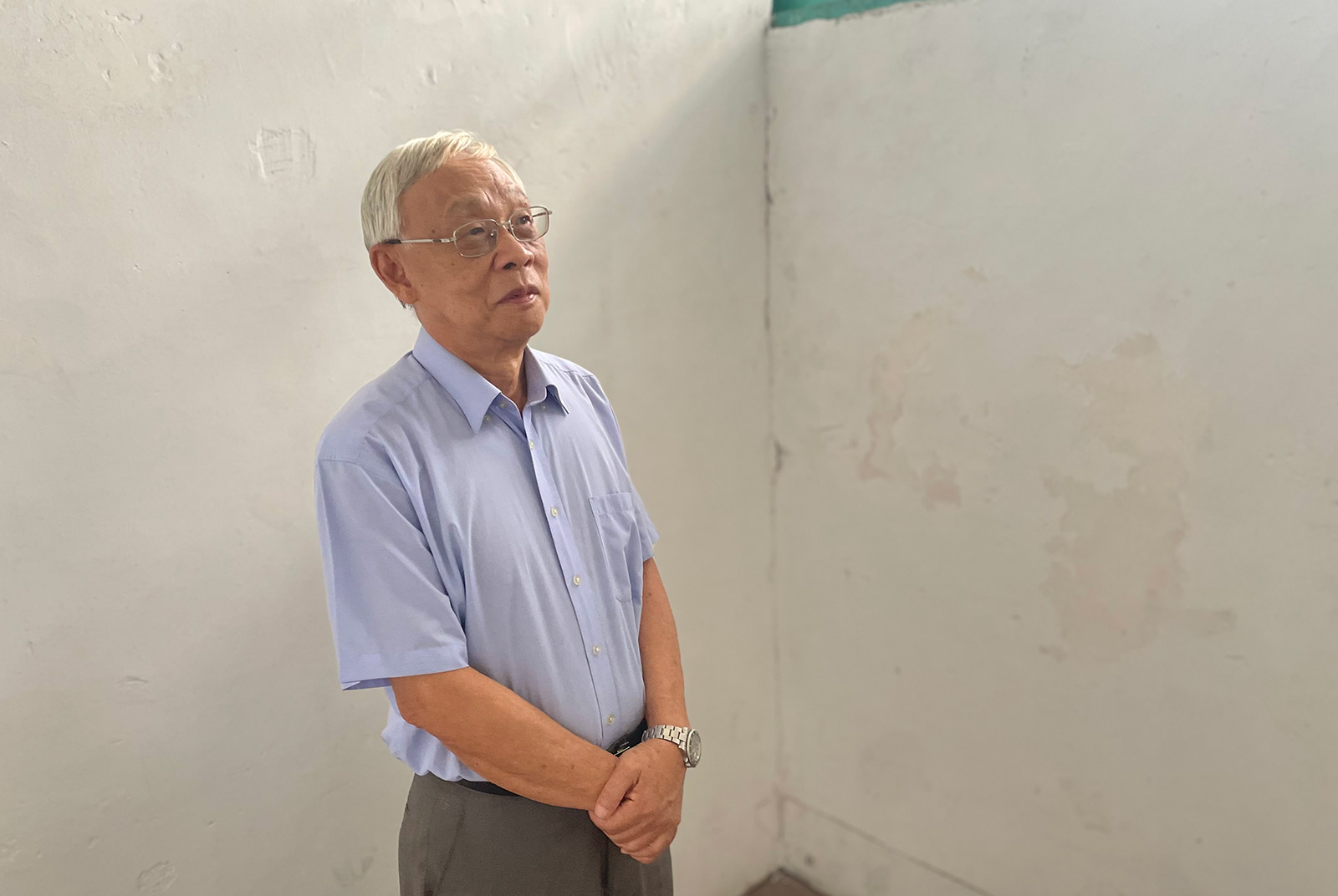
Source:William Liu
Fred Chin was a Malaysian student falsely imprisoned for 12 years during Taiwan’s White Terror, enduring torture, isolation, and injustice under martial law. Decades later, he chose forgiveness over hatred and now shares his story to promote human rights and democracy. In a time when authoritarianism is on the rise, will we remember the cost of forgetting history?
Views
Victims of the White Terror: The Story of Fred Chin
By William Liuweb only
Warning: this story includes mentions of suicide and extreme violence.
Fifty years ago, Taiwan was a radically different place. The island was under martial law, ruled by the Kuomintang (KMT), who governed Taiwan as a one-party state. During this time, there was no freedom of speech or assembly, and no rule of law.
Through the hard work of countless brave men and women, many of whose names we will never know, Taiwan began its transition to democracy in 1987. From 1949 to 1987, during a period known as the “White Terror,” tens of thousands of people fell victim to KMT rule.
One such victim was Fred Chin (陳欽生), who came to Taiwan in the early 1970s to study at Ching Kung University and was falsely accused of plotting to topple the government of the Republic of China. At a time when democracy around the world seems to be in retreat, his story serves as a powerful reminder of the importance of democracy, the rule of law, and human rights.
Jingmei Detention Facility (景美看守所), one of Taiwan’s most notorious political prisons, is an imposing concrete complex with a barbed wire fence running along the top of the building. Across the wall, a line of Chinese characters reads “Sincerely united (精誠團結), against a common enemy (同仇敵愾), hard work and endurance (刻苦耐勞), facing dangers and difficulties (冒險犯難).”. It is also where Fred Chin was held for the first two years of his 12-year wrongful detention.
“To this day, I don’t know why I was victimized… I have found no reason, I was just a student… I did nothing wrong, they told me that if I just signed the paper, I would be free… I just wanted to go home to Malaysia and see my family.”
Entrance to the Jingmei Detention Facility
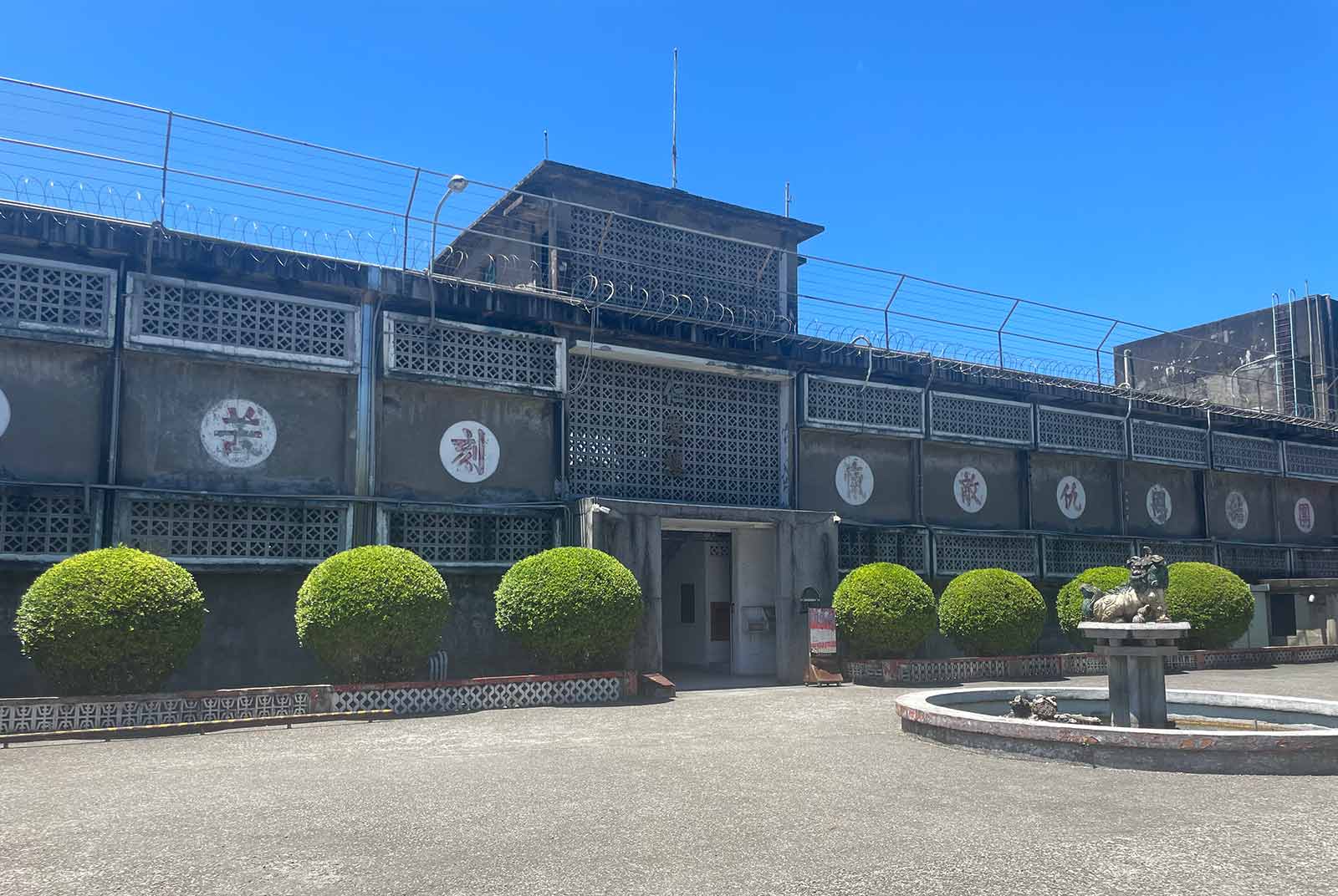 (Photo: William Liu)
At the age of 19, college student Fred Chin was detained for his alleged involvement in the Tainan US Information Service Bombing Incident. For twelve years, he was held without evidence and without any hope of returning to his home country of Malaysia. After his sentence was up, Fred had no family, friends, money, or support to restart his life; he spent the next three years living on the street.
But over thirty years after democratization, Fred harbors no animosity or hatred towards those who wronged him. Over the past decade, Fred has worked as a volunteer at the Jingmei Human Rights Museum, telling people his story and even having the opportunity to meet U.S. House Speaker Nancy Pelosi. His story is one of tragedy, but also one of hope, and demonstrates the power of kindness and the determination of the human spirit.
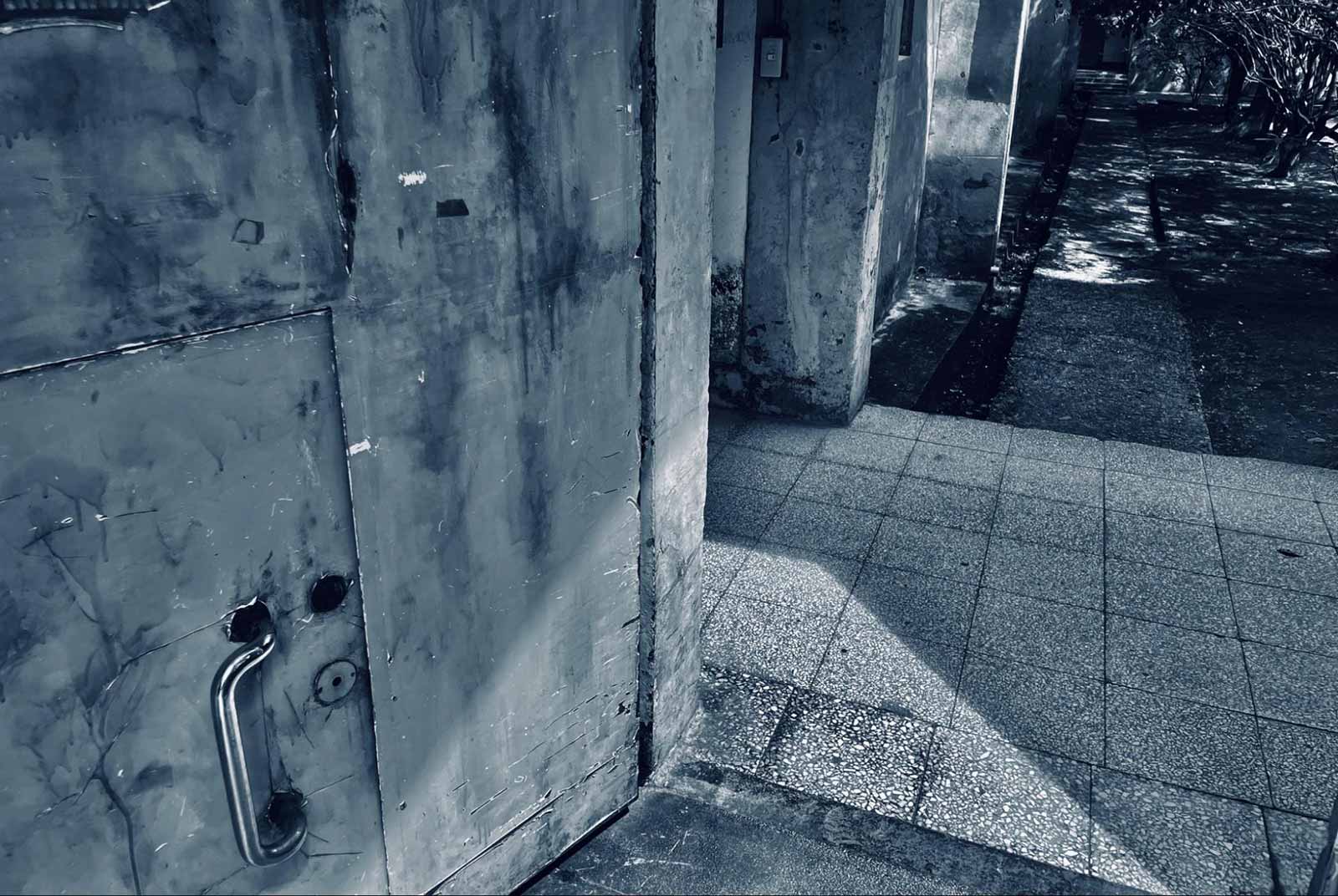 The door leading out of the Jingmei Prison: the larger door was meant for the prison guards, with the smaller one used for the prisoners. (Photo: William Liu)
Who is Fred Chin?
Fred Chin was born in 1949 to a Hakka Malaysian Chinese family. Chin’s father, a secretary in the British colonial government, died when he was only eight years old. His mother, who had little formal education, struggled to raise him and his siblings after his father’s death. Despite the hardship, he was fortunate enough to attend British schools from junior high school, where he learned English and eventually earned a Cambridge high school diploma.
Chin had initially planned to apply for university in the United Kingdom, only deciding to go to Taiwan after a talk with a friend. The friend explained to him that overseas Chinese would be treated well in Taiwan. Curious, Fred proceeded to ask where exactly Taiwan was, with his friend responding that he wasn’t quite sure either.
Once Chin arrived in Taiwan, he quickly realized he had come to the wrong place. He spoke poor Mandarin and no Hokkien, but he was still determined to overcome any challenges that came his way. Chin initially spent one year in Taipei doing a preparatory program and studying Mandarin before eventually enrolling at National Ching Kung University’s Department of Chemical Engineering.
While at NCKU, Chin struggled with his coursework, often relying on English-language materials to supplement the Chinese instruction. During that time, he frequently visited the US Information Services (USIS) to study. He recalled, “It was very comfortable,” with air conditioning, nice staff, and lots of snacks.
The Tainan US Information Services Bombing and Fred’s Arrest
In 1971, tensions between the United States and Taiwan were high. The U.S. was seeking to improve relations with China and Taiwan had recently been expelled from the United Nations. October of 1971 was also a politically sensitive time, marking the 60th anniversary of the Xinhai Revolution, which overthrew the Qing Dynasty and established the Republic of China on the Mainland. Under this backdrop, a bomb suddenly went off at the US Information Service building in Tainan injuring three people. The event later came to be known as the Tainan US Information Services Bombing.
Chin had nothing to do with the bombing, but because he frequently visited the USIS, he was later falsely accused of colluding with the Malaysian Communist Party to overthrow the ROC government. The following year, in 1971, a young man approached him and asked if he knew a man with the last name of Chin. Chin asked him what it was about. The man replied, “Don’t worry, it’s nothing.”
He then proceeded to ask Chin if he had a friend named Tsai, “He’s in Taipei right now and is going back to Malaysia tomorrow.” The man explained that Tsai had called him looking for Chin; he said that Chin needed to go to Taipei immediately so his friend could explain something to him.
Since he had done nothing wrong, Chin didn’t think much of it, but once he got in the car, he immediately felt that something was not right. Sitting next to him were four large men. Chin asked, “Sir, I do not have a friend named Tsai. Could I please ask where you are taking me?”
“You will know when we get to Taipei,” the man explained.
He was then taken to Taipei and detained in a tiny room for two weeks with no explanation. During that time, he attempted to commit suicide but failed.
Eventually, a policeman came in and told Chin that the case had already been solved and that he could now return to school.
Once he got in the car, he found that once again, something was off; the car was not heading towards Tainan. Chin proceeded to ask the man where they were actually going. The man in the car told him that any acknowledgement of the Republic of China Bureau of Investigation’s mistakes could seriously affect their future careers. He then told Chin that he was a nobody and that if they killed him and threw his body in the ocean, nobody would care. He told Chin that once the case was wrapped up, the police would receive a large sum of money, around NT$20,000. The policeman then quoted Chiang Kai-shek, saying, “Better to accidentally kill 100 people than let one guilty person get away.” He then turned to Chin and asked, “Can we let you go?”
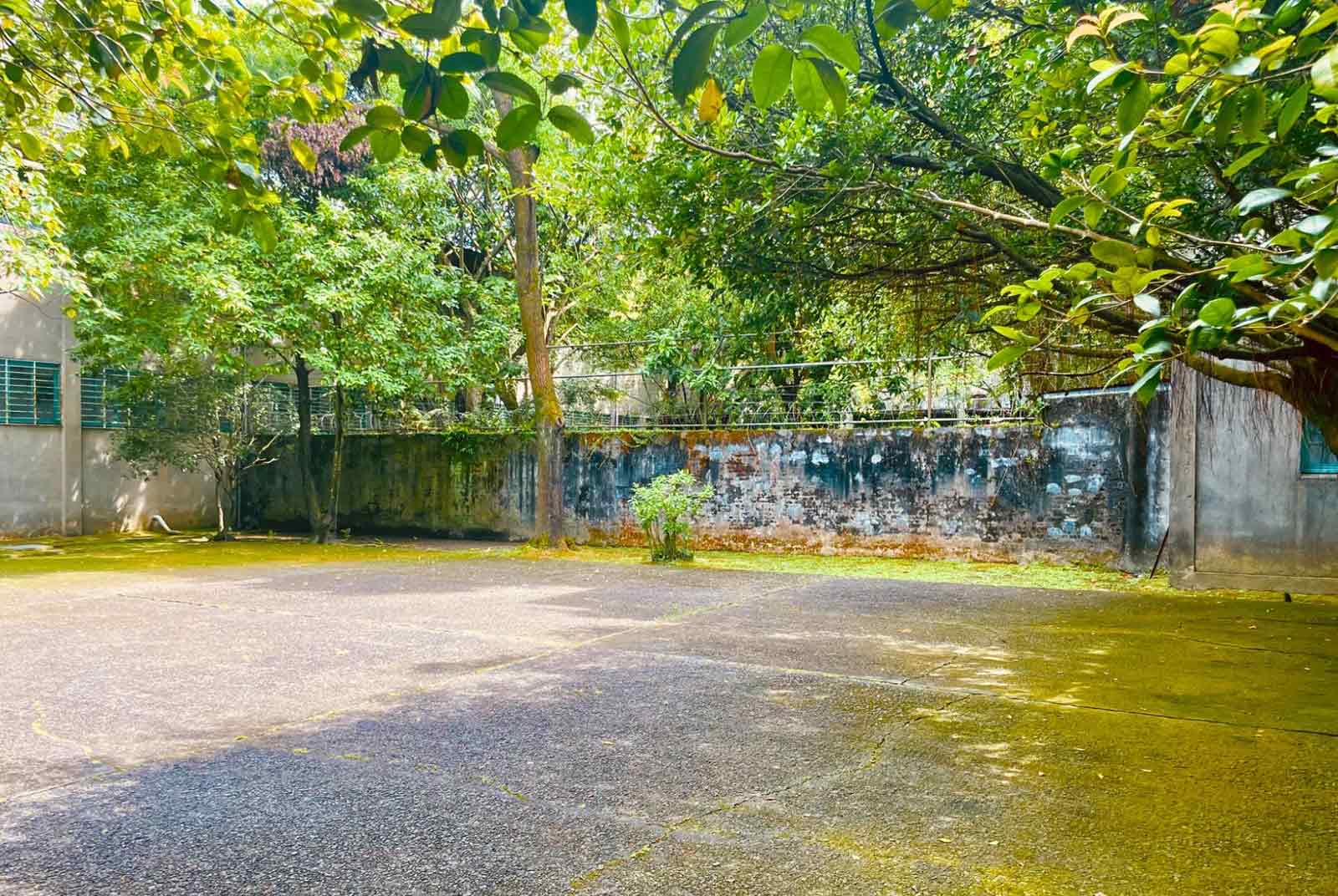 The courtyard at the Jingmei Prision. (Photo: William Liu)
Life in Prision
Chin soon arrived at the Jingmei Prison, notorious for housing political prisoners. Initially, he had some hope that he would have a chance to plead his case.
What followed instead was three weeks of torture and interrogation. Eventually, one of the guards came in and informed Fred that he needed his help to write a report for the guard’s superior. Afterwards, the guard told Chin he could sign some papers and leave.
After five weeks of interrogation, Chin just wanted to go home. He told the official that he was willing to cooperate and sign the papers. The materials the official gave him were all fabricated, but he had hoped that cooperation would end the pain. The judge and the investigators then proceeded to use the documents Chin signed to incriminate him. Chin spent the next twelve years of his life in detention.
Although his time in prison was painful, he did make sure to mention that the prisoners took care of each other. “With the exception of a blanket and mat, we had to buy everything we needed. When I was arrested, I didn’t have any money. My cellmates helped me buy everything.”
Eventually, Chin was moved to Green Island, the location of one of Taiwan’s most notorious political prisons. At that point, he didn’t want to live anymore and began to refuse to eat, only eating when forced to by the guards.
During his time there, Chin still maintained limited contact with his family, with his mother visiting him once during his wrongful detention. When his mother arrived, he urged her not to come and see him again, telling her, “Don’t waste your money”; instead insisting they could write letters.
While his time in prison was painful, he still managed to make the best of it. During his time on Green Island, he decided that he wanted to dedicate himself to studying. He learned Mandarin and Hokkien and read all the books in the prison’s small library. Perhaps most importantly, he also was able to learn a lot from the other political prisoners, many of whom had much more life experience than him. He eventually decided that he needed to face the world as it is. Afterwards, he felt that his time in prison was not as painful.
Life Post Incarceration
When Chin was eventually let out of prison, he had nothing, no family, no work experience, and most importantly, no ROC identity card, meaning that finding work was virtually impossible. Upon leaving the prison, the guard asked Chin what he wanted. Chin responded, “I want you to give me a Republic of China identity card.”
Chin was unable to obtain an identity card or return to Malaysia. Instead, he spent the following three years on the streets, picking up odd jobs. Unfortunately, many of the bosses told him that they were under a lot of pressure and that they were unable to continue employing him. During that time, the Malaysian government tried to help Chin return home, but the ROC would not allow him to leave. They gave him one simple reason: “You know too much.”
Fred knew that if he wanted to put his life back together, he needed an identity card. He tried everything, each time being refused, eventually having to resort to extreme measures. In 1985, he walked into the government office, took out a fruit knife, and told the officials that he had applied numerous times for an identity card. He said if they didn’t find a way to give it to him this time, he would kill himself. Fred expressed that he had no intentions of actually doing it, but that the whole incident did end with him obtaining an identity card.
Returning to Malaysia
By 1987, Martial Law and the White Terror had ended and Taiwanese society was becoming more open. During this time, Fred was finally able to return to Malaysia. But when he finally arrived home, after 21 years, he didn’t receive the welcome he was expecting.
His family told him, “You are already 40 years old and have no work experience or qualifications (diploma). What can you do in Malaysia? If you go back to Taiwan, there may be more opportunities there.”
Fred returned to Taiwan disappointed and heartbroken, but today, he believes their choice was correct. “If I stayed in Malaysia, then I would not be the person I am today.”
Rebuilding
During his time on the streets, Chin struggled to find work, but in 1986, his luck changed for the better. Another friend who was also a victim of the White Terror, helped him find a job at a small international trade company. The boss was good friends with the future president Chin Shuibian (陳水扁) and was aware of Chin’s past. The boss assured him that he didn’t have to worry about pressure, “You don’t have to worry, our support is very strong.”
Chin liked his new job, it was interesting and he got to travel a lot and see the world.
One year later, he had mastered international trade, and was soon recruited by another much larger company.
Chin’s wife also played an important role in helping him rebuild his life. In the interview, he stated, “I am very grateful for my wife.”
Upon returning from Malaysia, Chin had nothing, he lacked a job and identity card and had no place to live. He even went so far as to describe himself as effectively homeless.
Despite this, her family still welcomed him, expressing that they hoped the two could stay together, and even get married. When he subsequently brought up marriage to his future wife, she responded saying “Ok, no problem.” Chin was surprised, he was sixteen years older than her and still struggling to rebuild his life.
“Are you willing to take that risk?” he asked her. She responded saying she was more than willing to.
Reconciliation: “Hate is not able to solve any problems”
Chin was eventually able to get married and start a family, he now has three children, two sons and a daughter. By 2009, Chin felt his family and professional life had reached a good point. He now wanted to give back to society. Initially, Chin did not plan on doing human rights work, instead he began volunteering for the Ciji Foundation, one of the largest charities in Taiwan, caring for sick people.
He told Commonwealth, “In the process of falling down and getting back, this place and these people helped take care of me, and gave me so many opportunities.”
In 2010, Fred suddenly received a phone call, the person on the other line wanted to interview Chin. The man explained that he wanted to hear his story, but Chin was still reluctant. In total, he rejected the man four times, but the fifth time, Chin decided to agree, otherwise, he thought the person would never stop calling him.
The first time he told his story, it was incredibly painful, the following two weeks, he was barely able to sleep. He told the man that he didn’t want to tell his story again and that once was enough.
He then received a second phone call from a man claiming to be one of his classmates from Ching Kung University. The man invited Chin to return to the Jingmei Prison in New Taipei City. He said he wanted him to come inside and see what kinds of feelings and reactions he had.
Once he arrived at the building, he circled around the prison complex three times. On the third time, a man suddenly walked out from the side doors. Chin asked him what he did inside, the man explained that he tells stories, letting people know what life was like during the White Terror.
Hate has no purpose
Chin eventually began telling his story publicly. At first, he said he hated the men in the Investigation Bureau and the judge who sentenced him. He said, “Five or six years ago, when I told my story, I hated them.” But now he harbors no hatred or animosity toward them, and even expressed a willingness to forgive them.
His feelings began to change after attending an event at Academia Sinica. Someone came up to him and gave him some advice saying, “When you tell your story, it is clearly very painful…I recommend you try to tell this story from a different angle.”
Originally, when telling his story, Chin was very pessimistic, but now he tries to look at the future and the present from a more positive angle. Initially it was hard for him, but he persevered for over a year and the pain lessened. He now no longer hates the people who wronged him.
He explained to Commonwealth that the people who hurt him were not necessarily happy with what they did. “I cannot have any hate in my heart…Today, when I tell my story, I don’t feel any hate…but I cannot forget the pain they caused me.” Chin explained that he has tried to reach out to the people who hurt him, but has had no success. He made it clear that if he were able to meet them again, he would forgive them. “I think hating people has no purpose,” he said.
Graduation
One day, while giving a talk on human rights at Ching Kung University, the principal came to listen. After the talk, the principal approached Chin and apologized for what had happened. He especially expressed regret that at the time, the university had not done more to help him.
Chin explained that he was proud to have been able to study at Ching Kung University, but he expressed regret about never being able to graduate. However, the next year, to his surprise, he received a diploma from Ching Kung University’s Department of Chemical Engineering.
Even though the diploma had no practical use, it still symbolized healing and reconciliation; he had finally graduated. He soon went back to Malaysia with his diploma and told his mom “Mom I have graduated, I have really graduated.”
Meeting Nancy Pelosi and the Importance of International Human Rights
Chin has spent the past ten years volunteering at Jing Mei Prison, where he was once held. The prison has since been converted into the “Jingmei National Human Rights Museum," complete with multiple exhibits and memorials commemorating the victims of the White Terror. Chin has continued to tell his story to the next generation, in the hope that they will understand the importance of democracy and human rights.
“If you (young people) forget this, one day the tragedy that happened to me could happen to you,” he stated bluntly.
In 2022, the American Institute in Taiwan contacted Chin and asked if he’d be willing to tell his story to US House Speaker Nancy Pelosi. During her short two-day visit, Pelosi visited the museum and was able to meet with Chin. While he was only able to meet with her for around twenty-five minutes, she left a deep impression on him.
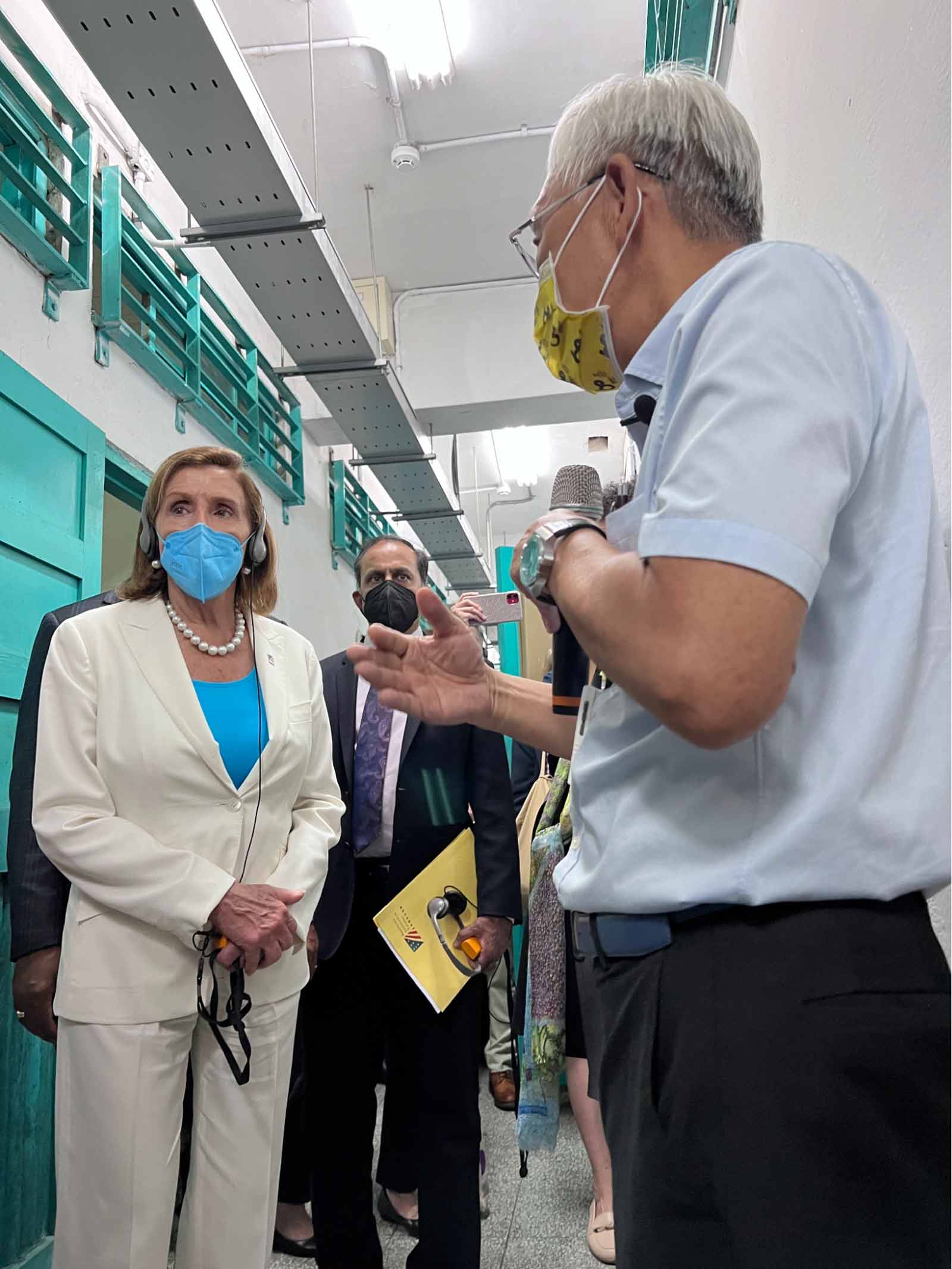 (Source: Fred Chin)
Chin said that he could see Pelosi was tired, but at the same time, he could see a sort of spirit in her eyes. He could tell she cared deeply about human rights.
He asked her, “Why did you want to come to this place?”
Pelosi responded, “My whole life, I have upheld the ideals of international human rights.” She continued, explaining that she wanted to come to the human rights museum to understand what Taiwan was like before democracy.
When asked about the flaws of democracy, Chin responded, saying that even though authoritarian governments are often quicker and more efficient, they aren’t necessarily better. He said people in these systems have no opportunity to fight back. He explained even though democracy will be slower and messier, it is still the best system we have.
In the 2020s, democracy seems to be in retreat around the world, with many citizens of democracies actively questioning whether or not it is worth preserving. Fred Chin’s story serves as a powerful reminder of the importance of democracy and what happens when countries do not respect basic human rights and dignity.
At the same time, it also symbolizes the power of forgiveness and reconciliation and the strength of the human spirit. Fred Chin lost everything, despite having done nothing wrong. But through the support of those around him and his own determination, Chin was eventually able to rebuild his life. He has also been able to forgive the people who falsely imprisoned him, showing that reconciliation is possible even after some of the most horrific crimes. Hopefully Chin’s story will continue to serve as a reminder of both the importance of human rights and the power of the human spirit.
Have you read?
- From Atoms for Peace to “No-Nuclear Homeland”: Taiwan’s Nuclear Power Referendum Explained
- Don’t Forget to Feed the Hungry Ghosts: Taiwan’s Ghost Month Explained
- East Asia’s Treasure Island: Exploring Taiwan’s Spiritual Landscape and Religious Diversity
Uploaded by Ian Huang
Views

Subscribe to CWE Newsletter (every Thursday)
Stay abreast of what's happening in Taiwan with our weekly digest.
Keywords: