Taiwan’s Growing Climate Voice at Brazil’s COP30
Source:Taiwanology
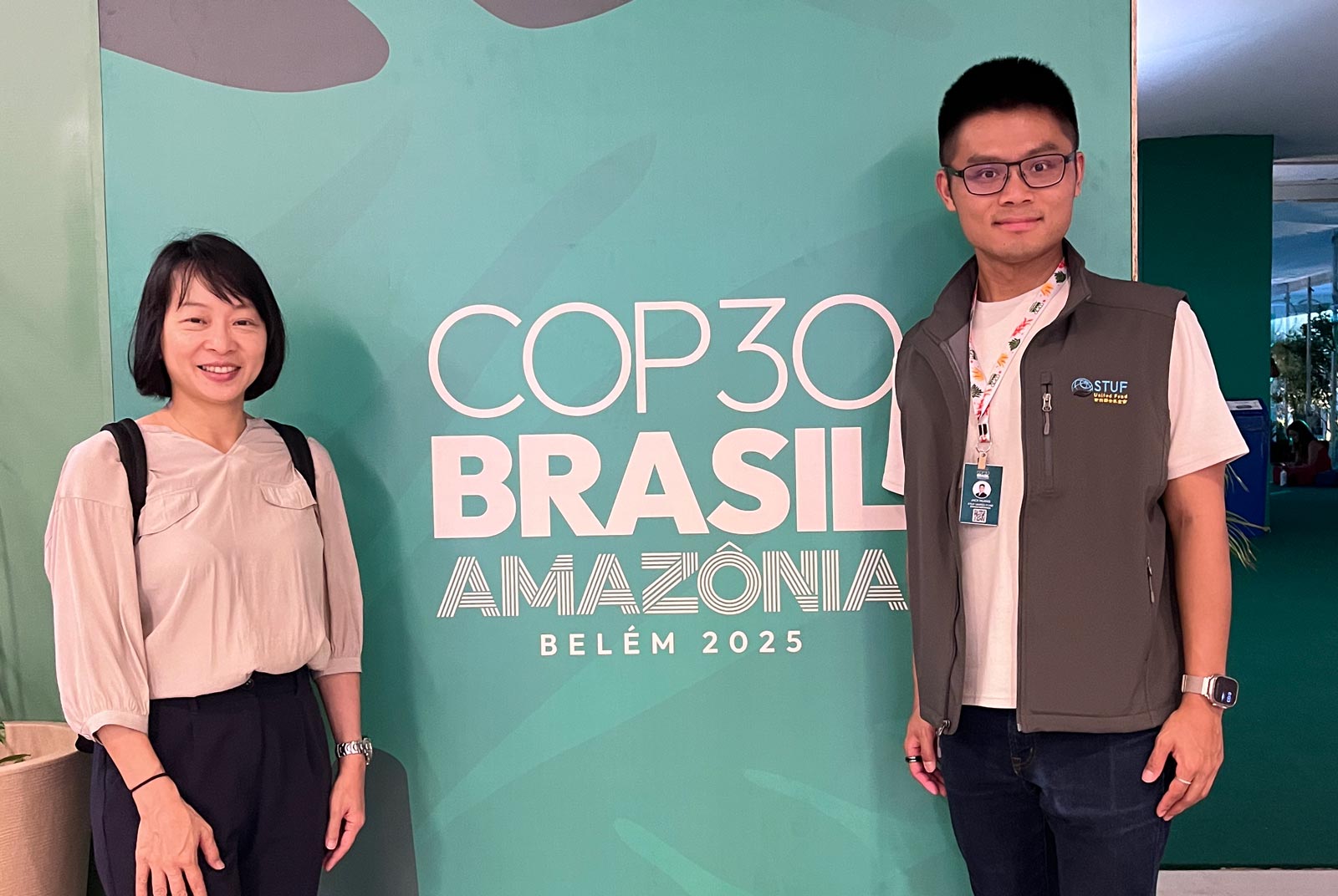
COP30 in Belém has ended not with a bang, but a whimper. With no agreement to phase out fossil fuels, the final deal leaves the 1.5°C goal hanging by a thread. But amidst the deadlock, Taiwan made a historic splash with its own pavilion in the Green Zone. What does this mean for the planet and for Taiwan’s international status? We dive in with Dr. Rachel Cleetus and Jack Huang.
Views
Taiwan’s Growing Climate Voice at Brazil’s COP30
By Taiwanologyweb only
The following is the transcript of the 54th episode of the Taiwanology podcast. It was produced by CommonWealth Magazine, hosted by Kwangyin Liu, and was recorded following COP30 in Belém, Brazil. The guests were Dr. Rachel Cleetus, Policy Director with the Climate and Energy program at the Union of Concerned Scientists, and Jack Huang, a consultant for the United Nations and volunteer organizer for the STUF United Fund pavilion.
Listen to the episode: Taiwan’s Growing Climate Voice at Brazil’s COP30【Taiwanology Ep.54】
The Global Reality: Overshooting 1.5°C
Host: "How do you view the current global picture regarding climate goals?"
Rachel Cleetus: "The report is one of many that have come out in the last couple of weeks, pointing out that unfortunately, because of inaction from world leaders, because of fossil fuel companies obstructing, unfortunately, this report is also confirming that the world is on the
brink of overshooting 1.5 °C. That has profound implications for people around the world."
Rachel emphasized that while there is positive movement, the pace is insufficient. "I'm not at a rate that's fast enough to outpace as much fossil fuels as are being deployed. So there's no path to meeting our climate goals unless we also have a fast fair phase out of fossil fuels alongside this extraordinary renewables growth."
She noted that the choices made now determine the severity of future damages. "We have choices available to us that can help mitigate as much as possible. Even now, those choices are really important. And they include rapidly ramping up renewables and efficiency, cutting back on fossil fuels, making sure that we have systemic changes in the global economy that encourage more clean energy transition more rapidly."
The Zero-Sum Geopolitical Trap
Host: "The IEA report and current political climate often frame these issues competitively. How do you see this?"
RC: "I think it's a real mistake to think about these big global challenges as a zero-sum competitive game. We're not going to be able to solve any major global challenge, including climate change, including a few years ago, the COVID pandemic, if countries don't act together."
She argued that framing climate action as a geopolitical fight harms everyone. "It should not devolve into a zero-sum game where everybody loses. So the opportunity here is really to think about how can we galvanize this clean energy transition around the world."
Regarding the United States' political shifts, Rachel was blunt about the domestic impact of rolling back climate policies. "This is going to directly harm consumers. It is going to raise electricity costs. It's going to slow renewables growth. It's going to increase pollution from fossil fuels."
Taiwan’s Presence: The Blue Zone vs. The Green Zone
Host: "I was walking around in the blue zone... I didn't see a pavilion for Taiwan. Why is that?"
Jack Huang: "Taiwan, of course, we are a country, but for some reasons in the United Nations policy, Taiwan is not exactly a country. So I think that's the reason why we couldn't see any Taiwan pavilion in the blue zone."
Despite this exclusion, Taiwanese organizations found a way to participate in the "Green Zone," which hosts NGOs and activists.
JH: "We call that Stuf, United Farm. That's kind of the charity foundation based in New York. The founder or the supporter, and the stakeholders come from everywhere. But most of them they are businessmen and businesswomen."
Jack explained the origin of the support: "It was a group of businesswomen and men in North America. They called the Taiwan Business Association. And there's a very key person called Thomas Chen. Thomas founded Stuf, United Farm, and he would like to promote Taiwanese soft power everywhere in the world."
Why a Non-UN Member Should Care
Host: "Why should Taiwan care about the climate negotiations or this climate change issue at all? This is a game for UN members."
JH: "Taiwan just take some realistic way. We are a place, or we are a region which rely on export and import. So we rely on this global trading system. So once climate change affects a lot of economies, a lot of this kind of trading system, Taiwan cannot just withdraw from that system."
Jack emphasized that Taiwan’s technological prowess is a key asset to share. "In Taiwan, we always call ourselves a very strong superpower. And why don't we share that superpower with some other developing country?. We have a very strong supply chain. We have very strong producers, the storage, the battery, or even the solar panel, the wind turbine."
The Risk of LNG and Stranded Assets
Host: "Taiwan really has invested a lot of money in building infrastructure for LNG in the name of energy security. What do you say to that?"
Rachel warned that investing in Liquid Natural Gas (LNG) infrastructure creates long-term economic risks.
RC: "And to any country, I would say what will energy security mean on a planet that's literally burning down?. And all of these scenarios, the IEA scenarios, the net zero scenarios are showing that those are incompatible with large build out of new fossil fuel infrastructure28."
She cautioned that these investments would soon become financial burdens. "So these will become stranded assets. These are not assets that should be invested in. Large new LNG infrastructure does not make sense in a world that's trying to decarbonize."
KL: "So they will become stranded assets in how many years?"
RC: "I think within the next 10-15 years, there will be a clear, we are already seeing renewables accelerate so fast that in many cases, these just won't be worth investing in. And it is really exposing countries to volatility on the global market as well, price volatility around gas."
The Cost of Inaction
Host: "What are the financial implications of missing these targets?"
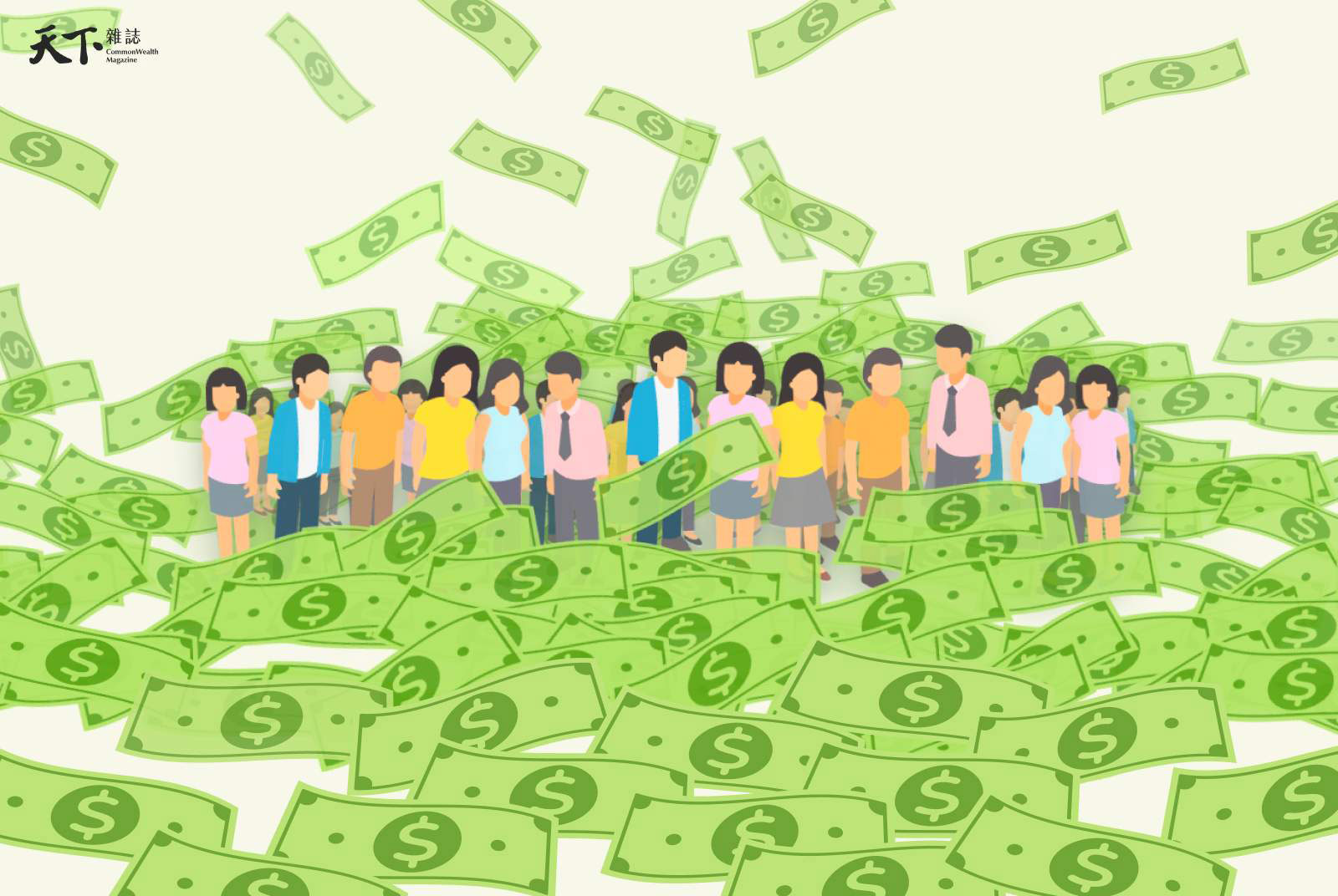
RC: "The other thing to point out is this report does not take into account the cost of climate change. So when we're talking about scenarios that blow past 1.5 to 2.5, even getting to 2.9, we're talking about trillions of dollars of damage around the world. Those costs are not accounted for in these scenarios."
Closing Thoughts: Implementation and Cooperation
Host: "What would you like to see accomplished?"
JH: "I do wish COP can really come with some real action. As the chairman in the opening ceremony, he mentioned we probably have enough ideas, we have enough solutions, but we don't have enough actions."
He concluded with a message on unity: "Taiwan, we are geographically very small, but our people are very strong. Because once we unite with each other, then we can conquer climate change."
Have you read?
- As China Dominates COP30, Taiwan Faces a New Climate Reality
- COP30 Opens in Brazil with Urgent Call for Unity
- Exclusive|BNEF CEO on Taiwan’s Net-Zero Path: Nuclear Power Cannot Be Left Out
Uploaded by Ian Huang
Views

Subscribe to CWE Newsletter (every Thursday)
Stay abreast of what's happening in Taiwan with our weekly digest.
Keywords: