New Solution for Ocean Plastic
Taiwan Makes Straws and Salad Boxes Environmentally Friendly
Source:Chien-Ying Chiu
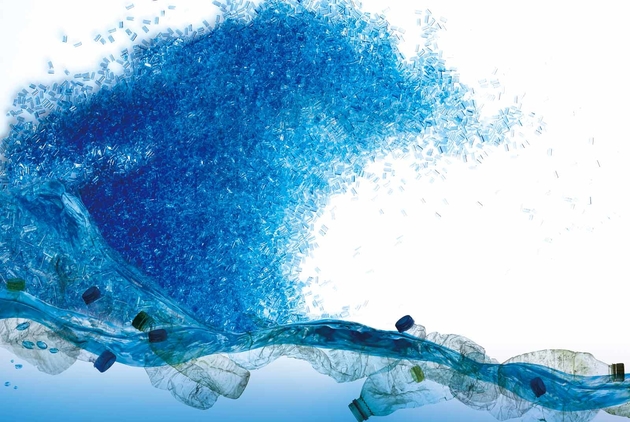
The worldwide revolution to reduce plastic usage and waste has given birth to new products and new companies. And Taiwan’s industry has hopped aboard this wave, with members from the textile and petrochemical industries, down to small- to medium-size businesses, offering creative solutions.
Views
Taiwan Makes Straws and Salad Boxes Environmentally Friendly
By Kuochen Lu, Ching Fang WuFrom CommonWealth Magazine (vol. 692 )
Are you still cleaning up beaches? Last year, 322 beach cleanups were held all around Taiwan, collectively clearing away a total of 37 tons of ocean waste. From the government to corporations, down to citizens’ groups, everyone rolled up their sleeves and did their part trying to save our oceans.
However, coastal cleanups cannot save our oceans at all, because the ocean waste you see is just the tip of the proverbial iceberg. According to statistics from the United Nations Environment Programme and the Ocean Conservancy, 8.6 million tons of waste material is dumped into the world’s oceans every year, yet beach cleanup activities can only pick up 10,000 tons, or only one one-thousandth of the total.
At this rate, plastic waste in the oceans will quadruple by 2050 at the earliest, outweighing all the fish in the seas.
The problem is that we are producing too much and recycling too little.
But this is both a threat and an opportunity for business. The worldwide revolution to reduce plastic usage and waste has given birth to new products and new companies. And Taiwan’s industry has hopped aboard this wave, with members from the textile and petrochemical industries, down to small- to medium-size businesses, offering creative solutions.
Not only have major brands like adidas and Nike announced that, as soon as 2024, they will begin manufacturing apparel made entirely from recycled materials, but cities around the world have declared war on plastic straws. (Read: Turning Ocean Waste into Footwear - Taiwan Makes it Possible)
Dust permeates the Huwei Science Park, in central Taiwan’s Yunlin County, as work on a plant for Minima Technology is still underway. Yet Japan’s Mitsui Bussan Plastics came calling, anxious to invest NT$120 million.
What Mitsui recognized is the commercial potential of zero waste with biodegradable polymers; biodegradable plastics can be broken down by microorganisms into water and carbon dioxide.
This put into focus a new trend in tackling marine waste.
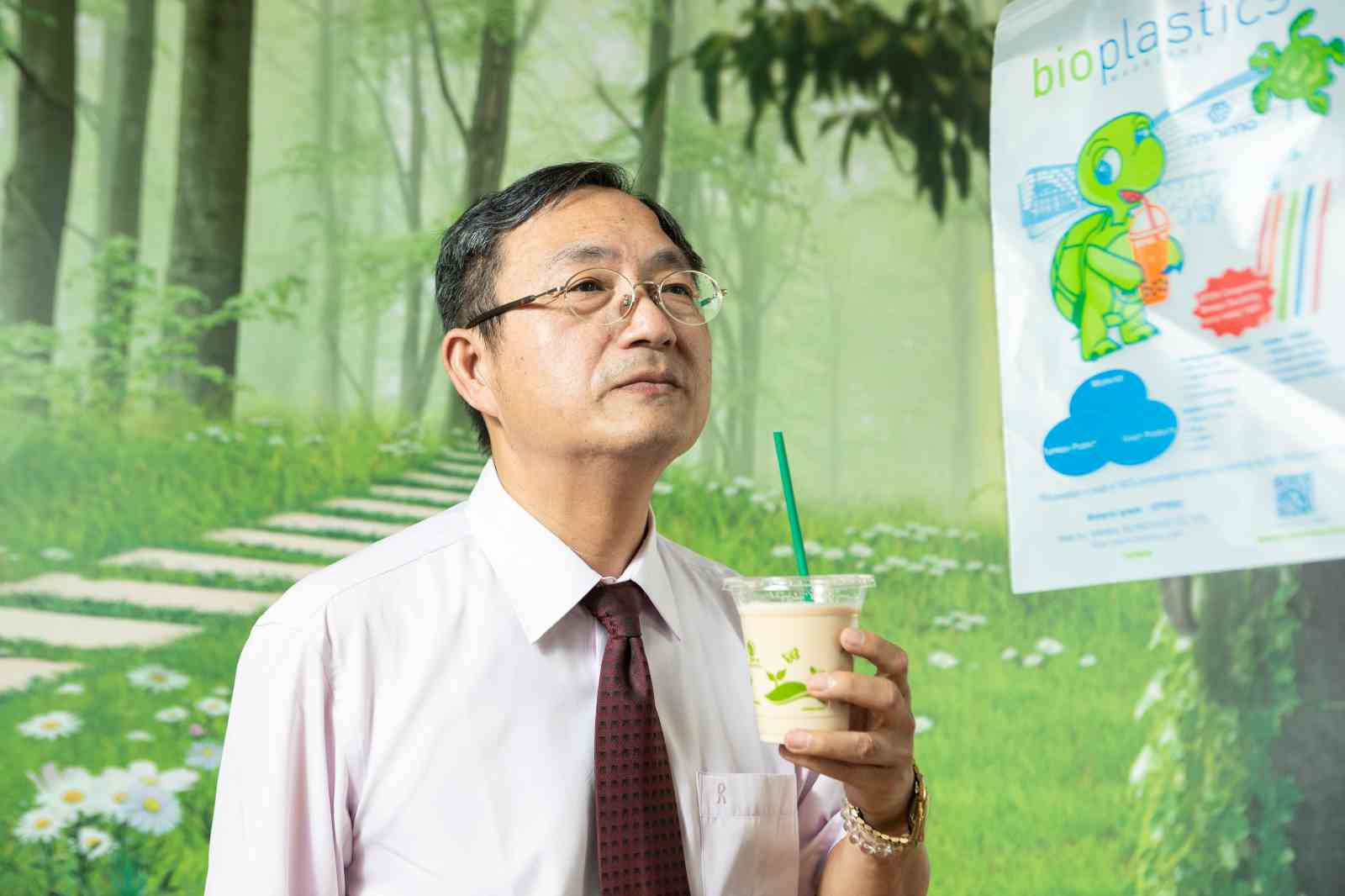 Photo by Justin Wu/CW
Dr. Chien-Ming Huang, Minima CEO, relates that the pursuit of lightness and durability led humanity to develop more robust, long-lasting plastics. However, Minima took another course of action, turning the molecular chain into carbohydrates.
Just as humans return to the earth after death, this type of plastic is similarly broken down by microorganisms.





Minima quietly endured a decade of consecutive losses, all the while remaining staunch in its commitment to developing biodegradable polymers. Dr. Huang saw his shares continuously dwindling, until the flood of plastics in the oceans got people thinking about whether we were taking the wrong direction with plastics, and turned around to invest in biodegradable polymers.
In addition to investment from the National Development Fund under Taiwan’s Executive Yuan, in 2019 Minima took on two more major investors, namely Formosa Plastics and Mitsui Bussan Plastics of Japan.
However, there is a worldwide shortage of upstream raw materials for biodegradable plastics, and even if production is expanded it would only amount to 300,000 tons at most, far short of the global demand.
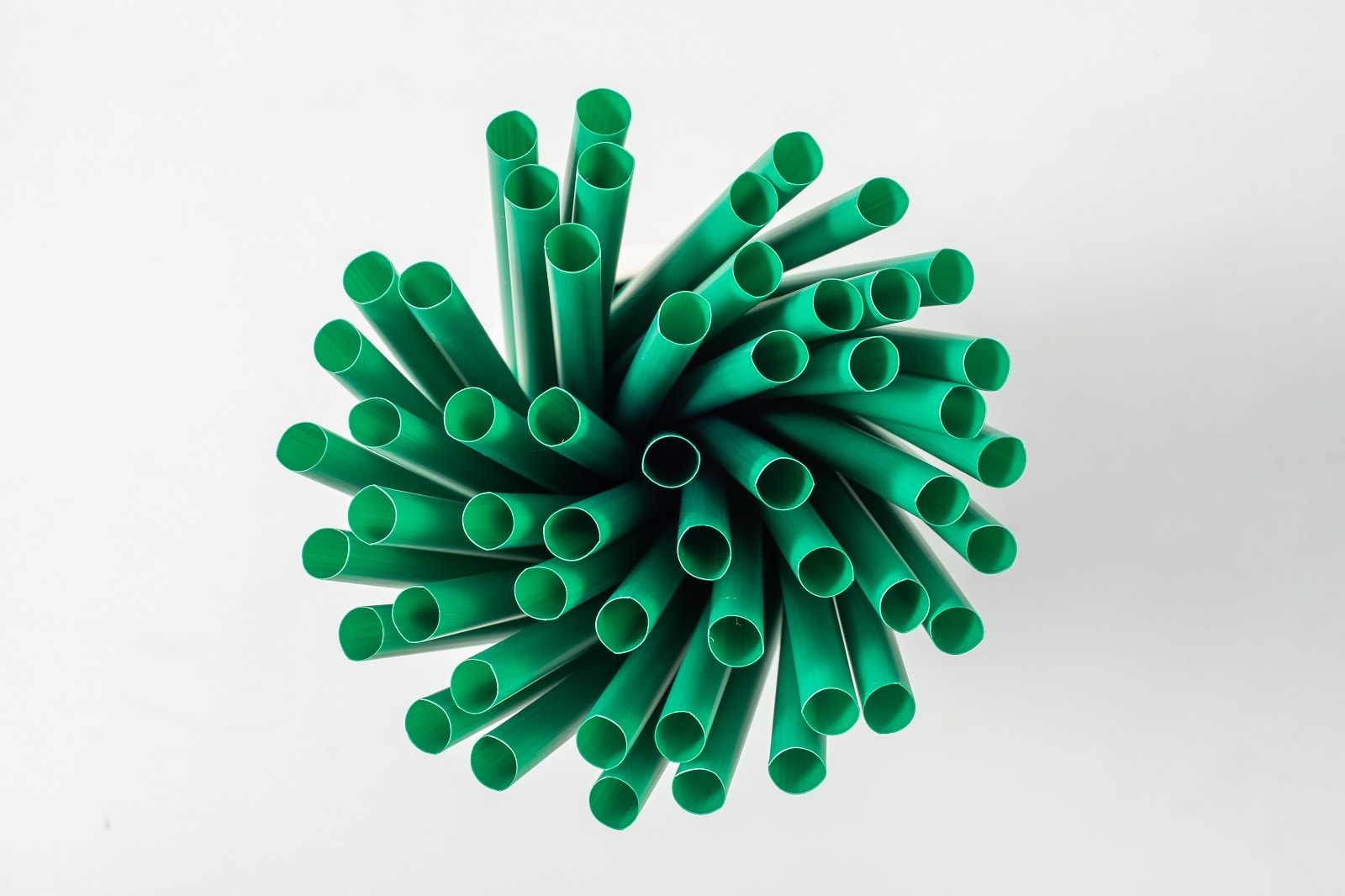 Photo by Chien-Ying Chiu/CW
“It would be better if Taiwan could produce our own raw materials,” says Huang. (Read: Made-in-Taiwan Biodegradable Plastic, Delivering Big for Starbucks)
Conventional petrochemical plants like Formosa Plastics’ Sixth Naphtha Cracker facility or China Petroleum’s refineries, are capable of producing biodegradable polymers such as PBS or PBAT that microorganisms would be able to break down.
The problem lies in that given the lack of a market in the past, no one was willing to invest in the production of this type of product. And although Formosa Plastics has invested in Minima, no one has stepped up to expand the production of upstream raw materials.
Other than straws, another area of modern living is also teeming with single-use plastics. When you walk into a supermarket, the strawberries, cherry tomatoes, and sushi are usually packed in transparent plastic punnets. So how can the environmental load of these plastic packages be reduced?
The answer can be found at the King Yuan Fu (KYF) Packaging Co. in Yingge, New Taipei City. Executive director, Yu-hui Chen, raises a light green tinted transparent plastic punnet with a broad smile.
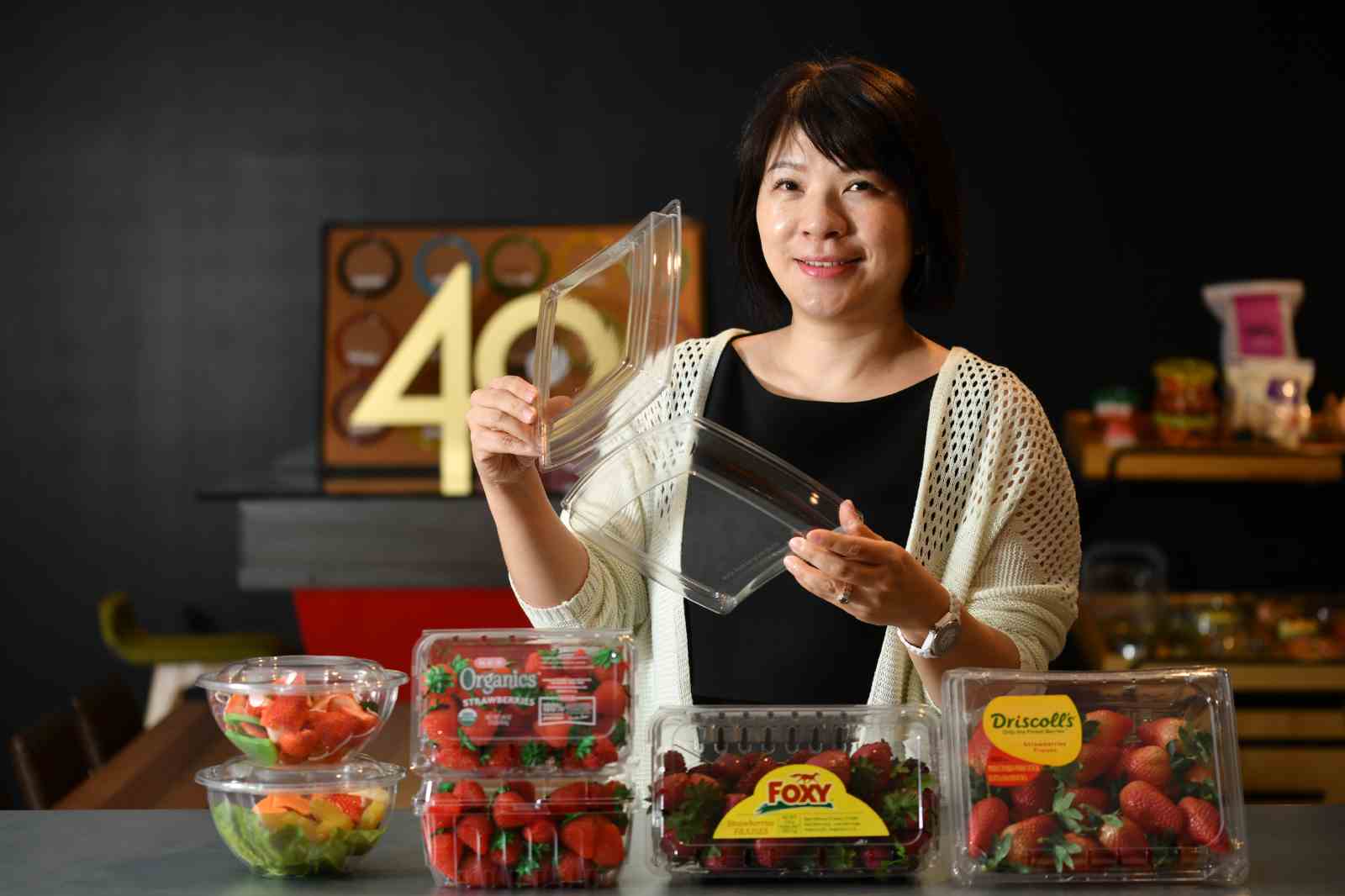 Photo by Kuo-Tai Liu/CW
These humble little containers are the latest project from KYF, Asia’s largest vacuum forming plastic container manufacturer: new plastic food container brand aGain gets its raw material from recycled PET (polyethylene terephthalate, a type of plastic widely used to make plastic bottles).
Of the single-use plastic punnets manufactured by KYF, 95 percent of the production volume is sold abroad, packing everything from crackers and cakes to strawberries and roast chicken.
KYF products can be seen in American megastores like Walmart and Costco. And Taiwanese products such as I-Mei puffs and Laurel hotpot kits also come packed in plastic containers made by KYF.
At a time when the plastic packaging industry is under heavy scrutiny, Chen wants to forge a new brand on recycled PET material, to give the public environmentally friendly consumption options. “Plastic is not necessarily a vicious cycle, but it can create a virtuous cycle,” she says.
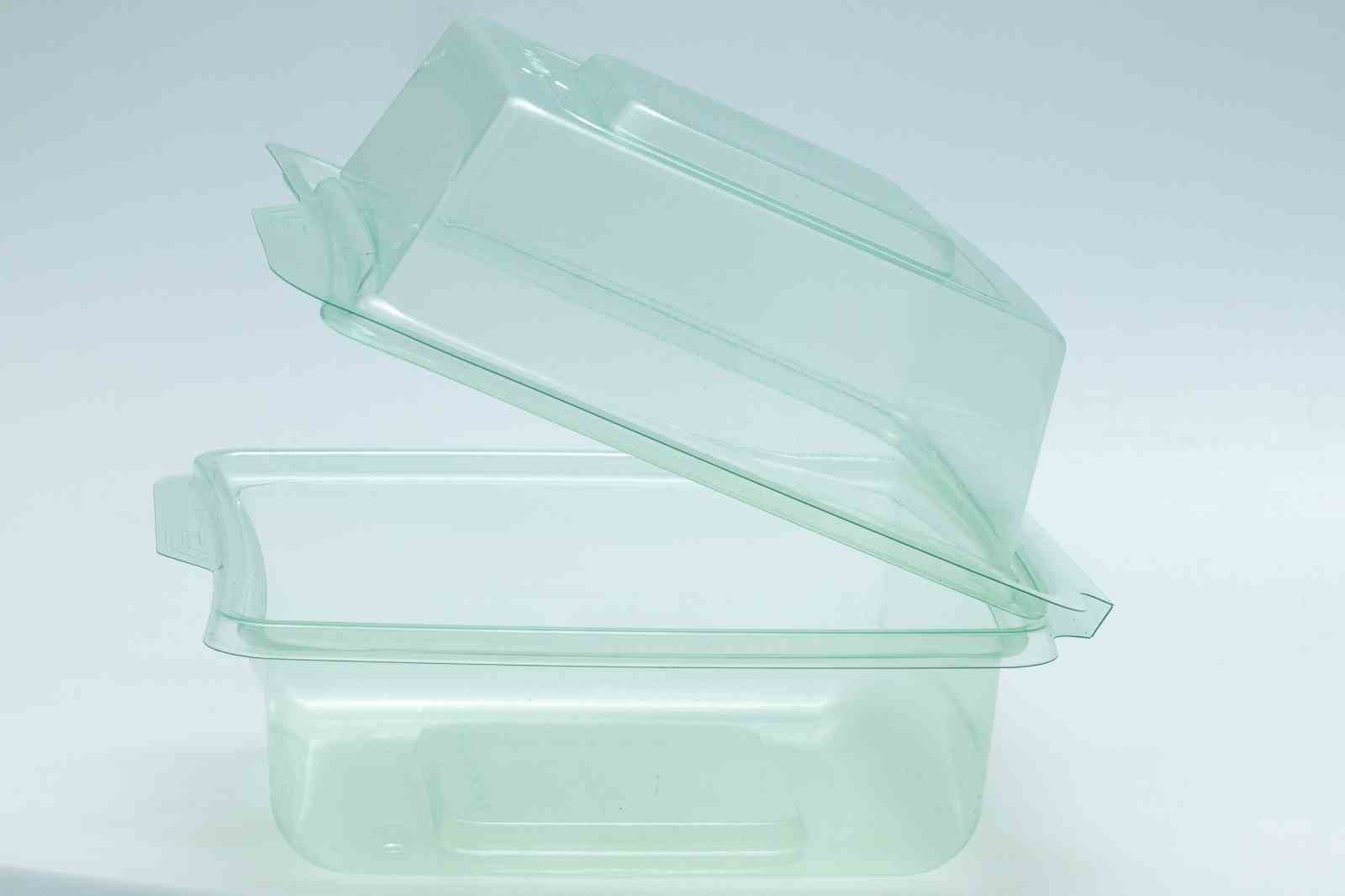 Photo by Chien-Ying Chiu/CW
Interestingly, the first action Chen took was to purchase scraps of recycled green-colored bottles.
Currently, only two colors in the PET recycling process have high reconstitution value following sorting, namely transparent and blue. Blue can be mixed in with transparent bottle scraps to increase the brightness of the reconstituted products, conforming with market expectations of transparent containers. As for other colors, like green or mocha, these largely take reconstitution down a notch, finding use as fiber filler.
It has probably never occurred to most people that bottles can be divided into noble and deplorable classes. But Chen wants to leverage her brand to shatter color discrimination, so that resources can attain corresponding value. And not just when it comes to color, Chen is determined to be a stickler fighting over even the smallest details of aspects like structure and appearance.
“In the past, the same type of product required 35 grams of raw materials. But we strengthened the structural design to reduce that by eight to 10 percent,” relates Chen.
She even aims to resolve issues further upstream. Last year KYF entered a joint investment with a customer on a cleaning and sorting plant in Mexico. This facility’s mission is no less than to increase the value of recycled PET food containers.
Similar to the issue of color, food containers are several rungs on the ladder lower in value recycling than bottles, even though both are made from PET. Food containers can easily become coated with oils, and come in all sorts of odd shapes and sizes, making label removal more difficult than bottles. Accordingly, despite the massive use of PET plastic boxes, most sorting facilities refuse to handle them.
Mexican labor costs are low, and workers there are able to process bottles and PET food cartons from American recycling firms, making it an important base behind KYF’s efforts to expand with a new plastic circular economy brand, and experiment with closed cycles.
Chen shows a photo of a pallet of bottles at the Mexican facility, among which KYF plastic containers for US export can be clearly spotted.
“There’s a Driscoll’s strawberry punnet, and there’s a tomato container…” she exclaims. In the future, plastic boxes previously bound for incinerators or landfills will serve as aGain’s raw materials.
Kuo-Wei Huang, acting chief operating officer of the High-Value Petrochemical Industry Promotion Office, observes that while Taiwanese small- and medium-sized industries have circular economy applications and innovative energy, they need to be able to tell a good story in order to raise the value of recycled materials.
“We want to promote a new concept: not only that bottles can be made into containers, but that our boxes can also be remade into new boxes,” she says.
Have you read?
♦ Made-in-Taiwan Biodegradable Plastic, Delivering Big for Starbucks
♦ He’s Turning Taiwan’s Used Fast Food Restaurant Oil Into Biodiesel
♦ Turning Ocean Waste into Footwear - Taiwan Makes it Possible
♦ What Makes This Glass Recycling Plant Special?
Business profiles
Minima Technology
- Founded / 2003
- CEO / Chien-Ming Huang
- Core business / biodegradable polymers
- Revenue / NT$300 million (2019)
King Yuan Fu (KYF) Packaging Co., Ltd.
- Established / 1978
- Executive Director / Yu-hui Chen
- Core business / vacuum formed injection molding plastic packaging
- Revenue / ~NT4.8 billion (2018)
Translated by David Toman
Uploaded by Sharon Tseng
Views

Subscribe to CWE Newsletter (every Thursday)
Stay abreast of what's happening in Taiwan with our weekly digest.
Keywords: