What is Propping Up China’s Economic Numbers?
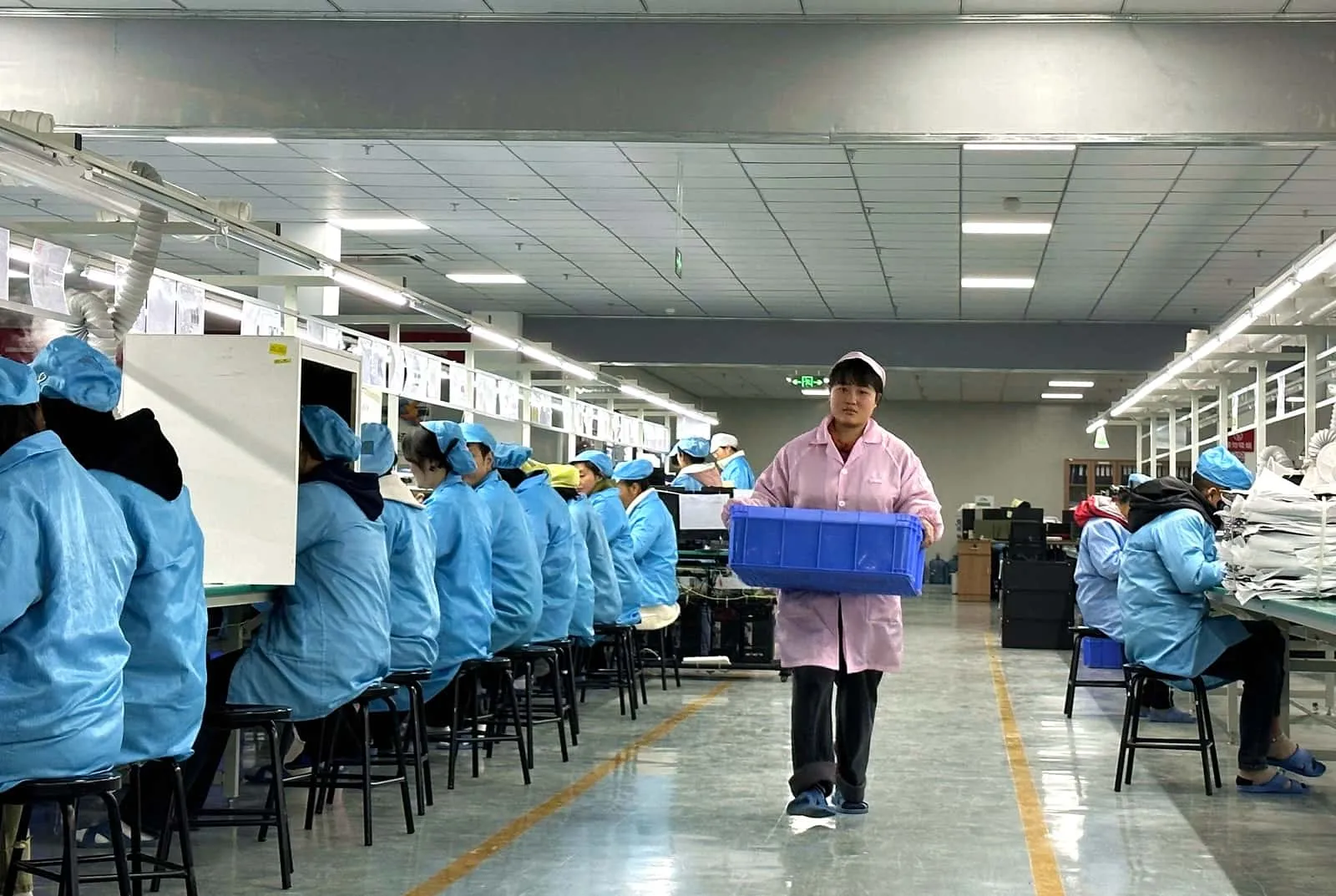
Source:Getty Images
China’s economy recorded 5.3-percent growth in the first quarter. However, upon closer examination, this represents a downward adjustment over the base period of last year, and the economy has been propped up by low-cost exports. What does it really tell us about China’s real economic outlook?
Views
What is Propping Up China’s Economic Numbers?
By Silva ShihFrom CommonWealth Magazine (vol. 797 )
For Liang (not his real name), a lecturer at a university in Guangzhou, the latest economic report card issued by the National Bureau of Statistics seems to describe another world.
“The official media claims that the first quarter is off to a good start, but my question is: What is actually good about the economy?” asks Liang. With the university about to reduce salaries, he is even thinking about selling his home.
Liang is not the only one who is surprised at China’s economic performance reports. According to figures from the National Bureau of Statistics, China’s economy grew at a rate of 5.3 percent in the first quarter, surpassing outsiders’ predictions by 0.8 percent.
At first, when China set its economic growth target for the year at around five percent, observers deemed that figure too high. However, with the release of the first-quarter report card, China now appears to have a chance to reach it.
What happened? And why is the middle class oblivious to such an economic recovery?
Looking simply at the proof offered by official PRC sources, it is clear that exports and investment in manufacturing have propelled first-quarter growth. Meanwhile, consumption remains stalled.
“Exports are stronger than we’d imagined,” offers Robin Xing, chief China economist at Morgan Stanley China, driving home the point with China’s latest score card in hand.
According to official statistics, exports grew by 4.9 percent in the first quarter, a stronger performance than all of last year. The analytical team at Sinolink Securities believes that a turnaround of the American economy has driven the recovery of China’s furniture and machinery exports.
Apart from exports, increased investments in the manufacturing industry and fixed assets also demand attention.
Not only have infrastructure investments exceeded expectations, but the overall growth of the manufacturing industry in the first quarter reached 6.7 percent, far outstripping overall economic growth. Within this sector, highly technical manufacturing including aerospace, electronic communications, and medicine achieved significant growth of 7.5 percent, a full two points higher than figures for the fourth quarter of 2023.
These results are brilliant, but when one looks a little closer, the other side of the “good start” comes into view.
According to the latest report from the Union Bank of Switzerland (UBS), China’s first-quarter statistics have seemingly been massaged.
“The Bureau of Statistics made a downward adjustment to the GDP growth rate for the first half of last year, and fixed asset investment for 1Q last year and historical data for real estate activities,” reports Wang Tao, chief China economist for UBS Group AG.
Contrasting with the Bureau of Statistics’ press release, the official source added a pre-emptive footnote, which stated that this year they have made particular efforts to strengthen statistical execution, and correct “problematic” data.
By close accounting, the official sum of last year’s fixed asset and real estate investments was actually adjusted downward by 11 and six percent, respectively. With the base period from the previous year lowered, this year’s figures naturally show additional growth.
In other words, only exports recovered, while investments have had a rough ride.
Insufficient bond issuance, investment slow to take root
Comparing overall and individual statistics further imparts the differences.
Taking the example of infrastructure investment at the beginning of the year, on the surface it looks like growth - whether fixed investments or investment in infrastructure - surpassed expectations.
However, looking on a more granular level at earth-moving equipment work hours or asphalt machinery utilization rates reveals a downward trend that is lower than last year’s level.
“Policies are slow to take root, and special bonds in particular are issued too slowly, which could be an important factor,” relates Zhao Wei, chief economist for Sinolink Securities.
Special bonds are issued by local governments to raise funds for particular projects, making them important tools for local infrastructure investment.
According to estimates by Zhao Wei and his team, first-quarter special bonds account for about 40 percent of the total annual sum. This year, however, the percentage has only been 16.3 percent.
If bond issuance falls short of targets, local governments lack the funds necessary to proceed with projects, despite having plans in place.
Credit ratings agencies have clearly recognized the risk at the local level. In early April, Fitch followed Moody's in revising China's sovereign credit outlook from "stable" to "negative," effectively casting a vote of no confidence in the Chinese government's fiscal capabilities.
Lackluster consumption remains greatest pain point
Using fiscal measures to drive growth has begun to raise doubts among outside observers. More fundamentally, the real estate downturn has led to insufficient consumer spending, which continues to be the largest pain point in the Chinese economy.
In the first quarter of this year, retail sales of consumer goods grew by only 4.7 percent, a lower figure than GDP growth. In particular, the performance of automobiles and communications equipment in March also lagged behind the same period last year.
The effects of consumption contraction have continued to spread to the manufacturing sector.
‘Low-cost China’ is this year’s theme
Comparing first-quarter export figures, export prices grew by single digits, whereas export volume grew nearly 14 percent, indicating that China's current export products are priced competitively to maintain volume.
Meanwhile, the production capacity utilization rate for the PRC continues to decline, with the latest quarterly data dropping to just 73.6 percent, the lowest level since the early 2020 COVID-19 lockdowns in China.
According to Capital Economics, even if other countries launch anti-dumping investigations against China, Beijing persists in massively investing in strategic industries, showing that “China’s overcapacity problem is not going to disappear overnight.”
China's first-quarter report card is actually a warning about unbalanced recovery solely reliant on exports.
Have you read?
- Engineers of the Human Soul
- The Second Ma-Xi Meeting: Paving the Way for Beijing to Focus on the Economy
- Ma-Xi Meeting 9 Years Later: Xi's Final Goodwill?
Translated by David Toman
Uploaded by Ian Huang
Views

Subscribe to CWE Newsletter (every Thursday)
Stay abreast of what's happening in Taiwan with our weekly digest.
Keywords: