Taxing Taiwanese Chips? Trump is Getting Manufacturing Wrong
Source:shutterstock
How can we get the message across to [Donald] Trump that Taiwan has not stolen America’s semiconductor business?
Views
Taxing Taiwanese Chips? Trump is Getting Manufacturing Wrong
By Joyce Yenweb only
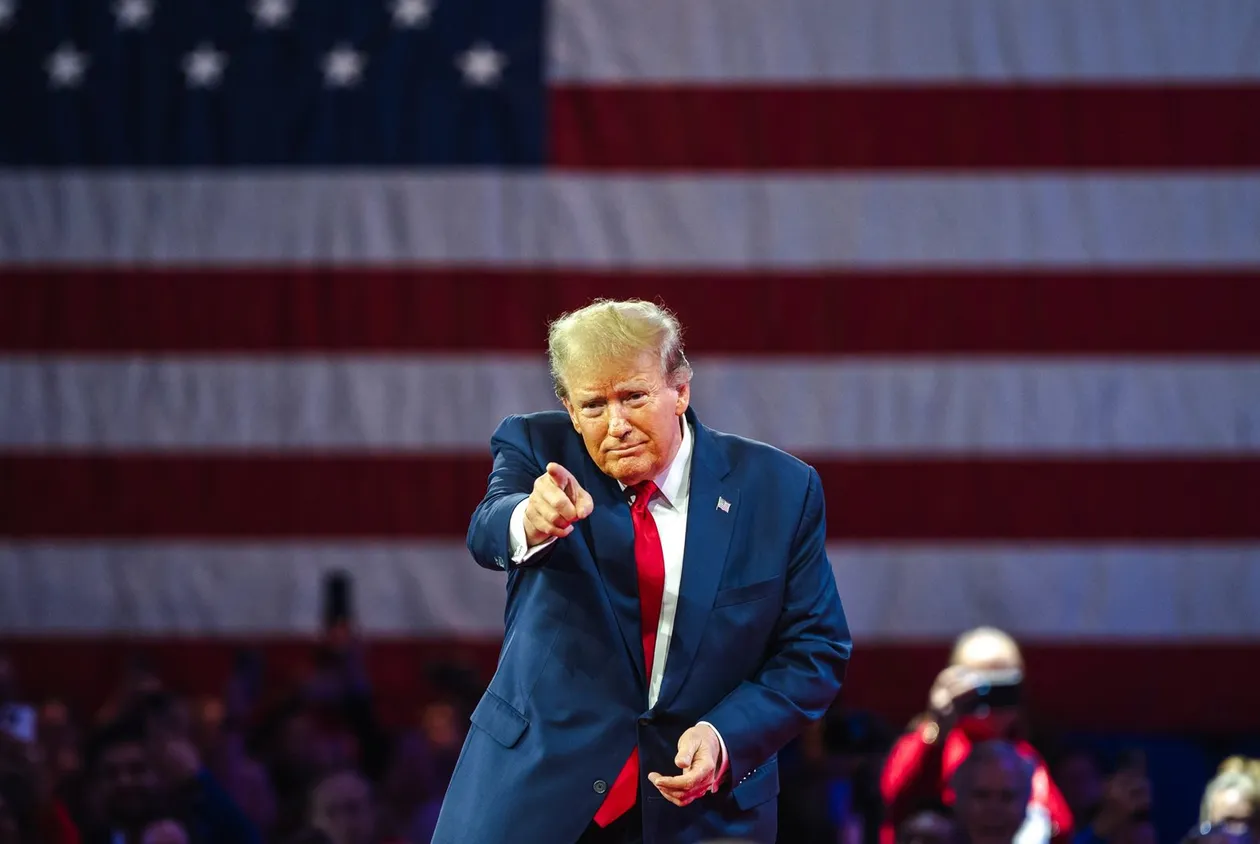
In July last year, Donald Trump was asked in an exclusive interview with Fox News whether he would be willing to send troops should China attack Taiwan. He refused to answer that question but pointed out that the United States should have taxed or tariffed Taiwanese semiconductors because Taiwan took away America’s chip business.
This is twisting the facts. Before Taiwan Semiconductor Manufacturing Company (TSMC) was founded, the chip foundry business did not exist anywhere in the world. Given that this industry was created from scratch, how can anyone claim that Taiwan took away America’s chip business? It was the wafer foundries that enabled the fabless semiconductor industry to thrive in the United States.
The correct way of putting this is to say that Taiwan helped create the dominant position that America’s semiconductor industry holds today.
Trump would probably say that semiconductors were invented in America and that, in the beginning, manufacturing was all based there. Consequently, the market share that chips made in Taiwan occupy today was, of course, taken away from America.
However, such a way of thinking very much resembles the mindset of the 1970s and 1980s, when the United States blamed Japan for taking away the business of American carmakers, leading to the symbolic smashing of Japanese cars with axes. One more Japanese car sold meant one less American car sold, so saying that Japanese cars took away market share from American cars still somewhat makes sense.
In contrast, the size of the semiconductor market is not restricted by the consumer population but rather depends on the categories of chips. When a new application emerges, a new market is created.
Focus on Competitiveness Instead of Employment
What is created is not only an entirely new market for semiconductors but also brand-new products. The explosive growth of the GPU market is due to the rise of generative AI. But people are optimistic about the prospects of generative AI also because there are GPUs to support its development. Therefore, using trade barriers to make semiconductors more expensive will not only hit fabless chipmakers such as Nvidia but also slow down the development of generative AI and electric vehicles in America.
Trump might counter: Trade barriers can also help support industries. Chip manufacturing is too important, and given that the U.S. has lost its leading position only in the last dozen years, it is worthwhile for the government to provide all-out support. In the early days, Taiwan also used trade barriers to cultivate industries. Why can’t America do the same?
However, America has already done a similar thing, which proved to be a failure. The U.S. once imposed quotas on Japanese cars, which encouraged Japanese carmakers to set up factories in the United States, but American car manufacturers still failed to perform well. By 2013, Detroit, the heart of the American automotive industry, was forced to declare bankruptcy.
Trump would probably argue: Didn’t the Japanese carmakers create jobs when they set up factories in America? Based on this argument, Taiwanese semiconductors would still have to be slapped with taxes or tariffs.
I believe that the vast difference between the political cultures in Taiwan and the United States is to blame. When American politicians discuss the revival of the manufacturing industry, they are sure to emphasize employment, while here in Taiwan, all the talk is about industrial competitiveness. Does this mean that Taiwan does not care about jobs? Of course not.
Taiwan sits just next door to China, the two sides speak the same language, and China’s population is 65 times larger than Taiwan’s. When both sides joined the WTO in 2000, China’s GDP was only 1/15th of Taiwan’s GDP. If Taiwanese politicians had demanded that the production bases remain in Taiwan to save jobs, companies would not have accepted such demands, and even ordinary people would have said this was idiotic nonsense.
So-called industrial competitiveness means that companies grow even deeper and broader roots in Taiwan. Regardless of whether they go abroad and flourish there, they still create jobs—and better job opportunities too.
Given that the United States is a high-tech power, it is even more unwise to focus solely on employment while ignoring industrial competitiveness. The biggest advantage of technology is that it allows fewer people to create even bigger output. If the government only cares about employment, it won’t be able to encourage such use of technology.
Tariff Barriers Harm Transformation
There is a paragraph in the book Chip War in which [former TSMC executive] Chiang Shang-yi discusses the work ethics in Taiwan and America. He said that when a machine breaks down in the middle of the night, American engineers will show up at the company only the next morning. Taiwanese engineers, however, would immediately rush to the site and repair the machine within an hour without having to fear complaints from their wives.
When reading this paragraph, one could easily be misled into thinking that Americans are lazy. But at Silicon Valley startups or Wall Street investment banks, Americans are also willing to work overtime until dawn. It’s just that this overtime culture does not exist in the manufacturing industry.
Even among Taiwanese engineers, pulling all-nighters was originally not common practice. This habit came to Taiwan with electronics contract manufacturing and was imposed on Taiwanese companies by American customers. Since the United States shifted production overseas, it does not face such high pressure and therefore believes that the working hours in the manufacturing industry should be nine to five like they were 40 years ago.
Of course, this does not mean that American engineers should rush to the company in the middle of the night when TSMC sets up shop there. Once automation technology has developed to the point where “robots supervise robots,” even engineers in Taiwan won’t be forced to hurry to the company at night—they would at most have to keep online contact, waiting until the robot has sent back a progress report.
As an AI powerhouse, the United States has much better conditions than Taiwan to develop smart factories, but when its politicians talk about the manufacturing industry, they remain silent on smart manufacturing because they are afraid of offending blue-collar workers.
This is a very American thing: when thinking of the manufacturing industry, the association is with blue-collar work. This is just another example of how the imagination remains stuck in the past.
In Taiwan, Japan, and South Korea, the manufacturing industry became knowledge-intensive a long time ago. Generally, employees are university graduates, often even requiring a master’s degree or higher.
American higher education is, of course, stronger than in Taiwan, Japan, and South Korea. Every year, a considerable number of science and engineering graduates enter the workforce, but they can choose from many top corporations such as Nvidia, Microsoft, OpenAI, and so on, whereas the top pick of Taiwanese jobseekers is the semiconductor industry.
A 10 percent tariff won’t change the fact that it is more difficult for TSMC to find employees in the United States.
Should Trump be reelected and actually impose tariffs on Taiwanese semiconductors, the damage to the American tech industry is bound to become apparent very quickly. It would, of course, be best if Trump could be made to change his mind before giving such orders. While chances are slim, it is worth a try.
Have you read?
- The Decline of American Manufacturing—A Cultural Issue, Not Taiwan’s Fault
- How Did a Chinese EV Brand Win Over Taiwanese Car Enthusiasts?
- Taiwan-Made Machinery Is Still Sold in Russia, What Can the Manufacturers Do About It?
Translated by Susanne Ganz
Uploaded by Ian Huang
Views

Subscribe to CWE Newsletter (every Thursday)
Stay abreast of what's happening in Taiwan with our weekly digest.
Keywords: