Meet Delta's AI Line Manager, Ready to Empower Smart Manufacturing Around the World
Source:Delta
Delta Electronics has automated its production lines to bring smart manufacturing to every order. Why is Delta's chairman personally directing the effort to turn its AI product into a strategic resource in the age of decentralized manufacturing?
Views
Meet Delta's AI Line Manager, Ready to Empower Smart Manufacturing Around the World
By Kai-yuan TengFrom CommonWealth Magazine (vol. 807 )
With a market value of over one trillion NT dollars, Delta Electronics is a company that is difficult to sum up in one word
There doesn't seem to be anything that Delta cannot do. Its four main business groups span power supply, transportation, automation, and infrastructure. It does everything from individual parts to total solutions. It even produces AI servers and humanoid robots.
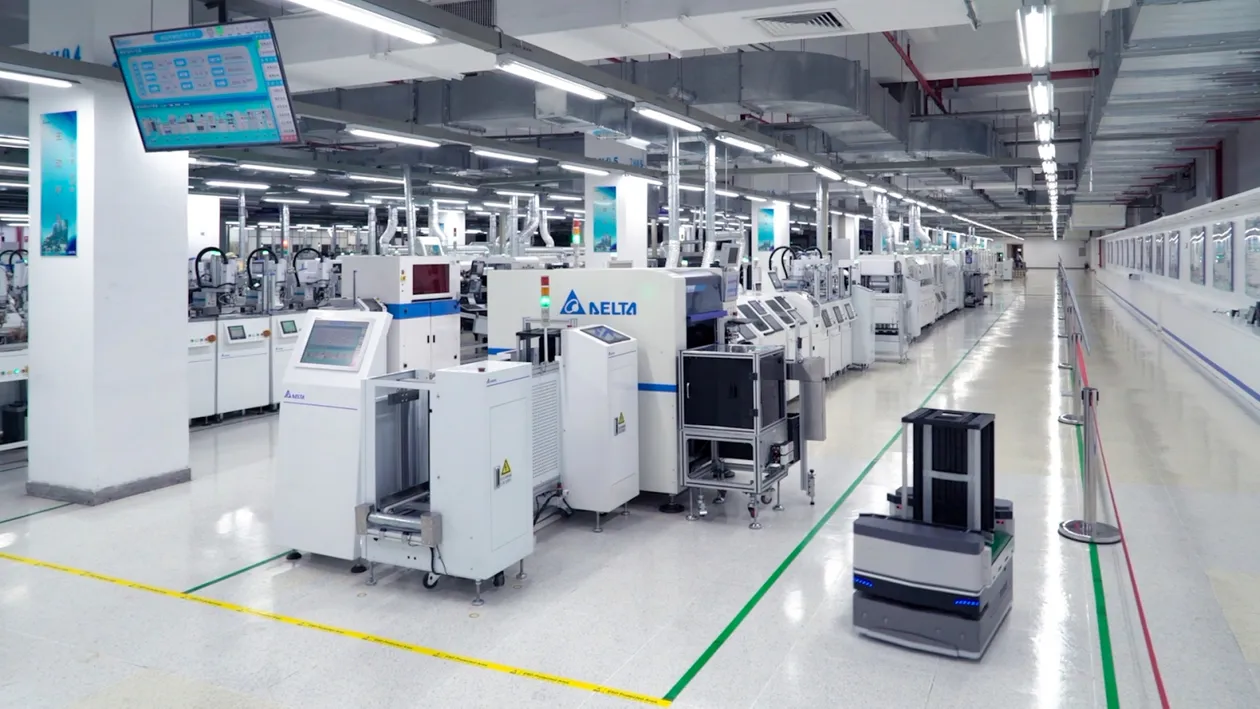
Inside Delta's Dongguan plant in southern China, the assembly lines are putting together adapters, power supplies, converters, scanners, and rechargers. The items, which range in size and complexity, dazzle the eye.
The ability to handle a large number of orders that are small in quantity but vast in complexity and variety is key to the success of Taiwan's information technology industry. However, it is also a barrier to automation.
Since 2015, however, when the world first began to move toward Industry 4.0, Delta's plants in Wujiang and Dongguan have started implementing AI-empowered smart manufacturing. The result has been an increase of 70% in production capacity and an increase of 500% in output value per capita in ten years.
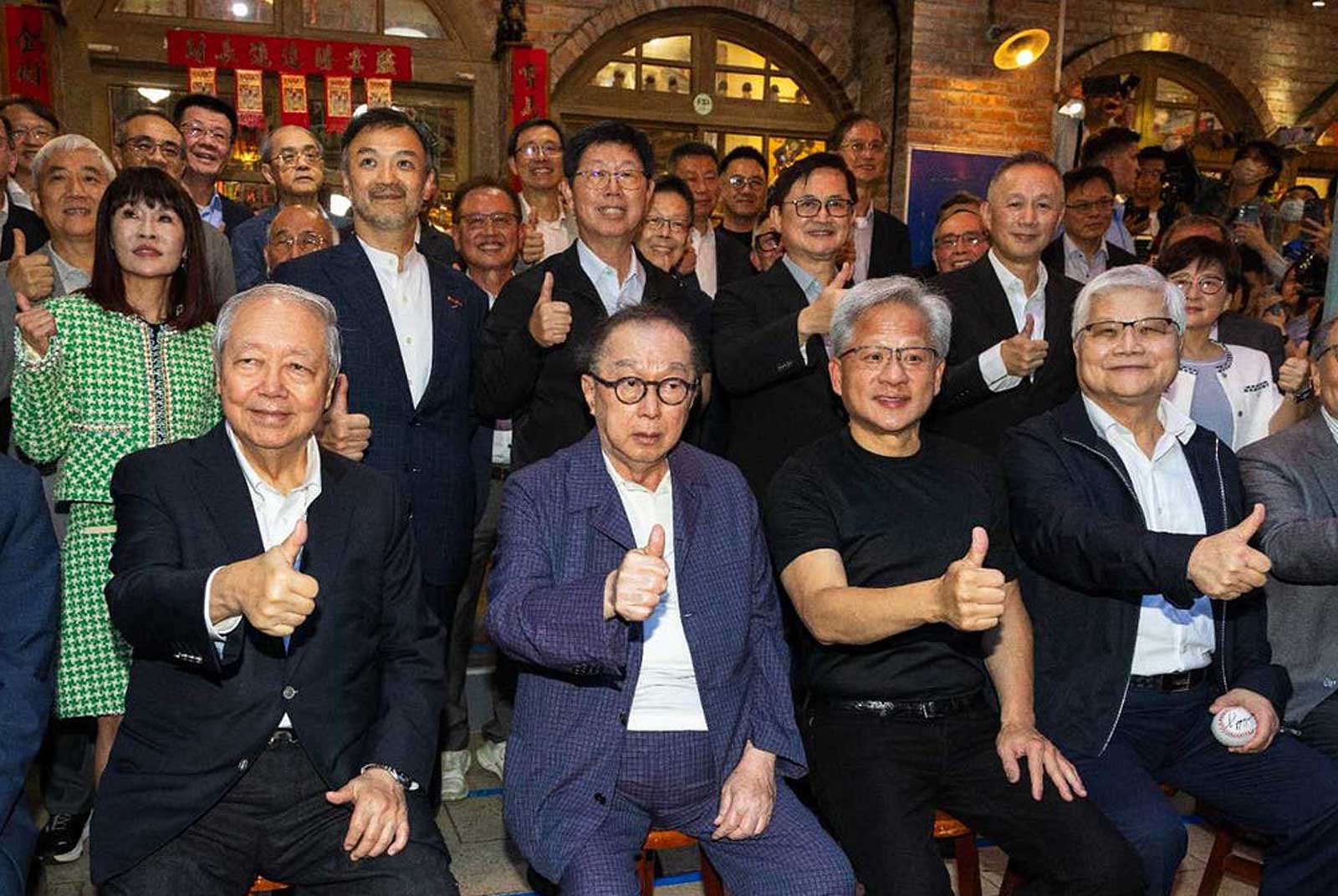
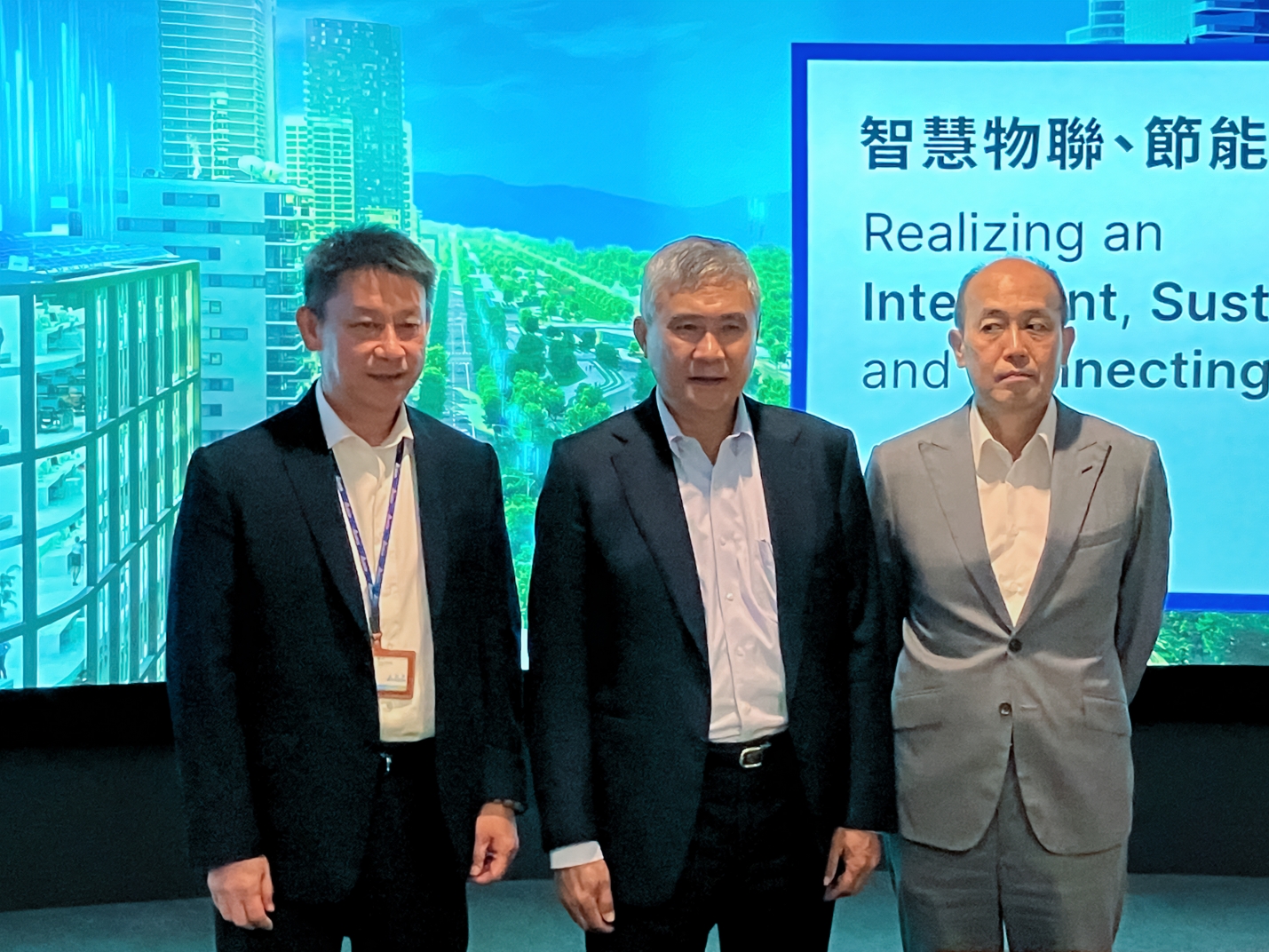 Ping Cheng(left) took over as chairman from Hai Ying Jun(middle) this year and plans to use AI smart manufacturing to implement a new strategy of decentralized production and mobile management. (Photo: Kai-yuan Teng)
"This requires a commitment to digitization. Production history and formula aside, attention must be paid to production parameters, internal data analysis, equipment management, and even the implementation of digital twins. These are the abilities we've worked on improving over these years," Delta Chairman and CEO Ping Cheng (鄭平) shared his insight at during the CommonWealth Economic Forum (CWEF) this July.
Delta's success in automation is a shining example of how Taiwan can leverage its core competencies in IT supply chain management to make a splash in AI-infused smart manufacturing.
Collaboration between Delta Smart Manufacturing (DSM), the research and development capabilities of the Delta Research Center, and the automation business group that sells manufacturing equipment has led to the creation of a brand-new product.
How was Delta able to turn smart manufacturing into its competitive edge? The secret lies in the "Huangpu base" that Cheng has spent a decade putting together.
Due to smart manufacturing and adjustments made to the assembly lines, the Dongguan plant has shed half of its workers over three years, while production capacity showed an improvement of 160%.
When this reporter was invited to view the AI manufacturing line, it was churning out circuit boards, the essential foundation of all electronic products. But due to differences in board size and thickness, not to mention the different possible configurations of the components on the boards, automating the production process poses a serious challenge.
AI-infused Line Manager
But now, the production process is managed by computers. Circuit boards that will be used in similar products are assembled together on the production line.
Delta's "Line Manager" is an example of localized AI. It remembers orders, machine parameters, utilization rate, and other important data. It can automatically transmit orders to the warehouse to request the delivery of fresh materials. Different circuit boards require different component modules. Once these are paired up, they are loaded into the automated assembly line.
Even quality control is now managed with AI optical inspection. "Currently, only changing the materials (modules) is still a hands-on process," says Andy Liu (劉佳容), General Manager of Industrial Automation BG at Delta.
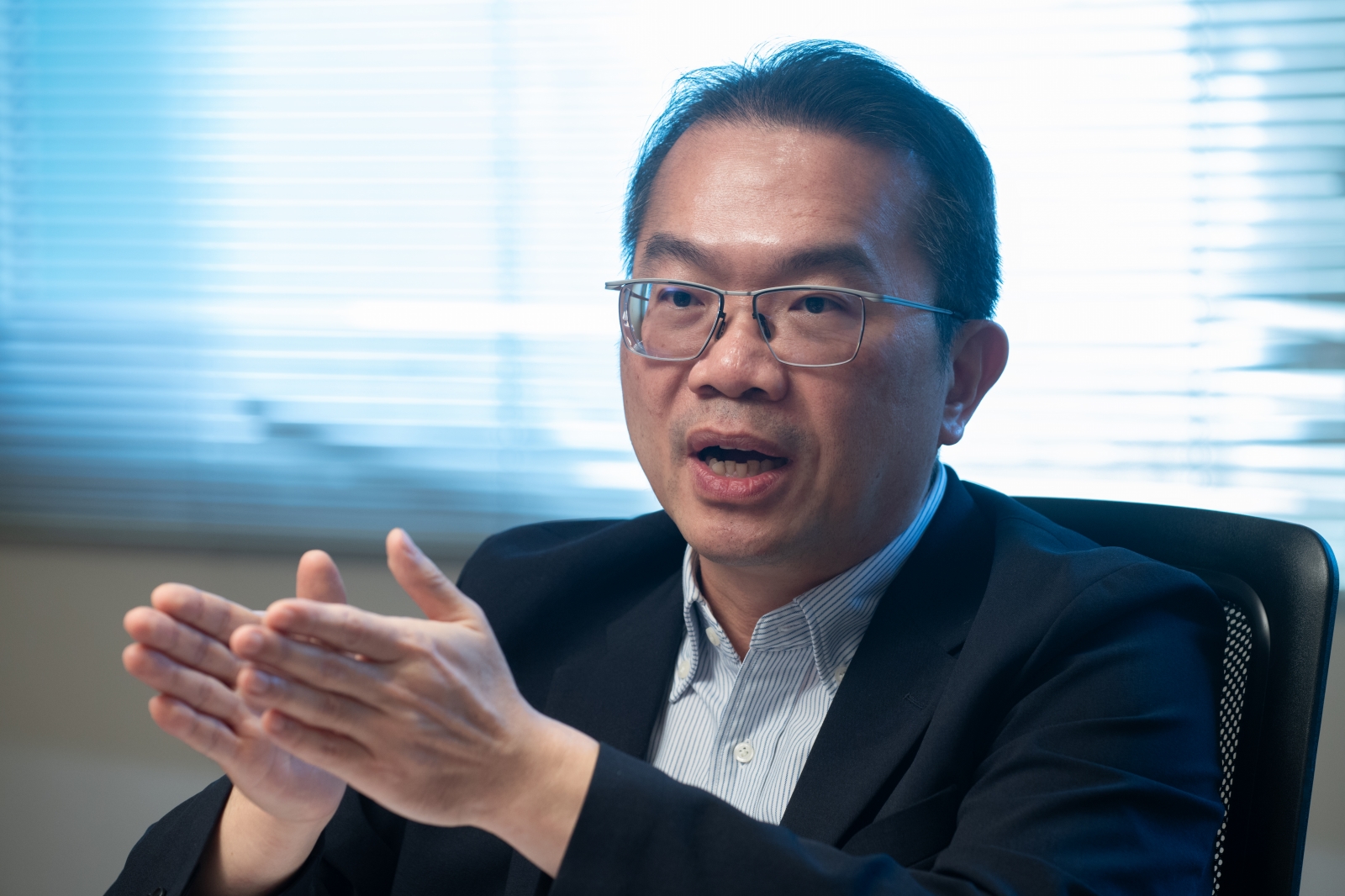 Andy Liu, General Manager of Industrial Automation BG at Delta Electronics, believes that modularization and generalization are Delta's principles for developing automation equipment. (Photo: Pei-Yin Hsieh)
A single Delta employee can manage three production lines at once. In the past, it took a month to train a Delta employee. Now, it only takes a week.
Delta Chairman Takes Personal Charge
Delta holds DSM meetings every month. Hosting duties rotate between Dongguan, Wujiang, Thailand, and Taiwan. But Cheng always chairs.
The purpose of these meetings is to come up with the best plans for improvement, or to ask for support from other participants.
The meetings are not cheap to run. The team must be assembled in different locations so personnel in charge of manufacturing, organization, and research and development can directly witness the improvements of the new production processes and learn from each other.
"Execution is very effective since the Chief Executive Officer is in charge," says Liu.
Most companies would not ask factory managers to participate in strategic meetings; Delta's DSM requires it. Most companies pursue smart manufacturing as an addendum to their core business. But Delta's DSM focuses on nothing else. Cheng sees these manufacturing specialists as his elite troops. One of their key performance indicators is the conversion rate.
Ji-Ren Lee (李吉仁), honorary professor at National Taiwan University, elaborates that the production cost of a good covers items like materials, equipment, and labor. The conversion rate reflects the ratio of the cost that doesn’t include the cost of materials.
Standardized Process Cuts Number of Screwing Machine Models Down to Two
Cheng mandated that DSM must find a way to reduce conversion rate by 30% every three years. "If production value is to stay the same, but costs are to go down, there are really only two ways. The first is to use the machines for more tasks. The second is to remove the labor cost," says Lee.
These constitute the specialties of Delta Smart Manufacturing: modularized and general-purpose equipment. Not only does it reduce production cost, it is also a springboard for entering the automation market.
Take the screwing machines as an example: If Delta's multiple plants developed their own machines, management would become very difficult. DSM reorganized the screwing machines used by its different business units until only two models remained in the entire company. They can be used for any product, and they are easier to sell.
The ability to use the machines internally and also to sell the machines externally allowed the research and development of the smart manufacturing production lines to enjoy greater economy of scale and higher returns on investment. This in turn makes it possible for Delta to spend 8% of its revenue on R&D.
"We've done automation for a long time. We know what kinds of trouble other people could encounter," says Liu.
For example, when Delta first automated its production lines, it did so by segments, giving some of the manual work to robots. But because robots and humans worked at different speeds, this level of desynchronization did not result in better efficiency.
"We had to stop at a certain point. Eventually, we learned to make holistic plans that encompassed the entire assembly line," Liu recounts.
 Delta's industrial robot. (Source: Delta)
Delta has a solid foundation of hands-on experience. But won't the commoditization of its know-how create competitors?
Liu admits that this is a point of internal contention. Due to this, Delta never sells equipment to direct competitors, and it prioritizes general-purpose equipment, such as the screwing machines. In 2016, Delta bought Unicom System Eng. Corp. to remedy its shortcomings in software. The automation department gradually went from selling hardware to providing total solutions.
"Delta's goal is to become like a general hospital, not a specialized clinic," Liu offers as a metaphor.
Delta has announced its goal is to grow revenue from automation by double digits during the next decade.
The ongoing trade wars have led to a paradigm shift in the global supply chain. Decentralized manufacturing and mobile management are both new strategies of and new challenges for Delta Smart Manufacturing.
"Delta's aim is to use the same manufacturing process wherever the product is made." Liu says Delta can offer this as a guarantee to its customers: "Even if we were to shift production from China and Thailand to India and the United States, there’d be no need to worry. We would still use the same equipment, production process, management, and standards."
New Plan: Decentralized Manufacturing and Mobile Management
In his speech, Cheng also mentioned that Delta was able to set up shop in the U.S. despite the high labor costs because it spent the past decade investing in smart manufacturing.
The new focus of Delta's AI-empowered smart manufacturing is to make the robots easier to use and the AI-powered Line Manager smarter.
Currently, localized AI can already achieve data transparency, production monitoring, and directly adjusting or optimizing on-site equipment.
The ideal is that in the future, engineers in China or Taiwan can operate production lines in India or the U.S. directly through the Line Manager, without being affected by the time difference. Or perhaps even the entire factory can become fully automated.
"The target is to let the people in charge of the assembly lines manage the work anywhere there's data and connection to the Internet," Liu paints a moving picture of the future.
Of course, to reach this level of automation, a company that specializes in making small quantities of products with vast varieties— like Delta—still has a ways to go.
In addition, because Delta’s automated arm focuses on the Chinese market, it has lost some of its clients due to its staff being unable to travel around freely during the pandemic, which in turn led to material shortage that slowed down delivery. The rise of Chinese competitors has also put the automation business in a bind. Although it contributed to 13% of the revenue in the first quarter of this year, it only made up 4% of the profit.
Under the leadership of Cheng, who views the ability to manufacture as a core competitive advantage, Delta’s smart business will continue to evolve. And its chairman will do everything in his power to see his vision come to fruition.
Have you read?
- The Secret Behind TSMC’s CoWoS Packaging Technology
- Delta Electronics Capitalizes on AI Server Boom as EV Market Cools
- How Delta Electronics revived a coral reef
Translated by Jack Chou
Edited by TC Lin
Uploaded by Ian Huang
Views

Subscribe to CWE Newsletter (every Thursday)
Stay abreast of what's happening in Taiwan with our weekly digest.
Keywords: