Why is Beijing’s Economic Rescue Plan Not Revitalising China’s Economy?
Source:Getty Images
Is China truly committed to reviving its economy? A month after launching a large-scale stimulus package, the effects have fallen short of expectations. What’s going on? Can Beijing solve the property market crisis that continues to plague its economy?
Views
Why is Beijing’s Economic Rescue Plan Not Revitalising China’s Economy?
By David Shenweb only
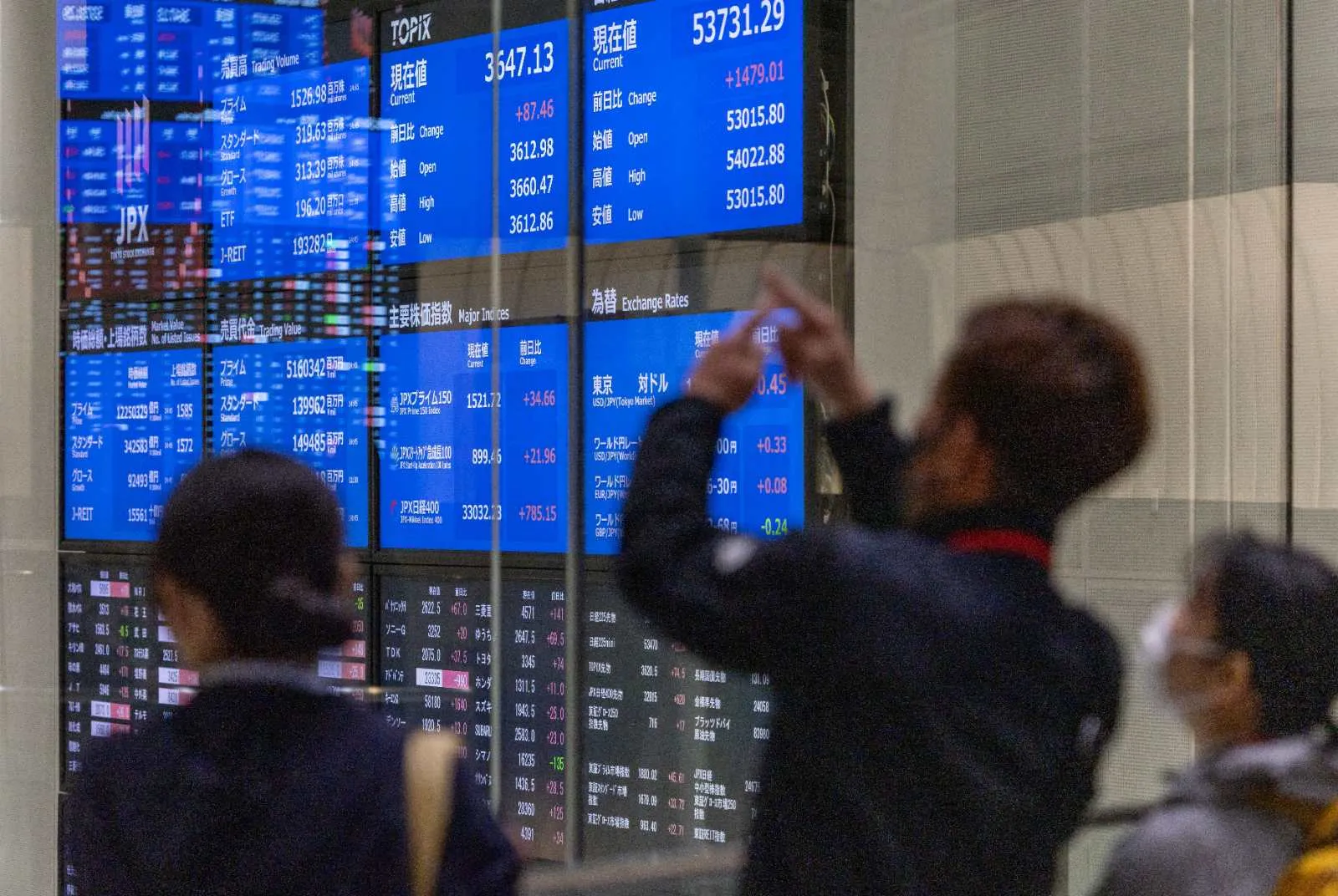
Over the past month, investors keeping a close eye on China’s market have been on an emotional rollercoaster. The stock market has been volatile, and the latest third-quarter GDP growth rate came in at just 4.6%—below the 5% annual target for the second consecutive quarter. The bottom line is that Beijing’s recent stimulus measures haven’t met market expectations.
Initially, foreign investors were optimistic, predicting that Beijing might inject 2 to 3 trillion yuan (1 trillion yuan is around $140.3 billion) into the economy. Chinese financial media outlet Caixin also reported that Beijing was planning to issue 6 trillion yuan in ultra-long-term special bonds over the next three years.
However, despite frequent questions from the public, Chinese officials have skirted around the issue of the bailout’s actual scale in the three press conferences held over the past two weeks.
This has sparked market concerns: Is Beijing really serious about a bailout?
Why Haven't the "Big Numbers" Been Released Yet?
The absence of a major stimulus figure to excite investors is likely due to regulatory hurdles in China. Any adjustments to the fiscal budget must first be reviewed by the Standing Committee of the National People's Congress (NPC). Traditionally, the NPC Standing Committee meets at the end of even-numbered months, and the session that was supposed to take place in late August was delayed until mid-September. Given the current timeline, the next meeting may not happen until November, at which point the size of the fiscal policy will finally become clear.
During a press conference in October, Finance Minister Lan Fo’an didn’t provide specific figures, but emphasized that this round of measures to address local government debt would be the most significant fiscal intervention in recent years—a "timely rain."
The key question, then, is whether this "rain" will fall where it’s needed most.
Lan outlined four major areas of focus for the Ministry of Finance’s upcoming "basket of policies": resolving local government debt, aiding the acquisition of surplus housing, recapitalizing large state-owned commercial banks, and providing subsidies to vulnerable populations.
Unlike in 2008, when Beijing injected 4 trillion yuan into infrastructure projects amid the global financial crisis, this time the government plans to funnel funds into banks. “This approach won’t yield immediate results and will take longer to have an impact,” said Frederic Neumann, Chief Asia Economist and Co-Head of Global Research, Asia Pacific at HSBC.
Will the Ministry of Finance’s "Timely Rain" Work?
Looking at two of the key areas the Ministry is targeting—resolving local debt and acquiring surplus housing—these are indeed the two most pressing issues facing China’s economy. However, when it comes to these two areas, the central government appears reluctant to take full responsibility.
Let’s start with surplus housing. The Ministry of Finance has indicated that tools like "special bonds" will be used to address the problem, but these bonds will be issued by local governments, not the central government. The problem is that local governments are already strapped for cash and lack the financial capacity to issue more debt to stabilize the property market.
So, if the central government steps in, how much would it need to spend?
According to recent reports from Chinese media, a 6 trillion yuan issuance of ultra-long-term special bonds is planned over three years. But even if the entire sum were used to purchase surplus housing, it would still be far from enough.
"At least 10 trillion yuan would be needed to buy up the excess housing stock," estimates Wang Guochen, Associate Researcher at the First Research Institute of Chung-Hua Institution for Economic Research.
As for local government debt, the current policy involves a process of "debt swaps," which essentially means converting implicit local government debt into low-interest, long-term local government bonds. But again, this is a local-level responsibility, not something the central government is taking on.
In reality, local government debt isn’t an insurmountable burden for Beijing.
Wang estimates that the total debt of all local governments in China is about 77% of GDP, well below the 100% level in the U.S. or the 200% level in Japan. In other words, if Beijing wanted to, it could issue special bonds to take on all local debt.
In August, the IMF even recommended that China use a one-time, $1 trillion fiscal stimulus to stabilize the property market. But Beijing rejected the proposal, fearing it would send a signal that the government would bail out speculative property investments.
The Housing Crisis Could Drag On for Another Year
“China’s current strategy is to drag it out. Whether things will change remains uncertain,” says Wang.
Frederic Neumann also predicts that it will take at least another year to fully resolve the surplus housing issue.
Even if, as the Ministry of Finance claims, a major "timely rain" is on the way, China’s policies in recent years have prioritized national security over economic concerns. "Policy signals have been severely disrupted," says Chang Hongyuan, Associate Professor of International Trade at Chihlee University of Technology.
Whether in terms of trade, which reflects the business environment, or unemployment rates, which affect consumer confidence, none of the key indicators have improved following a month of intensive policy efforts. Clearly, short-term stimulus measures alone won’t be enough to turn things around quickly.
Thus, whether China will achieve its goal of 5% GDP growth this year will depend not only on the actual size and effectiveness of the policies rolled out in the fourth quarter, but also on Beijing’s willingness to continue improving the business environment.
Have you read?
- Joint Sword-2024B: Experts Analyze China's Military Drills in the Taiwan Strait
- Made in China 2025: How China Thrives Despite Tech Sanctions
- The Gen Z Tsinghua Graduates Driving AI in China
Uploaded by Ian Huang
Views

Subscribe to CWE Newsletter (every Thursday)
Stay abreast of what's happening in Taiwan with our weekly digest.
Keywords: