Taiwan Faces Uncertainty Amid Trump’s Trade Tariff Plans

Source:Chien-Ying Chiu
As President-elect Donald Trump’s trade policies loom, Taiwan braces for a challenging economic landscape shaped by its reliance on global trade and vulnerability to geopolitical shifts. How should Taiwan cope?
Views
Taiwan Faces Uncertainty Amid Trump’s Trade Tariff Plans
By Judy Linweb only
Taiwan’s economy heavily depends on intermediate goods—components used in global manufacturing—making it particularly vulnerable to the impacts of geopolitical tensions and potential tariff shifts. Central Bank Governor Yang Chin-Long highlighted concerns about how President-elect Donald Trump’s trade policies could impact the global economy during a recent press briefing.
On December 19, Taiwan’s Central Bank decided to hold interest rates steady after the Federal Reserve signaled limited rate cuts in 2025. Governor Yang noted that the Central Bank’s 3.13% growth forecast for next year did not account for uncertainties surrounding Trump’s trade policies.
“It’s impossible to predict what Trump will do at this time,” Yang stated, emphasizing the unpredictable nature of the incoming administration’s policies.
Housing Bubble Warning
Beyond trade, Governor Yang also addressed concerns in Taiwan’s housing market. He cautioned against rapid policy changes, likening the process to an elephant turning slowly. “Like elephants, they must turn slowly. Otherwise, as seen in some countries, a sudden fall could be irrecoverable,” Yang explained. This metaphor underscored the importance of gradual reforms to prevent destabilizing the market.
Resilience Amid Excess Savings
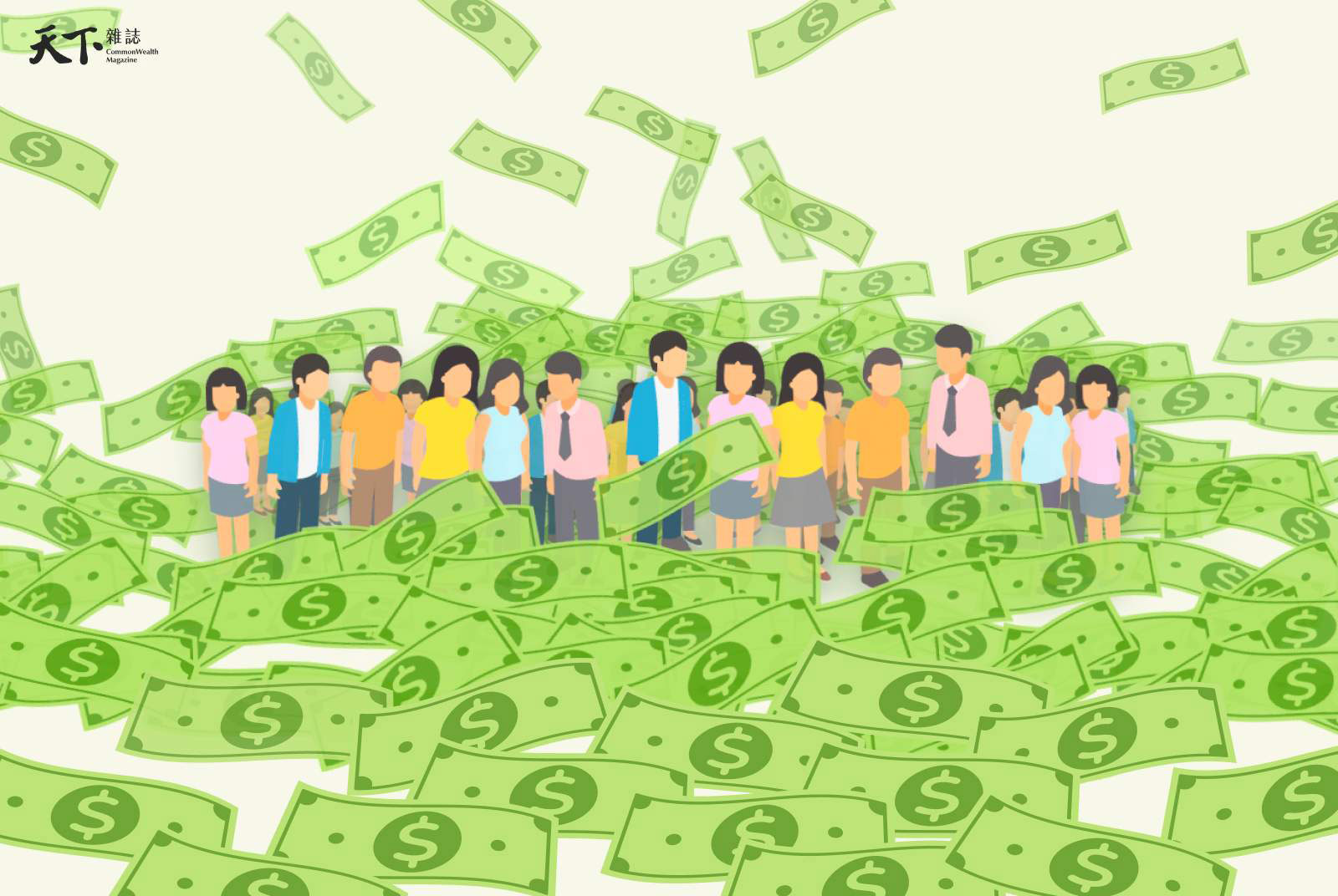
Taiwan’s accumulated savings of NT$35.3 trillion (US$1.08 trillion) and a personal savings rate of 41.3% provide a buffer against potential financial turmoil triggered by potentially disruptive U.S. trade policies. However, Taiwan’s deep integration into the Global Value Chain (54.5% participation rate) and the significant contribution of imports (32.4% of total exports) underscore its dependence on international trade.
Volatile foreign exchange rates could exacerbate challenges for Taiwan’s trade-dependent industries, impacting corporate profitability. While Taiwan’s strong savings rate offers some stability, policymakers must remain vigilant as they navigate these global uncertainties.
Scenarios for Trump Policy Impact
Supplementary materials provided by the Central Bank outlined potential scenarios based on Trump’s trade policies:
-
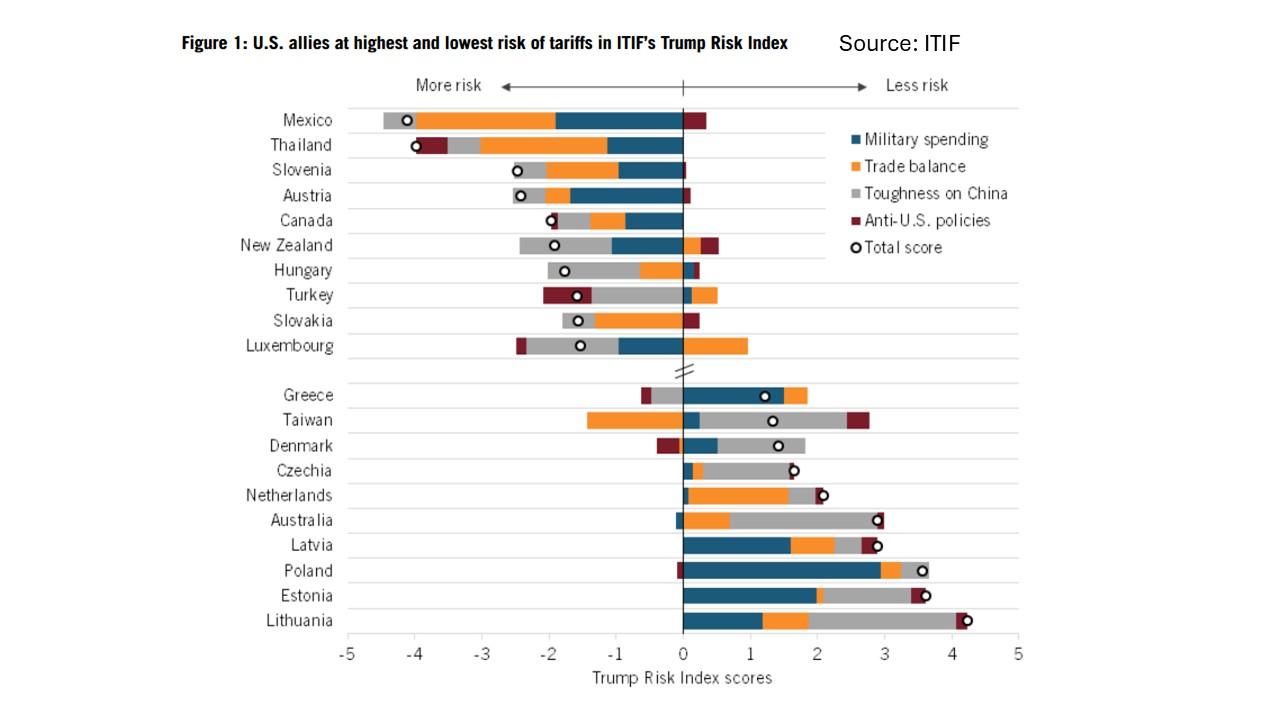
According to the Trump Risk Index published by the US think tank Information Technology & Innovation Foundation (ITIF), countries like Mexico, Thailand, Slovenia, Australia, Canada, and New Zealand are most vulnerable to U.S. tariffs.
-
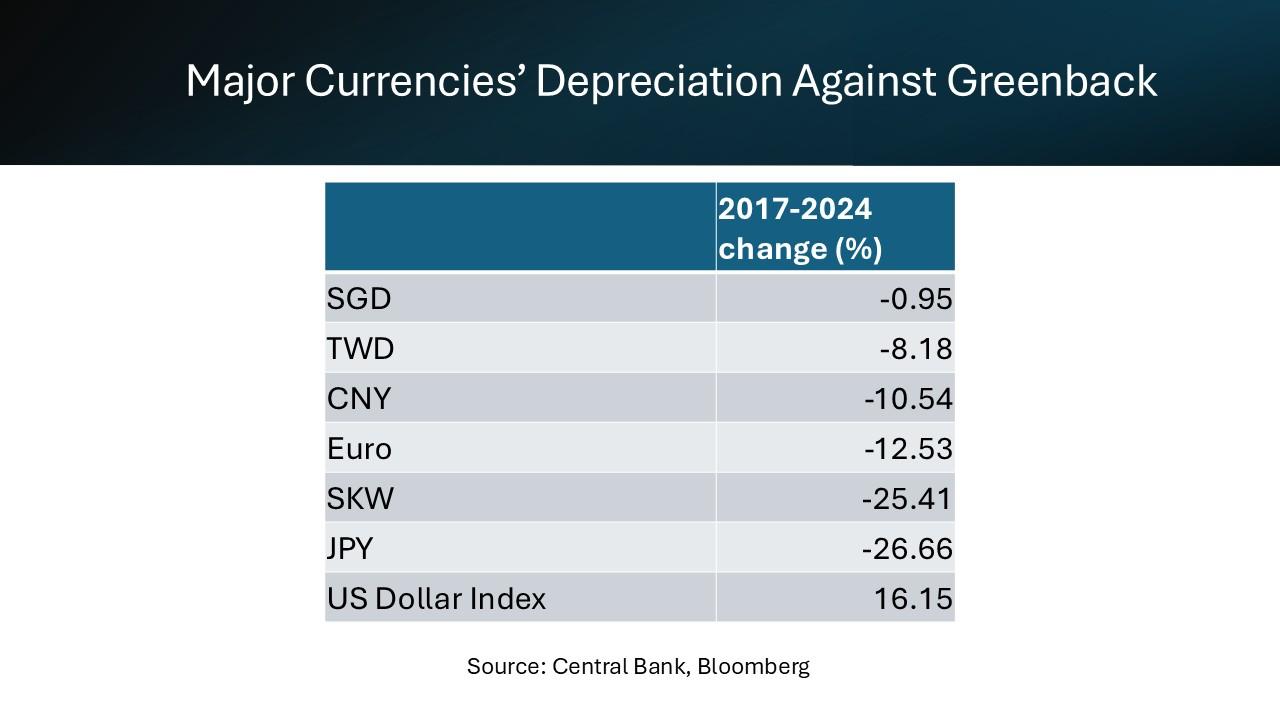
U.S. trade deficits with Mexico and Vietnam grew the fastest following the previous Trade War.
-
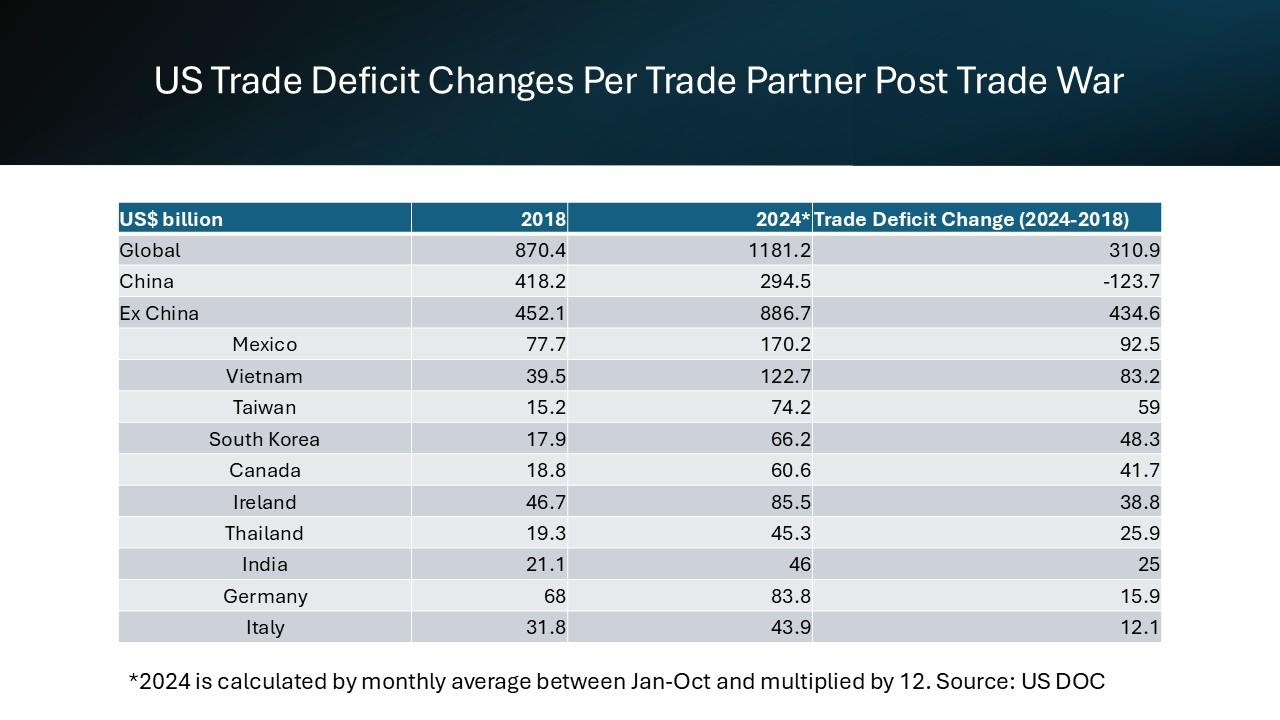
While other currencies have depreciated against the U.S. dollar, Taiwan’s currency has remained relatively stable.
Governor Yang’s remarks underscore the intricate balance Taiwan must maintain amid shifting global trade dynamics. While the island’s robust savings rate offers a safety net, its heavy reliance on global trade and exposure to currency fluctuations highlight the challenges ahead. As Trump’s policies begin to unfold, Taiwan’s strategic agility will be crucial to navigating an era of economic uncertainty.
Have you read?
- How Can Labor-starved Taiwan Attract More Foreign Talent?
- How can Taiwan Overcome Partisan Infighting?
- Taiwan’s Never Ending Trade Surplus
Uploaded by Ian Huang
Views

Subscribe to CWE Newsletter (every Thursday)
Stay abreast of what's happening in Taiwan with our weekly digest.
Keywords: