Living on the Front Line? What Westerners Get Wrong About Life In Taiwan
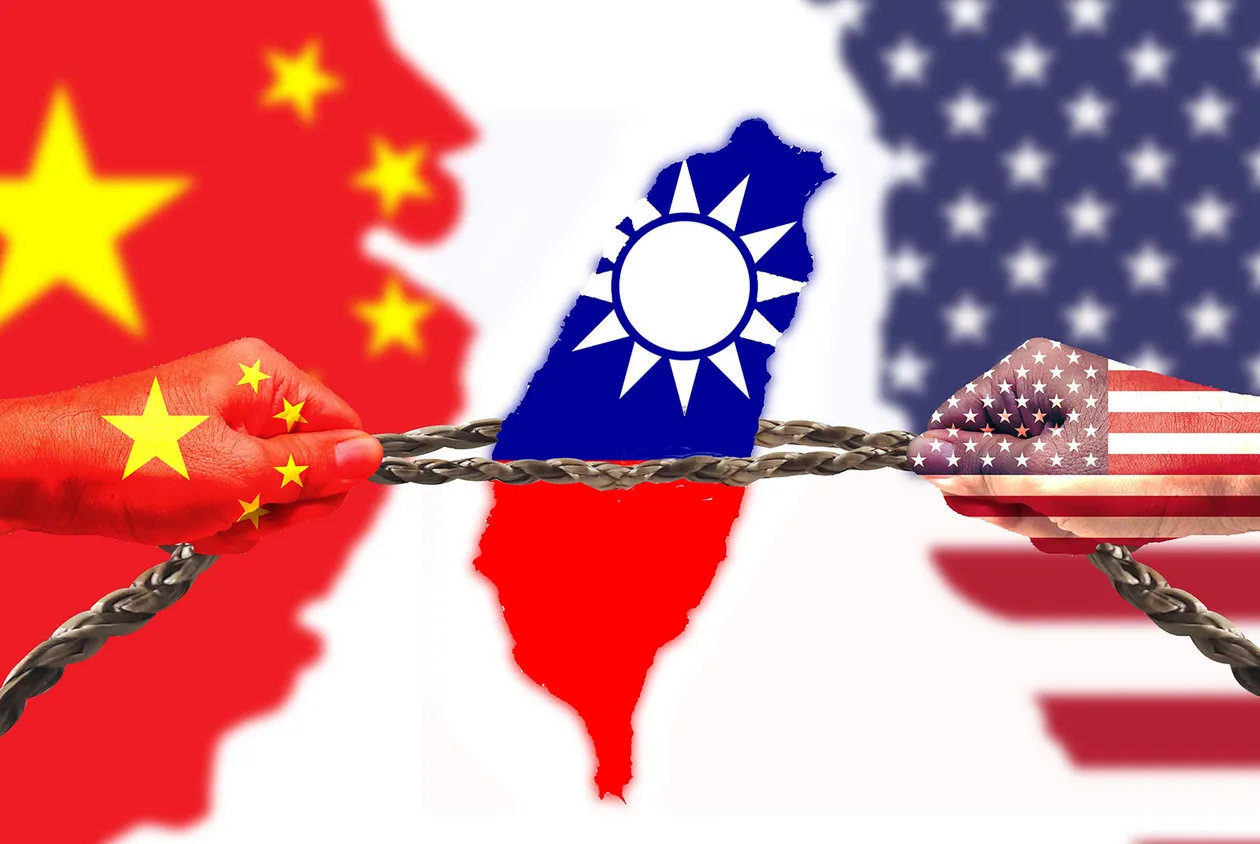
Source:shutterstock
In this op-ed, Harry Jenkins refutes the common Western view of Taiwan as a conflict-ridden territory on the brink of war. Drawing from his experiences since moving there in 2022, Jenkins contrasts the alarming geopolitical narratives. Could this gap between perception and reality be bridged by more firsthand accounts from those living in Taiwan?
Views
Living on the Front Line? What Westerners Get Wrong About Life In Taiwan
By Harry Jenkinsweb only
In the summer of 2022, I was sitting in a London pub with my dad, waiting for my Taiwanese visa. I had decided to up sticks and move to the faraway island, and, having received a job offer to teach English, the visa was the last thing I needed before I could start my journey.
 Author Harry Jenkins and his father(left). (Source: Harry Jenkins)
As my old man finished his pint of ale, a concerned expression formed on his face—his eyes fixed on something over my shoulder. I turned around to see what had captured his attention and saw he was looking at a BBC News report on a TV in the corner of the room. The sound was off, but it was clear what was being discussed. On the screen was a map of an island, and in the waters around it were red blocks showing the location of Chinese naval ships. The island was totally surrounded.
“Are you sure this is a good idea, H?” my dad asked.
Nearly three peaceful years in Taipei later, I feel I can safely answer in the affirmative. It was a good idea. But my dad’s concern wasn’t unreasonable. The Chinese military drills in August, 2022, had been in response to Nancy Pelosi’s visit to Taiwan earlier in the month, and—with the first shots of the Ukraine War still ringing in the ears—Taiwan felt like the next major fault line in an increasingly dangerous world.
Potential war was perhaps the only thing most British people knew—and still know—about Taiwan, besides bubble tea and microchips. The country is rarely mentioned in the Western media as anything other than a vital piece in the global geopolitical board game. As such, there is an assumption that life in Taiwan must be fraught and militaristic, like a kind of East Asian Israel.
Yet, as anyone who has spent any time in Taiwan knows, that image is a far cry from the reality. This is not a society on edge, and the geopolitical situation does not impose itself on everyday life. In fact, most of the time the island feels blissfully unaffected by the issues affecting much of the world in recent years. While Europe, for example, grapples with soaring living costs and an increase in terrorism, energy bills in Taiwan remain low, and the island’s streets stay safe.
However, this reality is lost on most Westerners. In a recent conversation with the manager of a buxiban (cram school), I discovered that many schools are now struggling to recruit English teachers from North America and the UK. Clearly, Taiwan is seen as a riskier option than other East Asian countries. After all, why move to a potential war zone when you could settle in Tokyo or Singapore instead?
But the irony is that any teacher moving to Taiwan from London, Toronto, or New York will undoubtedly find their new home infinitely safer and more peaceful than where they came from. Even in a big city like Taipei, it is common for front doors to be left unlocked and bags to be left unattended in public places—actions that are ill-advised anywhere in the UK that isn’t a small idyllic village.
My dad discovered this for himself when he visited me a few months after I moved. Once he was out of the airport, we arranged to meet in a 7-Eleven by my apartment, and when I arrived, he was sitting in the store’s annex, surrounded by all his belongings. Naturally, he was keeping a watchful eye on his bags, so he looked hesitant when I suggested we peruse the beers in the main part of the shop. “Will my things be OK?” he asked. “Of course, I replied, “you’re in Taiwan now.”
During his stay, my dad fell in love with Taiwan, and it became clear to him why I was so happy here. His perception of the country had changed, but that change had only come about through firsthand experience.
Most people in the West will not have the opportunity to visit Taiwan for themselves, and their view of the country will continue to be shaped by what they read and watch in the media. As such, it is incumbent upon those of us who have been lucky enough to build a life here to tell the truth about what life in Taiwan is really like.
(This piece reflects the author's opinion, and does not represent the opinion of CommonWealth Magazine.)
About the author:

Harry Jenkins is a writer, commentator, and formerly an English editor of Live magazine. Before moving to Taiwan, he worked in the British Houses of Parliament, handling policy related to foreign affairs, immigration, the COVID-19 pandemic, and much more.
Have you read?
- Trump Panic: How Taiwan can deal with Trump 2.0 and Secure its Future
- Why I Became the First Foreigner to Challenge Taiwan’s Constitution on Workplace Discrimination
- Allow New Residents To Take Root in Taiwan
- Taiwan’s New Visa: Is It More of a Layover for Digital Nomads?
Uploaded by Ian Huang
Views

Subscribe to CWE Newsletter (every Thursday)
Stay abreast of what's happening in Taiwan with our weekly digest.
Keywords: