Trump 2.0: Three Factors Impacting China-Taiwan Relations
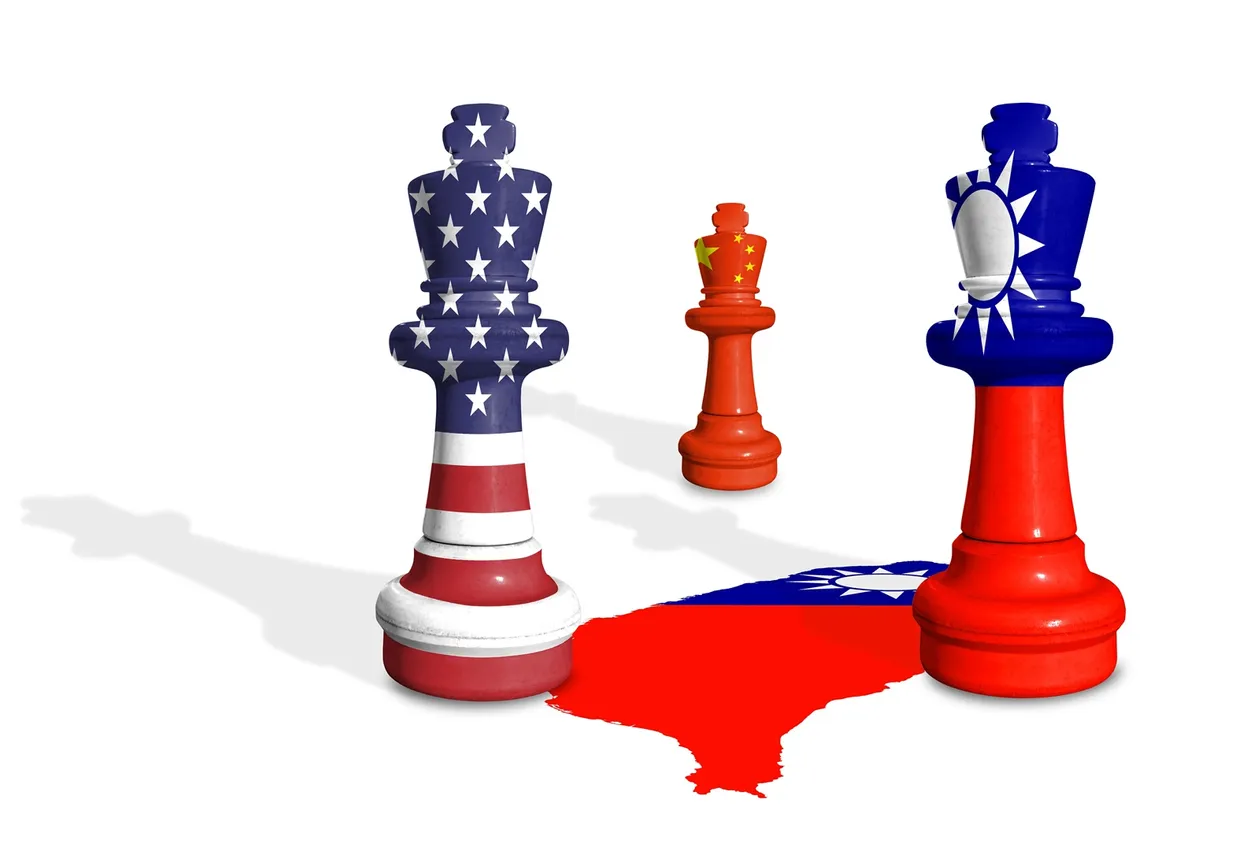
Source:shutterstock
Trump’s second term will undoubtedly impact geopolitics, as this year marks the twentieth anniversary of the Anti-Secession Law and the eightieth anniversary of Taiwan Retrocession. How Beijing responds and leverages these milestones regarding Taiwan relations will have broad implications.
Views
Trump 2.0: Three Factors Impacting China-Taiwan Relations
By Wu-ueh Changweb only
The stability of cross-strait relations this year hinges on three key structural factors.
The most critical is the US-China trade war, which will continue to impact the restructuring of the global supply chain.
China’s retaliatory measures in response to US-imposed tariffs have so far been restrained. To this point, even The People’s Daily has refrained from issuing an editorial scolding the United States, indicating that Beijing is leaving room for maneuver.
The second structural factor is Beijing’s longstanding position that the “Taiwan issue” is front and center as the first of its four red lines in US-PRC relations. The question is, when could this red line be crossed?
First, it depends on whether Washington sends Cabinet members or senior officials to Taiwan.
During Donald Trump’s first term, the US dispatched high-level officials, including the undersecretary of state, to Taiwan, prompting Beijing to immediately deploy fighter jets near Taiwan in a show of force.
Beijing is particularly concerned about whether Washington dispatches diplomatic officials from the State Department, National Security Council, or the Department of Defense. If mutual visits of such nature take place, Beijing can be expected to react strongly.
Next is the issue of arms sales.
The previous Trump administration set new records for military sales to Taiwan. If the current administration’s arms sales are high in both quantity and quality, Beijing would surely take strong retaliatory measures.
Third, should President Lai Ching-te make a transit stop in the continental US, Beijing will closely scrutinize the locations, timing, public engagements or remarks, and whether he meets with major American officials.
Additionally, Beijing will also be watching for shifts in Taiwan’s current political balance, where the ruling party lacks a congressional majority.
Since last year’s elections in Taiwan, Beijing has stated that the ruling Democratic Progressive Party (DPP) does not represent mainstream opinion in Taiwan. If recall campaigns result in the DPP securing a majority in the Legislative Yuan, it could have a significant impact on cross-strait relations.
Apart from the aforementioned three structural factors, several key dates and events could also be at play this year in cross-strait relations.
Twentieth Anniversary of the Anti-Secession Law
Although Beijing is expected to hold this year’s Taiwan affairs meeting soon, the event no longer holds as much significance. In the first quarter of the year, more attention will be paid to Beijing’s “two sessions” in March, during which observations can be made on several levels.
First, how high will China set its GDP growth target?
At present, bolder projections place it at five percent, as major provinces and municipalities including Beijing, Shanghai, Jiangsu, and Guangdong have already set their respective growth targets at around five percent.
Next, the government work report will touch on issues related to Taiwan.
In past years, it would not exceed one or two hundred characters about Taiwan, and the premier typically does not comment on cross-strait affairs. If there should be any major pronouncements regarding Taiwan policy, Xi Jinping would likely be the one to make them.
Another aspect of the “two sessions” is the leaders’ remarks. This will be the first time since Lai Ching-te took office to observe whether Xi Jinping addresses cross-strait relations directly during the meetings.
Of note is that this year marks the twentieth anniversary of China’s Anti-Secession Law. If National People’s Congress (NPC) Chairman Zhao Le chairs the symposium, it would signal adherence to protocol. However, if Xi Jinping himself delivers a speech marking this anniversary, it is unlikely to strike a conciliatory tone.
Following the conclusion of the “two sessions,” attention will be focused on the timing of the first meeting between Trump and Xi, as well as whether the mechanisms of dialogue remain intact.
US-China Dialogue: Strained but Not Broken
During the Obama administration, Washington and Beijing maintained over 70 channels of communication, which shrunk to zero during Trump’s first term. Some were restored under the Biden administration, reaching just over 20.
Since Trump’s return to office, he and Xi Jinping have communicated, and U.S. Secretary of State Marco Rubio and Chinese Foreign Minister Wang Yi have also spoken to each other. The next development worth watching is whether Wang Yi will engage in strategic dialogue with National Security Advisor Michael Waltz.
Such discussions are preparatory steps for a potential meeting between Trump and Xi. The existence of these exchanges suggests that, despite tensions, both sides are managing their relationship and achieving progress rather than allowing it to break down.
May marks the completion of Lai Ching-te’s first year in office, coinciding with the meeting of the World Health Assembly (WHA) and the intensification of recall campaigns. The atmosphere for cross-strait relations can understandably be expected to be rather poor at this time.
August and September will mark the eightieth year of such events as the “victory over Fascism,” “victory in the War of Resistance Against Japan,” and “Taiwan’s Retrocession,” milestones that will surely be celebrated with much fanfare by Beijing.
Notably, Taiwan’s retrocession has already been identified as a focus of Beijing’s Taiwan policy this year, as stated by Taiwan Affairs Office Director Song Tao in his New Year’s address. How this plays out will be worth observing.
Will a Ma-Xi Meeting Help Restore Mainland Tourism to Taiwan?
Lastly, a third meeting between former President Ma Ying-Jeou and Xi Jinping could take place this year in Beijing.
This year marks the tenth anniversary of their meeting in Singapore, and Beijing could surely use this platform for major Taiwan policy announcements and moves for both domestic and international audiences.
Generally speaking, this year cross-strait relations will not be completely confrontational, and some signals of rapprochement could emerge, depending on such developments as the resumption of tourism by visitors from the PRC in Taiwan.
Beijing’s promotion of counter-independence is an important tactic, but promoting unification is of primary importance.
Since Lai Ching-te took office, the Taiwanese public has only witnessed opposition to Taiwanese independence, not promotion of unification or reconciliation. At last April’s Ma-Xi meeting, Xi Jinping remarked that he “would be happy to see people from the mainland touring Taiwan.” If another Ma-Xi meeting takes place this year, tourism is unlikely to remain a symbolic gesture.
More importantly, Trump’s return to office introduces major uncertainties to regional politics and supply chains across the world, necessitating a recalibration of US-China relations.
However, if Taiwan’s political landscape remains bogged down in political squabbles and partisan infighting, failing to focus on civic and economic issues and formulate new strategies in response to shifting regional trade and geopolitical issues, it could open itself up to the greatest risk.
(The author is the director of Tamkang University’s Center for Cross-Strait Relations.)
Have you read?
- Jack Ma's Return Reveals China's Global Tech Ambitions
- Chinese Economist: Musk Will Save China From High Trump Tariffs
- China's Largest Military Exercise Near Taiwan in 28 Years: What’s Different?
- Chinese Scholars: Trump Won’t Go to War with China Over Taiwan
Translated by David Toman
Uploaded by Ian Huang
Views

Subscribe to CWE Newsletter (every Thursday)
Stay abreast of what's happening in Taiwan with our weekly digest.
Keywords: