A Yeltsin Moment: What Taiwan’s Health Care Revealed to Me
Source:Pei-Yin Hsieh
In this op-ed, Harry Jenkins reflects on his eye-opening experiences with Taiwan's efficient health care system, drawing a parallel to Boris Yeltsin's transformative encounter in an American grocery store. Jenkins contrasts the prompt and effective Taiwanese healthcare with the delays and inefficiencies he experienced in the UK’s NHS. Could such revelations inspire changes in global health care perceptions and policies?
Views
A Yeltsin Moment: What Taiwan’s Health Care Revealed to Me
By Harry Jenkinsweb only
In 1989, Boris Yeltsin, then member of the Supreme Soviet of the Soviet Union and later Russian president, visited the United States on a speaking tour. Having been shown the famous landmarks of New York, introduced to President H. W. Bush in Washington, DC, and guided around the Johnson Space Center in Houston, the Soviet politician decided he wanted a taste of the real America. So, on the way to the airport, he took a detour to Randall’s grocery store in the suburb of Webster, Texas.
To the average middle-class American, Randalls would have seemed the height of mundanity, yet to Yeltsin, a senior leader of a global superpower, it was life-changing. Photographs of the visit showed him closely inspecting freezers fully stocked with ice pops, like a member of a remote Amazon tribe being shown an iPhone for the first time. He was stunned by the sheer variety of products available to ordinary American citizens, compared with the sparsely stocked shelves of the stores in his own country. “Even the Politburo doesn't have this choice,” he later said, “not even Mr. Gorbachev.”
It was a transformative moment—a senior Soviet politician being forced to confront the clear and undeniable inferiority of the economic system he had spent his entire life upholding. The illusion could no longer be maintained, and according to one of his aides, “the last vestige of Bolshevism collapsed inside” Yeltsin that day.
In the UK, we tend not to think of ourselves as particularly ideological, especially not by Soviet standards, yet there are certain aspects of British society that it has become deeply frowned upon to question. Chief among them is the NHS—Britain’s publicly funded health service—which, since it was introduced in 1948, has vied with the Church of England for the position of state religion. It is an institution that must be praised and whose budget can only ever be increased.
British people are consistently told that their health care system is the envy of the world, and if any politician were to advocate for an alternative system—particularly an insurance-based one—they would be committing political suicide. Film director Danny Boyle even managed to crowbar a tribute to the NHS into London’s 2012 Olympics opening ceremony, where it sat alongside celebrations of the industrial revolution, James Bond, and William Shakespeare—a marker of just how highly the institution is regarded.
And so, when I had my first interaction with the health care system in Taiwan, I had something of a Yeltsin moment.
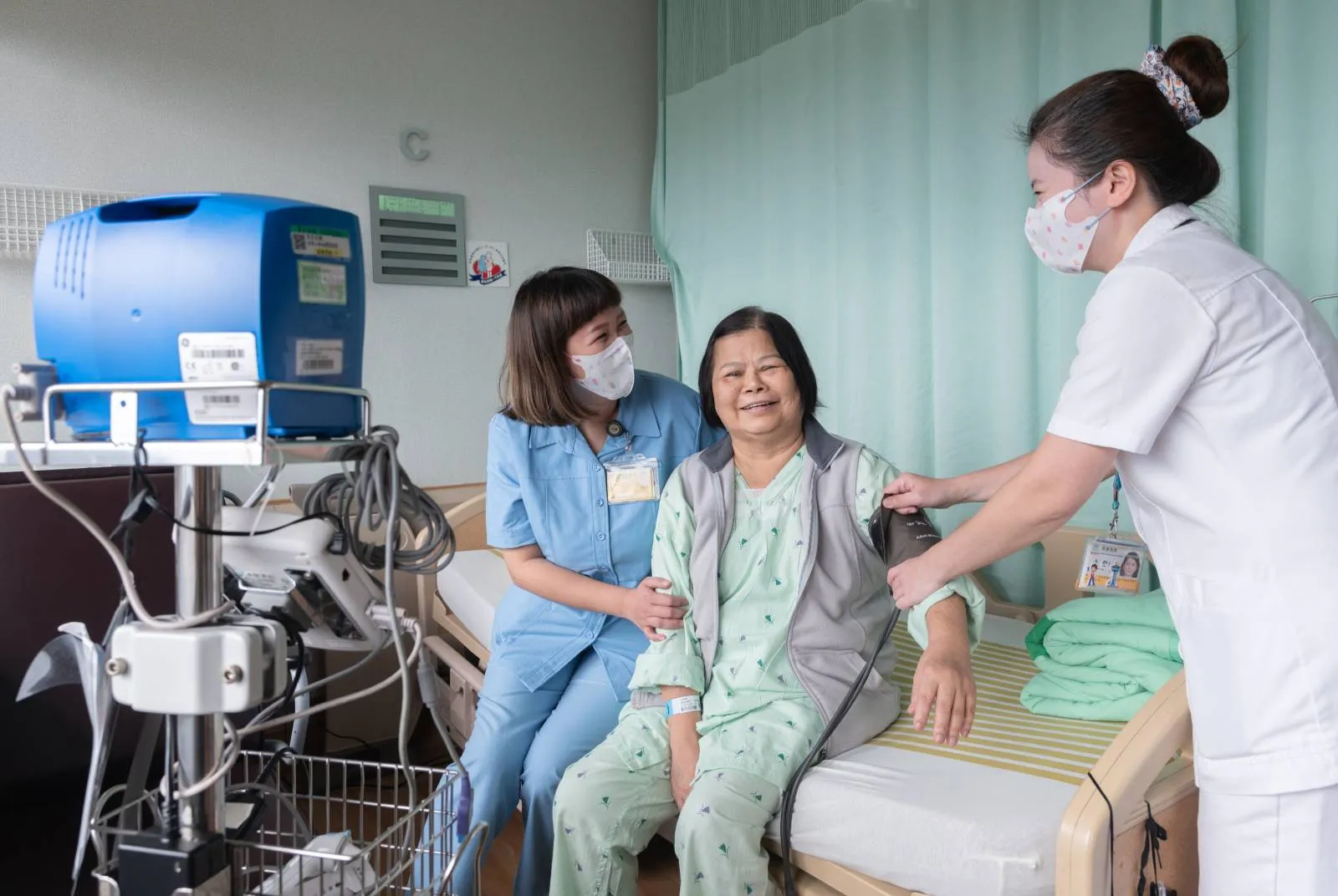
Having been experiencing earaches, I phoned up a local ENT surgery. The receptionist on the other end seemed confused when I asked if they had any availability whatsoever over the next few days. In the UK, acquiring an appointment with a GP can require you to book days or even weeks in advance, yet this receptionist told me to just arrive at the surgery whenever I wanted. Within an hour, I had been examined by an ENT specialist and prescribed the relevant medication—all for the price of a few night market skewers.
My first time visiting a hospital was revelatory too. I had to undergo a health assessment for a new job, and I was expecting a whole day’s worth of killing time in waiting rooms. Yet, the entire process, including X-rays, blood tests, and physical examinations, took no more than an hour and a half. What’s more, the hospital itself was clean, efficiently run, and calm.
The experience was a far cry from almost every interaction a relative of mine has had with British hospitals in recent years. In the UK, it has become far from unusual for people in urgent need of attention to be made to wait for hours for treatment or left to languish on hospital floors due to a lack of beds and rooms.
I am under no illusions that there are imperfections in the Taiwanese health care system. Doctors here have an almost zealous desire to prescribe medications with little connection to the symptoms being experienced (“Have a sore toe? Here’s something to help you sleep”), and undoubtedly, more problems will arise as the country’s population gets older and older.
But every time I visit a doctor’s surgery or hospital in Taiwan, I feel like Yeltsin staring at those ice pops. The belief embedded in the modern British worldview — that a publicly funded health care system is the only reasonable option—evaporates when confronted with the efficiency, quality, and cost-effectiveness of the Taiwanese insurance-based one.
So, as some are beginning to advocate for reform to National Health Insurance (NHI), it should be appreciated how excellent health care in Taiwan is. Just as those American shoppers at Randall’s grocery store in 1989 probably took the fully stocked shelves for granted, many Taiwanese may not realize how poor the quality of health care in other affluent countries can be. Sometimes, it requires an outsider to tell you just how good you have it.
(This piece reflects the author's opinion, and does not represent the opinion of CommonWealth Magazine.)
About the author:

Harry Jenkins is a writer, commentator, and formerly an English editor of Live magazine. Before moving to Taiwan, he worked in the British Houses of Parliament, handling policy related to foreign affairs, immigration, the COVID-19 pandemic, and much more.
Have you read?
- Living on the Front Line? What Westerners Get Wrong About Life In Taiwan
- Why I Became the First Foreigner to Challenge Taiwan’s Constitution on Workplace Discrimination
- Allow New Residents To Take Root in Taiwan
Uploaded by Ian Huang
Views

Subscribe to CWE Newsletter (every Thursday)
Stay abreast of what's happening in Taiwan with our weekly digest.
Keywords: