German Institute Responds to Nazi Salute in Taiwan: Memory Cannot Be Distorted
Source:Shutterstock
Following instances of the display of Nazi symbols in Taiwan, German Institute Deputy Director Andreas Hofem shares his thoughts on the responsibility of remembrance.
Views
German Institute Responds to Nazi Salute in Taiwan: Memory Cannot Be Distorted
By Andreas Hofemweb only
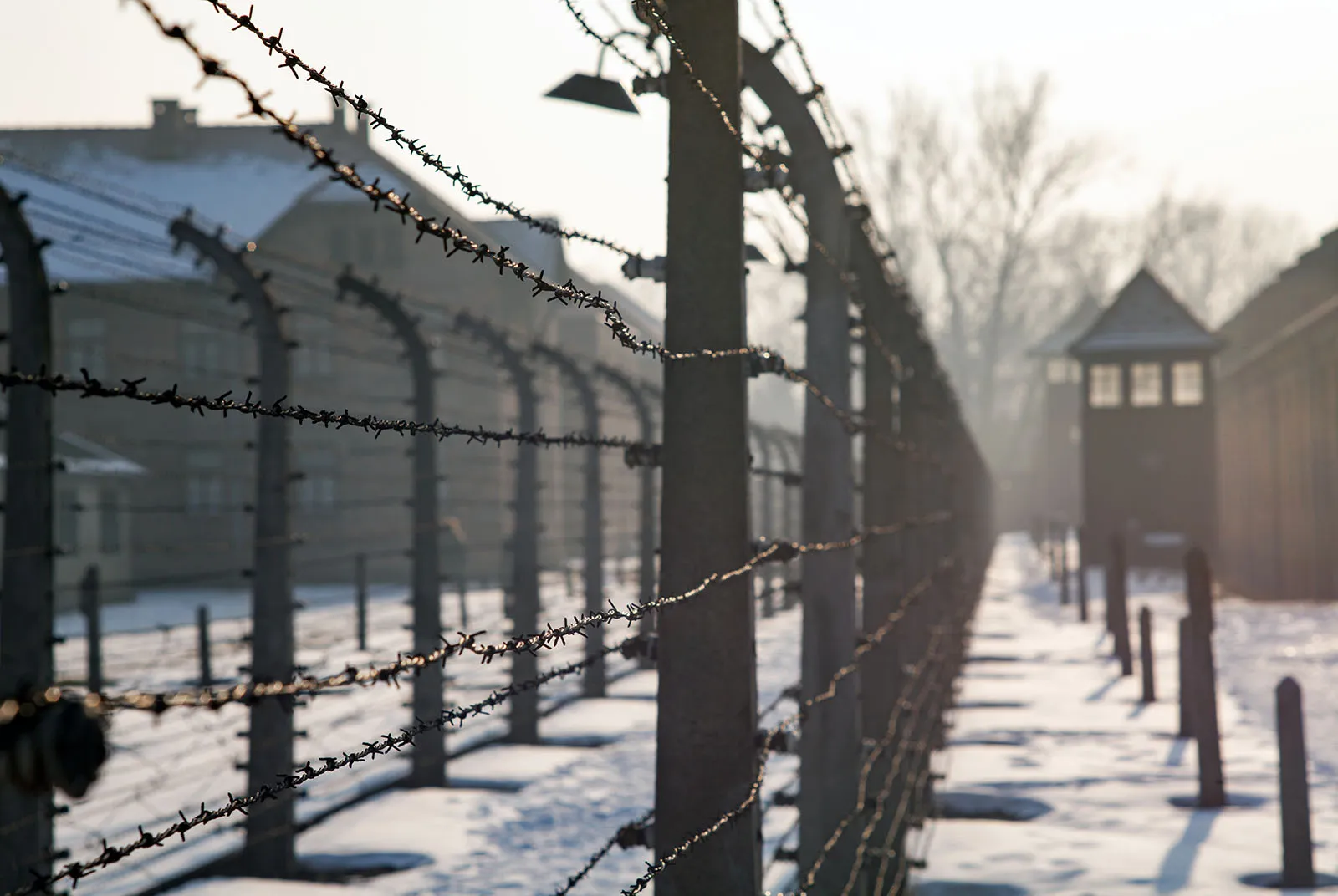
My birthday is January 27th. I was born many years after the end of the 2nd World War. Many years later, on January 27th 1945, the concentration camp in Auschwitz was liberated.
Today, the 27th of January marks the international day of holocaust remembrance. It’s a day of commemoration, of remembrance, but also of guilt and of shame.
As a German born years after the end of the Nazi tyranny, I feel shame for my people and nation. And I feel a responsibility to remember. My generation is not guilty, yet, as Germans, we must accept this shame and assume this responsibility.
This week, we commemorate the Holocaust in Taipei. And we mark the 80th anniversary of the end of the Nazi regime and the 2nd World War. Together with President Lai Ching-te, the Taiwan Foundation for Democracy, and the Israeli Office, the German Institute will commemorate this darkest chapter of human history. A chapter that Germans have written with the blood of the victims.
In the coming days, at places like Auschwitz or Dachau or Buchenwald, survivors, officials, religious leaders, and citizens gather once more to remember the unthinkable suffering of the victims. They recommit to the values that made peace, dignity, and democracy possible. And they renew a solemn vow: *What happened then, must never happen again.“
In Germany, this „culture of remembrance“ has become a cornerstone of our democracy today. However, this process has been far from perfect. But it has taught us that freedom is fragile, and that the seeds of hatred and indifference must never be allowed to take root again.
Today, we are witnessing dangerous attempts to rewrite history, to minimise crimes, and to discredit places of memory. According to recent surveys, over 50% of Germans believe it's time to “draw a line” under the Nazi past. These are signs of erosion - of empathy, of awareness, of historical responsibility. And of the core of our democracy and humanity.
In this context, it is most disturbing to see the display of Nazi symbols in public in Taiwan like in the recent case of a political activist wearing a Nazi armband and giving a Nazi salute. It is also distressing to bear the sight of two men waving Nazi swastika flags in front of the European school every day, morning and afternoon.
Millions of people have died and suffered because of the deeds committed under this sign. It is unacceptable that it is used today for selfish interests and political games. Because let us be clear: Distortion of history is not an expression of opinion.
Taiwan has been grappling with its own past. We witness an increasingly open engagement with difficult chapters of Taiwan’s history. This is a courageous step and deserves our support and admiration. It is an essential step to preserve the memory and to renew the pledge of “never again”.
German and Taiwanese institutions have shared their experiences of remembering the past. Because, we believe that as democracies we all must be vigilant. The German writer Erich Kästner put it this way: “The events from 1933 to 1945 should have been fought in 1928 at the latest. Later it was too late. One must not wait until the snowball has become an avalanche. One must crush the rolling snowball.”
Therefore, we must protect the truth against denial, protect dignity against hate, and protect memory against forgetting and distortion. Let us continue together along this path.
(This piece reflects the author's opinion, and does not represent the opinion of CommonWealth Magazine.)
CommonWealth Magazine welcomes op-ed submissions. Please send your article proposals to [email protected]
About the author:

Andreas Hofem is the Deputy Director of the German Institute Taipei.
Views

Subscribe to CWE Newsletter (every Thursday)
Stay abreast of what's happening in Taiwan with our weekly digest.
Keywords: