Why Do These Companies Stick With “Troublesome” Environmental Work? How Taoyuan Enterprises Turn Challenges Into Long-term Strength
Source:the Department of Economic Development, Taoyuan City Government
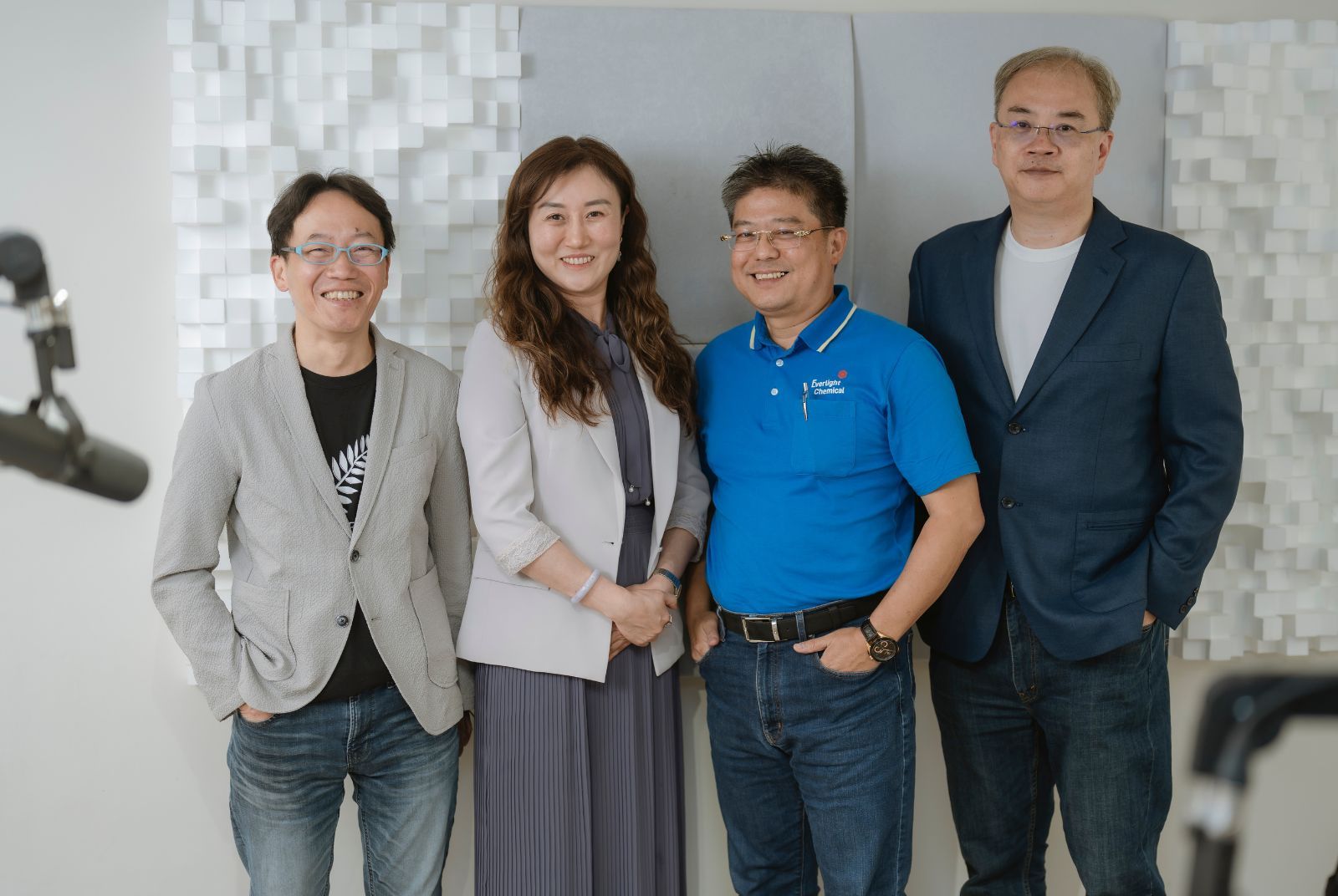
Yuan Chong-Song, Director of Risk Management and EHS at ASE Chungli;Fan Min-Feng, Environmental Protection Manager at Everlight Chemical (Plant II);Lu Li-Ping, Chief Sustainability Officer at Auden Techno Corp.;and Huang Chao-Yung, Director of Future Business Division and Editor-in-Chief of the CSR Channel at CommonWealth Magazine.
Views
Why Do These Companies Stick With “Troublesome” Environmental Work? How Taoyuan Enterprises Turn Challenges Into Long-term Strength
By the Department of Economic Development, Taoyuan City GovernmentCommonWealth Magazine
As Taiwan prepares to introduce its carbon fee, many companies remain hesitant, hoping regulations might shift over time; however, three Taoyuan Golden Enterprise Award finalists—Everlight Chemical, ASE Chungli, and Auden Techno Corp.—have a different attitude. For them, environmental responsibility is not an obligation to minimize; instead, it is a strategic driver for innovation, competitiveness, and resilience.
Some organizations treat compliance as an added burden. In contrast, these companies show that when sustainability becomes part of corporate culture, what once felt “troublesome” can become meaningful breakthroughs and long-term advantages.
A Commitment Rooted in the Local Community
At Everlight Chemical, nearly 60% of employees live in the surrounding Taoyuan communities. Environmental Protection Manager Fan Min-Feng said, “As a local enterprise, coexistence with the community is essential,” adding, “Regulatory compliance is just the starting point. Earning trust from residents—and offering peace of mind to employees’ families—is what truly matters.”
Everlight was Taiwan’s first chemical manufacturer to obtain ISO 14001 certification in 1996. Over the decades, “safety and environmental protection first” evolved into a deeply ingrained culture, upheld by senior executives and frontline workers alike.
ASE Chungli’s transformation began after the industry-shaping Kaohsiung wastewater incident in 2013. Director Yuan Chong-Song stated that “Our chairman made it very clear: not a single drop of non-compliant wastewater may be discharged.” ASE has since shifted from a linear model to a circular economy, achieving 100% reuse of nonhazardous waste.
Auden Techno Corp.’s commitment began even earlier. Chairman Chang Yu-Pin, a Taoyuan native, believed environmental awareness must start early. More than 10 years ago, Auden collaborated with the WildView Taiwan Film Festival to bring environmental documentaries to schools, reaching more than 300,000 students. By 2020, the company began participating in CSR award programs and implemented external evaluations to refine internal systems and map a long-term sustainability path.
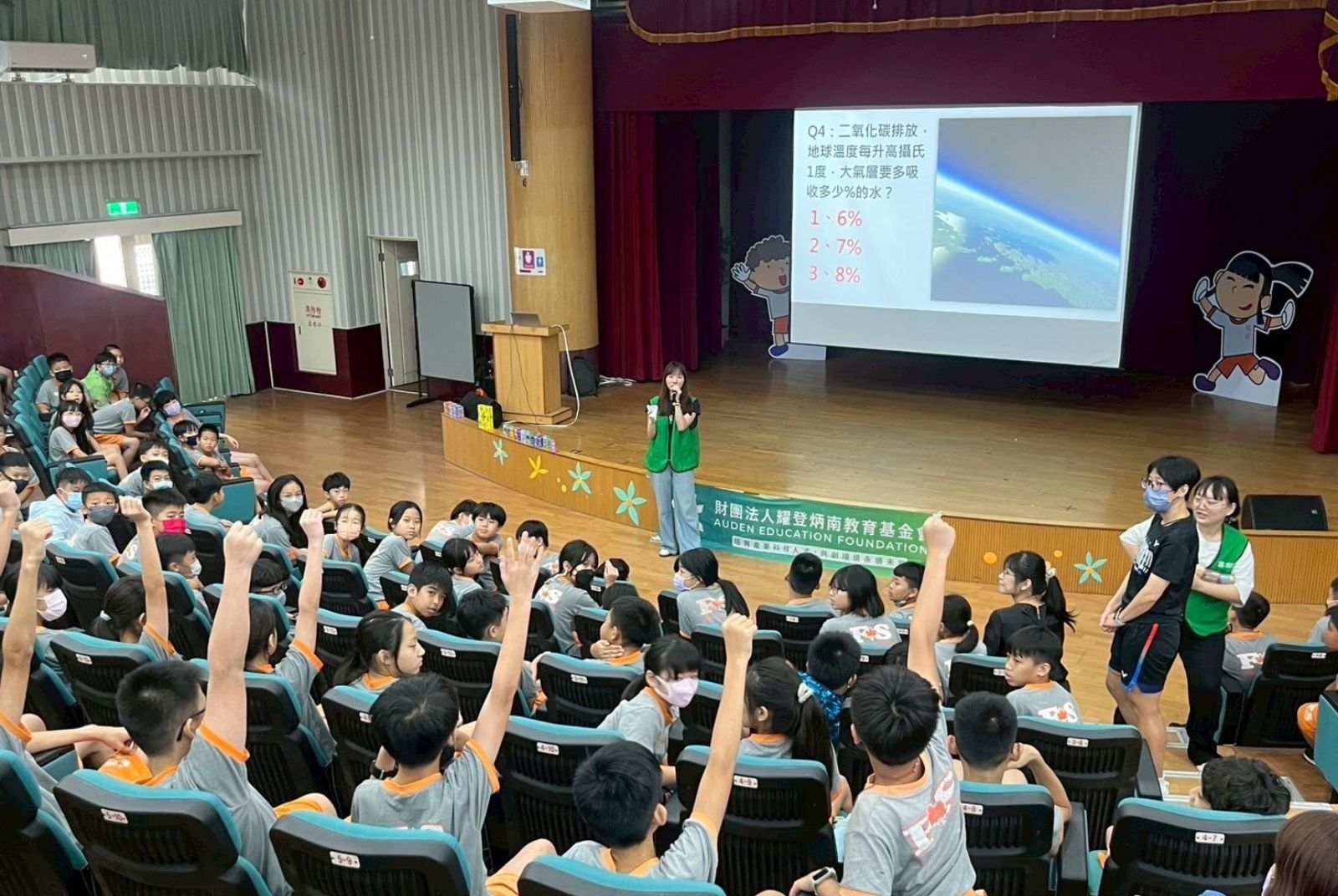
Auden Techno Corp. promotes the WildView Taiwan Film Festival. (Photo: Auden Techno Corp.)
Turning Environmental Challenges into Innovation
The pigment and dye industry faces significant challenges related to water and chemicals. Everlight chose to innovate rather than avoid the issue. Fab explained, “Our R&D team restructured dye molecules from the ground up to improve reaction efficiency.” This approach raised dye fixation rates from 60%–70% to over 90% and supported the development of digital textile inks that drastically reduce water usage. Combined with advanced recycling systems, Everlight now achieves a 95% water reuse rate—a rarity in global dye production.
ASE Chungli has achieved similar breakthroughs. The plant received ISO 46001 water-efficiency certification in 2022, enabling water reuse up to four times. “Industrial water should be reused as much as possible so valuable resources remain available for households,” Yuan emphasized.
Circular transformation has also extended into waste reduction. With assistance from the Taoyuan City Government, ASE collaborated with local companies to convert waste plastics into fuel oil and repurpose discarded epoxy molding compound (the black material used in chip packaging) into permeable bricks for use in school sidewalks. “These materials used to be incinerated,” Yuan said. “Now, they are part of a circular system.”
Auden took a capability-building approach, establishing a sustainability subsidiary to develop green talent and help SMEs reduce carbon footprints. Its new Bade headquarters has been certified to the LEED and EEWH Gold standards. Sustainability Director Lü Li-Ping stated, “Clients noticed that even though we’re not the largest supplier, we were ahead in sustainability readiness.” Auden even opened an office in Poland to support European SMEs with CBAM compliance.
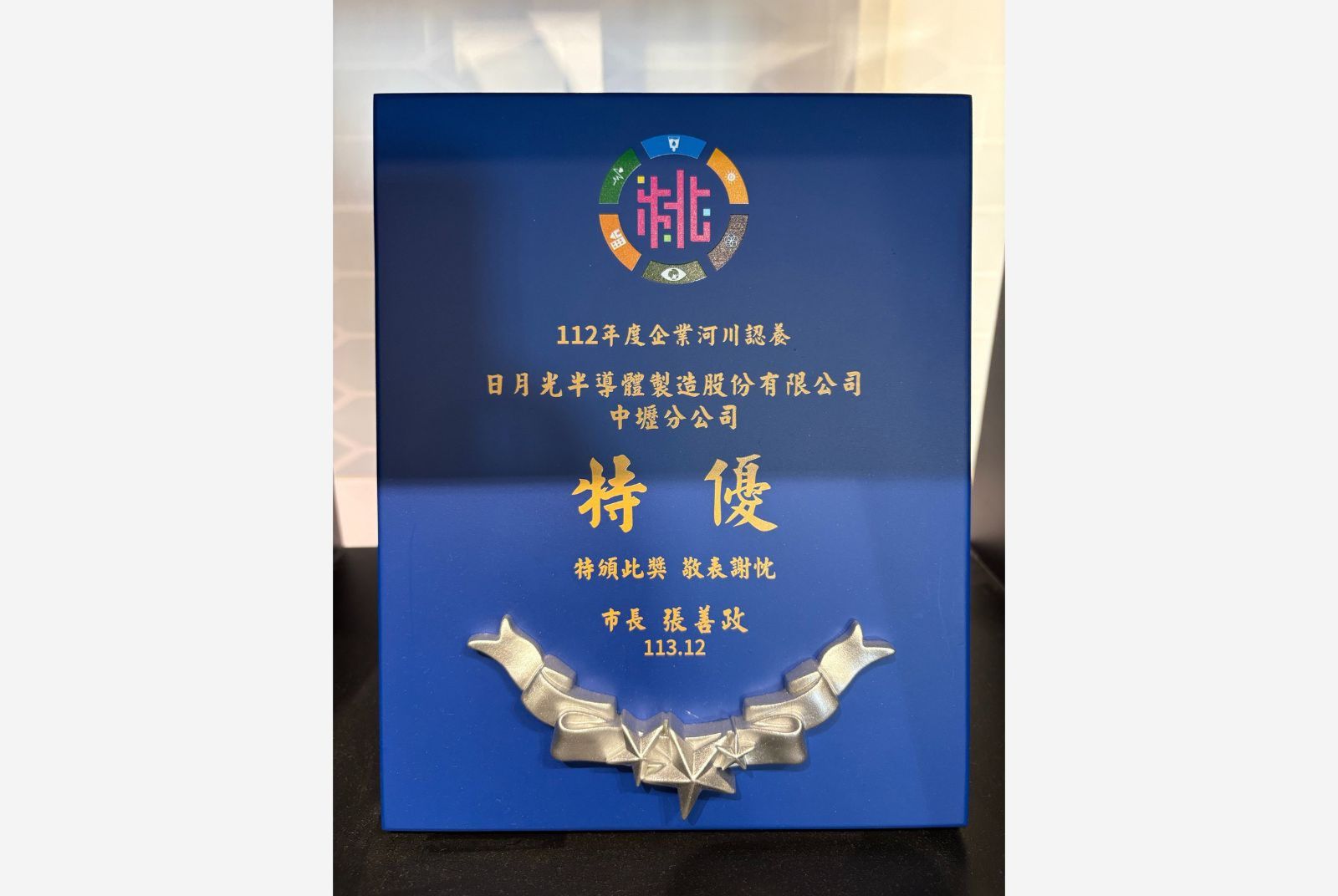
ASE Chungli receives Taoyuan City’s Outstanding Corporate River Adoption Award. (Photo: ASE)
Building a Local Sustainability Ecosystem
Everlight’s innovation in ammonia-nitrogen treatment has gained industry-wide attention. Using membrane distillation, wastewater byproducts can be converted into ammonium sulfate and reused in production, creating a closed-loop system. This approach earned Everlight the Taiwan Circular Economy Award and encouraged other companies to study the technology.
ASE has also integrated environmental indicators into supplier evaluations, prompting partners to adopt renewable energy and recycled materials.
Auden unexpectedly turned its green-building contractor, Futei Construction, into a sustainability partner. During the construction of Auden’s headquarters, Futei Construction became deeply interested in LEED and EEWH concepts. With guidance from Auden’s sustainability team, Futei began applying these principles to other projects. “A one-time vendor became one of our strongest sustainability allies,” Lü said.
Looking Toward 2030: Early Moves, Clear Goals
In the coming years, Everlight aims to achieve zero wastewater discharge and a waste reuse rate exceeding 90%. By replacing chemical coagulation with ozone treatment, Everlight has reduced sludge by 60% and built ecological ponds using treated water.
ASE has committed to SBTi-aligned net-zero targets for 2050 and has achieved 100% reuse of non-hazardous waste. ASE also works with the Taoyuan City Government to establish river-patrol volunteer teams that have significantly improved the Huangjin Creek ecosystem.
Auden is advancing decarbonization and product carbon footprint certification while expanding environmental education. In 2025, it developed a renewable energy board game and collaborated with local schools to train seed teachers. “We want environmental awareness to begin in childhood,” Lü noted.
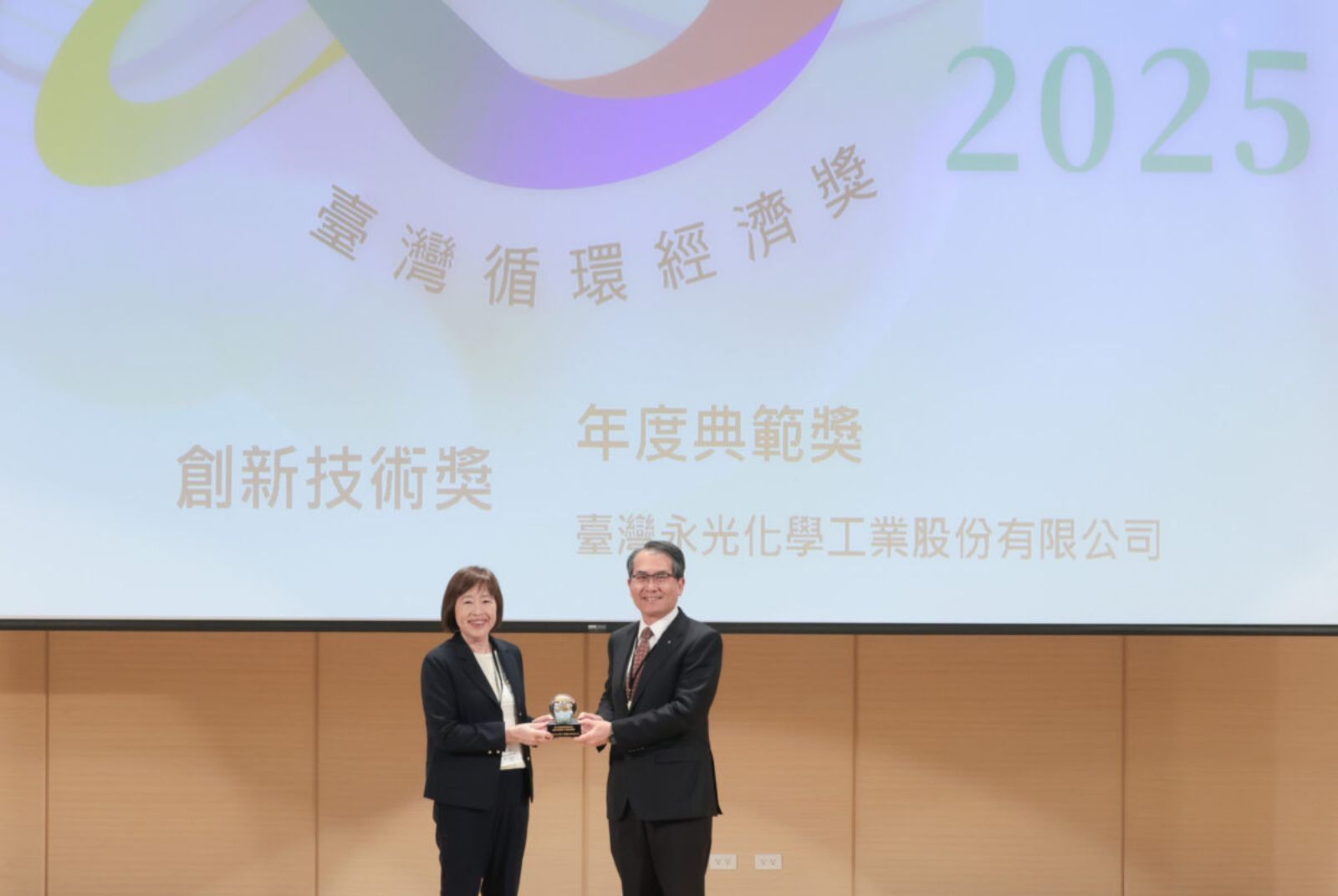
Everlight Chemical receiving the 2025 Taiwan Circular Economy Award. (Photo: Everlight Chemical)
Conclusion: The Value of Choosing the Difficult Path
“Sustainability transformation is never a single company’s battle—it is the upgrading of an entire local ecosystem,” Lü emphasized. These three Taoyuan enterprises show that environmental responsibility, often framed as inconvenient or costly, can become a source of innovation and long-term competitiveness.
From Everlight’s ecological ponds, to ASE’s river patrols, to Auden’s education programs, each effort reinforces a simple truth: meaningful environmental progress must grow alongside the community. Choosing the challenging but worthwhile path safeguards the environment and the future industrial foundation.
(Sponsored by the Department of Economic Development, Taoyuan City Government)
Views

Subscribe to CWE Newsletter (every Thursday)
Stay abreast of what's happening in Taiwan with our weekly digest.
Keywords: