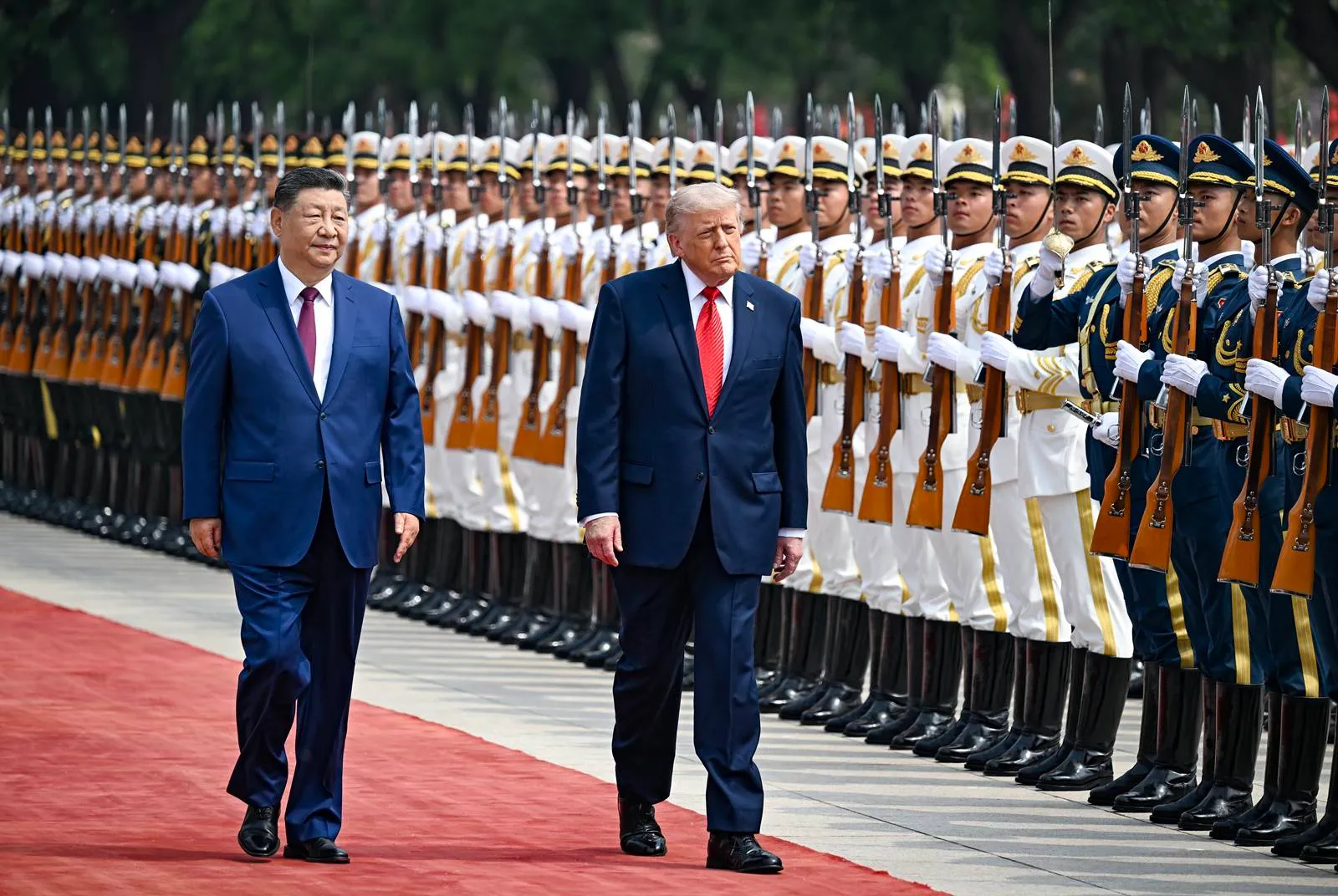
From 50 Cent to a Fistful of Taiwanese Dollars: The Story of Star Photographer Danny Chu
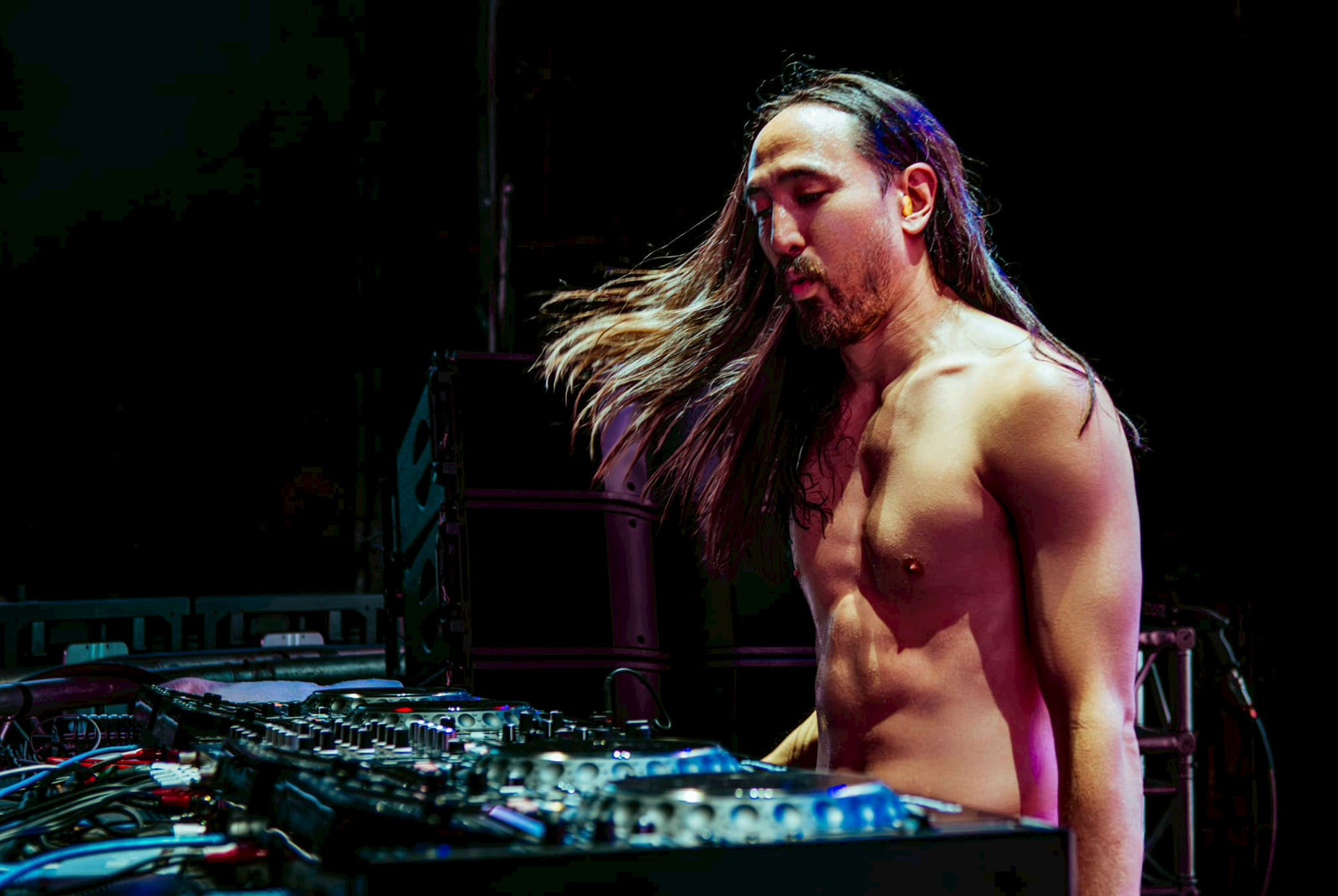
Source:Danny Chu
From New Jersey’s inner-city streets to Kaohsiung’s clubs, temples, and halls of power, Danny Chu’s journey spans music, culture, and identity. Once a go-to photographer for global hip-hop and EDM stars, he returned to Taiwan and quietly reshaped its visual landscape with a distinctly American urban eye—so how did a ghetto kid from the US end up redefining how Taiwan sees itself?
Views
From 50 Cent to a Fistful of Taiwanese Dollars: The Story of Star Photographer Danny Chu
By Julien Oeuilletweb only
At first glance, you could easily imagine Danny is a celebrity himself — some sort of rapper or pop artist. Tasteful tattoos, casual but cleanly cut streetwear, sparkling earrings, and a sharp hairstyle: Danny could perfectly fit on a stage in a club, his stocky silhouette drawn by laser lights and fog machines.
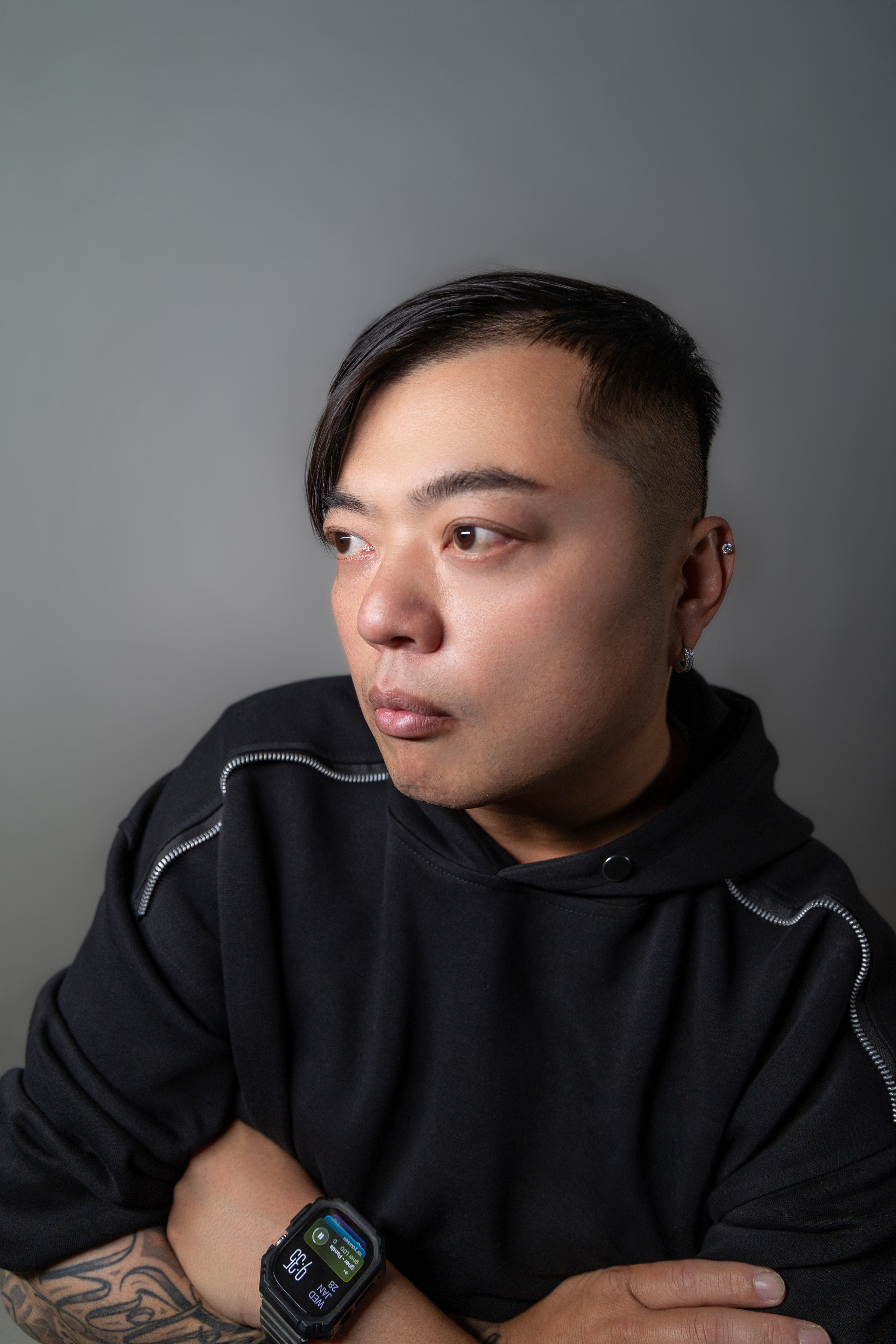 A self-portrait of Danny Chu.
It turns out that what Danny does is put such images on paper for others. Kaohsiung’s top photographer is, first and foremost, the man who shot portraits of some of contemporary music’s most popular acts. And at 40 years old, he has become one of Taiwan’s most sought-after photographers, with subjects ranging from politicians to nightlife dwellers.
“I worked a lot with DJs,” he says with a relaxed, fluid American accent. “I worked with Justin Bieber when he was very young. And Jaden Smith, the younger son of Will Smith. Travis Scott too. I worked with Armin van Buuren, Afrojack… I worked a lot with EDM, with their clubs.”
Danny fits well in clubs. But then again, he fits well in a lot of places.
Born in the United States to Taiwanese parents, he was a long way from pointing camera lenses at some of the most influential African American performers.
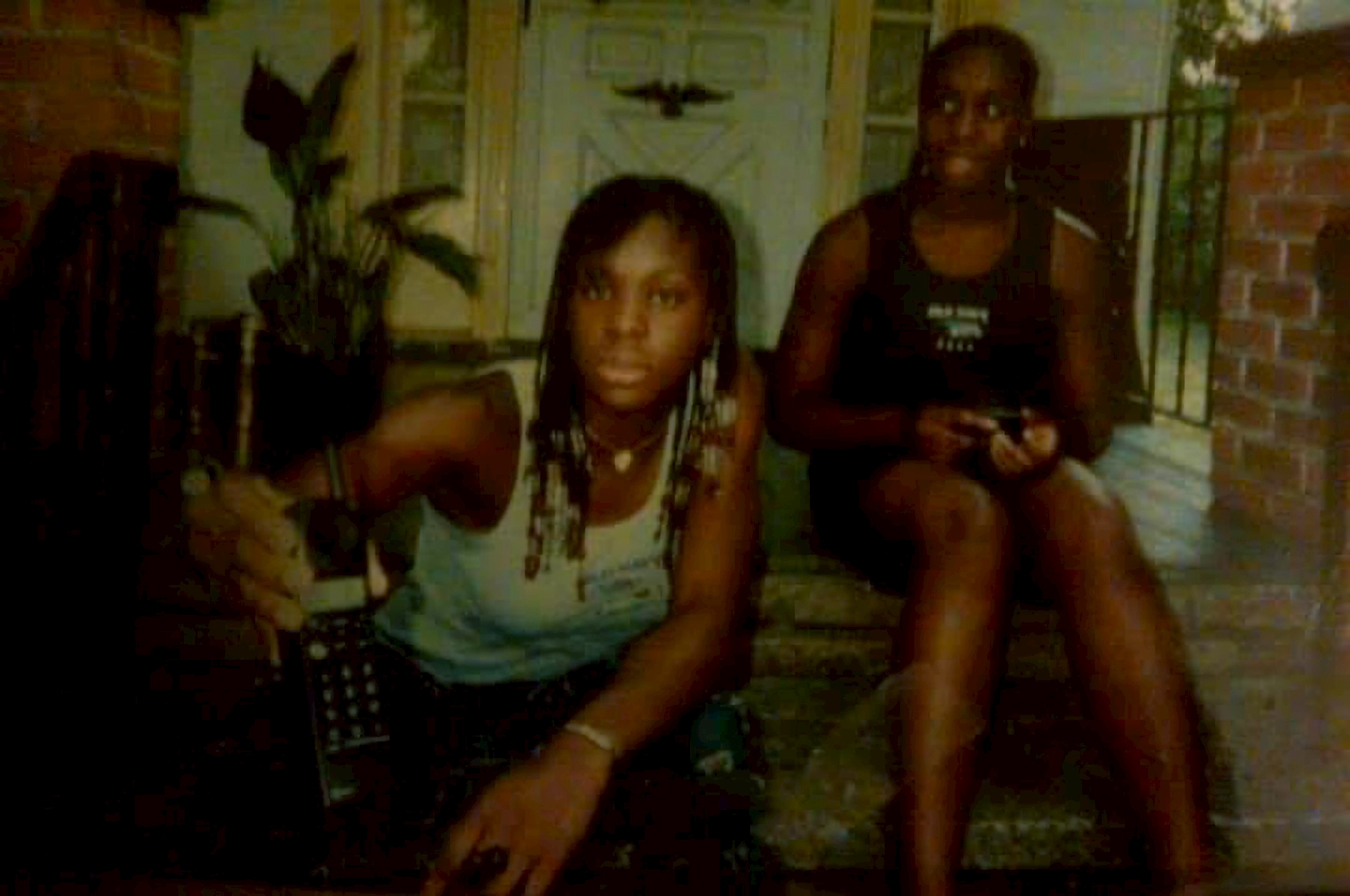 One of Danny's earliest pictures when, as a high schooler, he first attempted to capture the “ghetto” spirit of the community where he grew up.
“I’m originally from New Jersey and studied in New York City. I was from a very bad neighbourhood. I lived among African Americans, and in this community a lot of people are into music, beat music, all that stuff. But I wasn’t one of those guys who was good at music.”
Photography turned out to be his skill. And it is what allowed him to break cultural barriers for the first time.
“Growing up in this neighbourhood was pretty hard. I got bullied. This was not a community that was friendly toward East Asians at all. I was the only Asian at school. People called me names, kids were calling me ‘Bruce Lee’ and things like that. I broke the prejudice first by fighting back! I always got in trouble at school for fighting. But then photography helped me.”
Danny discovered his true calling at nine years old.
“You know how in the States you have art classes you can choose from in high school? You can do pottery or drawing… Photography was my last choice, but that was the only one with places left. But after starting it, I fell in love with the subject. You know, they always say that one picture tells a thousand words. What got me into photography is showing images to the public and having them understand that photography is even more than that. Photography is very special to me because you capture a moment that nobody expected. And you capture the soul. Each picture tells you a story.”
Imagine Danny as a young man wandering through exactly the kind of urban scenery you would see in a rap music video — but as a teenager, holding a big camera.
“The school let us use some cameras and gave us some film,” he says. “We could put the photos on paper ourselves in the darkroom. So I often took these cameras around the neighbourhood to get pictures of the ghetto, the urban ambience. It made me fall in love with it because it puts a lot of story inside the photo. I saw things nobody had the opportunity to see with a camera. It’s very special to have a camera in this context. It gave me the inspiration to be different.”
What started as the story of a kid out of place became the tale of a young man in perfect symbiosis with his environment.
“This place gave me a lot of art and creativity. Such a neighbourhood makes you sensitive to stories. Everyone has a story to tell. So I did a lot of portraits, a lot of street photography, a lot of what we call ‘story photography’. I never thought I’d do that before.” To this day, Danny remains a visual storyteller with a distinctive “US East Coast” urban vibe.
But that’s only the first layer.
The next step for Danny was out of the “ghetto” and into university and professionalism. He was accepted at Parsons School of Design, a highly selective institution. “You have to do an interview and show your projects to enter,” he recalls. “I did that, and I felt like the interviewers were not interested. Yet, toward the end of the month, they sent me a letter telling me I was enrolled. I was very surprised and very optimistic. I never thought I’d be able to go to New York. It was like a dream. There is a very limited number of students accepted every year, and I have heard a lot of legends — famous designers, photographers, and art-related professionals — came out of this school.”
“Later,” he says, “I had a professor who told me photography is a very dangerous career. He said photography can be used to help people, but it can be used to destroy the world too. I asked him what he meant by that, and he said you can take a lot of pictures you shouldn’t be taking. These types of images can be proof. You can help people, take pictures of a culture that people never saw before.”
Danny’s sensitivity toward cultures remained the common trait of every chapter of his ever-changing career.
At first, this was still expressed through his affinity with the urban, hip-hop-flavoured culture of America. Before even graduating, Danny had the opportunity to work with a legend of this culture: Curtis Jackson, better known as 50 Cent.
“His first producer came from the same school as me,” Danny says. “The same ghetto. He was a beatmaker, saw my pictures, and his brother was interested in what I could do. They introduced me to their circle of artists, brought me to a couple of events, and we clicked. At my first event, I saw a photographer on the stage running around, and I thought: I want to be that! So I joined even more events to meet people — promoters, organisers, music industry people, producers, artists. I wanted to know them better to achieve that goal.”
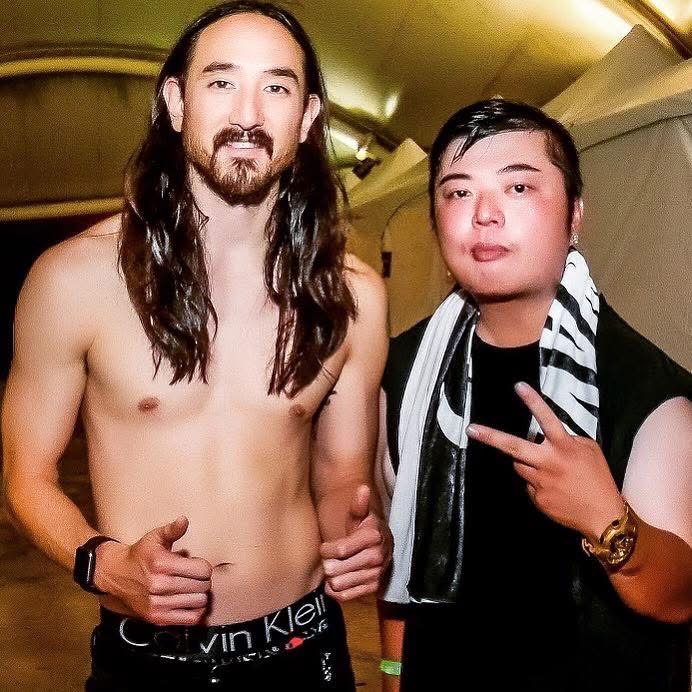 Danny with famous DJ Steve Aoki. (Photo: Danny Chu)
This changed Danny’s life. He was now part of the scene. “As time went on, I was introduced to more festivals. I got to work with Steve Aoki, Calvin Harris… And I was happy because a lot of these artists always have their own photographers — friends, family members even. And yet, they gave an opportunity to another photographer like me.”
He got to know the lifestyle, following them around the world in nightclubs and even cruise ships, taking pictures at major events such as Ultra, Tomorrowland, or Coachella, in a whirlwind of madness. “Once,” he says, laughing, “I was at an afterparty with a big celebrity — I won’t tell who — and those are the craziest events, you know? I left my camera behind to grab something to eat. When I came back, the camera was gone. I looked everywhere for it. Then the celebrity reappeared with my camera, telling me how great it was. When I checked the memory card, they had taken plenty of crazy pictures… You have no idea the kind of things I saw!”
And all of this came to an end 13 years ago.
The next episode of Danny’s life brought him back to Kaohsiung for a humble role, far from the glitter of music stars.
What brought him back to his family’s homeland was the family itself — more precisely, the only family member left in Kaohsiung, in southern Taiwan. “My grandmother got cancer, and that’s the most terrible thing ever. Of all the relatives, I was the only one not working nine to five. As a photographer, I have flexibility. We thought it would be easier for me to take care of her than for any of my relatives, so I moved here.”
And just like that, Danny went from hanging out with big names to becoming a humble man with professional gear and zero contacts whatsoever in a city that was then far from being known as the “concert city” it is today. “It felt like I was back to nothing, because in the States I knew everyone by then. One of my goals there was to work in Hollywood with photographers or videographers. I went through culture shock somehow. Kaohsiung was still very traditional and not international at all back then, and Taiwanese photography and videography were still very old-fashioned compared with what we did at a high level in the States.”
That final point opened another door. Danny would become the man who helped upgrade professional photography in Taiwan. “By using my skill set in Taiwan, acquired in the US, I can help this country. A lot of what I do now is bringing that foreign knowledge here. You know, we call this place Formosa — ‘beautiful island’ — for a reason, because it has almost everything. So now I learn the culture here, and in return I give what I have learned about photography, which was never done before here.”
Danny started by shooting Kaohsiung’s nightlife for a few Taiwanese dollars in the hope of approaching the local music scene – and he did become a favourite of the local, burgeoning hip-hop music scene.
But to his surprise, he was soon pulled into the world of local politics. He was even assigned the first interview shoot of Lai Ching-te after he became president. “It’s the strangest thing. Politicians felt my pictures were very different from what they were used to, which is, you know, paparazzi photos. Their photographers rush into the room where a mayor or candidate is waiting, start snapping — it’s all overexposed, the lighting is not right. When they saw my pictures, they felt I was putting soul right into the photos.”
Danny is still in high demand from various government agencies that want his modern, professional, and upbeat approach as part of their promotional work. But he was not going to stop there. The heart of the ghetto kid was still beating — hungry for action and raw authenticity.
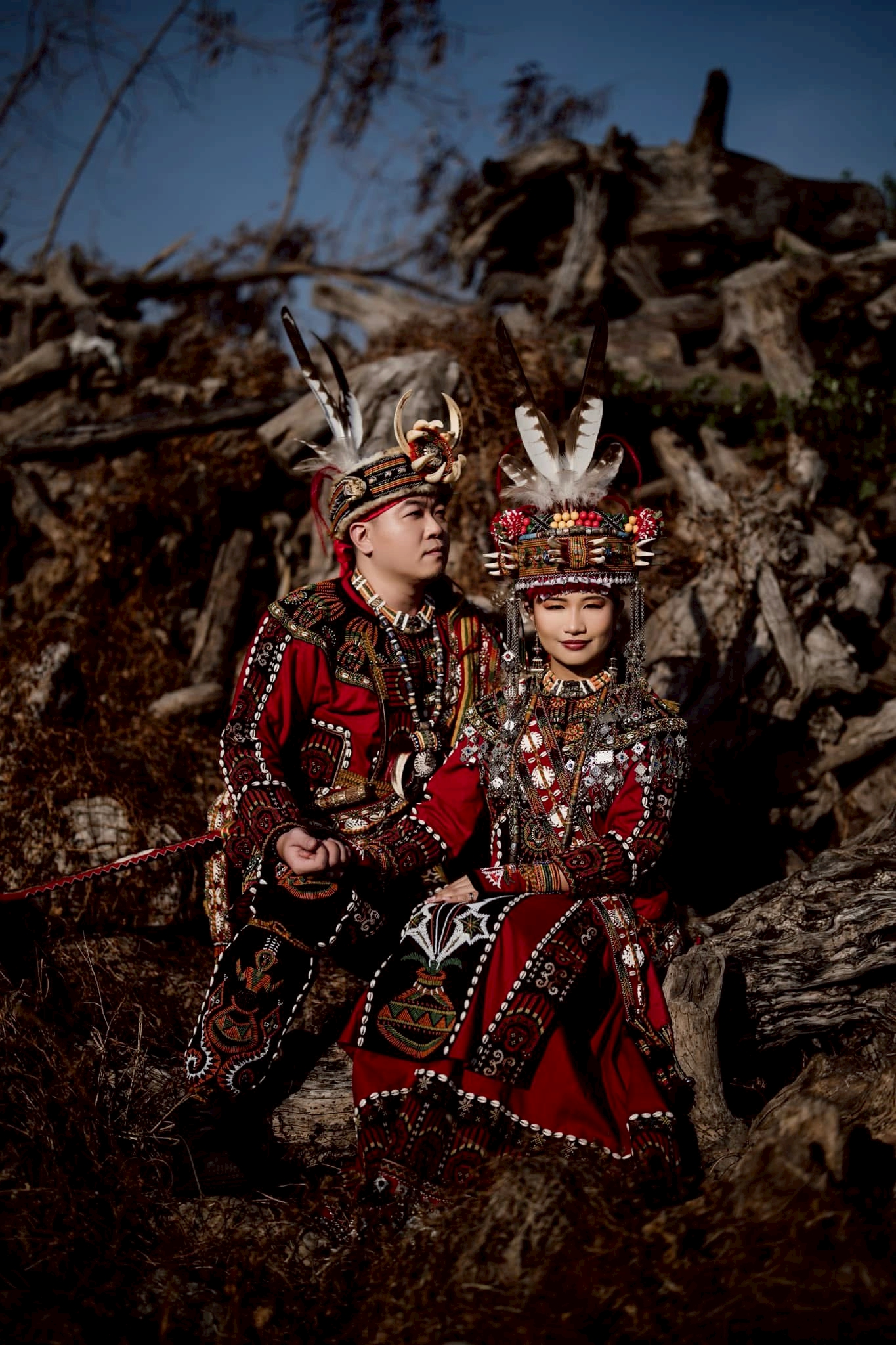 Portrait of a Taiwanese Aboriginal couple taken by Danny.
He was soon invited into a very different world: Taiwanese Indigenous culture. “It is a very, very delicate thing,” he says. “They don’t really let people into their circle, their traditional events. I got to meet them because they were asking me questions, since most never had the opportunity to leave the country — things like, ‘Hey Danny, how is it to be in this American ghetto culture?’ So I showed them the work of my friends in America, Black or white, and how they use rap music to express themselves, how inspirational it is. It’s the knowledge I bring to them. It was one of the biggest experiences for me. There are actually 16 Indigenous tribes in Taiwan, you know? I took pictures of their events, rituals and festivals. They have lots of colours, so it’s wonderful for a photographer: green, red, pink — all kinds of colours.”
And to top it all, and go full circle, Danny also took pictures of what he calls “the ghetto of Taiwan — temple culture. There’s not that much temple culture in Taipei, but it’s big in Kaohsiung.”
Although often associated with gangs in the public imagination, temple culture is primarily about brotherhoods. “They are sworn brothers and sometimes deal in the business of traditional jade jewellery or local distilleries. They hired me to take pictures as part of their promotional work. You need to know these ‘brothers’ or you will never have access. They are very delicate with their culture. I gained their trust because I was taking pictures in the nightlife scene, and they got to know me there, introduced me to their brothers. Now they ask me to take pictures of their temple life.”
During Danny’s time in Kaohsiung, the city itself underwent formidable change. It now has a wide array of concert venues, a thriving nightlife, and has become Taiwan’s modern cultural hub. No surprise, then, that Danny is already contemplating his next chapter. “I’m trying to move into a sort of booking agent role,” he says, “because I have so many connections with these artists and their managers. I want to be half photographer, half booking agent — a bridge. It’s actually very hard for American artists to come to Asia to perform because they don’t have the network to do it. I want to be one of the people who can connect the two.”
After years of telling their stories, it seems Danny will now help shape the history of a ghetto turned pop-culture Mecca — in pictures and in action.
For the Chinese version: 國際巨星御用攝影師,從美國到台灣的轉折人生:專訪用鏡頭捕捉靈魂的 Danny Chu
(This piece reflects the author's opinion, and does not represent the opinion of CommonWealth Magazine.)
CommonWealth Magazine welcomes op-ed submissions. Please send your article proposals to [email protected]
Have you read?
- Lin King: Taiwan’s First U.S. National Book Award-Winning Translator
- At 82, Calligrapher Tong Yang-Tze Brings Ancient Art to the Met
- The Taiwan of Hou Hsiao-Hsien and Edward Yang
Uploaded by Ian Huang
Views

Subscribe to CWE Newsletter (every Thursday)
Stay abreast of what's happening in Taiwan with our weekly digest.
Keywords: