I Fear the Compatriots Even When Bearing Gifts
Source:Shutterstock
When Beijing offers gifts, should Taiwan accept? In this op-ed Meng-kit Tang draws on an ancient warning — *timeo Danaos et dona ferentes* — to examine Beijing's latest package of measures toward Taiwan. The real danger, Tang argues, is not the offer itself but the dependence that quietly accumulates beneath it.
Views
I Fear the Compatriots Even When Bearing Gifts
By Meng Kit Tangweb only
Timeō Danaōs et dōna ferentēs or I fear the Greeks even when they bear gifts. This ancient line endures because it captures a simple truth: generosity from a rival is rarely innocent, but it is not always a trap either. Policy must navigate this tension.
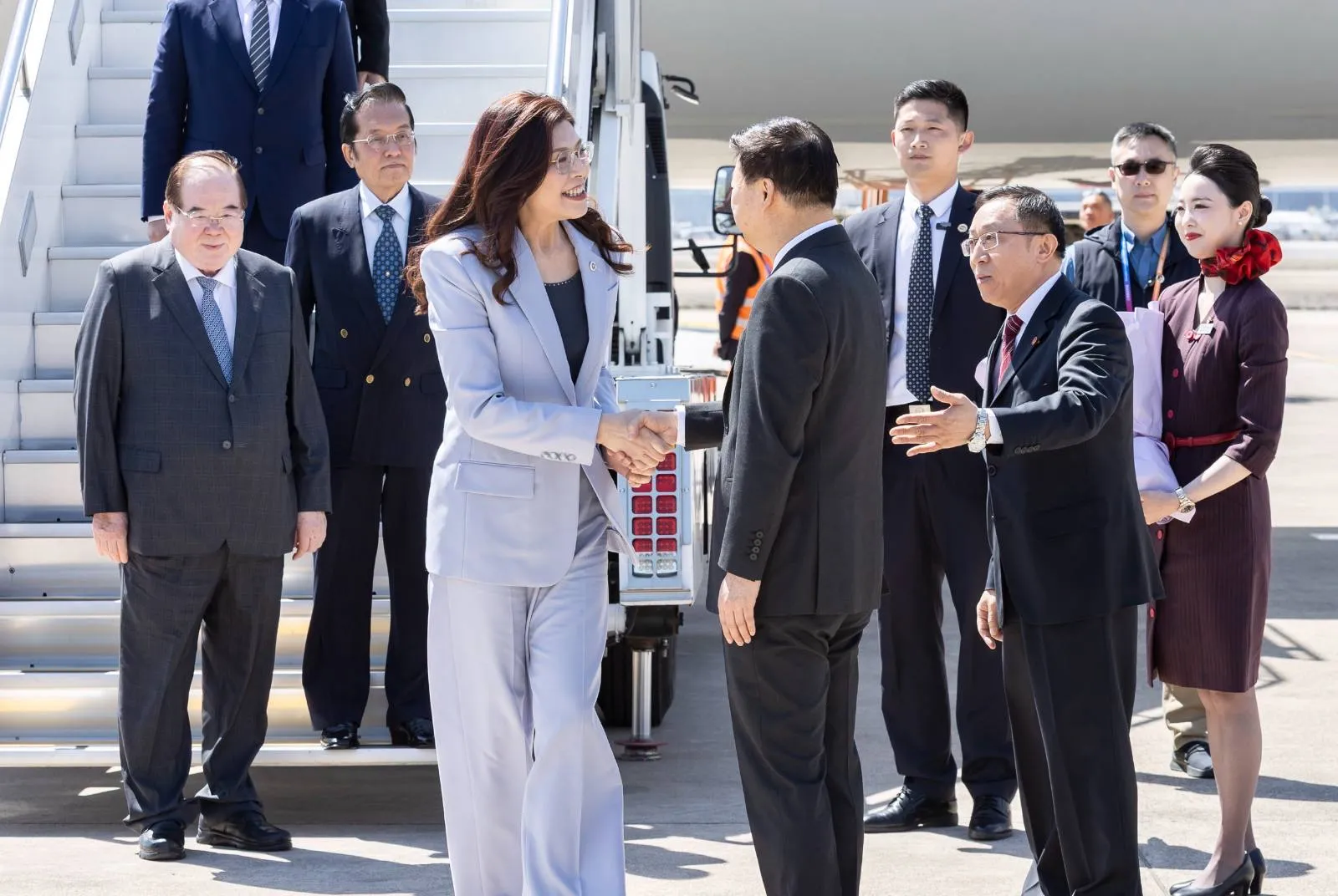
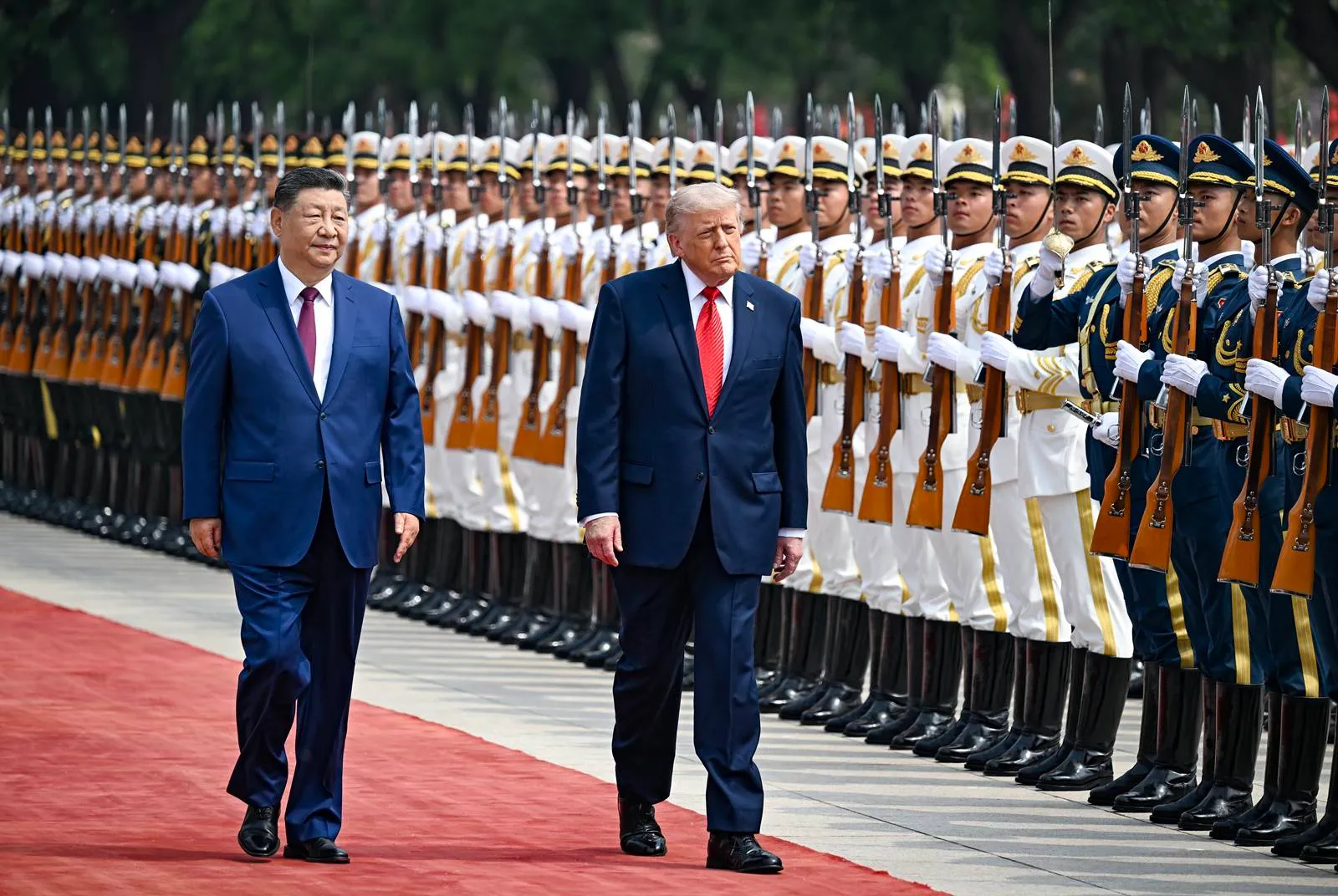
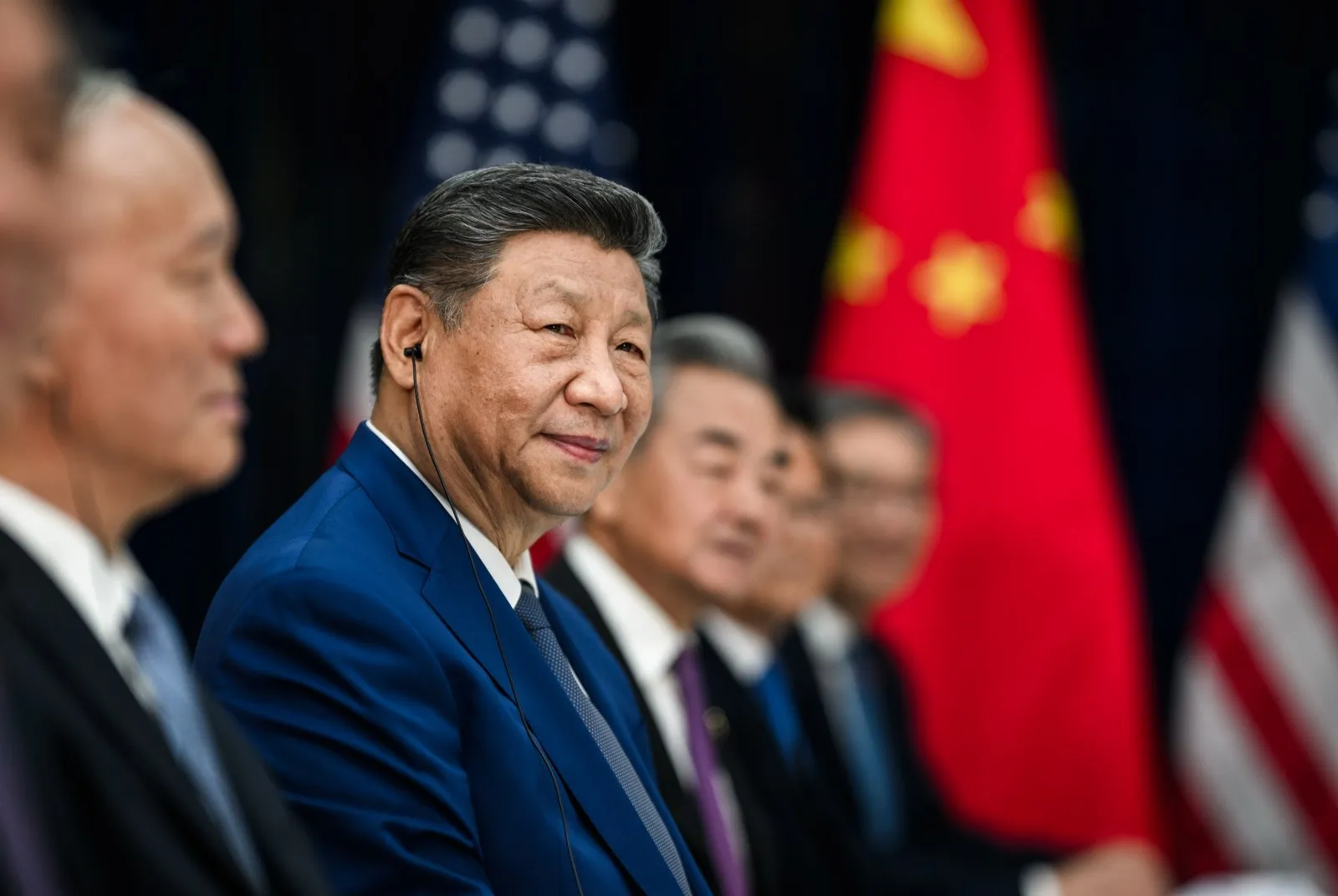
In Taiwan today, this balance is once again in play. After the April 2026 meeting between KMT chair Cheng Li-wun and Chinese President Xi Jin-ping, Beijing announced a package of "10 measures" aimed at easing trade and access for Taiwanese farmers, fishermen, small businesses, and residents of outlying islands. The tone was calm and administrative - lower barriers, smoother procedures, more convenience.
Yet, suspicion alone is not a strategy. Some of these measures would provide real relief. For a farmer in Chiayi, or a small exporter trying to stay afloat, easier access to China means real income and stability. Ignoring that would ignore the material reality of Taiwan’s economy.
The difficulty lies elsewhere. The question is not whether these measures offer benefits or risks; they offer both. The real question is whether Taiwan can engage without allowing dependence to quietly accumulate, until it begins to shape choices that once felt open.
What the 10 Measures Actually Do
These measures are not isolated offers but part of a larger design. One part of this design is political. Several measures focus on creating structured exchanges between the Kuomintang (KMT) and the Chinese Communist Party (CCP), as well as promoting youth and cultural programs framed around shared identity.
On paper, they appear as channels for communication, but in practice, they create an alternative rhythm of engagement alongside Taiwan’s formal political system. Influence does not need to replace institutions; it only needs to run parallel long enough to matter.
Another measure targets infrastructure, specifically linking Kinmen and Matsu to the mainland. The idea is simple: lower costs, easier movement, more convenience. Yet infrastructure is never just functional. Once in place, it changes habits, expectations, and dependencies that are hard to reverse. Physical connectivity has a way of becoming political over time.
The remaining measures focus on sectors like agriculture, fisheries, tourism, and small businesses, areas where economic sensitivity is highest. These are not random targets. They offer immediate benefits and are politically significant. Gains come quickly, but so does reliance.
The language tying it all together is deliberately flexible. References to the "1992 Consensus" and opposition to Taiwan independence establish a political baseline. Yet phrases like "explore," "promote," and "when conditions are suitable" leave plenty of room for future adjustments, reversals, or reinterpretations.
Taken together, these measures are less a collection of isolated offers than a structure that shapes future choices while offering immediate benefits.
History’s Warning: Incentives First, Pressure Later
Taiwan has seen this pattern before. From 2008 to 2016, cross-strait relations grew through a period of expansion. Agreements increased. Tourism surged. Agricultural exports to the mainland flourished. The Economic Cooperation Framework Agreement (ECFA) was touted as a foundation for stability and predictability.
For a time, this seemed convincing. Economic integration could soften political tensions. Interdependence could create restraint.
But post-2016, that assumption became more complicated. As political conditions shifted, access to the mainland tightened. Tourism dropped. Certain agricultural goods like pineapples and groupers suddenly faced restrictions. These restrictions did not always take the form of outright bans but emerged through regulatory friction or delays in approvals.
The pattern is clear. Access expands during periods of alignment. Dependence deepens unevenly across sectors. When political expectations are not met, pressure follows selectively - aimed at the areas where it will have the most immediate impact.
This does not mean that cooperation is impossible or inherently exploitative. It means that the structure of dependence matters as much as the presence of exchange. Economic ties don’t need to be severed to become influential; they just need to be uneven.
Hard Truths Taiwan Must Confront
Any serious response begins with an honest reading of Taiwan’s own position. Parts of the economy remain closely tied to China. For farmers, fishermen, and smaller exporters, the mainland market offers scale and proximity that are not easily replaced. Efforts at diversification exist, but they move slowly and unevenly, shaped by global demand patterns as much as policy direction.
At the same time, public expectations are difficult to reconcile. There is a broad desire for access to economic opportunity without political compromise. That expectation is understandable, but it leaves little space for openly acknowledging trade-offs.
Institutionally, engagement has also shifted in character. When official channels stall, party-to-party or informal exchanges tend to fill the gap. These mechanisms can be useful in maintaining contact, but they also blur the boundary between political negotiation and non-state interaction.
Each political camp reflects part of this tension. The Democratic Progressive Party (DPP) tends to view Beijing-framed engagement with suspicion, which can narrow room for calibrated participation. The KMT tends to treat existing frameworks as functional, even as the conditions around them evolve.
The deeper issue is not partisan but structural. Cross-strait policy is still often treated as a domestic argument, when it is also an ongoing exercise of asymmetrical management. That asymmetry does not respond to rhetoric but more to structure, consistency, and time.
From Easy Answers to a Workable Strategy
Simple answers have their appeal. They offer clarity, even comfort. But this is one of those cases where clarity can be misleading.
Accepting all ten measures would bring quick, visible gains. Some sectors would benefit almost immediately. But reliance would deepen just as quickly, and over time, the political conditions attached to that access would begin to quietly shape behavior.
Rejecting the package outright avoids that risk, but it shifts the burden elsewhere. Farmers lose markets; small businesses lose opportunities. Alternatives take time, and the costs are unevenly distributed. What looks firm at the top can feel exposed on the ground.
The most fragile path sits in between moving back and forth depending on the political moment. That kind of oscillation creates uncertainty at home and sends mixed signals abroad. It makes Taiwan harder to read and easier to test. Incoherence does not stay neutral for long. It becomes a signal in itself.
A more durable approach starts by stepping away from the idea that these measures must be accepted or rejected as a whole. They are not a single offer, and they should not be treated as one.
Some elements carry higher risks by design. Political mechanisms that operate outside formal state structures deserve particular caution. The issue is not contact, but accumulation. Over time, parallel channels can shift where influence sits, even if nothing appears to change at first.
Infrastructure proposals require an even longer view. Their benefits are tangible, but so are their consequences. Once built, they create patterns of movement and reliance that are difficult to unwind. Decisions here cannot be made on convenience alone.
Economic measures are more flexible, but not without limits. Support for agriculture, tourism, and small businesses can help, but it needs to be paired with active diversification. Engagement without balance tends to concentrate risk.
Cultural exchanges sit in a quieter space, but they are not neutral. They shape perception as much as they build familiarity. Selectivity matters more than scale. What ties this together is not a rigid framework, but a set of working disciplines.
Reciprocity should be grounded in observable behaviour, not just stated intent. Diversification should operate early, before dependence becomes visible.
And engagement should remain anchored in transparent, accountable institutions.
The aim is not to withdraw. It is to engage in a way that preserves room to decide.
Strategic Signaling and Global Implications
Taiwan’s response will be closely watched beyond its borders. For the United States, Japan, and other global partners, the question isn’t whether Taiwan engages with China. The question is whether that engagement is predictable, coherent, and managed within institutional frameworks. These qualities are critical because they signal Taiwan’s ability to manage external pressure.
Economic perceptions also matter. Taiwan’s position in global supply chains relies not just on its production capacity, but on its governance credibility. Markets value consistency more than positions.
A fragmented response would create doubt. A disciplined one would reassure partners that Taiwan can manage complexity and maintain strategic direction. The key question, then, is not whether to engage, but how to engage.
The Trojan Horse remains a useful metaphor because it describes how influence can quietly enter and gradually change conditions, often before it’s fully realised. “害人之心不可有,防人之心不可無.” One should not intend harm, but neither should one abandon caution.
Taiwan’s challenge is not just to resist pressure. It’s to recognise how pressure can be embedded within cooperation itself, and to act early enough to ensure that engagement remains a choice, not a condition.
(This piece reflects the author's opinion, and does not represent the opinion of CommonWealth Magazine.)
CommonWealth Magazine welcomes op-ed submissions. Please send your article proposals to [email protected]
About the author:

Tang Meng Kit is a Singaporean and works as an aerospace engineer. He graduated from the S. Rajaratnam School of International Studies (RSIS), Nanyang Technological University (NTU), Singapore. His research interests include cross-Straits relations, Taiwan politics, policy issues and aerospace technology.
Have you read?
- Harmony or Autonomy? The KMT’s China Visit and the Search for Openings Across the Strait
- Taiwan's Freedom Is Not a Fixation
- [Exclusive] Will the U.S. Fight for Taiwan? Stephen Wertheim Says There’s Another Way
- Why the World Will Not Have a Second TSMC
Uploaded by Ian Huang
Views

Subscribe to CWE Newsletter (every Thursday)
Stay abreast of what's happening in Taiwan with our weekly digest.
Keywords: