Cartoon Cats and Robots, Made in Kaohsiung, With an Indonesian Heart
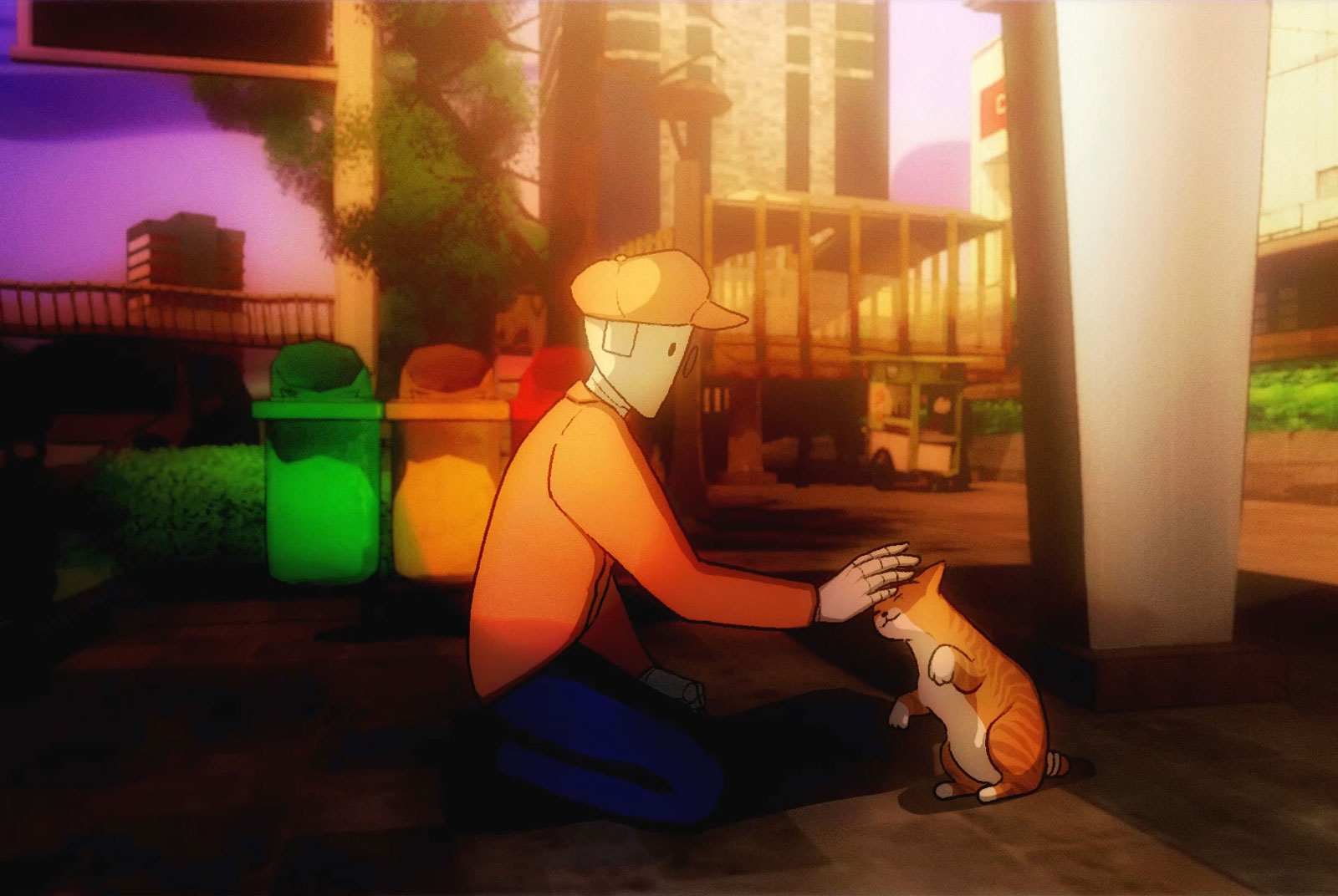
Source:Dear, All Robots
A group of Indonesian animation students studying in Kaohsiung brought their graduation film "Dear, All Robots" to the 2026 Youth Innovative Design Festival — a five-minute story about a man ground down into a machine and the stray cat that brings him back to life. But who are the young artists behind it, and what brought them to Taiwan to tell it?
Views
Cartoon Cats and Robots, Made in Kaohsiung, With an Indonesian Heart
By Julien Oeuilletweb only
Dear, All Robots. This is the title of a short, five-minute animated movie made in Taiwan.
In the movie, a humanoid robot is first seen going through the office life of a typical salaryman. All in carefully shaded black-and-white tones, it seems shot from CCTV cameras that only emphasize the oppressive feeling of his cubicle-dwelling life.
Notes of colour only appear in flashbacks that indicate this robot was once human: this is the concept of the story. The protagonist is not born a robot; he was once a young boy, and the grind of life turned him into a machine.
And then, a little one-eyed cat jumps into his life. The cat is in colour. Soon, the robot becomes a colourful human again.
This touching movie is played on a small screen in a booth at the 2026 Youth Innovative Design Festival (青春設計節), which took place in Kaohsiung from May 14 to 17. Around the booth, artwork, fliers, and figures of the characters are on display.
And the biggest surprise is that the movie was made by students as a graduation project.
The students are right there, surrounding the booth and welcoming viewers with big smiles. They are very eager to tell the story of how they ended up creating an animated movie in Kaohsiung.
And they are not Taiwanese: they came from Indonesia.
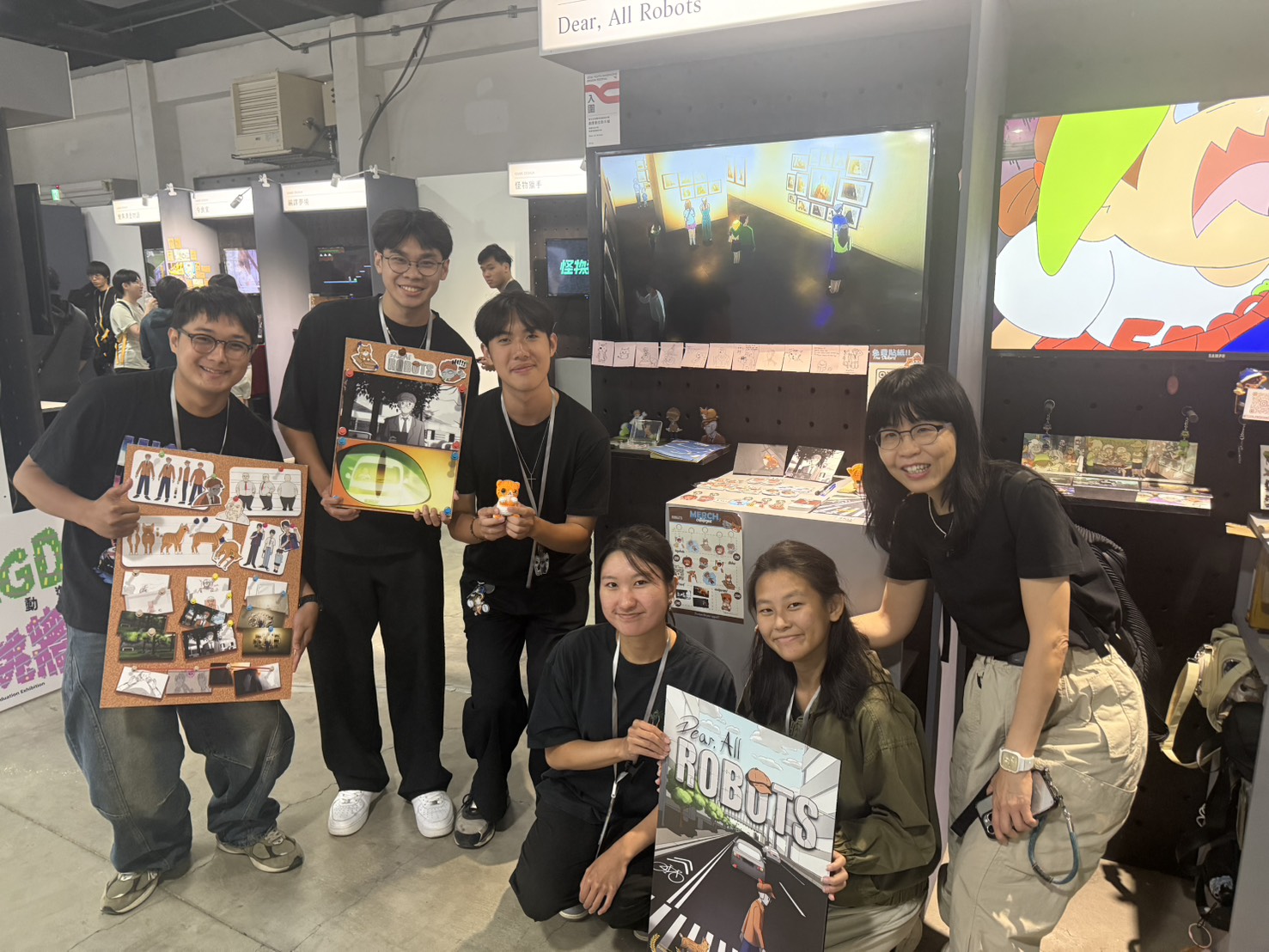
Yet their story resonates with the youthful Taiwanese audience that roams the festival.
Ryan Evan Limawi, one of the lead artists in the project, explains the meaning of the movie: “We see a lot of people nowadays, especially graduating, they have their dreams, a lot of dreams they chase. But then they aren’t able to find the job they wanted. They get jobs they don't like and they become like a robot.”
Indeed, the movie sets the tone from the start: a robot walking in a grey urban landscape, yet with a strange human warmth, both about the walking machine and the environment around him.
“Every day doing the same thing all over and over again,” Ryan adds, “we want to use this animation to tell everybody that even though you find a job that’s not suited with your dreams you still have a chance to change that in the future. We want you to find your dreams!”
This theme transcends culture. In an age of AI and global anxieties, young adults in Asia and beyond all feel the sting: torn between following their own path and finding stability, they often feel like robots chasing cats.
“Just because your first job is not the right one,” Ryan says, “it doesn’t mean that you won’t find it in the future, so you need to keep trying.”
“In Indonesia, it is very hard to find animation schools,” says Aiji Komala, a dynamic young man who serves as the 3D artist — while the characters are drawn in two dimensions, they blend with a three-dimensional background. “In Taiwan, you know we can learn Mandarin Chinese while learning animation as well, and animation schools here are better than in Indonesia.”
When asked what makes animation schools better in Taiwan, Aiji says: “I think people here appreciate design and animation more, even in your social life you can see they accept people such as designers more than in Indonesia. During our time here, we feel like they have more respect for designers.”
And when asked about Kaohsiung specifically, the consensus among the team is that they miss Indonesian food but “the city is so convenient!”
It quickly becomes clear that the students organised themselves as a real production team. Steffi Claire Leonardi, a perky young woman, explains that she was put in charge of “the whole ‘movement’ thing.” Another young woman, Kathelia Liem, says she was “assigned the colouring role, and also shading for the two characters. I did not really have any experience before and it was wonderful to create the shading for the cat and the robot.”
Indeed, her touches of colour are what give the two characters the allure of being made of flesh, despite one of them being a machine.
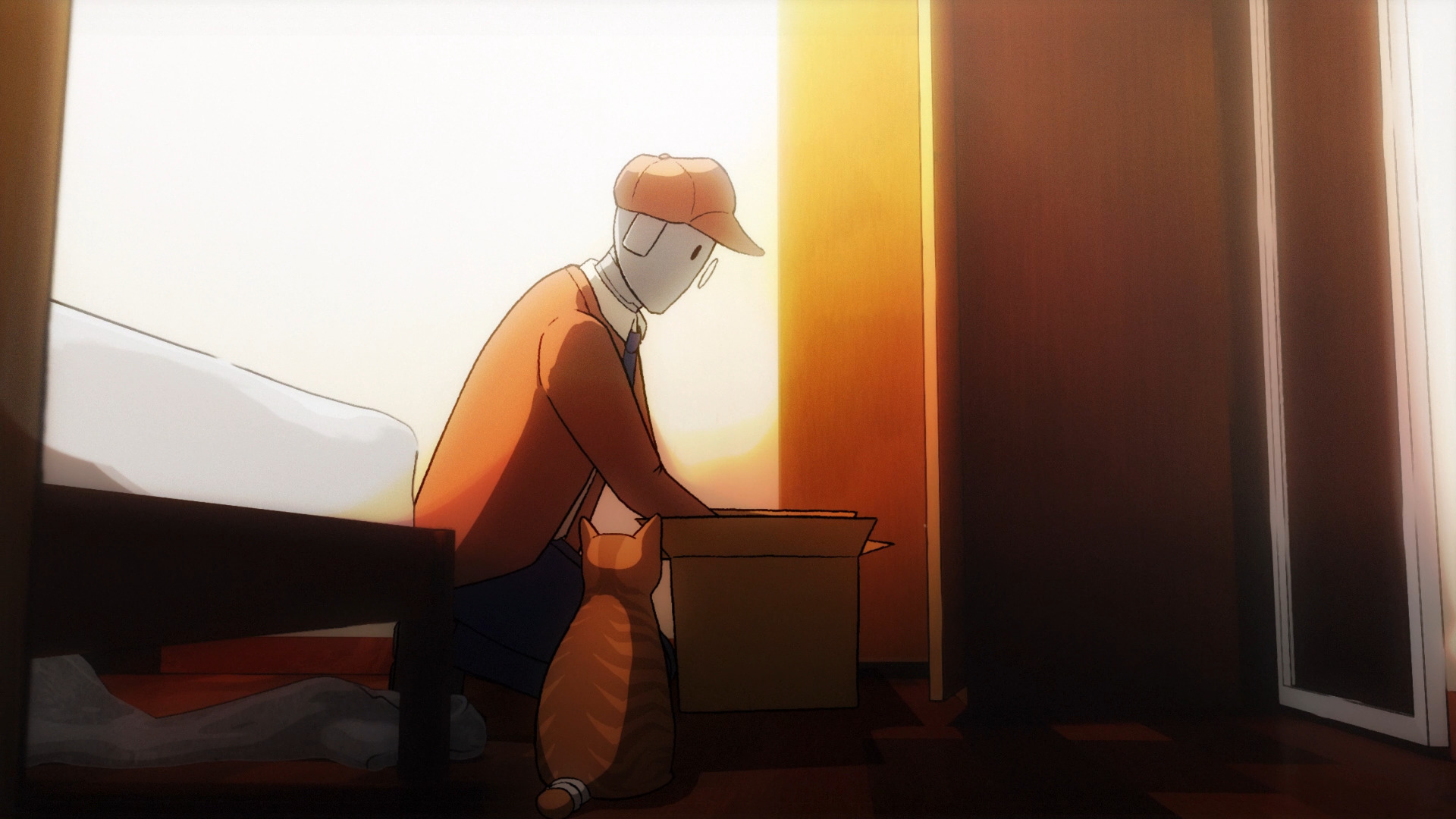
The main character, the human-turned-robot-turned-human, is named Anggara, which they explain is a “very basic” name for a boy in Indonesia. This accentuates his “everyman” aspect.
The cat is called Risol, which they say is a typical Indonesian fried-food snack. And it is orange, like the little cat in the movie.
As they bond, the machine reconnects with his lost humanity, showing that it was always human to begin with: it just needed to remember it.
The story was created collectively and reflects the anxieties and hopes of an entire generation.
Steffi says: “At first we weren't sure what to say. I like cats and I was very eager to animate a cat, because they are so cute, funny, and random. But I also thought they can bring colours to a story.” From this desire, a storyline and characterisation were built.
“You have to practice a lot to learn these skills,” Steffi says. “And you cannot procrastinate so you have to learn to manage your time efficiently, too.”
Making an animated movie is a massive endeavour.
Even with modern tools, the complexities involved in the creation of a cartoon are immense. On top of having competent artists, the team must also include people who know how to animate, how to pace a story, how to create an appropriate soundscape, and how to keep the whole thing coherent.
“Basically I was the last member of the group to join,” says Daniel Septian, another young man, “so I was just helping them with whatever was needed. But I loved helping them with revisions, looking at the story and finding what was wrong with the animation or the storyboard, etc.”
Daniel's role became important in making sure that the sum of the talents involved added up to something that stood on its feet. A lack of consistency can kill many projects in moviemaking — animated or not — so having someone point out flaws is essential to smoothing everything down and turning a project into an actual movie.
The Youth Innovative Design Festival is made for such projects to meet an audience.
Held yearly at the famous Pier-2 Art Centre in Kaohsiung, the festival looks exactly like any professional event, but everything is made by local students. Marketing, art, design: the students aim to become professionals in these fields, and the festival gives them a first chance to act like pros.
Other experiences offered to visitors are campaigns for cosmetics, perfumes, and urban design.
The entire festival is free, allowing the public and aspiring creative professionals to meet without second thoughts. The entire experience is designed to support young creators while giving visitors an entertaining and enriching time.
No surprise, then, that the team behind Dear, All Robots found themselves at home at the festival.
And it takes a while to realise it, but the team is actually chaperoned by their teacher, Joan (陳美蓉).
She remains a few steps away, looking at her students and letting them handle the whole presentation.
“In animation,” she says, “there are three main points: the storyboard, the story itself, and the visual style. And they combined it very well.”
And the team is showcasing great skills at promoting their work.
They sell stickers, keychains, and artwork. There is even a plushie of Risol.
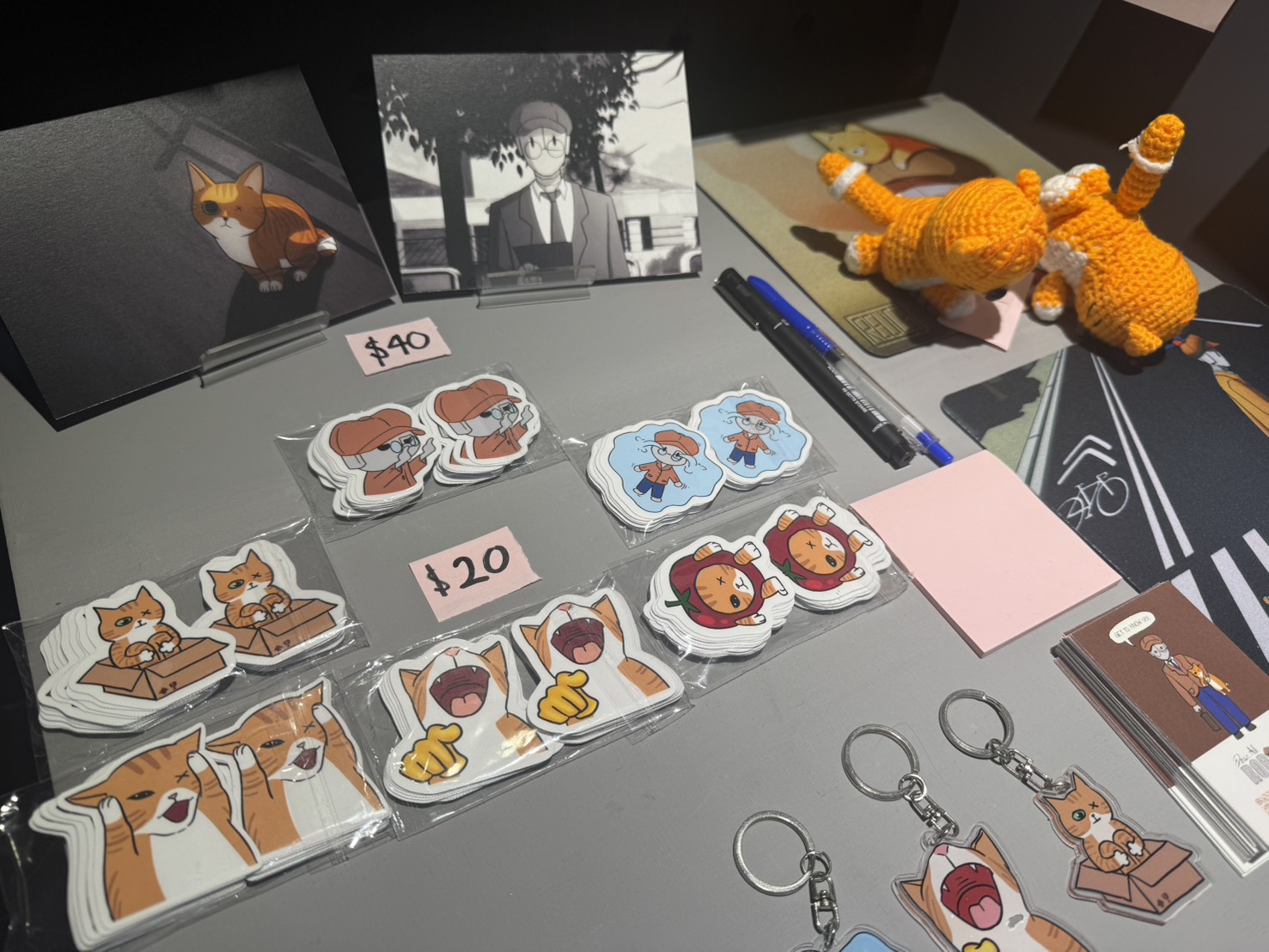
A beautiful art book shows sketches, storyboards, screenshots, extra artwork, and stories of how the movie was made — the kind of professional material you would buy in a specialised anime shop for famous artists.
They went as far as creating LINE stickers — an easy way to create visibility and connection with people in Taiwan through the most popular messaging app in the country.
During the exhibition itself, they also invite the audience to write their reactions to the movie on Post-it notes. These are then displayed on a panel in their booth.
There is a reason why they are so astute at promoting their movie: they received classes on marketing.
This is an extremely important topic that can change the life of future professionals in such a highly competitive field. By teaching them how to efficiently give life to their characters and stories beyond the movie itself, the teachers greatly enhance their chances of becoming recognised and building a career.
“We competed in various competitions,” Joan says. “This will give them an excellent opportunity to show their animation to industry professionals.”
Dear, All Robots was one of the most successful presentations at the festival, with a large number of visitors coming to watch the movie and showing curiosity about the two characters. Their design met an audience that will hopefully grow beyond the Kaohsiung city limits.
According to Joan, “they have the kind of passion that is necessary in this field.” It makes sense: after all, this is what the story of Anggara and Risol was about.
Have you read?
- How NTUST Became a Talent Pipeline for Taiwan Tech
- Why New International Schools Pick Kaohsiung as Home
- Young Indian Engineer Builds Career in Taiwan’s Semiconductor Industry
Uploaded by Ian Huang
Views

Subscribe to CWE Newsletter (every Thursday)
Stay abreast of what's happening in Taiwan with our weekly digest.
Keywords: