How Taiwan’s First Island Chain Allies Quietly Build a Coalition Against China’s Gray-Zone Playbook
Source:Getty Images
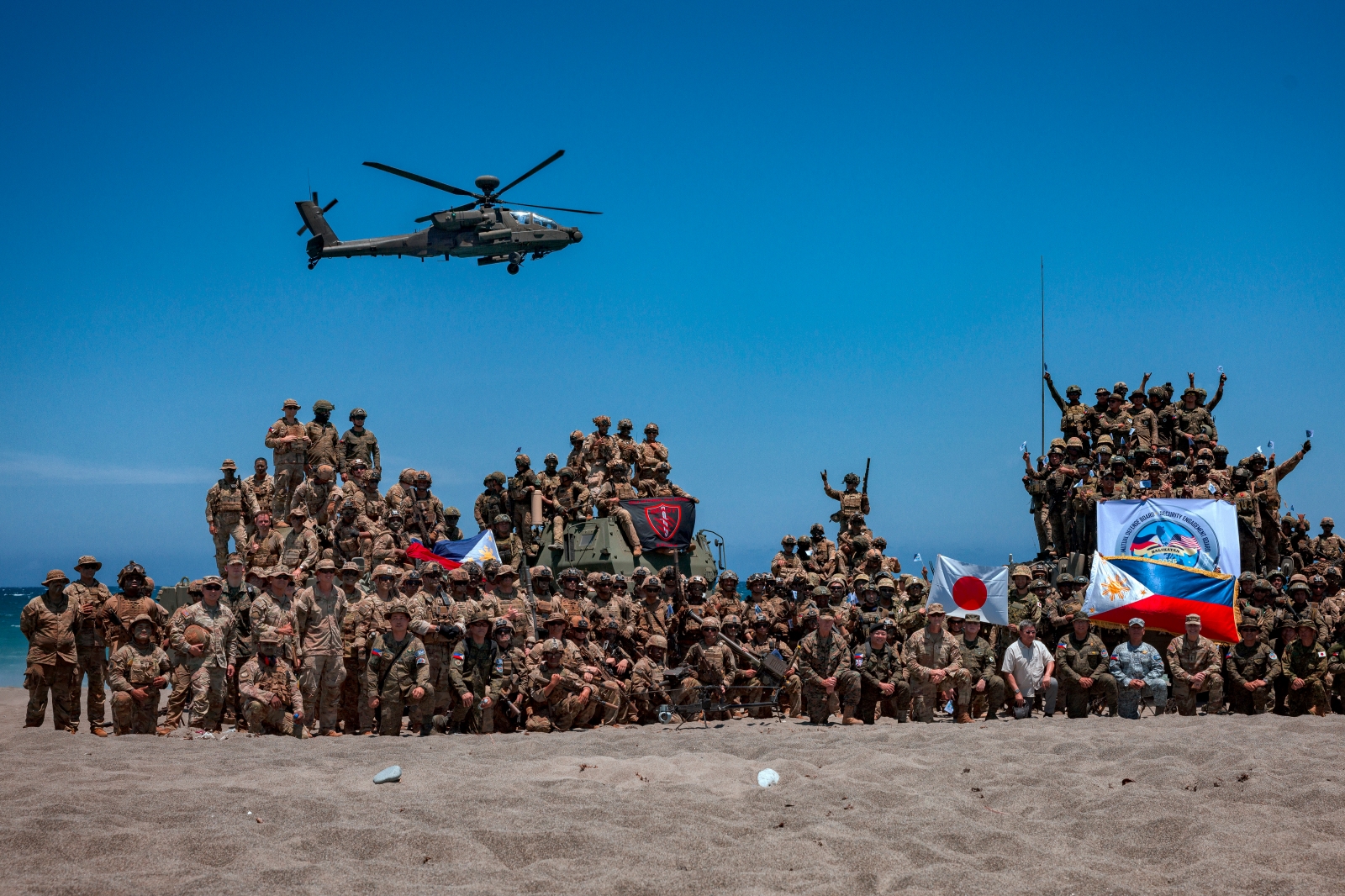
The Taiwan Strait must not become another Strait of Hormuz. As allies step up joint exercises across the first island chain and the U.S. shifts its strategic focus back to Asia from the Middle East, Taiwan and its partners are exposing China's maritime activities through a strategy of transparency—countering Beijing's efforts to normalize unification without war.
Views
How Taiwan’s First Island Chain Allies Quietly Build a Coalition Against China’s Gray-Zone Playbook
By Hazel HsuCommonWealth Magazine
It has been eight years that Lin Li-wei, a captain based at Su’ao port on Taiwan’s northeastern coast, returned to his hometown. He remembers 2024, right after the presidential elections, as the most turbulent time with regard to conditions at sea. At the time, China held a series of military exercises around Taiwan so that radio messages broadcast by Taiwan’s Coast Guard and the China Coast Guard crisscrossed and the radar screen often showed Chinese, Japanese, and Taiwanese government vessels and military ships sailing alongside.
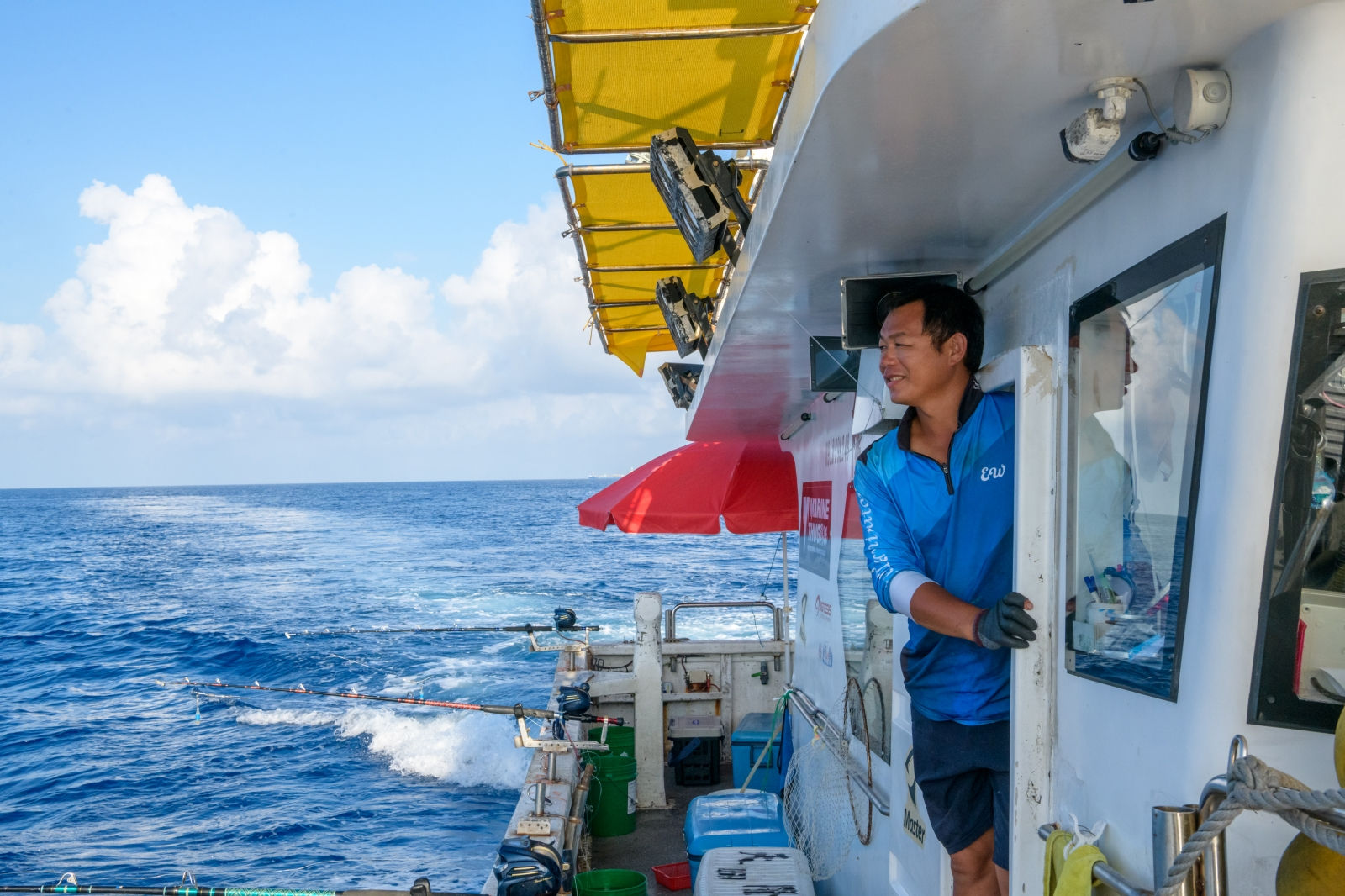 China has expanded its maritime law enforcement operations into waters surrounding Taiwan. For some fishermen and commercial ship crews, receiving broadcasts from the China Coast Guard has become an increasingly routine occurrence. (Photo: Chien-Ying Chiu)
Therefore, Lin was all but surprised when a group of Chinese government vessels that arrived outside Su’ao port in June demanded port entry and exit information from a Benin-registered tanker.
“In the beginning fishermen would still curiously open their radar to look for them, but over these two years everyone has just become numb.”
That those at the frontline don’t care anymore is what Taiwan should be worried about.
Ocean Affairs Council Deputy Minister Sung Chen-En (宋承恩) notes that China’s gray zone activities follow the three steps of the law: conducting regular patrols, establishing jurisdiction, and developing a governance model.
China has already expanded the model of conducting law enforcement activities in waters around Taiwan’s offshore isle Kinmen southwards to the Pratas Islands, a Taiwan-controlled coral atoll group in the northern South China Sea. In June, Beijing announced with great fanfare that its activities in waters off Taiwan’s Pacific coast constituted “offshore governance”.
Sung is quick to point out that “No matter how many times China unilaterally asserts to be enforcing the law, under international law, this will not earn them jurisdiction over Taiwanese waters.”
 Ocean Affairs Council Deputy Minister Sung Cheng-en said the council is actively strengthening cooperation with allied partners. (Photo: Kai-cheng Chuang)
Counter measures could be taken in two directions: First, Taiwanese Coast Guard vessels could refute the claims via broadcast when sailing alongside commercial ships to let the ship master know that “this area is controlled by Taiwan’s Coast Guard”. Second, the Ocean Affairs Council and the Maritime and Port Bureau could establish a shipping information exchange center to warn commercial vessels immediately, thus preventing ship masters from going along with Chinese law enforcement out of fear.
Jao Juei-Cheng (饒瑞正), professor at the Institute of the Law of the Sea of National Taiwan Ocean University, warns that if Chinese demands for vessels to change course and accept inspections have an effect over time, this might push up insurance premiums. The cost of Taiwan’s maritime transport and trade could gradually rise, and if the situation escalates to an extreme, an “isolation” situation similar to what we are currently seeing the Strait of Hormuz could happen in Taiwanese waters.
On the diplomatic front, Japan and the Philippines announced in May negotiations to delimit their overlapping exclusive economic zones. Japan immediately declared twice that the talks would not affect third countries. Taiwan Foreign Minister Lin Chia-lung (林佳龍) has already demanded that the negotiations between Japan and the Philippines take Taiwan’s interests into consideration.
National Security Council officials have analyzed China’s reaction. Within twelve days after the Japan-Philippine border talks hit the news, China’s Foreign Ministry, Maritime Safety Administration, Taiwan Affairs Office, and Ministry of National Defense released statements one after the other, using the law, history, and military threats in their reasoning. At the same time, Chinese criticism of Taiwan’s “weak” statement on the border talks made the rounds on Taiwanese social media.
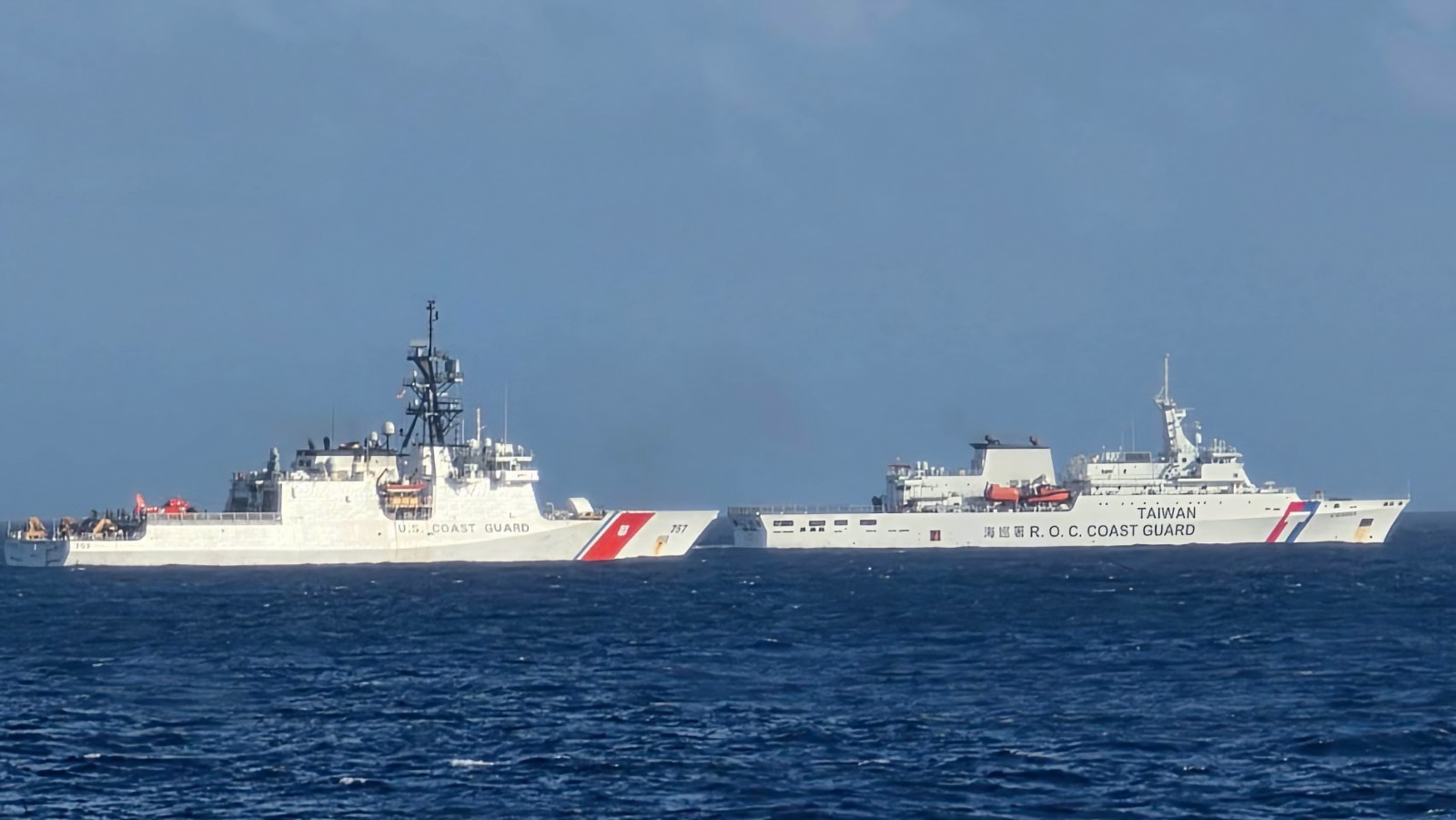 The American Institute in Taiwan (AIT) said in a public statement that the U.S. Coast Guard and Taiwan's Coast Guard Administration are working closely together on a range of shared maritime objectives.
Mainland Affairs Council Deputy Minister Shen Yu-chung says this is a deliberate manipulation of peoples’ perception, meant to exert pressure at home. Shen points to the “de facto unification without formal unification” tactics proposed by Zhu Weidong, a scholar with the Chinese Academy of Social Sciences, in June. It uses a low level of law enforcement activities to let the international community and Taiwanese society get accustomed to the Chinese order, thus achieving de facto unification “by subduing the enemy without fighting”.
The Taipei Main Office of the American Institute in Taiwan (AIT), for its part, has expressed concern over the fact that Chinese coast guard vessels are harassing commercial ships in Taiwan’s eastern waters. The statement publicly asserted for the first time that the waters over which China claims jurisdiction “have been peaceably administered by Taiwan for over 70 years”. France, Germany, and the United Kingdom also issued a joint statement in late June, voicing concern over “novel Chinese activity in the waters east of Taiwan”.
How should Taiwan react and counter China’s grey zone activities? Experts from various countries point to cooperation and transparency.
Retired Admiral Tomohisa Takei, who served as chief of staff with the Japan Maritime Self-Defense Force, frankly states “The situation at the Senkaku Islands is already at a critical point”, referring to Chinese incursions into waters off the Japan-administered islands, also known as Diaoyu Islands or Diaoyutai.
He suggests that Taiwan, Japan, and the Philippines share AIS (automatic identification system) data from commercial vessels.
Harrison Prétat, deputy director with the Asia Maritime Transparency Initiative at U.S. think tank CSIS, says ten years ago the idea of a “Chinese maritime militia” was still dismissed as complete nonsense. Given that it has meanwhile become general knowledge, we depend on collecting public information over time to forge consensus.
Rear Admiral Jay Tarriela, spokesperson for the Philippine Coast Guard, believes that “transparency is what transforms abstract territorial disputes into concrete experiences.”
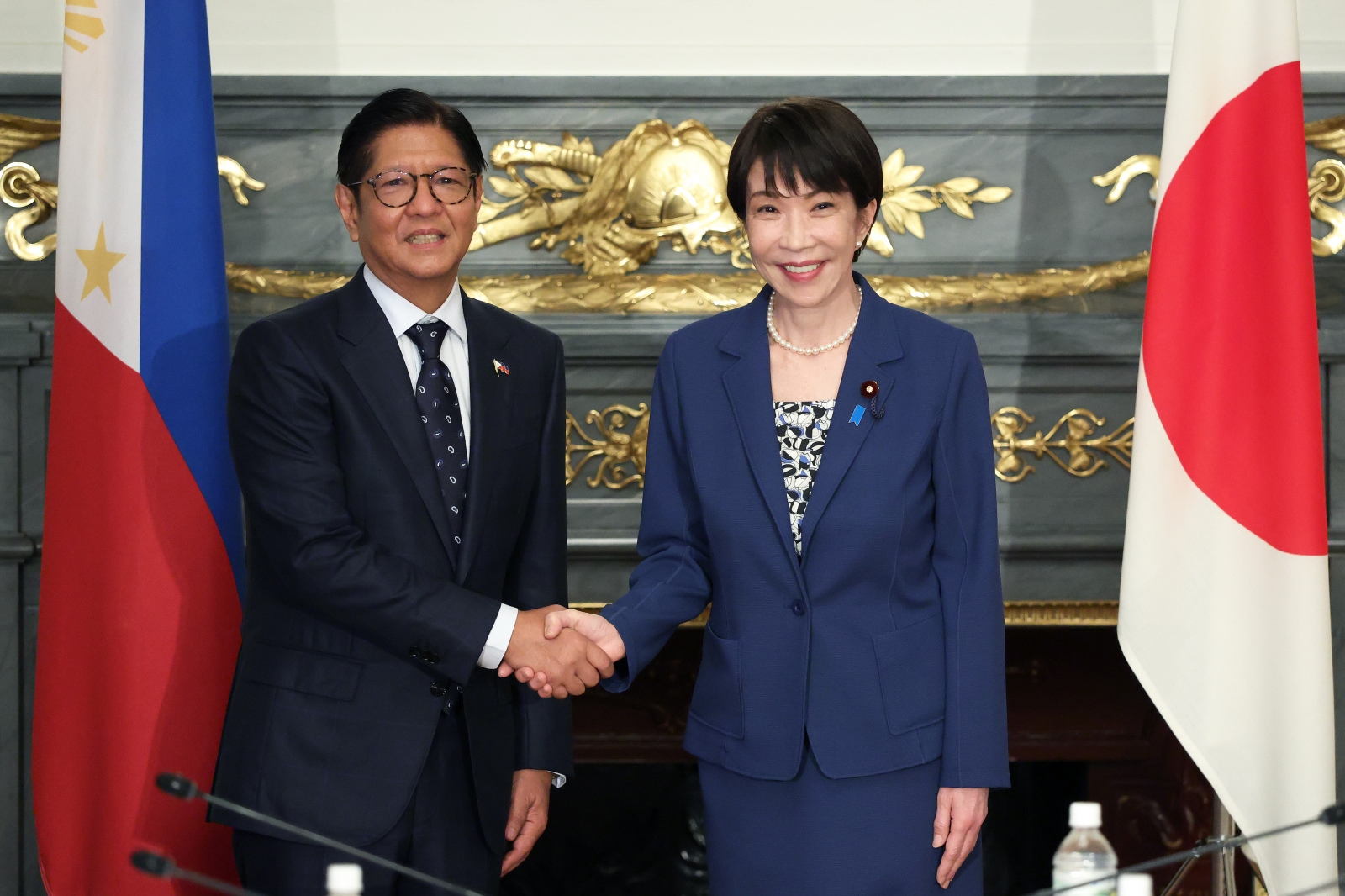 Following the Japan–Philippines summit in Tokyo in late May, Japanese Prime Minister Sanae Takaichi (right) and Philippine President Ferdinand Marcos Jr. (left) issued a joint statement underscoring the importance of peace and stability across the Taiwan Strait. (Getty Images)
The U.S. Coast Guard has already shifted a cutter squadron to the Asia-Pacific to counter China’s maritime presence. In late July, the AIT announced that the coast guards of the United States and Taiwan are closely cooperating in maritime affairs. Scholars suggest that Taiwan keep a low profile while deepening cooperation with its first island chain allies, building consensus at home, and firmly holding its “no provocation” baseline.
What Is a Territorial Sea Baseline?
The reference line, usually the low-water line along the coast, from which a country's territorial sea, contiguous zone, and EEZ are measured.
How Far Does a Territorial Sea Extend?
A territorial sea extends 12 nautical miles from the baseline. The coastal state has sovereignty, while foreign vessels retain the right of innocent passage.
What Is the Contiguous Zone?
The area between 12 and 24 nautical miles from the baseline, where a coastal state may enforce customs, immigration, fiscal, and health laws.
What Is an Exclusive Economic Zone (EEZ)?
An EEZ extends 200 nautical miles from the baseline. The coastal state has exclusive rights to natural resources, while other states retain freedom of navigation.
What Are Taiwan's "Prohibited and Restricted Waters"?
Special maritime zones regulating Chinese vessels under Taiwan's cross-strait law. Chinese vessels must obtain permission to enter.
What Is a "Provisional Law Enforcement Line"?
A temporary boundary in disputed EEZ areas defining where Taiwan's Coast Guard patrols and Taiwanese fishing vessels operate.
What's the Difference Between the U-Shaped Line, Nine-Dash Line, and Ten-Dash Line?
They all describe South China Sea claims originating in 1947. Taiwan uses "traditional U-shaped line," while China now refers to its claim as the "ten-dash line."
What Is the China Coast Guard?
China's paramilitary maritime law enforcement force, responsible for enforcing maritime claims, fisheries, and security.
What Is China's Maritime Militia?
State-backed civilian fishing vessels used to monitor and harass foreign ships as part of China's gray-zone strategy.
What Is the Automatic Identification System (AIS)?
A ship-tracking system that broadcasts a vessel's identity, position, speed, and course for maritime safety.
Have you read?
- [Exclusive] NSC Secretary-General Joseph Wu: “What We Fear Most Is a Public Grown Numb to China's Pressure”
- Taiwan Faces Uncertainty after Trump-Xi Summit
- After Xi Meets Taiwan Opposition Leader, Is Taiwan Being Recast as a “Domestic Affair”?
Translated by Susanne Ganz
Uploaded by Ian Huang
Views

Subscribe to CWE Newsletter (every Thursday)
Stay abreast of what's happening in Taiwan with our weekly digest.
Keywords: