New Taipei Rises, Taichung Falls: Voters Demand Local Leaders "Show They Care"
Source:Shutterstock
Taiwan’s latest local leadership survey shows voters rewarding mayors who focus on governance and local needs. As New Taipei rises and Taichung falls, four key trends reveal what is shaping public support ahead of the November local elections.
Views
New Taipei Rises, Taichung Falls: Voters Demand Local Leaders "Show They Care"
By Chun-chieh YangCommonWealth Magazine
In the November local elections, Taiwan will see the largest reshuffle in more than a decade, as 14 of the island's 22 mayors and county magistrates are stepping down or up for election this year. What does it take to win popular support? The latest approval ratings survey of Taiwan's local leaders conducted by CommonWealth Magazine highlights four phenomena.
Phenomenon 1: Creating a "sense of glory"
Taking the five top spots are Chiayi County Magistrate Weng Chang-liang (翁章梁), Taitung County Magistrate April Yao (饒慶鈴) and Chiayi City Mayor Huang Ming-hui (黃敏惠), who cannot run for reelection after serving two four-year terms, as well as Miaoli County Magistrate Chung Tung-chin (鍾東錦) and Pingtung County Magistrate Chou Chun-mi (周春米), who both seek reelection and have moved up in the approval ranking.
Weng came in first place for the third year in a row. Under his watch the coverage ratio for long-term care services has risen to 129 percent, the highest ratio nationwide. On top of that, he managed to attract large investments from Taiwan Semiconductor Manufacturing Company and the drone industry. Weng emphasizes that "administration should not pursue unrealistic goals" but make sure that the funding is there before decisions are made.
Yao rose to rank four, her best ranking during her eight-year tenure, thanks to her focus on a "slow economy" model and city marketing efforts, which took the top spot nationwide. Her governance motto is "less self, give more to Taitung".
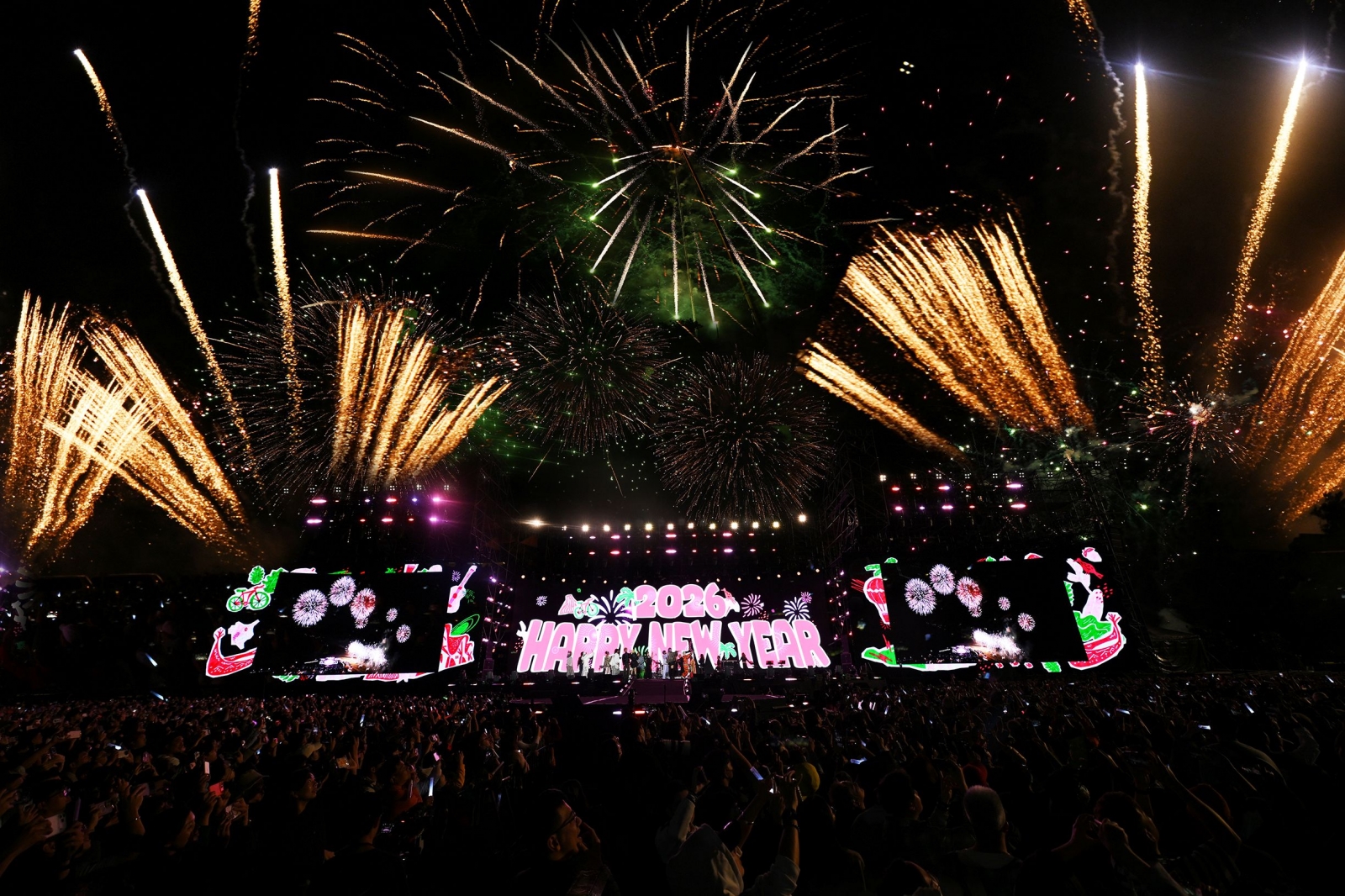 The Taitung New Year’s Eve concert, “East! Take Me Away,” remains a source of fond memories and local pride. (Source: Taitung County Government)
Tunghai University political science professor Chang Chun-hao (張峻豪) points out that these county magistrates have fewer resources than the leaders of the six special municipalities and are therefore forced to develop their communities' strengths and local characteristics. Since fiscal transfers from the central government are based on revenue sharing ratios and not the political affiliation of local leaders, the peoples' sentiment toward their local leaders is not easily influenced by political leanings.
Phenomenon 2: Key for rising approval ratings is "tone down party politics, focus on urban governance"
New Taipei City Mayor Hou Yu-ih (侯友宜) has moved up ten spots, achieving the highest ranking of the six special municipality leaders. In contrast, Taichung City Mayor Lu Shiow-yen (盧秀燕) dropped 10 places, her worst ranking since taking office in 2018 and behind the five other big city mayors.
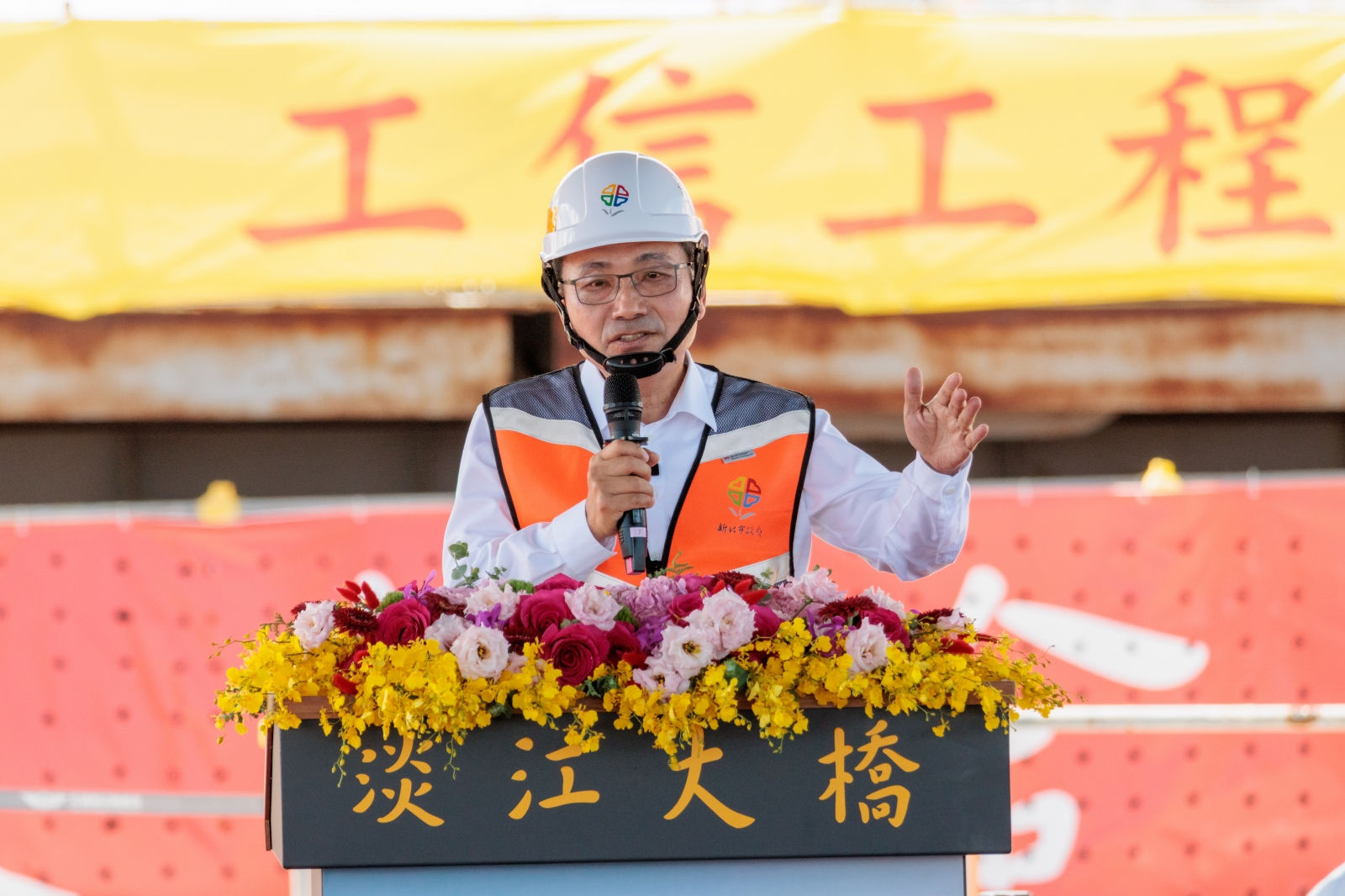 The opening of the Danjiang Bridge before New Taipei Mayor Hou Yu-ih leaves office has helped boost his approval ratings. (Photo: Chien-Ying Chiu)
Liu Jia-wei (劉嘉薇), professor at the Department of Public Administration and Policy of National Taipei University, points out that Lu is perceived as having her mind set on a presidential bid. She has visited Europe and the United States and frequently states her opinion on cross-strait and national defense issues. "Taichung citizens feel she is not focusing on urban governance, that she is not really putting her heart in it," says Liu.
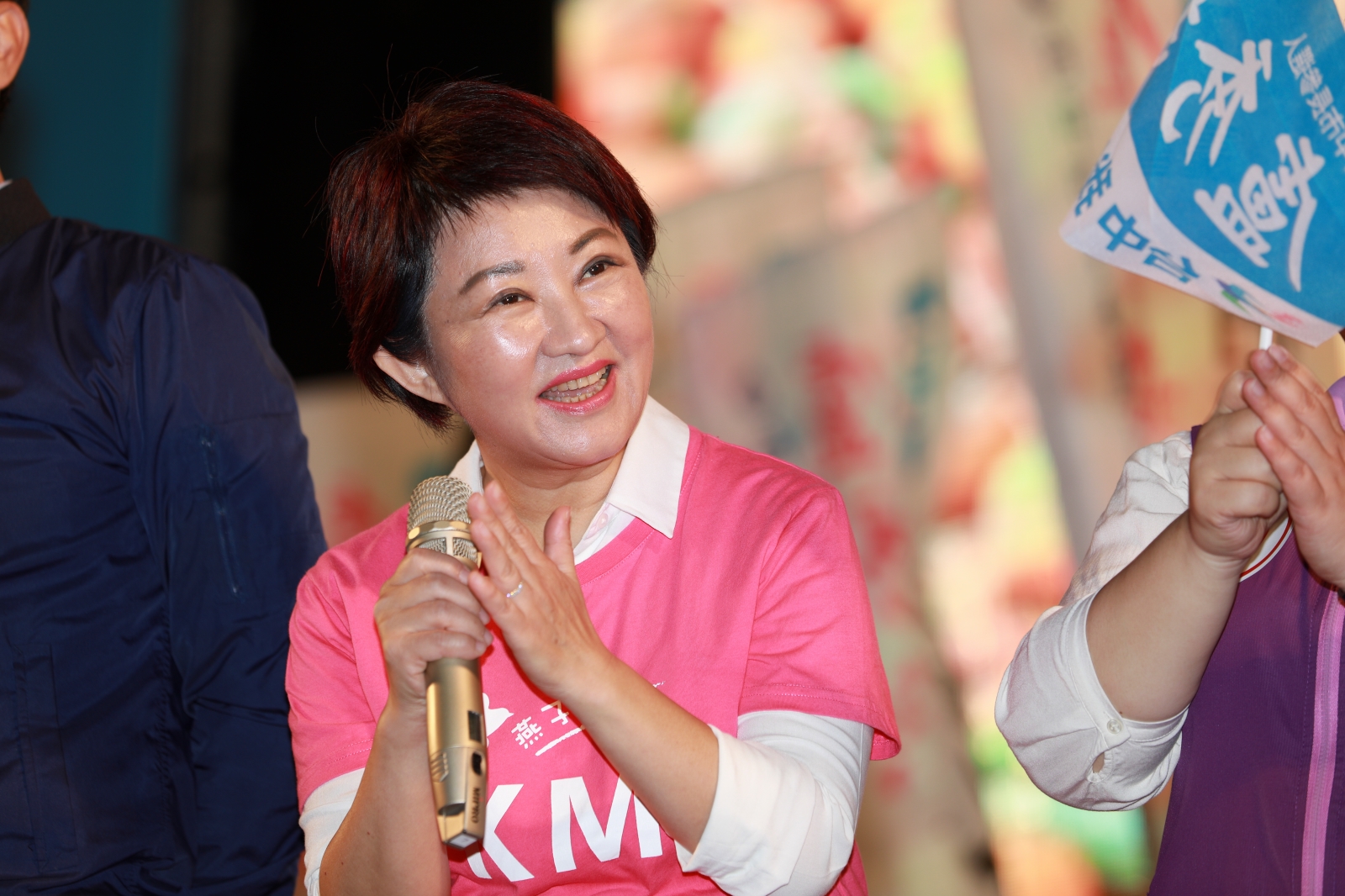 Taichung residents, meanwhile, are dissatisfied with Mayor Lu Shiow-yen’s (left) handling of public issues such as African swine fever. (Photo: Chien-Ying Chiu)
Among independent voters Lu's approval ratings have also suffered after two food scares exposed lax local regulatory oversight. In connection with an outbreak of African swine fever in Taichung last year the Control Yuan has proposed corrective measures and impeached four Taichung city government officials. Charges have also been filed in the scandal over contaminated cooking oil produced by Taichung-based Central Union Oil.
In contrast, New Taipei Mayor Hou quickly left the national stage after losing his presidential bid in 2024, to engage in hands-down "action governance" at the local level, seeing through the completion of the Danjiang Bridge and the Sanying metro line. On top of that, he deliberately toned down his political affiliation, which helped him score the highest approval rate of all six municipal city mayors from unaffiliated voters.
Phenomenon 3: Kaohsiung Mayor Chen Chi-mai (陳其邁) and Taipei City Mayor Jiang Wan-an (蔣萬安) both rise in the ranking
Since Chen took office six years ago, Kaohsiung has hosted more than 400 large-scale concerts, generating NT$18.9 billion in tourism revenue. And he successfully marketed the city as the location for Taiwan's first industrial park for advanced packaging. In 2024 the southern port city achieved a carbon reduction rate of 24.3 percent over base year 2005. Chen says, "Kaohsiung cannot retreat, we must do it." As Chen cannot run again, he is being touted for a job in the central government.
Taipei Mayor Jiang has moved up two spots despite the city's worsening rat problem and a controversy over designated outdoor smoking areas. Among unaffiliated voters Jiang enjoys an approval rate of 74 percent.
But Hung Yao-nan (洪耀南), assistant professor at Tamkang University, cautions that Jiang's performance pales in comparison to Chen and Hou. "If you want to go for the presidency, you first need to do a good job in the city government."
Phenomenon 4: Candidate coordination affects approval in blue and green camps
Tainan City Mayor Huang Wei-che (黃偉哲) has risen ten ranks as Tainan citizen approve of his initiatives to highlight the city's cultural characteristics. But when it comes to traffic safety, he has the worst approval ratings of all local leaders.
Local observers believe that approval ratings in the five counties and cities ruled by the Democratic Progressive Party (DPP) have generally improved since the DPP finalized its line-up for the local elections in November already in mid-June. In contrast, the major opposition Kuomintang (KMT) has had difficulties producing candidates in Hsinchu County and Changhua County, causing the approval ratings for the local leaders there to decline.
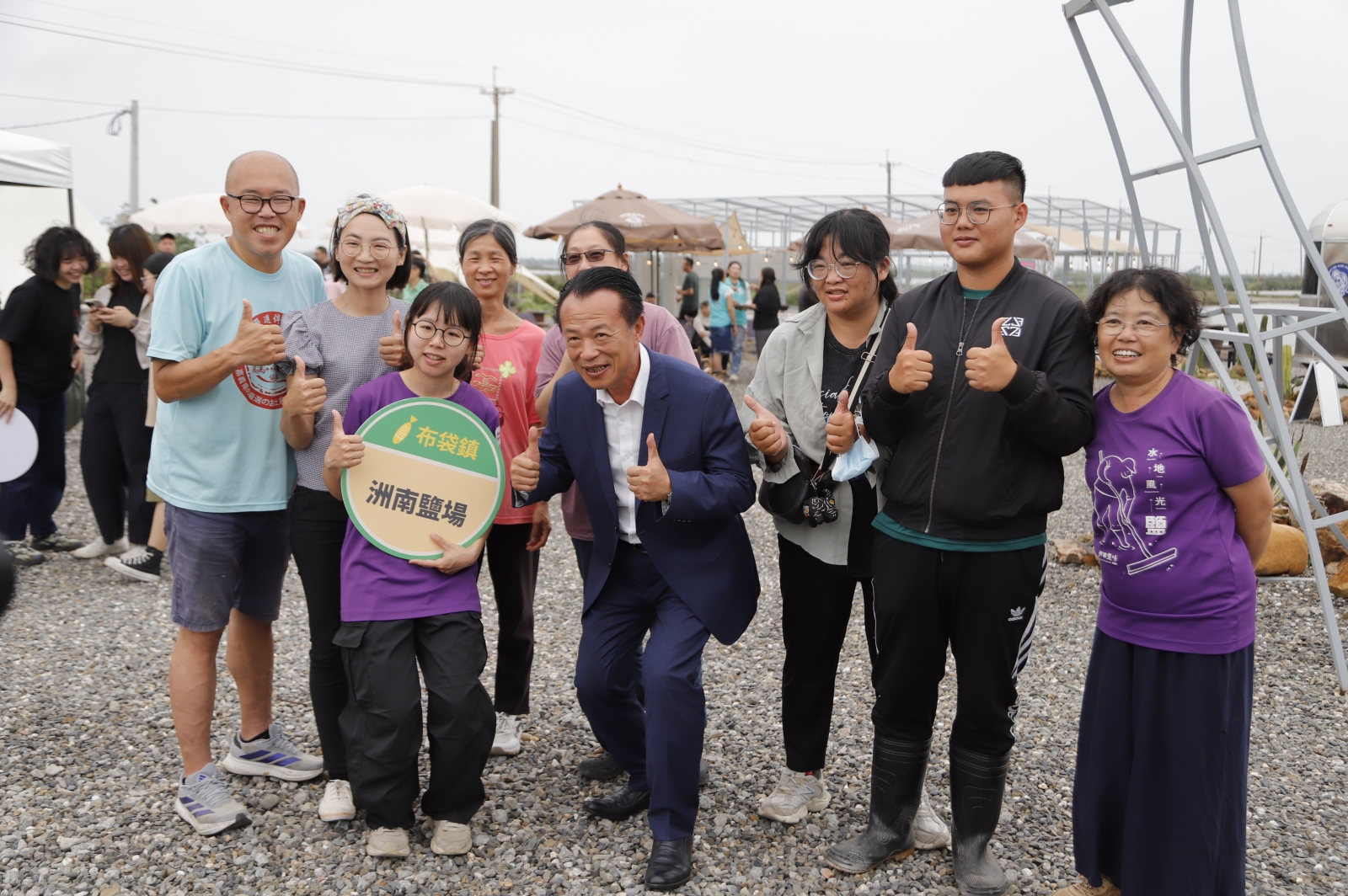 Chiayi County Mayor Weng Chang-liang (third from right) has actively worked to create job opportunities for young people returning to their hometowns. (Source: Chiayi County Government)
Tsai Jung-hsiang (蔡榮祥), political science professor at National Chung Cheng University, points out that failure to agree on a candidate causes supporters of rivaling factions to disapprove of the incumbent local leader.Chiayi County Magistrate Weng says of himself, "I am only a groundworker", reminding potential successors that city development does not happen overnight but means using the existing foundation to build on strengths and overcome weaknesses.
Have you read?
- Exclusive: 40% of Top 2000 CEOs Don’t Expect War, 60% Fear Hollowing-Out
- Why are Taiwan CEOs raising salaries despite record low confidence in 2023?
- The ‘Prosperous 100’ leading Taiwan’s semiconductor industry into a decade of success
Uploaded by Ian Huang
Views

Subscribe to CWE Newsletter (every Thursday)
Stay abreast of what's happening in Taiwan with our weekly digest.
Keywords: