Hon Hai aims for 10% global EV market share
Source:Hon Hai Technology Group
On the eve of Hon Hai Precision’s annual shareholders’ meeting, the company made major strides in its electric vehicle deployments, marking Hon Hai’s moves into motor systems and batteries, key components making up half of a typical EV’s costs. How would these moves help it transform?
Views
Hon Hai aims for 10% global EV market share
By Elaine Huangweb only
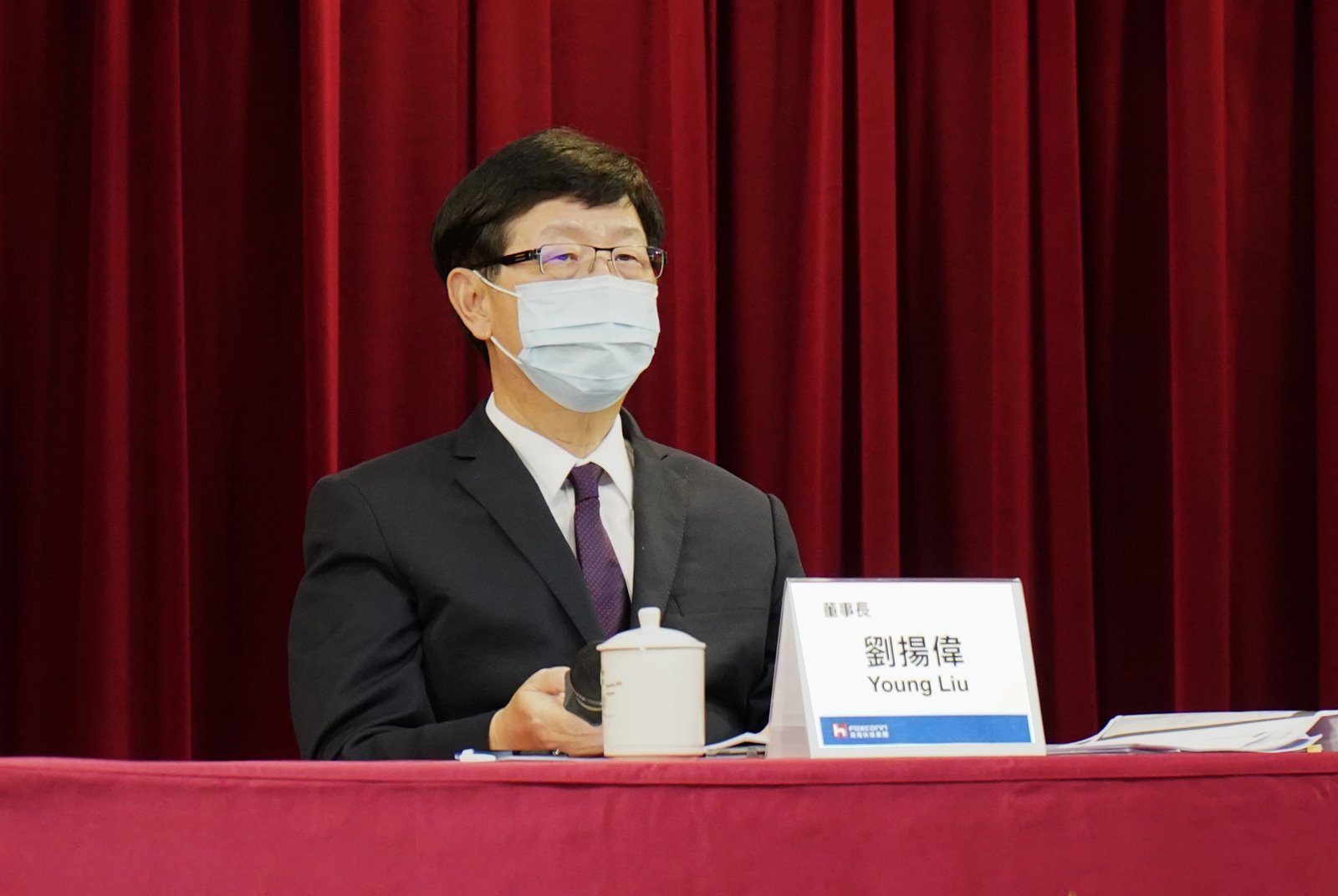
Hon Hai Precision Industry Co. (Hon Hai) held its annual shareholders’ meeting on July 23. This year marked the second year since Hon Hai Group founder Terry Gou handed the reins of the company to Young Liu. This year is the thirtieth anniversary of the company’s public listing, which has seen Hon Hai grow from revenues of NT$1.7 trillion to a record high NT$5.35 trillion in 2020, while also facing sizable transformational challenges.
Young Liu is the architect of Hon Hai’s “3+3” technology transformation strategy, which has become familiar to those outside the company over the past two years. Further, Hon Hai’s declared revenue of NT$2.7 trillion in the first half of this year reached a new record for the same period, representing 31 percent year-on growth.
“Our stock price has risen by 40 percent from last year’s shareholders’ meeting to the present time, demonstrating shareholders’ support,” asserts Young Liu.
Accompanying the introduction of the new iPhone 13 by key customer Apple in the second half of this year, analysts believe that it will push Hon Hai’s revenue even higher, as well as fuel sales growth this year.
According to a report by Fubon Securities Investment Services Co., Hon Hai has secured the contracts to manufacture the iPhone 13, 13 Pro and 13 Pro Max, while PRC-based manufacturer Luxshare is signed on to produce the Pro, and Pegatron will make the mini version of the iPhone 13.
“There are four versions of the iPhone 13, and Hon Hai got three of the large sizes, occupying 65-70 percent, easily making it the biggest manufacturer by volume this year,” said Liao Hsien-yi, an analyst at Fubon Securities.
Taiwan Hon Hai market value surpasses Foxconn Industrial Internet (FII)
However, Hong Hai has stood out prominently lately among the ebb and flow of the cross-strait capital markets.
Hon Hai practically packed up all of its most valuable portions in June of 2018, listing on the Shanghai A Stock Exchange under the name Foxconn Industrial Internet (FII). At one point its market value shot all the way up to 528.35 renminbi, surpassing that of mother company Hon Hai Precision.
“At the time, the PRC government welcomed Taiwanese enterprises to hang out a shingle in China and go public,” offers one anonymous Taiwanese technology analyst. Hon Hai operates multiple production bases in China, employing a million-strong staff, and FII’s public listing is undoubtedly the benchmark for Taiwanese enterprises. However, as the trade war between the U.S. and China has not eased over the past year, China has clearly backed its own OEM manufacturers, including Luxshare and BYD. This in turn has greatly diminished the attractiveness of Taiwanese enterprises on the Hong Kong and PRC bourses.
As the Chinese capital market propped up its own domestic enterprises, FII’s stock price and market value both dropped continuously, so that the market value of 233.8 billion renminbi (around NT$1.01 trillion) was less than half of that at its peak.
 (Source: Hon Hai Technology Group)
In contrast, looking at Hon Hai Precision, listed in Taiwan, the stock dropped to 70 at one point in January 2019. By the conclusion of the shareholders’ meeting on July 23 it had reached 111, valued at 1.53 trillion and exceeding that of FII.
This reflects the effectiveness of the “3+3” strategy promoted by CEO Liu and the emphasis on electric vehicles (EVs) as the main thrust of the company’s technological transformation on Taiwan’s capital market.
Alliances with automakers below, deploying key parts above
Over the past six months Hon Hai has aggressively sought to establish alliances with automakers, from conventional manufacturers like Taiwan’s Yulon Motor Corp., China’s Geely Automobile, the world’s fourth-largest automotive group Stellantis, and new energy automakers like Fisker of the U.S. and Byton of China. Young Liu announced at the shareholders meeting that Hon Hai would collaborate with Fisker to manufacture electric vehicles in the United States, targeting production of 250,000 vehicles per year by 2024.
One anonymous industry insider observed that Hon Hai will not be satisfied with just the contract assembly of electric vehicles, but that it ultimately seeks to reproduce the EV industry’s business model, providing upstream parts and components to elevate profitability.
On the eve of the shareholders’ meeting, Hon Hai and subsidiary Foxtron Vehicle Technologies announced their intention to establish a co-invested corporate headquarters in Taiwan by 2022 with NIDEC, the world’s largest maker of small-sized and precision motors. The new venture is set to concentrate on the research and development, production, and sales of electric motor systems and autotronics products.
NIDEC founder Shigenobu Nagamori, 76, has been friends with Hon Hai founder Terry Gou for over 20 years.
Hon Hai’s designs for the alliance with NIDEC are for Hon Hai to gain a foothold in key motor propulsion systems for electric vehicles.
“The value chain of an electric car has different value proportions. Viewed in terms of the cost structure, batteries account for around 30 percent or more, and the motor drive system also occupies around 20-plus percent, coming in second,” explains an anonymous analyst.
2024: Solid state lithium battery full production
Over the past six months Hon Hai has invested heavily in automotive battery materials, becoming a shareholder in Giga Solar Materials and Long Time Tech, as well as startup SES, a lithium-ion battery supplier for electric vehicles listed on the New York Stock Exchange. And Young Liu has made known his wishes to reach full production of solid state lithium batteries by 2024.
Further, on July 22, just before Hon Hai’s shareholders meeting, top company executive Mark Yi-Pin Chien was directly brought in to head up Long Time Tech as chairman, declaring Hon Hai’s deepened deployments in battery materials.
The battery field poses major challenges, as the global electric vehicle power battery and battery material sectors are currently dominated by Panasonic, LG Chem of Korea, Mitsubishi SDI and Contemporary Amperex Technology (CATL) of China.
“Purchasing materials from other corporations places one’s lifeline in their grip,” offers one analyst. Citing the example of Tesla Motors, he notes that Tesla sets the actual direction at Tesla and Panasonic’s jointly invested battery plant in Nevada, as it endeavors to exert control over battery and charging systems.
The analyst relates that Hon Hai still continues to rely on the iPhone and servers for its profits, and although it has managed to prop up its stock price with the topic of electric vehicles, “electric vehicle performance must ultimately pass the test,” the analyst admits.
Responding to EV business prospects, Young Liu related that he would first examine the sales of critical parts and components. As for complete car manufacturing, a topic of keen interest among observers, “it is possible that we’ll see the infusion of sales starting in the fourth quarter of 2023,” he said.
“A 10 percent share of the global EV market (from 2025 to 2027) is the target we’re aiming for,” said Young Liu.
Have you read?
♦ Taiwan’s EV Supply Chain Cranks into High Gear
♦ Phasing out nuclear amidst power rationing causes steel prices to soar
Transated by David Toman
Edied by TC Lin
Uploaded by Jane Chen
Views

Subscribe to CWE Newsletter (every Thursday)
Stay abreast of what's happening in Taiwan with our weekly digest.
Keywords: