TSMC’s Path to Semiconductor Foundry Leadership: Insights from Morris Chang's Memoir
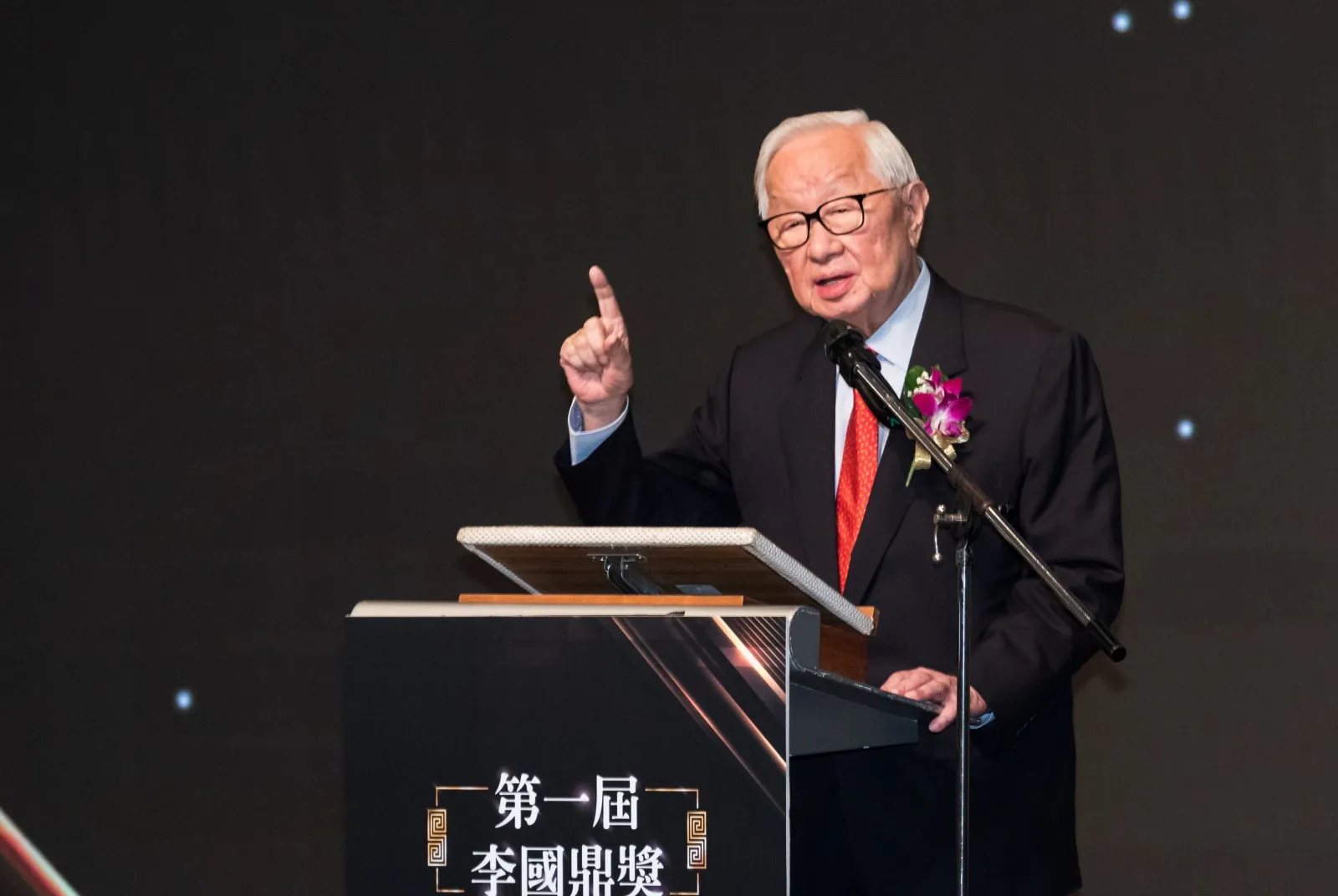
Source:Chien-Ying Chiu
Morris Chang’s latest autobiography recounts TSMC’s rise to global semiconductor leadership, highlighting its pioneering foundry model, technological innovation, and strategic vision. Through customer-focused partnerships and relentless R&D, TSMC outpaced rivals like Intel and Samsung, redefining the industry and cementing its legacy as a technological trailblazer.
Views
TSMC’s Path to Semiconductor Foundry Leadership: Insights from Morris Chang's Memoir
By Judy Linweb only
Taiwan Semiconductor Manufacturing Company (TSMC) founder Morris Chang released the highly anticipated second volume of his autobiography on November 29, just before Thanksgiving. This volume, the culmination of seven years of writing, chronicles TSMC’s journey from its inception to its emergence as a leader in the semiconductor foundry industry between 1964 and 2018. However, it stops short of addressing how TSMC became a geopolitical linchpin following events like the U.S.-China trade war, the COVID-19 pandemic, and global shifts toward onshoring and friend-shoring semiconductor production.
For readers newly acquainted with TSMC, a pressing question often arises: What did TSMC do to ascend to its unrivaled leadership in the global foundry market? Particularly, how did it outpace formidable competitors like Intel and Samsung?
Morris Chang addresses this in his autobiography. He credits TSMC’s rise to two key factors: a pioneering business model executed to perfection and relentless innovation through proprietary technologies.
The Dedicated Foundry Model: A Game-Changing Vision
Chang’s vision for TSMC emerged from a critical analysis of Taiwan’s semiconductor landscape in the 1980s. Despite licensing technology from RCA in 1975 and achieving competitive yields, Taiwan struggled with a lack of IC design capability and insufficient access to global markets. Taiwan’s first semiconductor spinoff, United Microelectronics Corporation (UMC), operated as an integrated device manufacturer (IDM) but failed to gain a competitive edge. By 1985, Taiwan’s wafer fabrication lagged 2.5 generations behind industry leaders, with the industry evolving too rapidly for local firms to catch up.
Recognizing these challenges, Chang proposed two potential paths to the government:
- Establish a new company focused solely on dedicated wafer foundry services.
- Expand UMC’s operations without altering its IDM structure.
Premier Yu Kuo-hua opted for the first approach, paving the way for TSMC’s founding. The government committed to funding 48.3% of the capital needed, while private investors were invited to supply the remainder. Notably, Philips, the Dutch electronics conglomerate, became a key founding investor, contributing $40 million for a 27.6% stake.
TSMC’s business model was revolutionary. Unlike IDMs, which design, manufacture, and sell their chips, TSMC exclusively provided wafer fabrication services to IC design companies. This model resonated with customers, particularly with its promise to "never compete with customers" and treat them as partners. It also addressed a critical unmet need—reliable, third-party manufacturing services for fabless companies like Chips & Technologies and Atmel.
Despite skepticism from some Taiwanese officials and industry insiders, Chang was unwavering in his belief that TSMC’s model could compete with the best. This customer-centric ethos laid the foundation for TSMC’s ascent.
Proprietary Technology: The Engine of Leadership
Chang’s tenure at Texas Instruments taught him that technological independence was vital for long-term success. From the outset, TSMC resisted reliance on external technology transfers, opting instead to develop its own manufacturing processes. This decision proved pivotal.
While Moore’s Law dictated rapid advancements in IC design, TSMC matched that pace in wafer fabrication. Between 1987 and 1999, TSMC advanced its process technology nine generations, from 2.0 μm to 0.18 μm nodes. By comparison, the Industrial Technology Research Institute (ITRI), which had transferred 7.0 μm technology from RCA in 1976, managed only three generations of progress over 11 years.
Two factors fueled TSMC’s technological acceleration:
- Aggressive R&D Investment: TSMC consistently allocated 8% of its revenue to R&D, far exceeding industry norms. By 2000, this amounted to $5.1 billion annually.
- Incentivized Innovation: Unlike public research institutions like ITRI, TSMC offered its engineers performance-driven rewards, including bonuses and stock options, fostering a culture of accountability and ambition.
Chang’s leadership was instrumental in driving this progress. When he appointed Chiang Shang-yi as head of R&D in 1997, Chang set an audacious goal: to bring TSMC’s technological capabilities on par with first-tier semiconductor companies. By 2018, TSMC had achieved a historic milestone, becoming the first company to mass-produce 7nm chips.
Crucially, TSMC resisted shortcuts. In 1999, IBM proposed a collaboration to develop 0.13 μm technology. Chang and his lieutenants declined, prioritizing TSMC’s proprietary development. IBM instead partnered with UMC, but their collaboration faltered, leaving UMC technologically trailing TSMC. Today, UMC’s most advanced node is 14nm, while TSMC continues to push the boundaries of innovation with 3nm, 2nm, and even A16 nodes.
How did TSMC surpass its formidable competitors? Beyond investing heavily in R&D, TSMC capitalized on its rivals' strategic missteps. Samsung eroded Apple's trust by venturing into direct competition with its own smartphone line, while Intel faltered by reducing its R&D budget under leadership that underestimated the critical importance of technological dominance.
A Legacy of Vision and Perseverance
Morris Chang’s autobiography offers a rare glimpse into the strategic decisions and guiding principles that propelled TSMC to the forefront of the semiconductor industry. From pioneering the dedicated foundry model to investing heavily in proprietary technology, TSMC’s journey is a testament to the power of vision, persistence, and innovation.
Reflecting on TSMC’s remarkable ascent, it’s clear that this success story is not merely the result of brilliant leadership or a bold business model. It’s a collective achievement, built on the dedication of countless employees, the trust of customers, and the support of visionary partners.
As TSMC continues to shape the future of technology, Chang’s narrative serves as both a history lesson and an inspiration — a reminder that transformative success is rarely the work of a single individual but rather the result of shared commitment and resilience.
Have you read?
- At 82, Calligrapher Tong Yang-Tze Brings Ancient Art to the Met
- Chi Pang-yuan: Emissary of Taiwanese literature, daughter of the Republic of China
- The Taiwan of Hou Hsiao-Hsien and Edward Yang
Uploaded by Ian Huang
Views

Subscribe to CWE Newsletter (every Thursday)
Stay abreast of what's happening in Taiwan with our weekly digest.
Keywords: