Local Cases Fan Doubts, Will Taiwan see a Second COVID-19 Wave?
Source:Kuo-Tai Liu
Preliminary results of mass coronavirus testing in central Taiwan’s Changhua County indicate that some of the tested local residents must have previously contracted the novel coronavirus. Does that mean that Taiwan is headed toward a second wave of the pandemic?
Views
Local Cases Fan Doubts, Will Taiwan see a Second COVID-19 Wave?
By Cathy Chiangweb only
“People are buying surgical masks again,” notes Yeh Yen-po, director of the Public Health Bureau of Changhua County, letting out an exasperated sigh. The renewed interest in protective gear reflects a heightened sense of danger as the novel coronavirus epidemic seems to be resurging in Taiwan.
Several foreign nationals who returned to their home countries after prolonged stays in Taiwan are reported to have tested positive for the novel coronavirus. They include a female Japanese university student, a migrant worker from Thailand, and a Japanese engineer who had not suffered from any symptoms during his more than one-month-long stay in Taiwan, but tested positive upon returning to Japan.
The most baffling case, however, is that of a Belgian engineer. According to media reports, the engineer came to Taiwan in May to work on an offshore wind farm project in Changhua County. Before attempting to return to Europe via Dubai in late July, he took a coronavirus test as required, paying out of his own pocket, becoming the first positive case from Taiwan detected in a random, self-paid test. Taiwan normally only tests people who report symptoms or who have had contact with an infected person.
During his work stint in Taiwan, the engineer had widely travelled in northern and central Taiwan but still spent most of his time in Changhua County. Apparently, the engineer did not habitually wear a surgical mask, which is why Yeh, who has extensive experience in investigating epidemic outbreaks, is once again on edge.
The epidemiological investigation team in Changhua used the Belgian engineer’s mobile phone to determine his digital footprint to plot the scope of his activities, including visits to the workplace, hotels, restaurants, fitness centers and bars as well as high speed railway trains and taxis. Through contact tracing, they found nearly 400 potentially infected people in Changhua County alone. They all had to undergo nucleic acid testing to detect a current infection with COVID-19 and serological testing for antibodies to detect past exposure to the virus. Virtually all test results came back negative.
Mass testing finds infected people, some with more severe symptoms
It cannot be denied that isolated COVID-19 cases have cropped up, ranging from the Japanese university student to the Thai migrant worker and the Belgian engineer. This means that our neighborhoods might not be as safe as we thought.
Many people wonder whether there are asymptomatic carriers of the novel coronavirus or people with only light symptoms in Taiwan who are unwittingly spreading COVID-19.
The public is closely watching the mass testing in Changhua, conducted by the College of Public Health of National Taiwan University in cooperation with Changhua County’s Public Health Bureau, which is hoped to provide an answer to people’s concerns. So far, serological tests for novel coronavirus antibodies have been carried out on more than 3,000 people. The full results of the study are expected to be announced end of August.
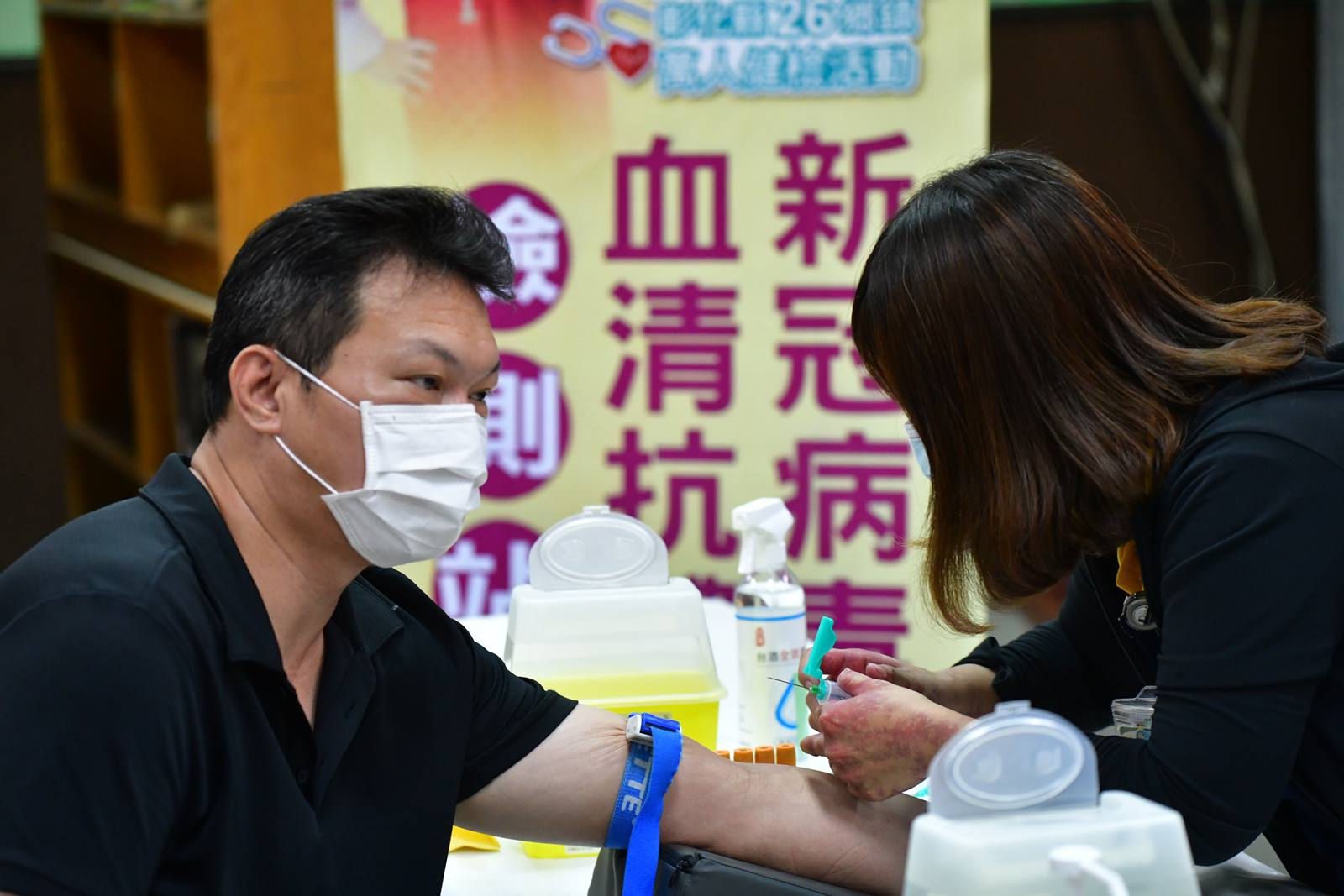 Photo: Kuo-tai Liu
A person involved in the study confirms that some people tested positive for antibodies and there were even a few who had developed neutralizing antibodies, which provide stronger virus protection.
This means that some of the Changhua County residents who were tested must have been infected with the novel coronavirus at some point but subsequently fully recovered. Among those infected, some must have had more severe symptoms. However, neither NTU’s College of Public Health nor the Public Health Bureau of Changhua County are willing to release exact figures at this point.
Chen Hsiu-hsi, associate dean of NTU’s College of Public Health, explains that, after contracting the novel coronavirus, even asymptomatic carriers or people with light symptoms will produce antibodies. More severe symptoms will usually trigger an immune response that leads to the production of neutralizing antibodies.
It does not come as a surprise to Yeh that some people test positive for antibodies. “No matter how meticulous our epidemiological investigation was at the time, there were still infected people that we did not catch,” he says.
Returnee Wave in March Likely Prevention Loophole
Chen believes that in places with a much higher number of confirmed infections than Changhua County, such as Taipei and New Taipei, the actual spread of the virus is probably much more serious.
Taiwan has won international acclaim for its containment of the pandemic. Where do the loopholes come from?
Su Ih-jen, a former director general of the Taiwan Centers for Disease Control, believes that the loopholes might have been created in early March.
At the time, the pandemic had already become severe in Europe and the United States. The number of new confirmed cases soared in the United States, surpassing other disaster areas such as China and Italy. But the Central Epidemic Command Center (CECC) only implemented full border restrictions on March 19. The following day, Taiwan saw 27 new confirmed cases of COVID-19, the highest number in a single day.
“In our communities, there were definitely asymptomatic people, particularly from that wave of returnees from Europe and North America, because the border restrictions were launched somewhat slowly. Before that, there were for sure carriers coming in who were seeding community transmission,” Su points out.
Chen notes that the existence of “asymptomatic infected persons” is the main reason why the novel coronavirus is so difficult to contain in comparison with SARS or influenza.
Local Transmission Risk Still Exists
The problem is that asymptomatic carriers or people who have not yet developed COVID-19 are both contagious. Before the onset of the disease, the viral load in the upper respiratory tract of asymptomatic carriers is comparable to that of patients who have already developed symptoms.
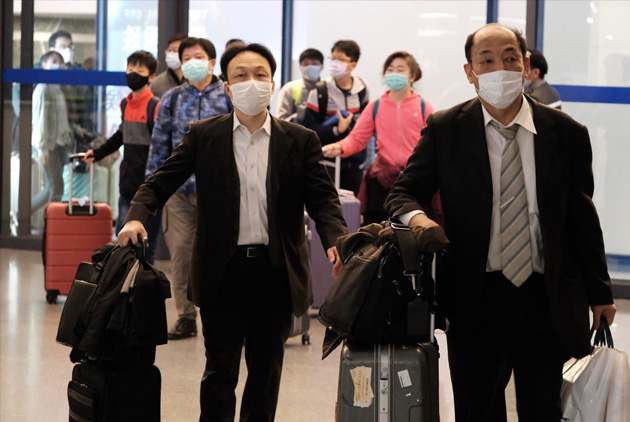
Having scrutinized the Belgian engineer’s activity history, Chen infers that the man probably contracted the virus from someone recently returned from abroad and was asymptomatic or still in the incubation period, and that he most likely caught the infection in Taipei, where the lion’s share of people enter the country from overseas.
Currently testing on arrival is only mandatory for Philippine nationals. Travelers from other countries [and Taiwanese returning from abroad] are only tested if they have symptoms or been exposed to an infected person. So far, only about 200 tests per day have been conducted on arriving travelers.
The voices calling for mass testing upon entry are growing louder. But the CECC estimates on the basis of 1,200 arrivals per day and at a cost of NT$3,500 per test kit that this would incur a daily expense of NT$4.2 million. Given that the incubation period varies and can be longer for some people, about 35 percent of infections would still not be caught, creating prevention gaps. “I am 200 percent against it,” says Lee Ping-ing, member of the CECC’s expert advisory group.
Huang Li-min, chairman of the Infectious Disease Society of Taiwan, believes that even more infected people could be screened out if all travelers arriving from abroad were tested after completing their 14-day quarantine. “The fewer people carry the virus, the safer our communities.”
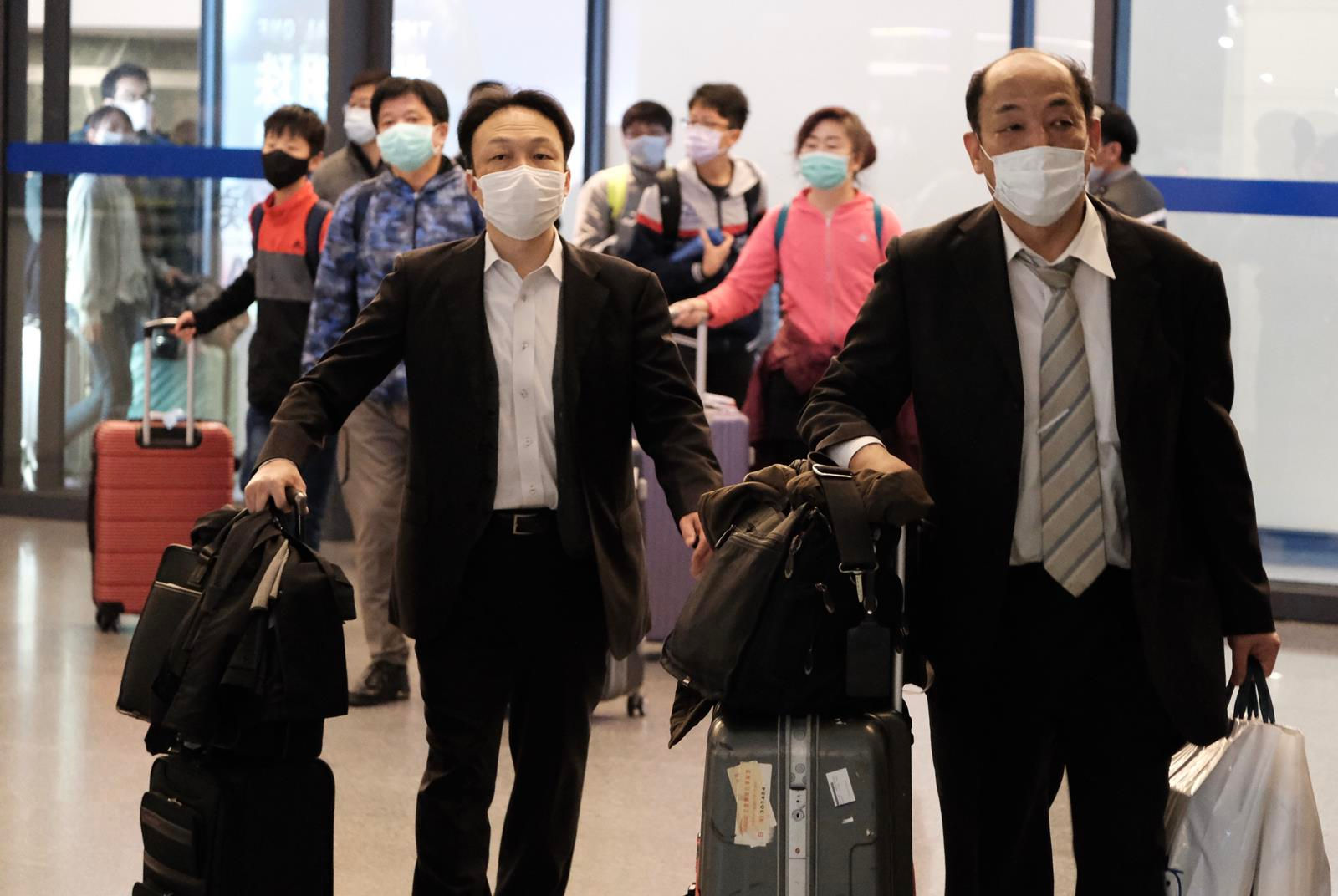 Photo: Kuo-tai Liu
But Lee points out that CDC data shows that more than 10 days after the onset of COVID-19, patients are no longer infectious. This means that testing after the 14-day quarantine period does not make much sense because, even if people are confirmed to have contracted the virus, the viruses detected on the carriers will be dead viruses that are no longer infectious.
Aside from testing, funding for the prevention of COVID-19 is also used for quarantine measures, treatment and pandemic-related economic stimulus measures. More money will have to be spent once an antiviral treatment has been found or a vaccine has been successfully developed. Lee believes that the state should spend its money in more tangible areas than on post-quarantine testing.
Second Waves Engulfing Many Countries, Taiwan Can’t Let Down Guard
While Taiwan has never implemented actual lockdowns, life has meanwhile returned to normal. Yet, several neighboring countries and cities that were admired for their successful containment of the pandemic are now experiencing a second wave of infections, seeing their worst nightmare come back.
Hong Kong, for instance, had not recorded a single case of local transmission for 23 days in a row. But in July, the city registered a new wave of infections with COVID-19 clusters tied to nursing homes, restaurants and drugstores but not traceable to a source.
In Da Nang, a popular tourist spot in central Vietnam, a new outbreak was registered July 25, ending a three-month streak without local transmissions. Meanwhile, more cases have been detected in other cities, including Hanoi and Ho Chi Minh City, and the epidemic continues to spread further.
Australia, Germany, and Japan have all seen a mysterious resurgence of cases.
Will Taiwan follow in the footsteps of the other countries and be caught up in a second wave of coronavirus infections?
Chang Shan-chwen, convener of the CECC’s advisory specialist panel, frankly admits that he “does not rule out” a second wave and confirms that it is definitely possible that there are asymptomatic carriers of the novel coronavirus in Taiwan.
Taiwan Health Minister Chen Shih-chung has appealed to the public not to let up in their efforts to contain the disease. He said people should continue to “wash their hands frequently and wear face masks”. As many countries experience a second wave of infections, we must not let down our guard.
Have you read?
♦ Why a brand-new all-suites hotel in Taipei offers coronavirus quarantine accommodations
♦ Is the Virus Making China Stronger or Weaker?
♦ Pandemic Leading to Wealth Redistribution. Who are the New Coronavirus Poor?
Translated by Susanne Ganz
Edited by TC Lin
Uploaded by Penny Chiang
Views

Subscribe to CWE Newsletter (every Thursday)
Stay abreast of what's happening in Taiwan with our weekly digest.
Keywords: