From Taiwan Fish Ponds to the World: A Cable Tie Success Story
Source:Chien-Tong Wang
KSS is a hidden champion in the wire and cable accessory sector. Despite having never set up shop in China, its products have found markets in more than 120 countries around the world. How has this component maker risen up from Tainan’s fish ponds to build a global business?
Views
From Taiwan Fish Ponds to the World: A Cable Tie Success Story
By Ching Fang WuFrom CommonWealth Magazine (vol. 799 )
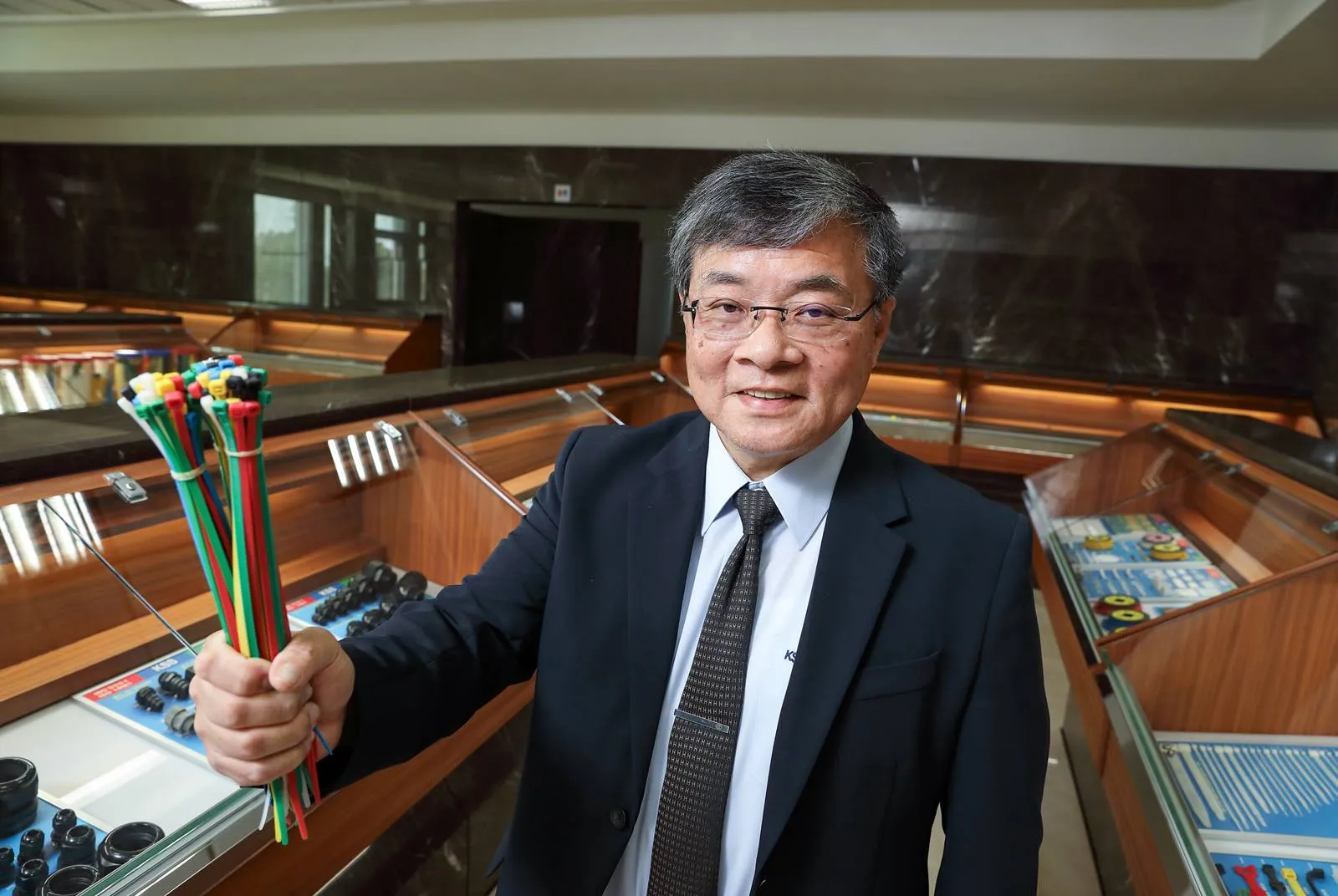
Qigu District in Tainan is the largest milkfish farming area in Taiwan. It is also home to a local manufacturer that is the world's third-largest in its field, selling its products in over 120 countries. That company is Kai Suh Suh Enterprise Co., Ltd. (KSS), known for its wide range of wire and cable accessories.
Its products are inconspicuous yet indispensable in everyday life. From the N-shaped cable clips that secure home cables in place to the wiring ducts, wrapping bands and cable ties used by factory production lines and charging stations, they are all supplied by KSS.
Most of these small plastic components cost merely pennies, but they are used pretty much everywhere, in electronics, machines, buildings, and gardens “and even for tying up bad guys and crabs and in the tuna business. We make them all," jokes KSS General Manager Chiu Ping-yu (邱平裕).
KSS has quietly built its business over half a century and is now ranked third globally in its field by several international market research firms, yet refuses to disclose its revenue.
Everything in its production process – from its tooling to its manufacturing and packaging – is made in Taiwan, all done in its factories in the fish farming village of Dujia in the Qigu area.
The company’s strategy of making everything in house stands in sharp contrast to its competitors.
Mocked by Peers for Not Going to China
Over 30 years ago, Taiwan's cable tie industry began moving to China, creating in Wenzhou the world's largest production and supply chain cluster for cable ties. Yet KSS has never invested in China, opting instead to expand in Qigu, building seven plants there. At the time, KSS’ rivals mocked the company for missing the boat.
"Frankly, we were too scared to go," admits Chiu. His father, company founder Chiu Chun-hsiung (邱俊雄), who had started his business from scratch and was extremely risk-averse, worried about how to prevent technology theft and withdraw his investment safely if need be.
 KSS's plant in Tainan.
The father epitomizes the first-generation Taiwanese SME (small and medium-sized enterprise) entrepreneur. The Chiu family has been rooted in Dujia for more than 10 generations, with many relatives involved in fish farming. The father initially ran a traditional Chinese medicine shop before heading to Taipei to get into the hardware trading business.
Tending to Both Machines and Fish Ponds
In the 1960s, as aid from the United States to Taiwan was being phased out, the electronics sector was taking off. At the time, factories had no idea how to use wire and cable accessories, often bundling cables haphazardly with steel wire. But when Chiu Chun-hsiung saw wiring ducts, cable ties and other products displayed by a foreign vendor at a local trade show, he saw opportunity, especially as Taiwan’s agrarian society was starting to industrialize.
He began importing cable accessories from a Japanese company to sell locally, but its supply was unstable and it still insisted on distributors taking on more inventory than they could sell. Eventually, he decided to start his own business, setting up a machine in his family's pig sty.
"Workers tended machines in front and fishing rods in the back," joked Chiu Ping-yu.
Starting with plastic wiring ducts, KSS gradually developed expertise in plastic injection and extrusion and gained experience with molds, enabling it to offer customers a one-stop shop for products. Starting in Asia, the business expanded globally. Cable ties alone, worth a measly NT$0.3 to NT$0.5 (about US$0.01 to US$0.015) have emerged as generators of NT$1 billion-NT$2 billion in revenue for the company.
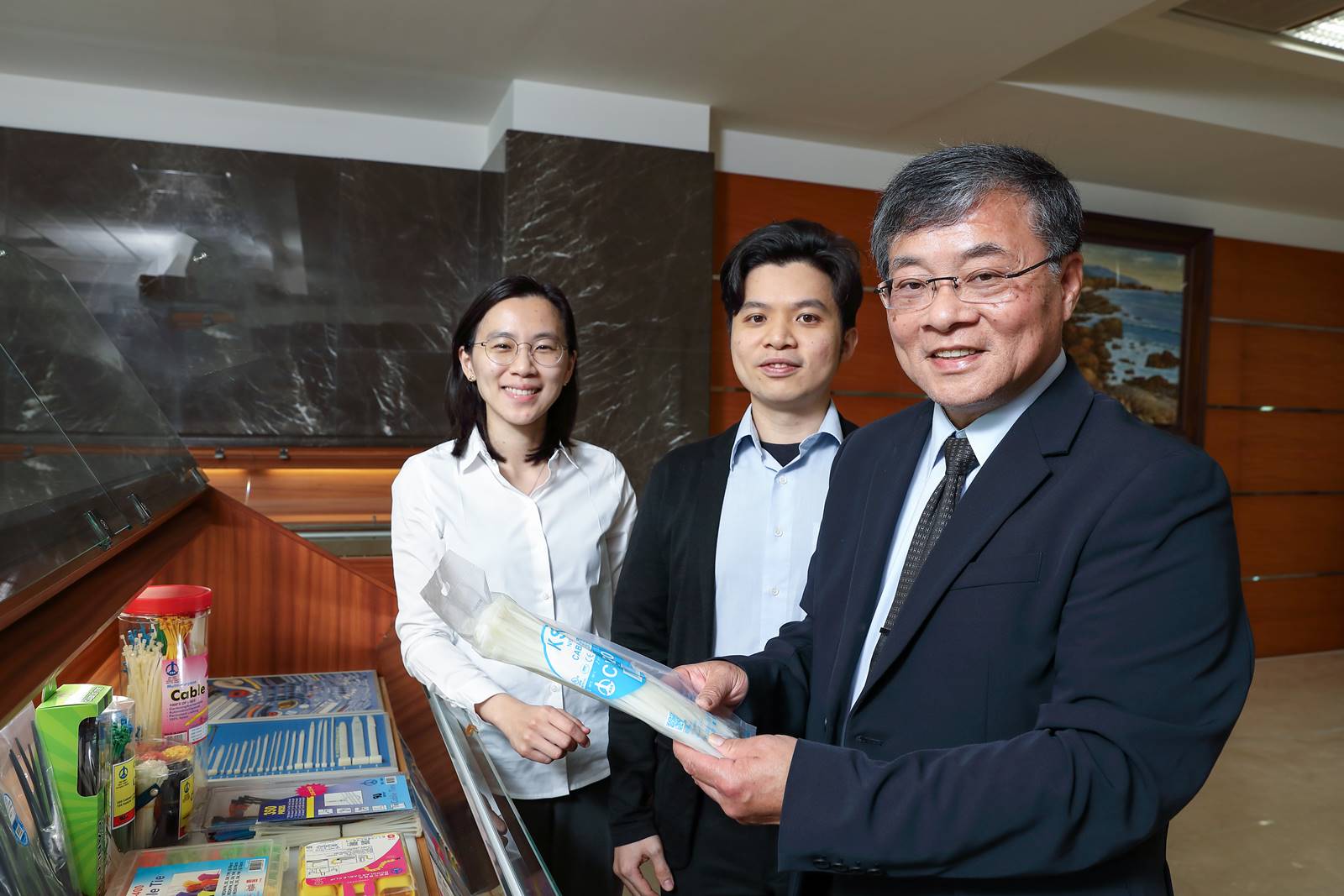 KSS General Manager Chiu Ping-yu (right), and his family.
Automation and Expansion
Export markets account for 70-80 percent of KSS's revenue. As the company has gotten bigger, it has remained insistent on manufacturing in Taiwan, putting immense pressure on itself to upgrade its processes to keep costs down.
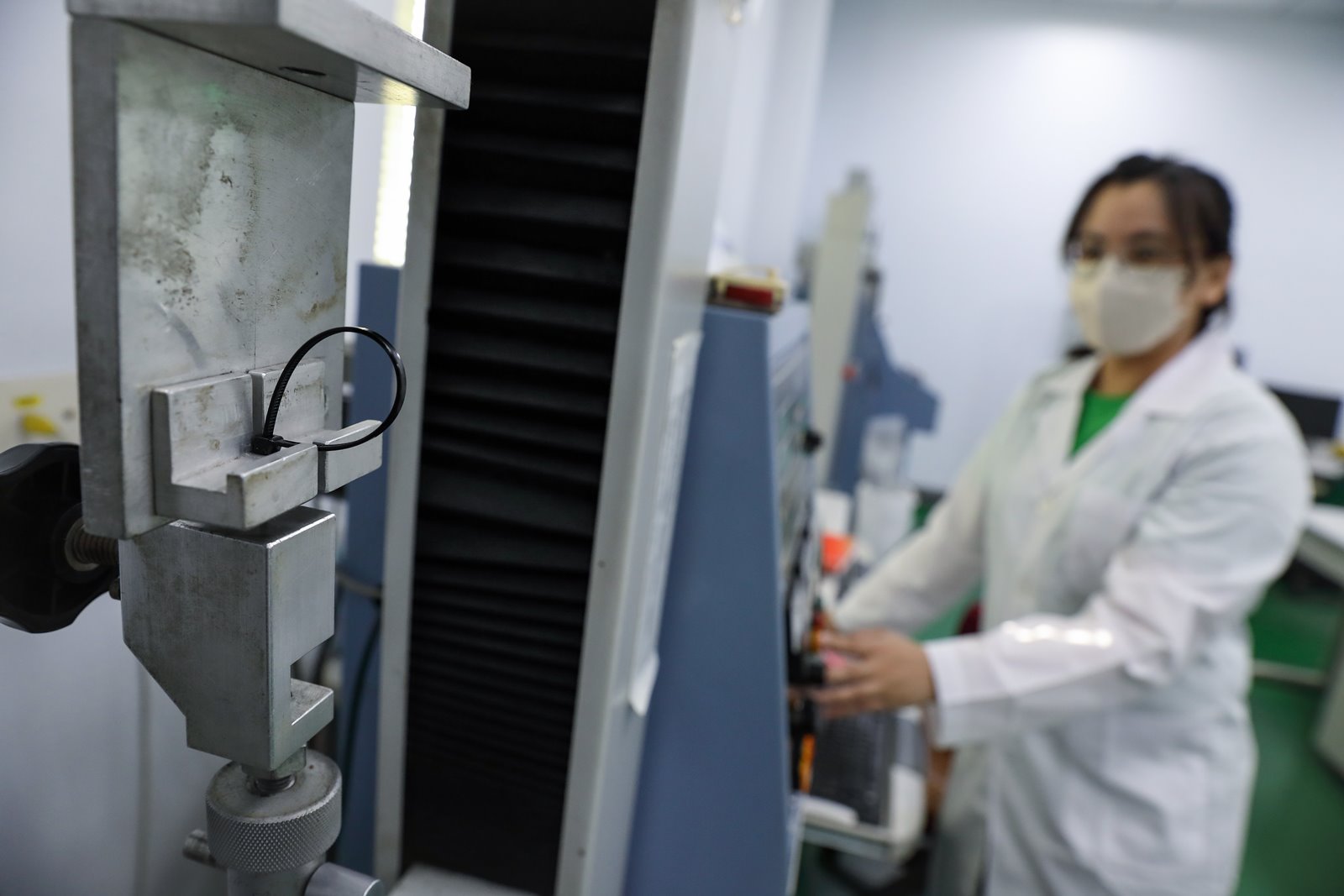
In particular, KSS has shunned the use of foreign overseas workers, focusing instead on automation — a journey it has pursued for 20 years, including investing billions in automated warehouses.
Cable tie manufacturing is inherently suited to mass production, with KSS churning out 60 million of the straps a day. Packaging these ties evenly, however, is a significant challenge, not to mention the problems posed by the myriad other wire and cable accessories it makes.
In the past, four or five workers would be needed to package the production of one machine. Automation reduced that number, but because KSS’ orders were increasing and it was expanding capacity, it did not have to lay off workers during the automation process.
Spurring the company’s expansion and need to modernize has been thousands of small monthly orders from global SMEs, each often worth no more than a thousand U.S. dollars. Today boasting a diverse product range and low unit prices, KSS serves over 20,000 customers in the computer peripherals sector alone, with 3,000 to 6,000 regularly placing orders, significantly mitigating risk.
Despite KSS’ Inflexible Pricing, Walmart Still In
For large buyers like Walmart, a client many Taiwanese suppliers eagerly pursue, KSS has followed a more “take it or leave it” approach. Because big clients buy in quantities adding up to millions of Taiwan dollars per order, they are more sensitive to pricing and try to negotiate much tougher deals, but KSS is known for sticking to its original quotes.
"If you think we're too expensive, that's fine," Chiu Ping-yu laughs. Walmart was put off by KSS’ pricing, but it came back to the company during the pandemic amid product shortages and disruptions to global supply chains, because only KSS had enough stock to meet its needs.
For the Chiu family, the future of wire and cable accessories holds endless possibilities.
"When customers bring us samples, it means there's a market. We make the tooling and produce the items," Chiu Ping-yu said.
The humble cable tie has countless applications, requiring varying stress points or temperature and flame resistance characteristics, ensuring that the hidden champion from the fish ponds of Tainan still has plenty of incentive to keep improving and growing.
Have you read?
- How Chroma Became One of Nvidia's Exclusive Suppliers
- How Chenbro, Taiwan's Server Chassis Leader, Became Indispensable for Nvidia
- Delta Electronics Capitalizes on AI Server Boom as EV Market Cools
Edited by Luke Sabatier
Uploaded by Ian Huang
Views

Subscribe to CWE Newsletter (every Thursday)
Stay abreast of what's happening in Taiwan with our weekly digest.
Keywords: