AIT Chief Calls Taiwan’s Semiconductor Sector Irreplicable, Encourages Regional Alliances
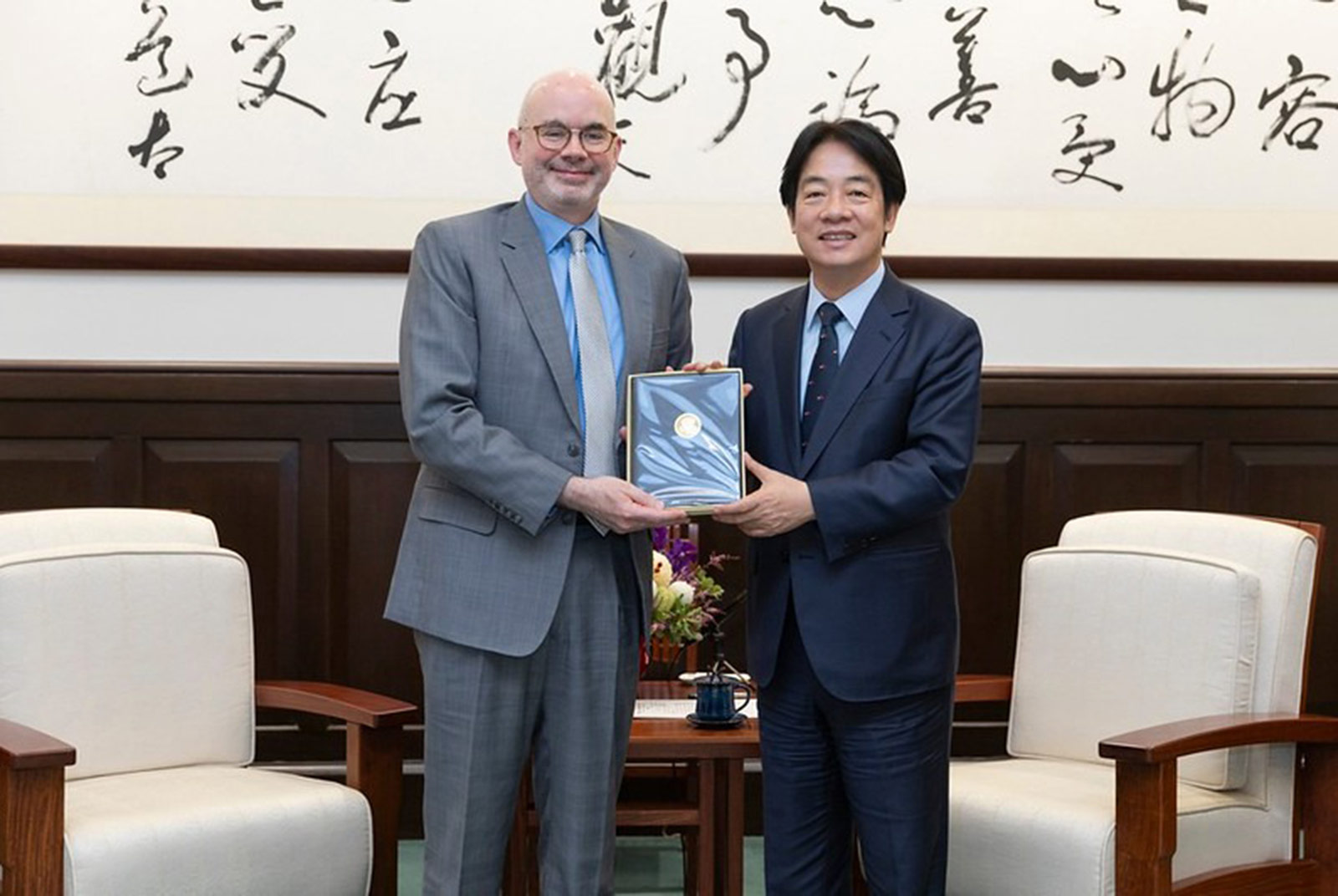
Source:Office of the President Republic of China(Taiwan)
The new AIT director reiterated U.S. commitment in the stability of the Taiwan Straits and emphasized the pivotal role of Taiwan's semiconductor industry in the world. However, he belives Taiwan cannot meet the surging AI demand for chips alone, and it needs to forge stronger alliance with the Philippines.
Views
AIT Chief Calls Taiwan’s Semiconductor Sector Irreplicable, Encourages Regional Alliances
By Judy Linweb only
Raymond F. Greene, the new director of American Institute in Taipei (AIT), in a recent interview with Mindi World News Podcast, told the audience that Taiwan’s semiconductor ecosystem is irreplicable and irreplaceable, while encouraging Taiwan to strengthen ties with the Philippines for strategic alliances.
Greene challenged the notion of the semiconductor industry as a "zero-sum game," highlighting the mutual benefits of the U.S.-Taiwan partnership. “Many in America question why the majority of chips are produced in Taiwan rather than the U.S., but the U.S. leads in IC design and semiconductor equipment.” Greene noted that maintaining a complementary relationship in this industry is beneficial for both countries.
“I don't think Taiwan should be worried about the future, because there's no way to replace the ecosystem in Taiwan, there's no way to replicate,” said Greene. Yet, he acknowledged that Taiwan alone cannot meet the surging global demand for semiconductors.
Greene said since AI is going to increase the global demand for semiconductors, Taiwan is facing not only the size problem, but they're also facing problems in labor shortage, the water supply shortage, and especially in the green energy sector, because a lot of the semiconductor customers demand to have their chips produced with green energy, thus diversification of production sites is necessary.
On the topic of his priorities during his tenure, Greene said the first one is to strengthen Taiwan's security, the second is to help Taiwan's social resilience, and the third is to expand Taiwan's international connections, and those connections include the U.S.-Taiwan relationship.
Greene emphasized that Taiwan's ability to defend itself is one of the centerpieces of the U.S.-Taiwan relationship and said that Taiwan's cooperation with the U.S. will continue to demonstrate resilience and close ties in the international arena.
The U.S. remains committed to assisting Taiwan in strengthening its self-defense, and under the Taiwan Relations Act, the U.S. is obligated to provide the equipment and support necessary for Taiwan's defense, which has bi-partisan support. “That will not change no matter who will become the next U.S. president,” said Greene.
Taiwan can Do More for the Philippines
When discussing the threat of China’s “gray zone tactics”, Greene said that the avoiding conflicts in the Taiwan Strait is paramount, and he believes that the possibility of a full-scale war is quite low at present. Although he views a large-scale cross-strait war as unlikely, he acknowledged that Taiwan must continually prepare for daily challenges, whether in the form of maritime disputes, military exercises, or psychological tactics.
Since Philippines is facing the same kind of gray area threats and has been responding with sound strategies to show the world the situation they are facing, Greene encouraged Taiwan to learn from the Philippines and enhance economic and trade ties with the Philippines.
“Geographically, Philippines is very close, and there's a lot of exchange of economic talent, so I think Taiwan can invest more in this area,” said Greene, pointing out that Taiwan can do more in education, such as inviting Filipino students to study and work in the semiconductor industry in Taiwan, and help implement agricultural technologies in the Philippines.
Have you read?
- Taxing Taiwanese Chips? Trump is Getting Manufacturing Wrong
- How Did a Chinese EV Brand Win Over Taiwanese Car Enthusiasts?
- Taiwan-Made Machinery Is Still Sold in Russia, What Can the Manufacturers Do About It?
Uploaded by Ian Huang
Views

Subscribe to CWE Newsletter (every Thursday)
Stay abreast of what's happening in Taiwan with our weekly digest.
Keywords: