How Long Will Taiwan’s Good Day Last as Nvidia-Powered AI Hardware Leader?
Source:Chien-Tong Wang
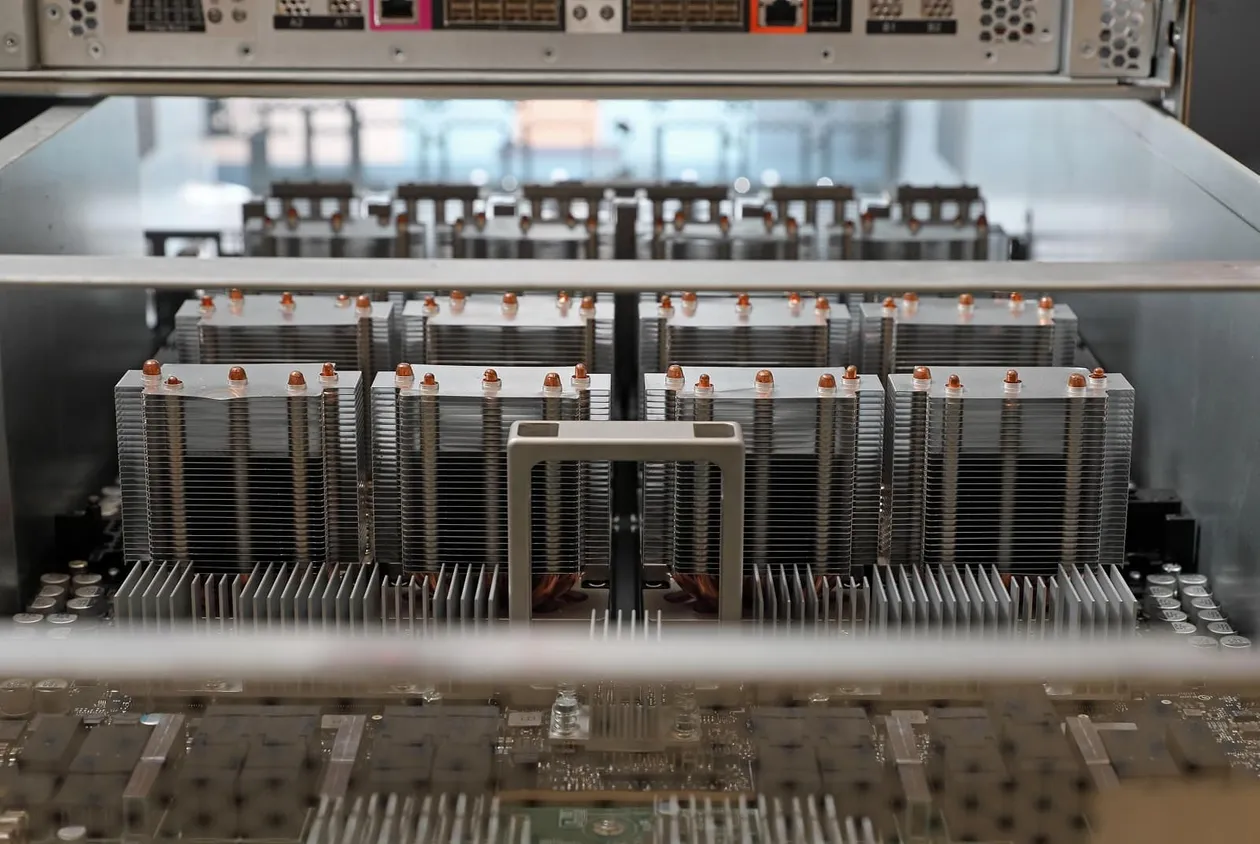
The United States will soon replace China as Taiwan's biggest export market. In the first nine months of 2024, Taiwanese exports saw an annual increase of 10% thanks to the shipment of AI servers, many of which run on Nvidia chips. But how long will the good times last?
Views
How Long Will Taiwan’s Good Day Last as Nvidia-Powered AI Hardware Leader?
By Liang-rong ChenCommonWealth Magazine
In the first nine months of this year, Taiwan's export to the U.S. grew by 60%, to rake in a sum of $84.2 billion. If this trend continues, the U.S. will replace China and Hong Kong to become Taiwan's biggest trade partner in 2025.
This is a historic moment. Six years ago, the Trump administration declared a trade war on China. Driven by customer demand, server companies like Quanta and Hon Hai moved their production lines back to Taiwan. CommonWealth published an article opining that the traditional business model of Taiwan’s electronics sector, which saw "Taiwan taking the orders, exporting the components to China to assemble them into smartphones and computers, and then selling the goods to America", was transforming into a more streamlined model: "Made in Taiwan, sold to America". (https://english.cw.com.tw/article/article.action?id=2471)
That forecast has panned out even faster than expected. The driving force is the current boom of generative artificial intelligence, or Gen AI. The explosive growth of related goods and services has propelled Taiwan to new heights.
AI Servers Reshaping Taiwanese Exports
Taiwan's Ministry of Economic Affairs (MOEA) recently published data on Taiwan's server exports. Exports ballooned by 159% in the first nine months of 2024, bringing in a sum of $15.69 billion.
In 2018, when then-president Donald Trump kicked off the trade war with China, Taiwan only exported $1.13 billion worth of servers. Business has grown tenfold in just six years.
An MOEA official told CommonWealth that those numbers are on the conservative side, since they only account for what the industry refers to as "L9" servers and above. These are servers that are shipped with CPUs and GPUs already installed on the motherboards.
The L6 "barebone" servers that only have components installed in Mexico or the U.S. are in a separate category, called "other data processing units". These are the real mainstay of Taiwanese exports. From January to September of this year, Taiwan exported servers worth $39.3 billion, with a year-over-year growth rate of 220%.
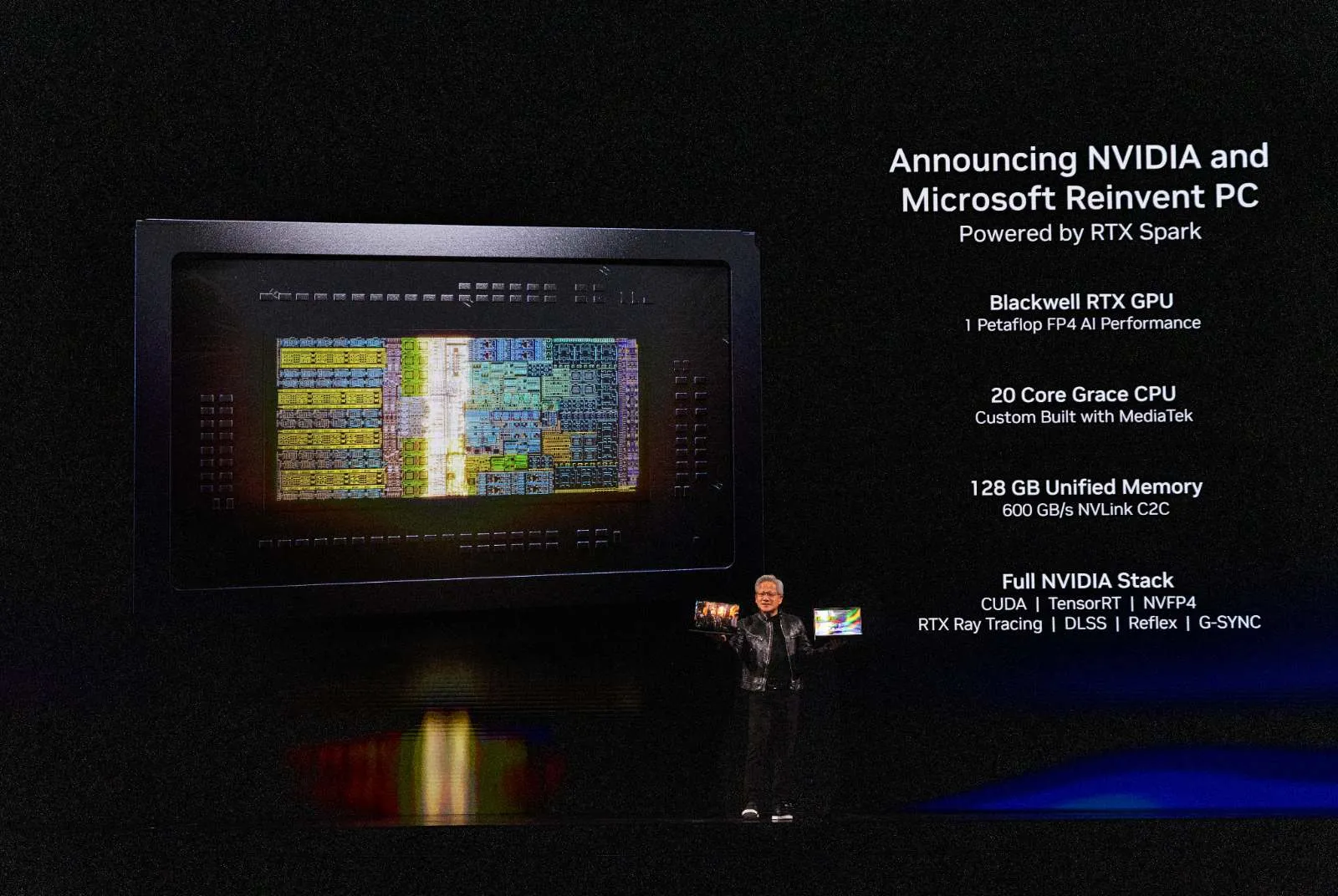
Such servers are shipped to Mexico-based assembly lines run by Hon Hai, Wiwynn, and Inventec. They are fitted with AI accelerators such as the Nvidia H100 or AMD's MI300 series. As it happens, these chips are manufactured by TSMC, so they are also shipped from Taiwan.
This is why Taiwan’s export of integrated circuits to the U.S. grew by 110% in the first three quarters, to reach a total of $5.1 billion.
These bulky AI accelerators, which are the size of books, rely on TSMC's patented CoWoS technology to deliver the performance necessary for training the large language models (LLMs) used in AI. Multiple pricey high bandwidth memory (HBM) chips, primarily provided by Korea's SK Hynix, are also packaged in the processors.
Because of this, Taiwan has also imported more DRAM from Korea in the same span of time, with the overall price tag being $11 billion, which is an increase of 135% YoY. Taiwan's trade deficit with Korea has reached a historic high.
Will AI Go the Way of HTC?
There is a sense of déjà vu when looking at how one company and one product have upended Taiwan’s economy. Specifically, we are reminded of HTC in its heyday.
HTC based its production in Taoyuan. In addition to its own smartphones, it made Google's Android smartphone, the Nexus. Thanks to HTC, "cellular network and other wireless internet telephones" were briefly Taiwan's fourth largest export, behind integrated circuits, liquid-crystal displays, and petroleum by-products. In 2010, HTC accounted for a quarter of the growth in Taiwanese exports.
This wave of AI servers, spearheaded by Nvidia's supercomputing processors, has an outsized influence that dwarfs even HTC when it was at the top of its game.
During the first three quarters of this year, Taiwan's exports experienced an annual growth of 10.2%, equating to around $35 billion. The export of servers and "barebone" servers alone brought in $36.7 billion.
In other words, if it wasn't for the contribution of AI servers, Taiwanese exports would actually have shown negative growth.
It wasn't that long ago that HTC went through its meteoric rise and dramatic fall. For several years after 2010, the plummeting sales of HTC phones weighed down the country's exports.
When will the AI party come to an end? During TSMC's shareholders' meeting, Chairman C.C. Wei (魏哲家) vowed that "AI is just getting started" and "there are years of growth ahead." This has alleviated some of the fears.
However, there are plenty who feel that Taiwan's AI server companies are profiting from a windfall. If it wasn't for the realpolitik that bars Chinese companies from competing, the AI supply chain—like the smartphone supply chain—would have required Taiwan to ship the components to China and assemble the servers there.
"The China-U.S. trade war is definitely in Taiwan's favor," says Kenneth Chung-Hou Tai (邰中和), co-founder of Acer and chairman of the AI startup Zettabyte. But he goes on to say that while Chinese smartphones benefited from an eager local market and a mature supply chain, these factors are not at play when it comes to AI servers. "Aside from Inspur, (the world's third largest server contract manufacturer), China does not have a sophisticated or complete supply chain."
He feels that Taiwan's dominance in the AI server market was "naturally formed". He adds, "Taiwan is lucky."
Some observe that based on the latest trend, although Taiwan will continue to play a key role in the field of AI servers, its products will shift from being "Made in Taiwan" to being "Made by Taiwan".
During Hon Hai's Tech Day this October, Chairman Young Liu (劉揚偉) stated that Hon Hai has already built a "massive factory" in Mexico, with production lines 350 meters in length, to prepare for the surging demand for AI servers.
He opined that due to geopolitical considerations, the production of AI servers will trend toward local manufacturing and a shorter distance to market.
Nothing is set in stone. But it's worth remembering that Taiwan's economic jamboree, brought on by heightened interest in AI servers, may not last forever.
Have you read?
- Made in Taiwan, Straight to the United States
- HTC Struggles Through a Bottleneck
- A look inside NVIDIA and Jensen Huang’s ambition
Translated by Jack Chou
Edited by TC Lin
Uploaded by Ian Huang
Views

Subscribe to CWE Newsletter (every Thursday)
Stay abreast of what's happening in Taiwan with our weekly digest.
Keywords: