‘Trump No Match for Global Consumers’: Pegatron Chairman
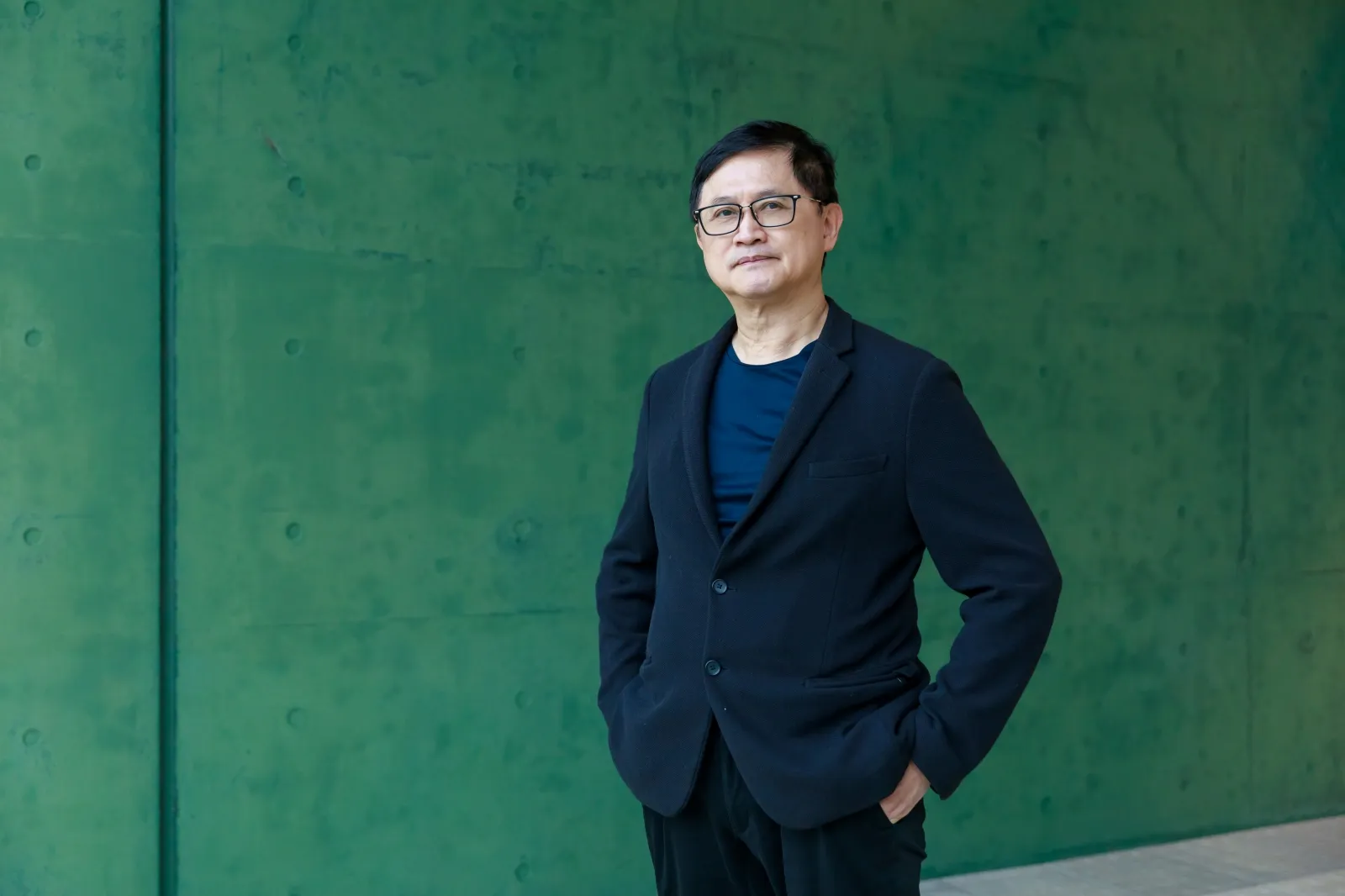
Source:Chien-Ying Chiu
The global tech industry has operated for years under the Information Technology Agreement, enabling tariff-free trade and a seamless supply chain. But the rules of the game under Donald Trump have changed. Pegatron Chairman T.H. Tung analyzes this new crazy world.
Views
‘Trump No Match for Global Consumers’: Pegatron Chairman
By T.H. Tungweb only
United States President Donald Trump remains a confounding figure. Within months of taking office, he has shaken long-standing alliances, discarded formal trade agreements, and ignored diplomatic norms. Do these moves reflect a shrewd negotiating strategy or a deeper rejection of America’s traditional values in favor of short-term interests? Observers have had trouble deciding.
Some label Trump’s approach “business-like,” but in reality, there is no singular business style. Intel’s Gordon Moore was meticulous, AMD founder Jerry Sanders was flamboyant, and Elon Musk is headline-grabbing. Trump’s style is distinct—infused with Anglo-Saxon heroism that spawns his love for “performative” encounters in front of the camera, turning serious political negotiations into livestreamed drama.
This break from diplomatic tradition has increased global uncertainty. But one silver lining — from the perspective of the fictional optimist Ah Q — is that Trump’s unpredictability will not only adversely affect Taiwan, but companies across the globe. The United States, European Union, Japan, South Korea, and Canada are all grappling with the same reality.
Rational Response in a Chaotic World
Facing Trump’s short-term policies, Taiwanese companies have adopted a pragmatic stance, going along for the time being to limit losses. That is especially true of Taiwan's tech sector. In five areas vital to tech — capital, technology, orders, consumer markets, and manufacturing bases — capital remains abundant, and manufacturing capacity has diversified to Southeast Asia, Mexico, and even back to Taiwan since the U.S.-China trade war.
But the sector is working closely with the United States in the other three areas. There has been long-standing cooperation on technology between Taiwan and the San Francisco Bay Area, and thus choosing to align with Trump’s policy shifts and maintaining flexibility could help stabilize the situation.
It is a strategy that buys time in the short run while keeping options open over the longer term.
Can America, however, truly achieve its dream of reviving its manufacturing base?
America's Industrial Past and Present
History suggests the U.S. was once a manufacturing superpower to meet wartime needs. After Pearl Harbor, the country built 300,000 fighter planes in just four years, capable of replacing a fighter plane lost in combat in just two days. Today, however, things look very different. American shipbuilding now accounts for only a small fraction of global output, and even the U.S. Navy's newest frigates have been plagued by serious delays due to the extended decline in industrial capacity.
In 21st century America, manufacturing employs only 8 percent of the non-farm workforce. Over the past 50 years, high-end services have become the country’s economic engine — absorbing top talent and delivering extraordinary profits. The service sector now represents over 80 percent of U.S. GDP, dwarfing agriculture and manufacturing combined.
By comparison, the total annual output value of global shipbuilding is lower than that of personal computers and far below smartphones or automobiles. In other words, America’s real wealth comes from finance, tech, entertainment, education, and other high value-added services — not from traditional low-margin, high labor-cost traditional manufacturing. This is the essence of America’s prosperity-induced “Dutch disease": the dominance of services has crowded out the appetite for manufacturing.
The Market Decides, Not the President
It is therefore misleading to claim that other nations "stole" U.S. manufacturing. What happened was a structural economic shift. With per capita GDP at $82,770, American wages are 1.5 times higher than Germany’s, 2.5 times Japan’s, six times Mexico’s, 19 times Vietnam’s, and 33 times India’s. Given this cost disparity, global consumers will naturally choose more affordable products — regardless of where they’re made.
This global consumer behavior is a natural market reaction. Famous economist Friedrich Hayek said markets are smarter than governments, and even Trump, with all his executive power, cannot overturn the collective preferences and habits of consumers.
Taking this one step further, the negative impact of Trump’s policies on renewable energy are already taking shape, but this has not reversed global trends. In encouraging more drilling of crude oil and natural gas and repealing subsidies for electric vehicles, Trump may be easing inflation and energy prices in the short term, but he will not have a decisive impact on global green energy development.
In 2023, U.S. electric vehicles accounted for just 7.6 percent of the global market, compared to a 29 percent share for China and over 20 percent for Europe. If the U.S. retreats from climate leadership, China, the EU, India and others will undoubtedly fill the void.
By the same token, electricity generation is currently the world’s largest single source of carbon emissions, and major power consumers China and India could exert more real-world influence on global decarbonization than the U.S.
A Splintered World: America vs. the Rest?
Whether on green energy or industrial policy, the world has already been gradually splitting into two camps: “A Country” (America) and “R Country” (Rest of the World). From Greenland to the Panama Canal, from tariff wars to climate policy, we’re seeing a shift toward geopolitical realignment and perhaps even a new kind of bipolar order.
When Trump’s current term ends, the key question may be whether America has had its global leadership role taken away. This is the issue we must continue to monitor and ponder.
- Taiwan Businesses Brace for 32% U.S. Tariff Shock
- Trump Unveils Reciprocal Tariffs, Threatening Global Supply Chains
- Pegatron Chief TH Tung: Corporations Shouldn’t Resort to Layoffs
Edited by Luke Sabatier
Uploaded by Fiona Lin
Views

Subscribe to CWE Newsletter (every Thursday)
Stay abreast of what's happening in Taiwan with our weekly digest.
Keywords: