
How Will Taiwanese Orchids Survive Trump’s Tariffs?
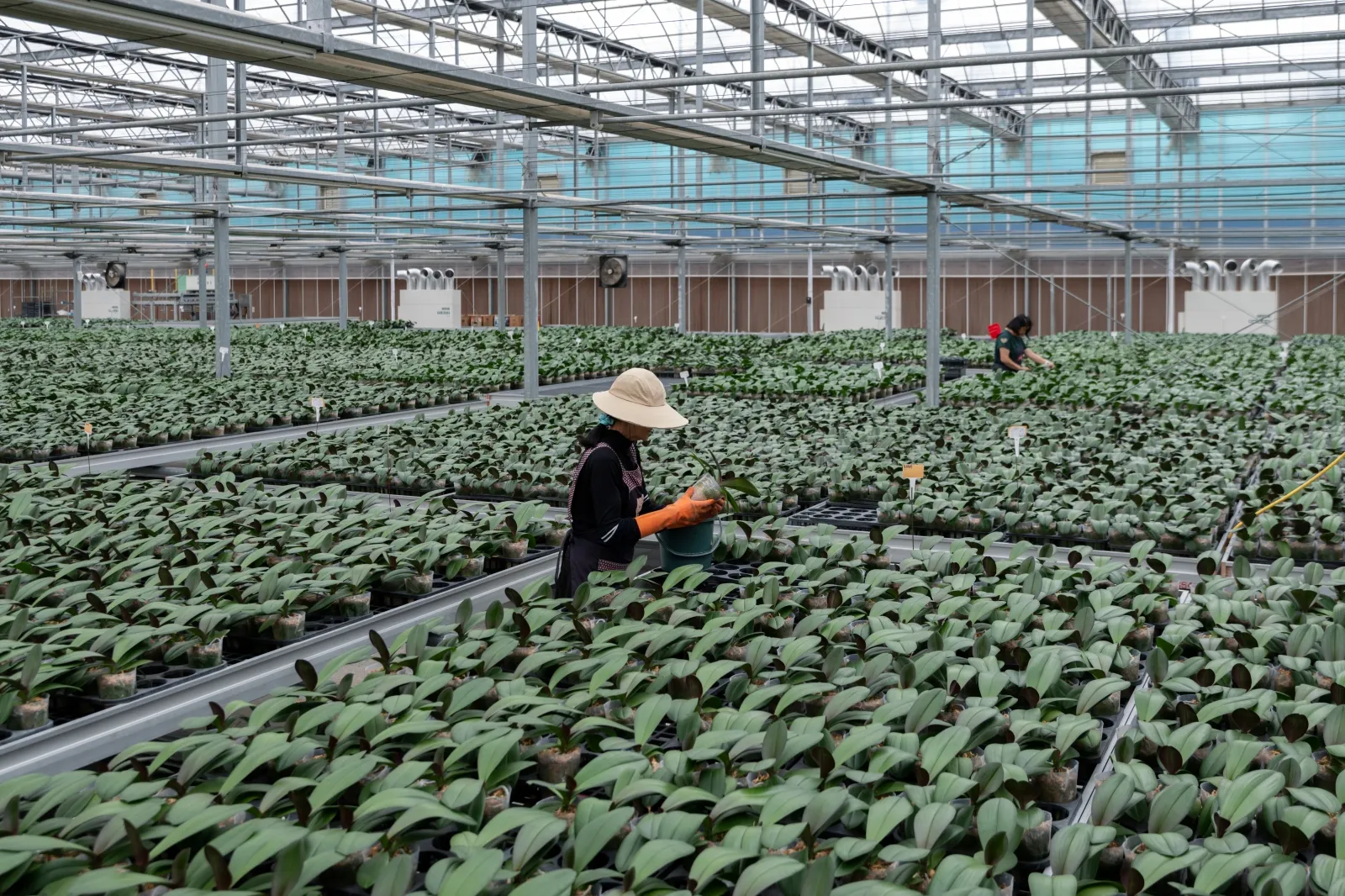
Source:Pei-Yin Hsieh
It took two decades for Taiwan’s famed moth orchids to conquer 70% of the U.S. market. Now, Trump’s tariffs may put them in jeopardy. With sales to the U.S. totaling over US$60 million annually, Taiwan’s orchid cultivators must look for a way out.
Views
How Will Taiwanese Orchids Survive Trump’s Tariffs?
By Li Hsun Tsaiweb only
“The United States is an important trading partner. We must not give up this market because of the tariffs and let others fill the void.” On April 9th, just before Donald Trump announced a 90-day pause on his reciprocal tariffs, Taiwan’s Agriculture Minister Chen Junne-jih (陳駿季) made this statement to nearly 100 orchid cultivators at a seminar. The sense of anxiety was palpable. One planter who’d been in the business for almost four decades revealed that after Trump’s announcement, some American customers had already canceled their orders, while others were eyeing imports from Latin America.
Taiwan sells its beloved moth orchids to over 80 countries, with the U.S., being the biggest market, making up 40% of exports. In 2023, Taiwan sold orchids worth US$61 million to America.
When Americans see moth orchids, six or seven out of ten are from Taiwan. This is the culmination of 20 years of hard work.
Taiwan was the first country allowed to ship potted orchids to America. This is safer and less expensive than shipping them unpotted, and it created a unique value chain between Taiwan and the U.S.
Typically, Taiwanese planters cultivate the orchids until the sprouts are near maturity. Once shipped to the U.S., local planters take over and nurture them for another four months until they blossom, at which point they are sold to flower shops. This has made the U.S. an even bigger market for Taiwan than Japan.
However, such a closely knit supply chain also made Taiwan over-dependent on the American market.
More than 400 Taiwanese planters are licensed to sell to the U.S. “Which means any change in the American market will have an effect on Taiwanese moth orchid planters,” says Yong-siang Lai (賴永翔), manager at Taida Horticultural Co. His father, Pen-Chih Lai (賴本智), is a famous horticulturist credited for making it possible for Taiwan to sell potted orchids to the U.S.
Tseng Chun-pi (曾俊弼), secretary-general of Taiwan Orchid Growers Association, warns that once the tariffs come into effect, as much as 10% of U.S. orders might disappear. This is akin to losing the entire Australian market—roughly three million plants. Because moth orchids, not unlike semiconductors, rely on a carefully coordinated supply chain, a bottleneck to mature sprout exports will adversely affect young sprouts as well as seedling flasks further up the supply chain.
Of greater concern is the consumer market. Tseng points out that moth orchids are pricey luxury items. If the American economy suffers due to the tariffs, customers might be inclined to buy cheaper flowers or stop buying altogether, thereby eliminating the orchids market entirely.
Three Ways Taiwanese Orchids May Still Thrive
One, reduce costs
Moth orchids are raised in greenhouses that must maintain an ambient temperature of 27 degrees Celsius year-round. That means fans in summer and insulation in winter. Energy and labor costs take up more than half of total costs. Many vendors still burn fuel in heaters to warm the greenhouses, which may become cost-prohibitive. Yong-siang Lai advocates using heat pumps to replace boilers. The initial cost may be high, but they will make their money back in four years, since energy costs will be halved. Lai also recommends installing smart meters to more closely monitor energy expenditure and prevent waste.
Two, automation
Currently, Taiwan is behind in automated pot-changing and watering technology. Even automatic pot-changers only function half as efficiently as human laborers.
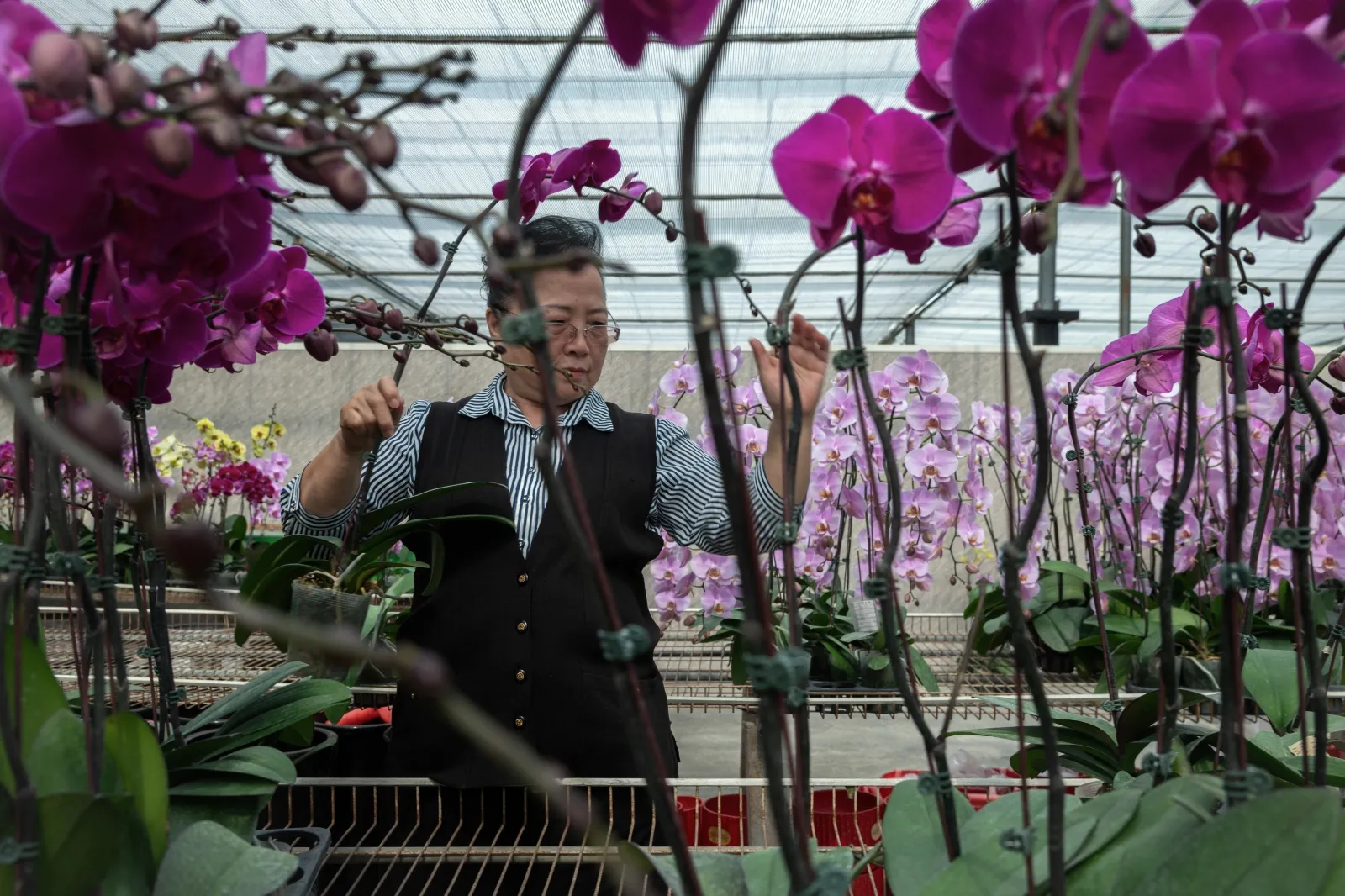 (Source: Pei-Yin Hsieh)
The Netherlands has the lead in automated watering; cultivators use bark-based mediums and plastic sleeves to improve watering efficiency. However, since bark-based mediums are prohibited from being exported to the U.S., Taiwan will need to search for another method. Some planters are looking into new materials that are more conducive to good airflow. If successful, this will help automate greenhouses.
Three, change business models and diversify risk
The lifecycle of a moth orchid from seedling to mature sprouts is 25 months. There is no way to speed up the process or reduce production halfway. In the past, verbal agreements and emails were enough to serve as proof of transaction, but these would offer scant protection if orders are postponed due to tariffs. Lai suggests taking a page out of industrial manufacturing, adopting official legal contracts and taking deposits to help mitigate risks.
Lin Feng-pei (林豐沛), secretary-general of the Taiwan Orchid Biotechnology Park Development Association (台灣蘭花生物科技園區進駐業者發展協會), says that there are seven stages from when the moth orchid is planted to when it can be exported as a mature sprout. Planters might consider moving facilities to the U.S. and exporting seedling flasks or young sprouts instead, so that the final stages of cultivation can be done closer to the market. Not only will this help alleviate the impact of the tariffs, it will also make the industry more responsive to changes.
For 30 years, Taiwanese moth orchids have dominated the world market thanks to the innovation and tenacity of their cultivators. In the face of Trump’s tariffs, the question of how to minimize damage will not only put the adaptability of planters to the test, it will also challenge the negotiating powers of the Taiwanese government.
Have you read?
- Beyond the Chip: TSMC's Innovative Blueprint for Green Manufacturing at 2025 North America Technology Symposium
- Trump Tariffs Target Shein and Temu—Is Taiwan Their Workaround?
- Trump Tariffs Roiling Taiwan’s Industrial Clusters
Translated by Jack Chou
Edited by TC Lin
Uploaded by Fiona Lin
Views

Subscribe to CWE Newsletter (every Thursday)
Stay abreast of what's happening in Taiwan with our weekly digest.
Keywords: