Winning the Cognitive Fight: How Taiwan Can Turn Information Defence into Strategic Communication
Source:shutterstock
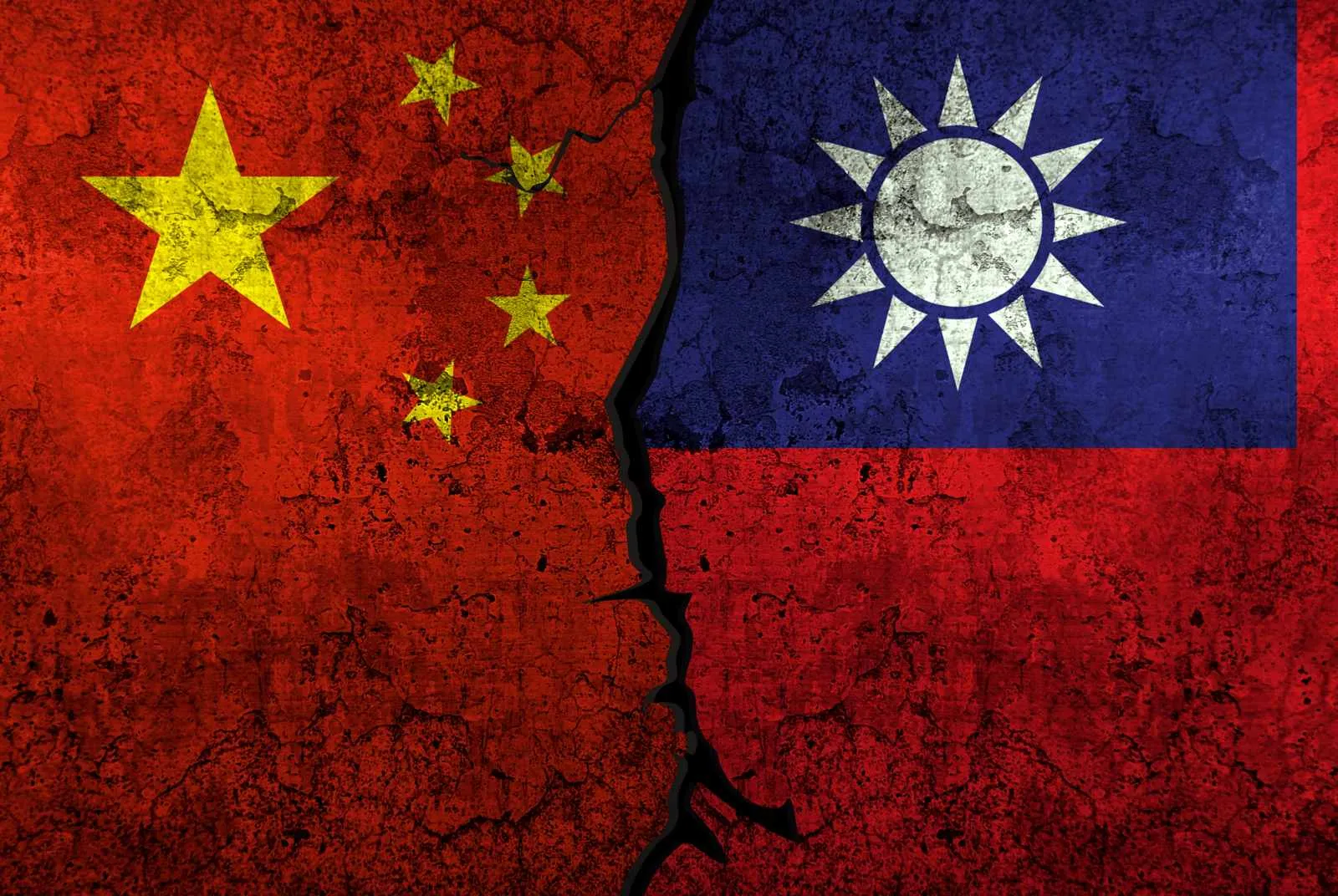
As China ramps up its cognitive warfare to undermine Taiwan’s trust in democracy, Taipei must move beyond reactive fact-checking to proactive strategic communication. By uniting government, civil society, and tech, can Taiwan turn its greatest vulnerability into a model for democratic resilience?
Views
Winning the Cognitive Fight: How Taiwan Can Turn Information Defence into Strategic Communication
By Aritra Banerjeeweb only
When Beijing wages war without firing a shot, the battleground is not the Taiwan Strait—it is the mind. Over the past decade, China’s information operations have moved from crude propaganda to sophisticated “cognitive warfare,” designed to erode democratic trust and convince citizens that resistance is futile.
The targets are everyday Taiwanese: voters, influencers, soldiers’ families. The weapons are AI-generated videos, doctored news, and well-timed psychological nudges coinciding with military drills or economic coercion. According to Taiwan’s National Security Bureau, PRC-linked campaigns have increased by more than 60 per cent in the past year, often blending online harassment, content farms, and cyber-intrusions.
The result is not persuasion but paralysis—citizens trapped in an atmosphere of noise, doubt, and fatigue.
China’s Narrative Machine
Neville Bolt, a leading scholar of strategic communication, describes the discipline as “the continual calibration of persuasion and coercion, of friendship and force.” China has perfected that calibration.
Drawing on a framework proposed by David Kelly and the Washington-based Center for Strategic and International Studies (CSIS)—popularly referred to as the “Seven Chinas”—Bolt highlights how Beijing projects multiple, sometimes contradictory, identities: the civilisational victim, the developing-world leader, the communist survivor, and the protector of the global commons. He cites this typology to illustrate the complexity of China’s narrative statecraft, not as his own original model.
Building on that discussion, Bolt’s own concept of “Easternisation” situates China’s messaging within a larger shift of political and informational power from West to East. In this context, Beijing’s persuasion is the promise of progress; its coercion, the price of dissent.
From Fire-fighting to Strategy
Taiwan has been exemplary in crisis management—its civil-tech community, from Doublethink Lab to the Taiwan FactCheck Center, routinely debunks falsehoods within hours. Yet debunking is reactive; strategy is anticipatory. To move from information defence to strategic communication, Taipei must fuse governance, civil society, and technology into a permanent, coherent capability.
- Create a 24/7 Strategic Communications Council
A small fusion cell under the Executive Yuan—bringing together the National Security Bureau, the Ministry of Digital Affairs, the Ministry of National Defence, and the public broadcaster—should serve as Taiwan’s “nerve centre.” Its remit: horizon scanning, unified messaging during crises, and publishing after-action reviews in plain language. - Institutionalise a 60-minute “truth window”
When viral claims threaten public order, an official note—what is verified, what is uncertain, when the next update comes—must appear within an hour across all major platforms. Predictable transparency, not omniscience, builds trust. - Move from de-bunking to pre-bunking
Before predictable flashpoints such as elections or PLA drills, run “inoculation campaigns” teaching citizens how manipulation works: the likely tactic, the emotion it exploits, and how to verify the source. Studies from other democracies show that such pre-bunking raises long-term resilience more effectively than reactive corrections. - Build a Deepfake & Media Forensics Lab
A joint academic-government consortium should watermark official media, issue confidence-level labels for contested clips, and maintain a public registry of known synthetic artefacts. Taiwan could pioneer open-source deepfake detection for Mandarin-language content—an exportable public good. - Empower civic and creative ecosystems
Provide multi-year funding pipelines for independent verifiers like Cofacts and for a non-partisan network of journalists, podcasters, and educators trained in rapid verification and safe communication. When citizens become authentic amplifiers, credibility travels faster than manipulation. - Forge fast-lane partnerships with platforms
Sign standing MOUs with LINE, Meta, and YouTube for accelerated down-ranking of coordinated inauthentic behaviour and real-time labelling of state-linked content during declared incidents. Temporary friction—“read-before-share” prompts—can curb virality without chilling speech. - Practise like you play
Conduct periodic red-team drills simulating combined cyber-psychological assaults: fake corruption leaks, doctored voice calls, coinciding PLA exercises. Ministries, media, and platforms should practise joint responses, then publish unclassified after-action summaries. Transparency turns rehearsals into public reassurance.
Democratic Persuasion versus Authoritarian Coercion
China’s Belt and Road Initiative exemplifies how economic policy doubles as narrative statecraft—an orchestrated story of prosperity and harmony that conceals leverage and dependence. Taiwan’s counter-model must invert that logic: persuasion through openness rather than compulsion through opacity.
Strategic communication in a democracy is not propaganda. It is the art of making truth inexpensive, timely, and shareable. When citizens see their government admit uncertainty, explain verification methods, and invite participation, trust becomes self-reinforcing.
Bolt’s formulation of persuasion-and-coercion offers a useful mirror: Beijing fuses both to dominate; Taiwan must perfect persuasion alone—and prove that transparency can out-perform fear.
From Target to Teacher
Taiwan’s struggle sits at the heart of the Indo-Pacific information order. If it codifies and exports what works—civil-tech collaboration, rapid fact-checking, pre-bunking education—it can transform vulnerability into leadership.
A Taiwan Democratic Resilience Institute, paired with a Taiwan InfoSec and Strategic Communication Clinic, could train officials and journalists from fellow democracies, share threat intelligence on botnets and cross-platform memes, and co-develop civic-education modules.
Such initiatives would project Taiwan not as a perennial target of aggression but as an architect of resilience—a model for small democracies facing large adversaries.
The Cognitive Deterrent
Beijing’s campaigns are built to make citizens question the point of resisting. Taiwan’s answer should be to make disinformation unprofitable and public truth effortless. The cognitive war cannot be won by silence or speed alone; it will be won when every Taiwanese understands that democratic communication, done right, is itself a form of deterrence.
(This piece reflects the author's opinion, and does not represent the opinion of CommonWealth Magazine.)
CommonWealth Magazine welcomes op-ed submissions. Please send your article proposals to [email protected]
About the author:

Aritra Banerjee is a Defence, Foreign Affairs & Aerospace Journalist and co-author of The Indian Navy @75: Reminiscing the Voyage. Having spent his formative years in the United States before returning to India, he combines a global outlook with on-the-ground insight in his reporting. He holds a Master’s in International Relations, Security & Strategy from O.P. Jindal Global University, a Bachelor’s in Mass Media from the University of Mumbai, and Professional Education in Strategic Communications, and Grand Strategy from King’s College London (King’s Institute for Applied Security Studies). With experience across television, print, and digital media.
Have you read?
- Why the World Needs Confucian AI — and Taiwan Can Lead in AI Ethics
- India-Taiwan Rare Earth Collaboration Could Design Future Security in the Region
- From Railroads to AI: The Booms That Rewrite History
Uploaded by Ian Huang
Views

Subscribe to CWE Newsletter (every Thursday)
Stay abreast of what's happening in Taiwan with our weekly digest.
Keywords: