Why Taiwan Should Pay Attention to America’s Substack Revolution
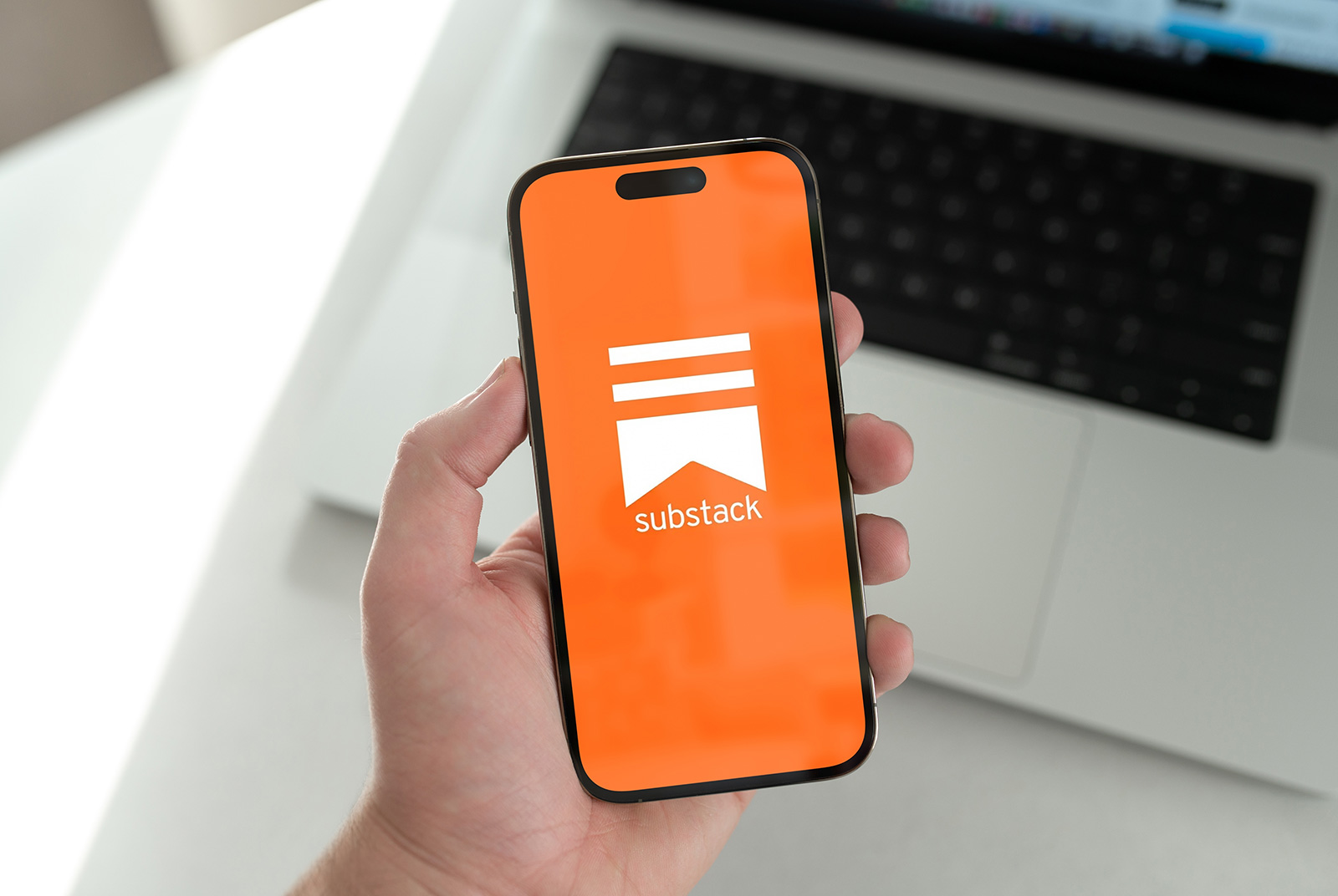
Source:shutterstock
Substack is reshaping U.S. political discourse by attracting top journalists and policymakers to its independent newsletter platform. As elite conversations move away from legacy media, Taiwanese observers should pay attention—especially those tracking U.S. views on Taiwan and China. Ben Krauss explains why this shift matters.
Views
Why Taiwan Should Pay Attention to America’s Substack Revolution
By Ben Kraussweb only
This past summer, arrivals walking through Washington, DC’s Union Station were greeted with large billboards that read: Media isn’t dead. It’s on Substack.
The numerous media figures, lawmakers, and interest lobbyists entering America’s political capital didn’t need to be convinced — these are exactly the people who are on Substack. Founded in 2017 to provide publishing and payment infrastructure for digital writers, the platform now counts over five million readers. And it is the new home of media elites like Jim Acosta of CNN and Paul Krugman of The New York Times.
It used to be the case that legacy media outlets only lost marquee talent to other legacy media outlets. But Substack’s admittedly self-congratulatory advertising campaign is based on a true phenomenon — the landscape in US media is changing, and many of the elite political and policy conversations that once unfolded in opinion pages and television panels now take place in Substack newsletters. For political observers in Taiwan, understanding the key players in this new media ecosystem is essential to following American political discourse.
The lure of Substack is quite simple. Unlike a traditional news outlet, writers are able to directly monetize and, in a sense, own their readership base. Many writers also don’t have editors, and this independence means less pressure to cover particular topics and consequently, the ability to publish more free-ranging articles. For a popular economist like Paul Krugman, this means wading into the technocratic details of trade policy, rather than publishing the more accessible columns he wrote at The New York Times.
This doesn’t mean that writers who move from legacy media to Substack become less influential. Matt Yglesias, founder and lead writer of Slow Boring —the publication I work for— left the digital news outlet Vox in 2020. While this career decision was deemed incredibly risky at the time, his newsletter has since become widely read by staffers and policy leaders inside the Democratic Party. In 2022, it was reported that the Biden Administration’s landmark Inflation Reduction Act was reworked, in part, on the basis of several Slow Boring columns that were passed around the administration.
Some of the most influential American Substacks aren’t one-person newsletters, but full-blown media outlets that use the platform’s publishing infrastructure. This includes the prominent anti-Trump outlet The Bulwark, which counts many prominent Democratic Party politicians as regular readers, along with 900,000 subscribers. Even bigger is The Free Press, a right-leaning publication with over 1.5 million subscribers that was recently purchased for $150 million by the multinational media conglomerate Paramount Skydance. Its founder, Bari Weiss, famously left The New York Times to start the publication — and has been rewarded with far more wealth and influence than she had before.
It’s true that the biggest rival to legacy outlets in the United States is the rise of social media, and the growing proportion of Americans who receive their news on sites like Instagram, TikTok, and X. But the value of Substack in America’s political landscape is not the scale of its reach, rather the fact that it has increasingly become the epicenter of elite discourse. For example, the Democratic Party is in the midst of a furious debate over its party identity after the 2024 election. And Substack has become one of the central launching places for new, ideologically driven publications who want to contribute to the discourse. The audience of an outlet like The Argument, a new center-left Substack founded by a widely read columnist at The Atlantic, is primarily not the typical low-information voter, it is political obsessives, policy staffers, and elected officials.
This is why you’ll find future presidential candidates like Secretary Pete Buttigieg and Senator Chris Murphy posting on the platform as well. Their posts are not designed to reach the voters they’ll need in a general election against a Republican opponent. Substack functions as a channel for them to contribute to the intra-party discourse.
For the Taiwan readers who are, understandably, more interested in following US news to track dialogue about their country, legacy media outlets remain the place where the most influential pieces are published. See: The New York Times’ recent opinion piece arguing for a more restrained US cross-strait foreign policy, and the ensuing uproar it caused on both sides of the Pacific.
There are influential US-based substacks that shape Taiwan discourse inside the country, although many of them primarily cover the country through a China lens. For instance, ChinaTalk is a newsletter and podcast that regularly discusses Taiwan security and the semiconductor industry. Bill Bishop’s Sinocism is the most influential newsletter covering China inside the US, and he also regularly publishes news on Taiwan. Tech Taiwan, written primarily by the Taiwanese tech reporter Liang-rong Chen, is obviously not based in the US; it is read by American foreign policy and tech analysts who specialize in Taiwan.
American media outlets almost exclusively cover Taiwan in relation to its geopolitical struggle with China and its world-beating semiconductor industry. Adding nuance to this narrative for American readers is difficult, but a newsletter on Substack would certainly be a place to start.
On Substack, the network recommendation algorithm gives a Taiwan-focused newsletter the chance to reach far beyond its initial niche. It might first be suggested to readers who follow experts writing about Taiwan, then expand to those interested in China and East Asia, and eventually reach the inboxes of prominent generalist writers who cover both foreign policy and American politics, like Noah Smith (formerly of Bloomberg). A standalone site, by contrast, wouldn’t tap into these network effects—its audience would have to be built from scratch rather than discovered through the platform’s internal web of recommendations.
Substack evangelists are proclaiming the death of legacy media (I still think The New York Times will be around to cover the death of the sun). But Substack is playing a bigger role in shaping US political discourse, especially amongst the country’s political and financial elites. The only way to truly understand what’s happening here is to open an account, or even start a publication yourself.
(This piece reflects the author's opinion, and does not represent the opinion of CommonWealth Magazine.)
CommonWealth Magazine welcomes op-ed submissions. Please send your article proposals to [email protected]
About the author:

Ben Krauss works at Slow Boring, a U.S. politics and policy newsletter, and is currently freelancing in Taiwan.
Have you read?
- Trump–Xi’s Temporary Truce: What It Means for Taiwan
- Winning the Cognitive Fight: How Taiwan Can Turn Information Defence into Strategic Communication
- Why the World Needs Confucian AI — and Taiwan Can Lead in AI Ethics
Uploaded by Ian Huang
Views

Subscribe to CWE Newsletter (every Thursday)
Stay abreast of what's happening in Taiwan with our weekly digest.
Keywords: