How Taiwan Powers Nvidia’s Smallest Supercomputer Yet
Source:Ming-Tang Huang
When Nvidia’s Jensen Huang handed Tesla CEO Elon Musk its smallest supercomputer yet, it wasn’t just a tech milestone, it spotlighted Taiwan’s full supply chain now powering the global AI revolution.
Views
How Taiwan Powers Nvidia’s Smallest Supercomputer Yet
By Meng-hsuan Yangweb only
In mid-October, Nvidia CEO Jensen Huang visited SpaceX’s factory in Texas to personally deliver the world’s smallest supercomputer, the DGX Spark, to Elon Musk. Musk unboxed the device and asked in disbelief, “So that’s the whole thing?” That moment symbolized the beginning of Nvidia’s new era of on-premise supercomputing.
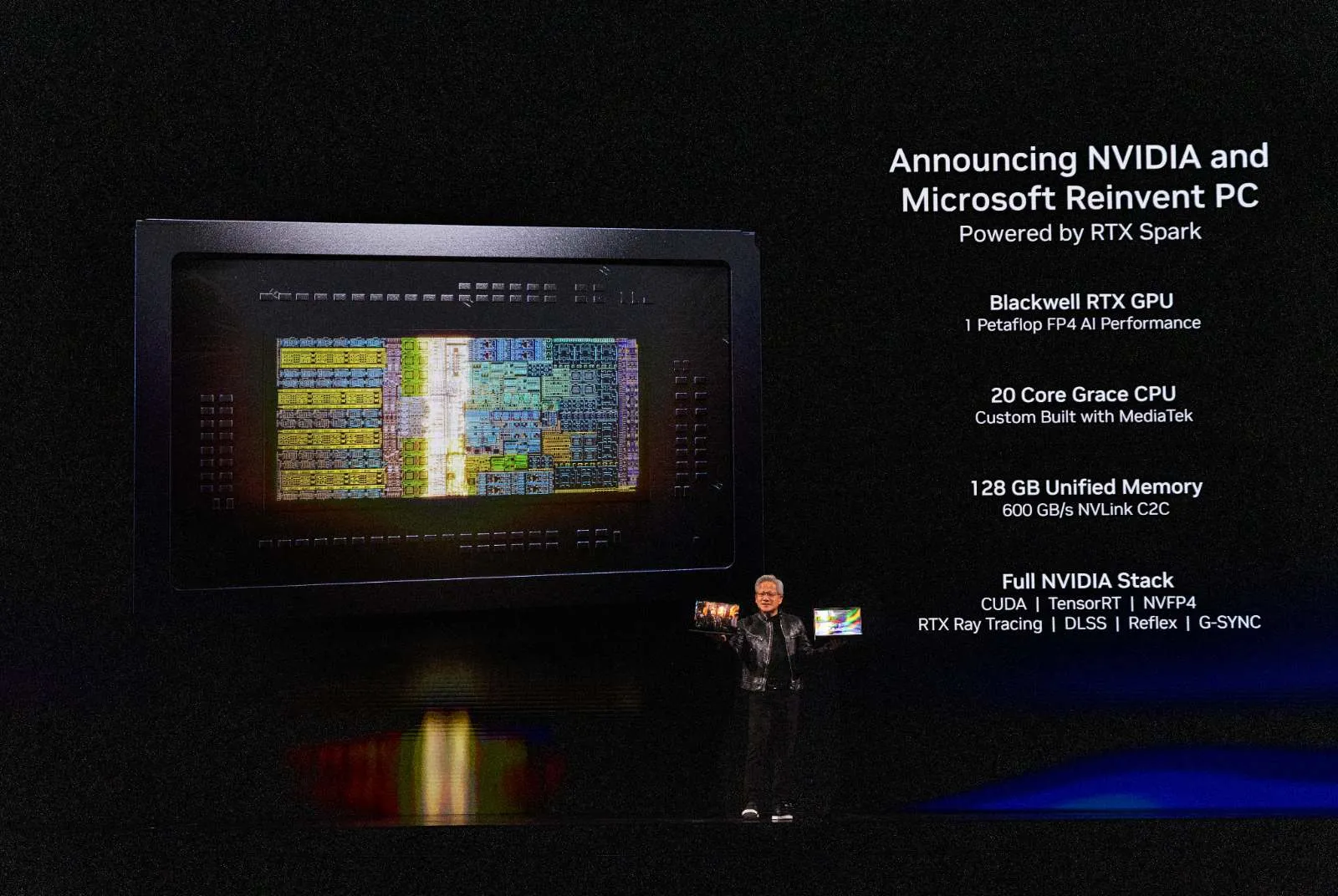
About the size of a bento box and weighing just 1.2 kilograms, the DGX Spark is powered by the Grace Blackwell GB10 superchip, co-developed by Nvidia and MediaTek Inc. Its computing performance is five times higher than that of the first DGX-1 launched in 2016. Zouhao Shen (申作昊), an analyst at Digitimes Research Center, said the device shifts AI computing from large cloud servers to the edge—closer to where data is generated—marking a clear change in Nvidia’s strategic focus.
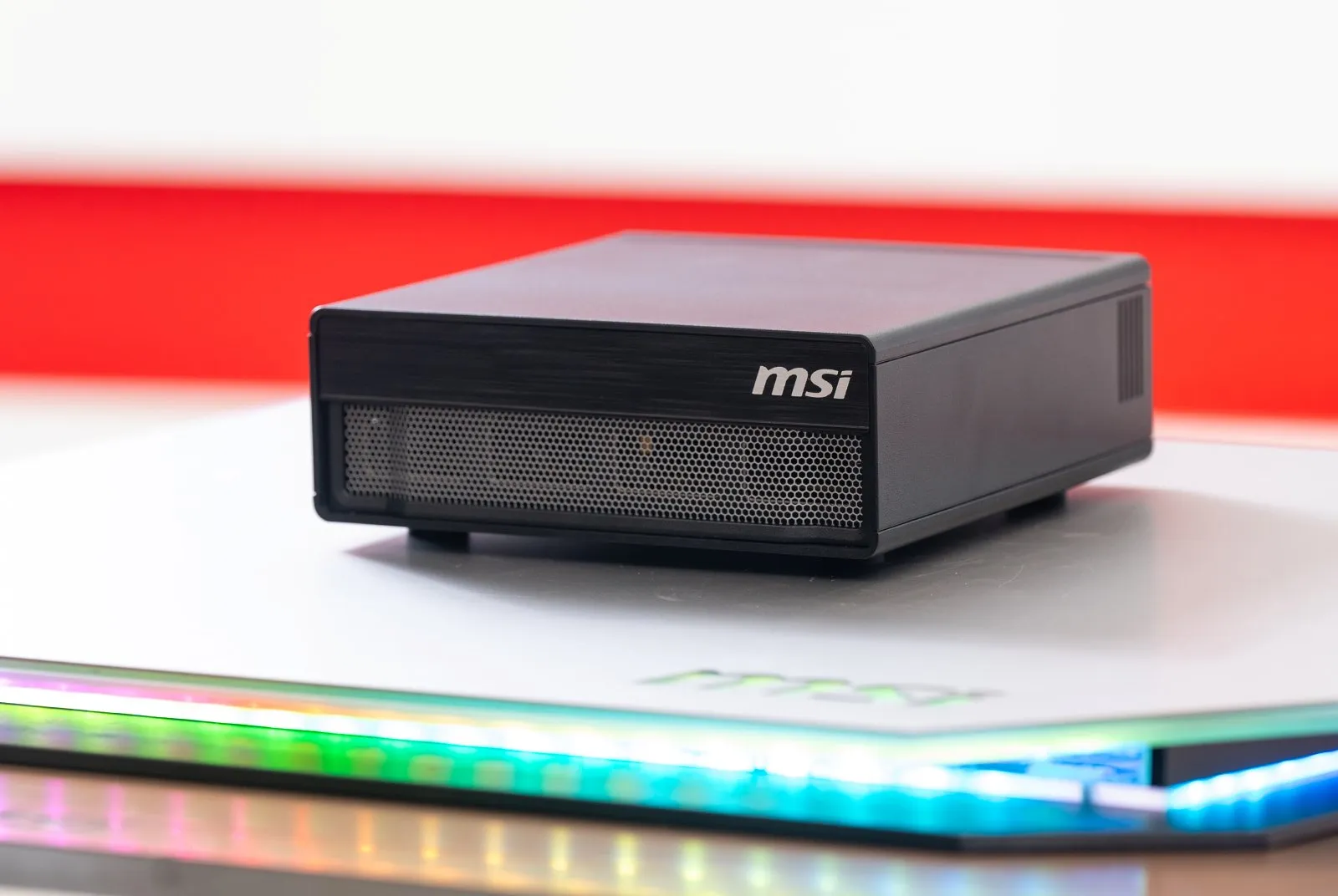
The DGX Spark platform is essentially an extension of Taiwan’s notebook computer supply chain. The GB10 chips were jointly designed by MediaTek and Nvidia; Pegatron Corporation and Wistron Corporation handle system assembly; Delta Electronics Inc. supplies the power module; and brands including Acer, Asustek Computer, Gigabyte Technology, and MSI (Micro-Star International) are developing their own products based on the Spark architecture. Among them, MSI has been the most aggressive. It launched the EdgeXpert mini AI supercomputer, the only GB10-based system both designed and manufactured in-house. “This is not only Nvidia’s opportunity. It is an opportunity for Taiwan’s manufacturing sector to move toward higher value-added products,” said Eunice Huang (黃文慧), vice president of MSI’s Industrial PC Division.
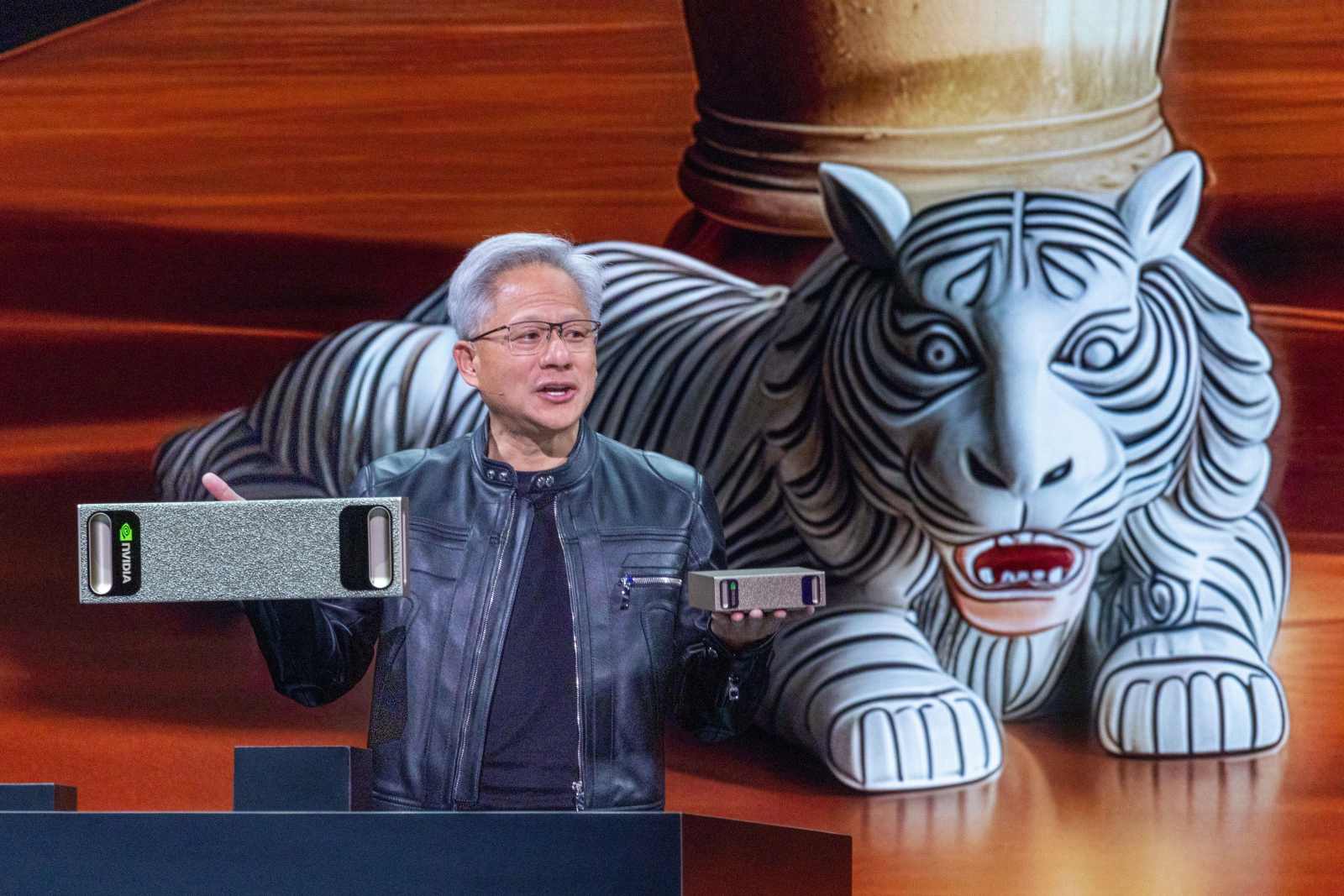 The DGX Spark signifies that Nvidia's flagship DGX lineup finally has a ground-end solution. (Photo: Chien-Tong Wang)
The MSI development team faced the challenge of fitting a CPU, GPU, 128 GB of memory, and a Gen5 SSD into a compact 1.2-liter case while ensuring long-term stability. During R&D, the team adopted airflow-based cooling technology similar to that used in Apple’s iPhone 17, repeatedly simulating air channels and vent holes to keep surface temperatures below 51 °C. Nvidia had first unveiled the Spark architecture at its GPU Technology Conference (GTC) in March and demanded that partners bring it to mass production within four to six months. To meet the tight schedule, MSI’s product manager personally went to Taoyuan International Airport to clear Nvidia’s GB10 chips through customs, while engineers stationed themselves on the production line to test prototypes during assembly. “Our R&D people all became line workers,” Huang laughed. This race against time epitomized the rapid-response capability that defines Taiwan’s tech industry.
The DGX Spark is designed for plug-and-play use, preloaded with Nvidia’s Container Toolkit, including CUDA and Docker integration. Though the market initially adopted a wait-and-see attitude, MSI has launched a global roadshow in China, the United States, Europe, Japan, and South Korea. It is also working with Taiwanese hospitals, financial startups, and U.S. academic institutions on trial programs. Lin Hsi-lung (林錫龍), MSI vice president for Information Technology, said hospitals hope to deploy on-premise AI systems to help generate medical reports while protecting patient data. In academia, Lin said, graduate students could take this “bento-box supercomputer” back to their dorms for AI model training.
From the GB10 superchip to the power module, assembly, and brand integration, the DGX Spark is almost a Made-in-Taiwan supercomputer. When Jensen Huang personally handed the device to Elon Musk, it wasn’t just a symbolic gesture—it showcased Taiwan’s full supply chain, revealing how the island has moved from being a behind-the-scenes AI server supplier to standing on the frontline of the edge-computing revolution.
Have you read?
- The AI Bubble Is Two Years Away, and The Two Warning Signs to Watch For
- Satellite Conference Shines Light on Taiwan’s Space Supply Chain
- Nvidia’s 800V Data Center Push: Taiwan’s Delta and LITEON Join the Power Race
Translated by Luke Sabatier
Uploaded by Ian Huang
Views

Subscribe to CWE Newsletter (every Thursday)
Stay abreast of what's happening in Taiwan with our weekly digest.
Keywords: