Merck and ASML Deepen Taiwan Presence as EUV Materials and Core Technologies Go Local
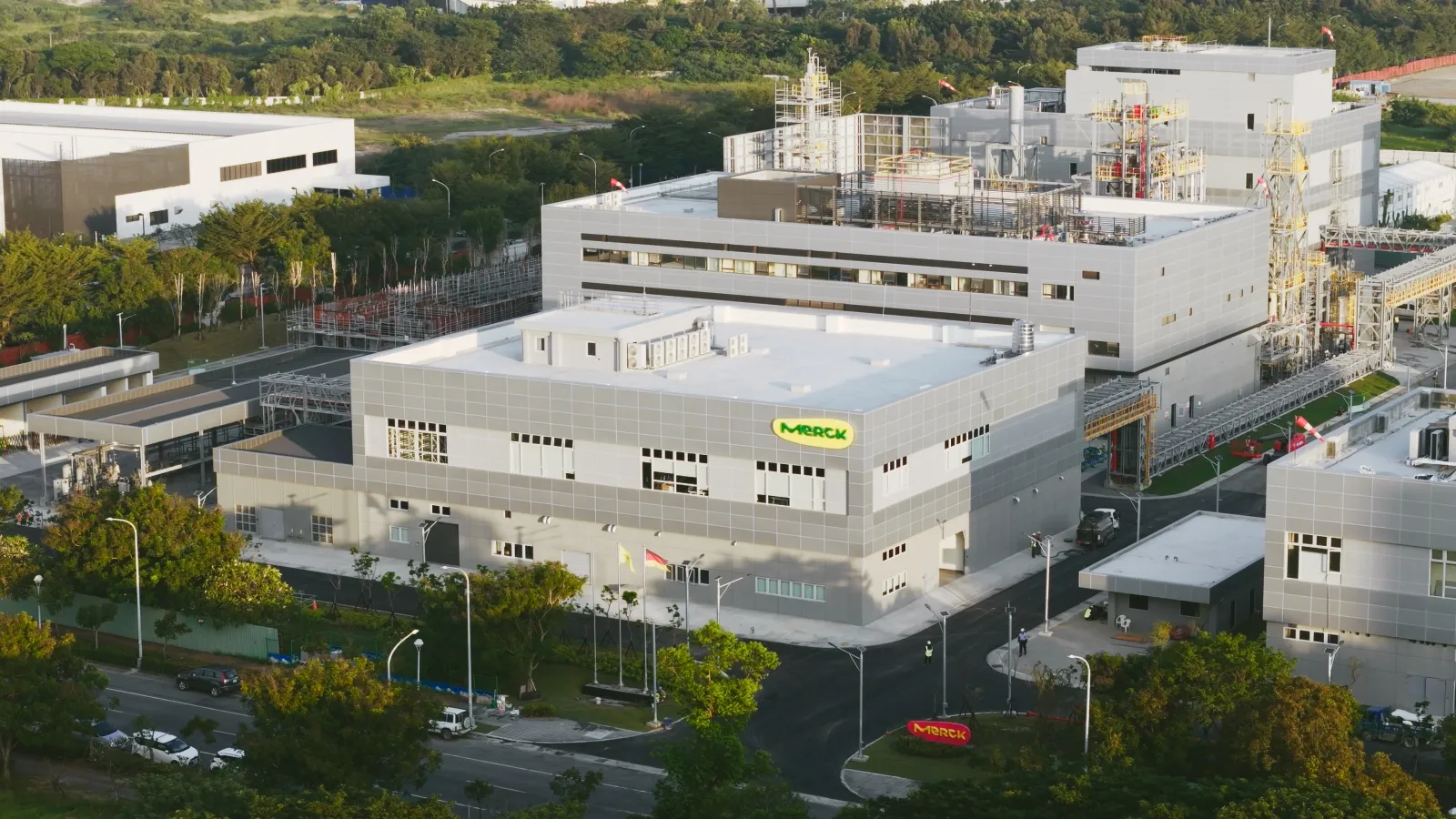
Source:Merck
As the race toward two-nanometer semiconductor processes intensifies, one of the industry’s most critical developments is European suppliers relocating capabilities to Taiwan to secure shorter, more resilient supply chains.
Views
Merck and ASML Deepen Taiwan Presence as EUV Materials and Core Technologies Go Local
By Elaine I-yun HuangFrom CommonWealth Magazine (vol. 841 )
From materials and equipment to maintenance and calibration, multinational suppliers are no longer simply shipping products to Taiwan. They are relocating core capabilities to sites near wafer fabs, reshaping the global division of labor in the semiconductor industry.
At the Kaohsiung Science Park in the port city's Luzhu District a 15-hectare complex bearing Merck’s purple logo stands out. The facility represents the German chemicals and materials supplier's largest investment in Taiwan in its 35-year history: In what is also the company's biggest single investment project worldwide, a total of NT$17 billion were committed over five years. The site, which produces materials for advanced logic processes and advanced packaging, is located about a 30-minute drive from its core customer, Taiwan Semiconductor Manufacturing Company (TSMC)
John Lee (李俊隆), Managing Director of Merck Group Taiwan, notes that for processes beyond the two-nanometer technology node key inputs such as thin-film materials, specialty gases, and formulation chemicals previously had to be sealed and shipped back to Germany for adjustment — a round trip that could take two weeks or more.
That process has changed. Materials can now be tested and fine-tuned in real time in Taiwan. With its first and second Luzhu plants forming an integrated production and distribution model, Merck meanwhile boasts a local content ratio of more than 50 percent.
Concerns over the “weaponization” of critical materials form an important backdrop to this wave of foreign investment. If supplies of key materials are disrupted, even the most advanced fabs can be forced to halt operations. Multinational suppliers are therefore choosing to move risk upstream, placing capabilities as close to their customers as possible.
Localization is extending beyond materials to EUV lithography equipment.
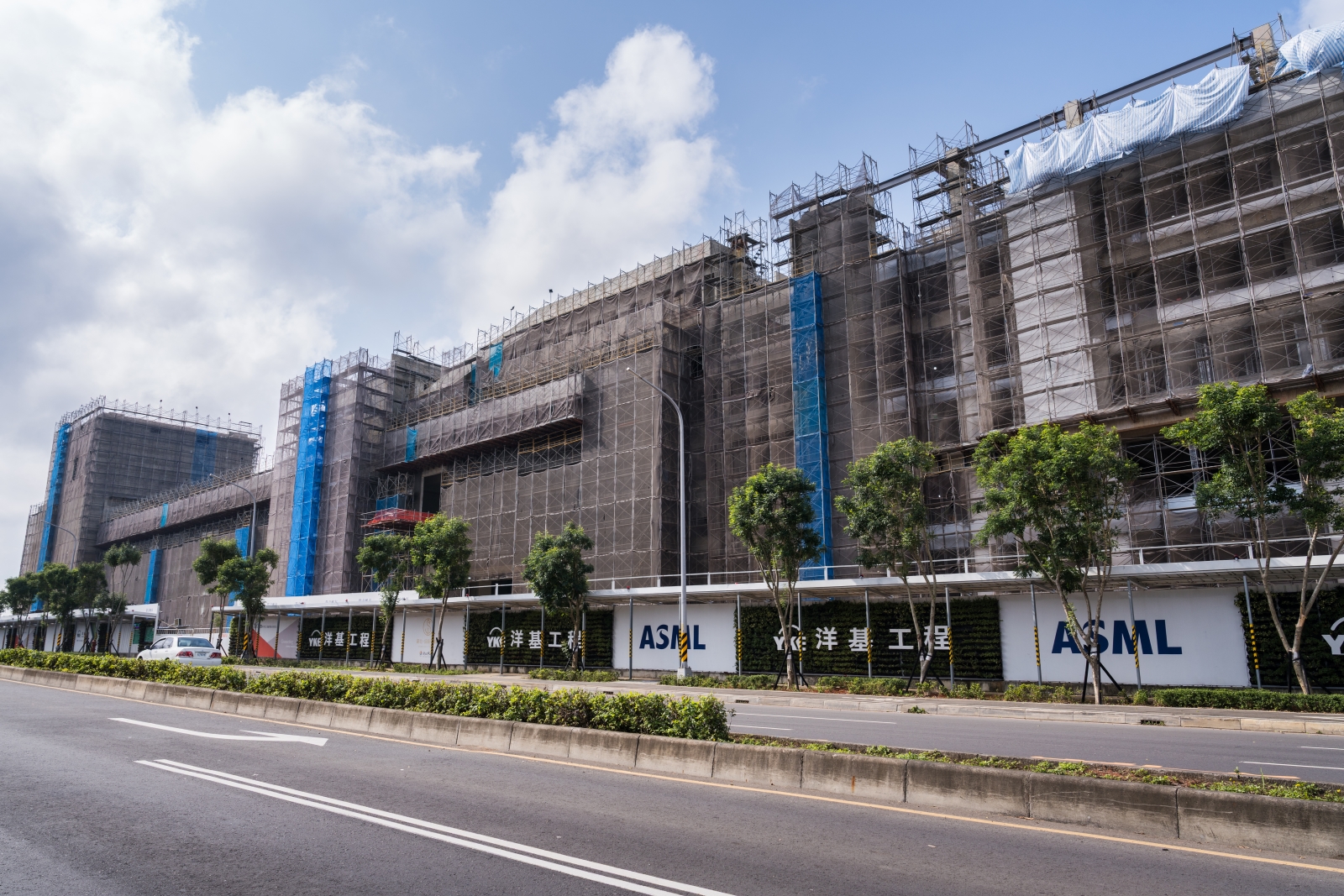 EUV major manufacturer ASML is currently undergoing major construction at its No. 1 factory in Linkou. (Photo: Kuan Hsieh)
In 2023, Taiwan’s Investment Commission approved a NT$30 billion plan by Dutch semiconductor equipment maker ASML to build a new facility in Linkou, New Taipei City. It is believed that the new investment is aimed at supporting two-nanometer processes and next-generation High-NA EUV lithography systems.
In the future, the most expensive and critical component of EUV lithography tools, the collector mirror, will undergo deep cleaning and precision calibration in Taiwan. This will help ensure high utilization rates at TSMC’s advanced process nodes.
As ASML expands its presence, the two other core players in EUV have set up facilities in Taiwan.
Optics supplier Zeiss has established an innovation center in the Hsinchu Science Park, focusing on advanced process inspection and failure analysis, The German company has designated a “global account lead for TSMC” to ensure rapid support. EUV Laser supplier Trumpf from Germany has opened a technical center for plasma generators in Taoyuan, enabling EUV systems to be repaired and upgraded locally in Taiwan.
For Taiwan, this is more than a surge in foreign direct investment; it is also a training ground for advanced technology. Requirements set by the Ministry of Economic Affairs for local content are pushing Taiwanese firms to move from manufacturing components and modules toward sub-systems.
As materials and EUV technologies become increasingly localized, Taiwan is no longer just a user of advanced processes. It is steadily positioning itself as a critical node in the global semiconductor manufacturing ecosystem.
Have you read?
- TRUMPF Accelerates Expansion in Taiwan but Face Talent Shortage Challenge
- The Lone Star Pivot: Why Taiwan’s Tech Giants are Betting Big on Texas
- Chris Miller’s Warning Meets Nvidia’s H200 Moment in the US–China AI Race
Edited by Susanne Ganz
Uploaded by Ian Huang
Views

Subscribe to CWE Newsletter (every Thursday)
Stay abreast of what's happening in Taiwan with our weekly digest.
Keywords: