Why the 'Anti-Algorithm' App Retro Found Its Biggest Fanbase in Taiwan
Source:Wei-kai Huang
With nearly 1 million photos uploaded daily, Taiwan now accounts for 36% of Retro’s global user base—proving there’s a massive hunger for social media without the noise.
Views
Why the 'Anti-Algorithm' App Retro Found Its Biggest Fanbase in Taiwan
By Judy Linweb only
Taiwan, a country with only 23 million of population, surprisingly became the largest market of Retro, a new social media mobile app uploading nearly 1 million photos daily. Taiwan accounts for 36% of its 1.2 million active users.
“We had a lot of growth at the end of 2024. But year over year, we have 100% growth in Taiwan last year,” said Ryan Olson, co-founder and CTO of Retro, explaining why they got so curious that they had to come to Taiwan to meet with users here.
“Users in Taiwan are willing to experiment with new apps, and they have higher demand for privacy,” said Nathan Sharp, the co-founder and CEO.
A decade after Meta’s acquisition of Instagram, the duo departed the sprawling campuses of Menlo Park in 2022 to co-found Retro to recapture the vanishing "magic." They see Retro less as a Social Media platform and more as a digital sanctuary, born from a desire to reverse the industry’s pivot toward algorithmic entertainment and "hijacked" attention.
Sharp and Olson still recall the time in 2016, when they spent fourteen hours a day in a room at Instagram’s headquarters, racing to build what would become "Stories." It was a high-stakes project that defined a new era of digital ephemeral sharing. But for Sharp and Olson, the most profound moment wasn’t the global launch. It was the weeks prior, when the feature was only available to a small circle of colleagues.
"It felt like a window into the lives of our friends," Sharp recalls. He remembers discovering, through a simple post, that Olson was a rock climber—a detail that hadn't come up in months of professional collaboration. "It was magical. It was just friends updating friends."
The Google Influence: Engineering for Utility
While their resumes are headlined by Meta and Instagram, the philosophical backbone of Retro traces its lineage further back to an earlier era of Silicon Valley: the engineering ethos of Google.
For Sharp and Olson, the influence of Google wasn’t just about technical capability; it was about the concept of "utility over engagement." In the early days of the social web, the goal was to build tools that solved a problem or fulfilled a human need—the need to remember and share life with those who matter most.
"We saw a front-row seat to what happened with the Facebook acquisition [of Instagram]," says Olson. "We understand that even if everyone feels aligned at the start, things change over time."
This "Google-esque" focus on clean, intentional design is evident in Retro’s refusal to adopt the modern social media playbook. There are no "professional creators" at the center of the experience, no infinite discovery feeds designed to keep users scrolling for hours, and no predatory algorithms. Instead, the founders have prioritized a "burn slow" business model, operating with a lean team of fewer than ten staff to ensure their original ideals aren't diluted by the need for hyper-growth.
From Entertainment back to Connection
The founders’ departure from Meta was catalyzed by a realization that "Social Media" had effectively ceased to be social. It had become "Entertainment Media."
"The industry shifted toward a use case that is very distracting and often makes people feel worse about their own lives," Sharp explains. "It’s about professional creators now, not your family."
Retro is designed as a counterweight to this trend. It functions as a shared journal, a place where the "magic" comes from seeing a friend’s weekend hike or a family member’s morning coffee, rather than a viral video from a stranger. The ethos is one of self-appreciation: building a product that helps users look back at their own lives and feel a sense of gratitude, rather than the "FOMO" (fear of missing out) that defines the modern scroll.
Trusted Personal Connections
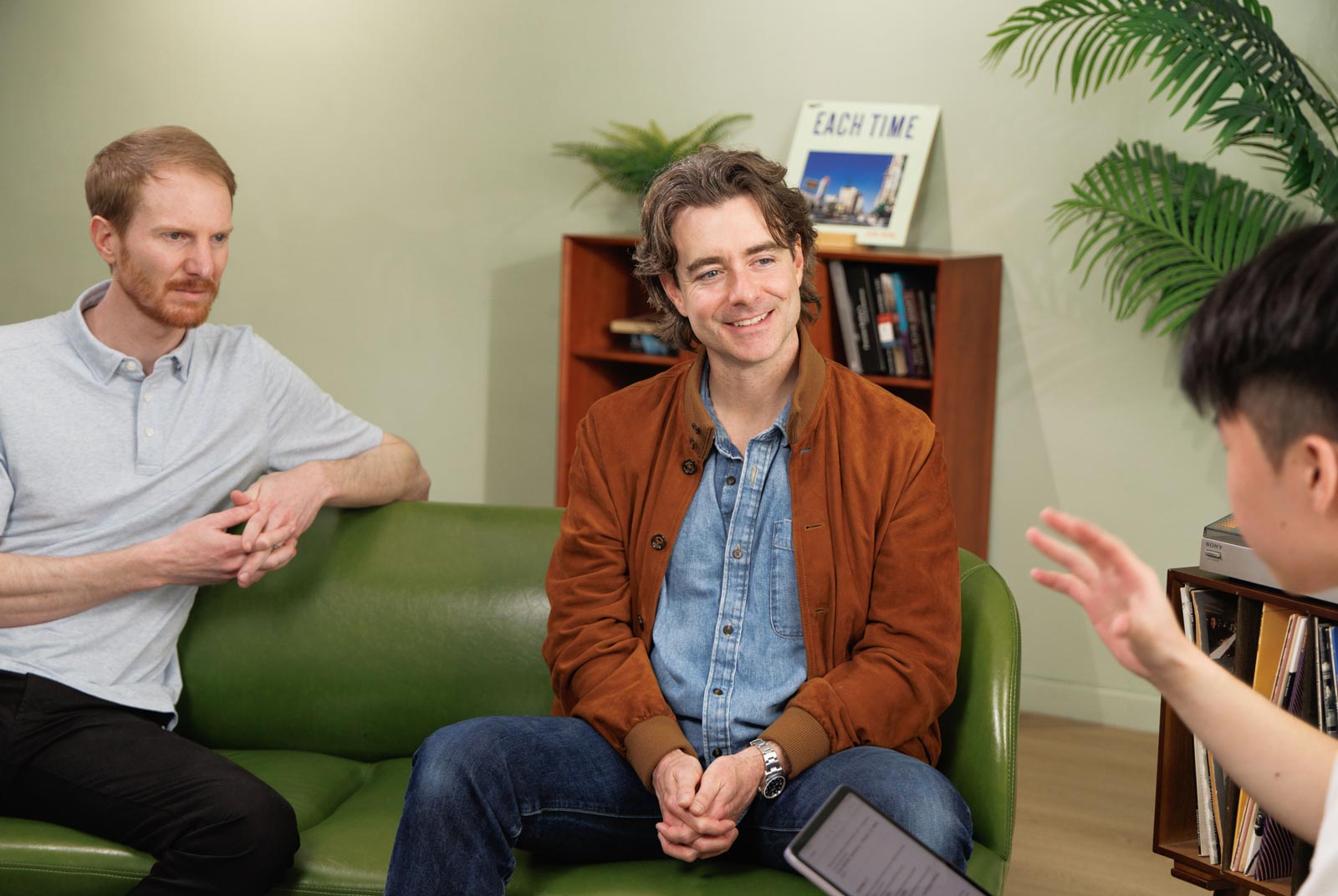
The experience of heavy users reflected this core value of the co-founders. In a users’ research session, Carter, who started using Retro as early as three years ago, sees Retro as his daily journal. Retro curates a weekly recap for users and makes stickers and postcards out of those materials for users.
Unlike other platforms where users might feel pressure to post only "perfect" or highly curated content, Carter and Becky, another user in the session, feel comfortable posting "everything" and sharing numerous photos daily, including personal, everyday moments, selfies, pets (cats), and interesting things they encounter throughout the day.
Their discovery of the app came through trusted personal connections or respected figures in their professional network, reflecting the app's focus on real-world social ties rather than algorithmic discovery
In the end, Retro’s success isn't measured by its 36% market share in Taiwan or its "Google-esque" engineering, but by the comfort users like Carter and Becky feel when they post a blurry photo of a pet or a morning coffee. By replacing FOMO with gratitude and strangers with trusted connections, the app has created something rare in the digital age: a place where "everything" is worth sharing because the people watching actually care. For the duo who once built the world’s biggest stage for ephemeral sharing, the greatest achievement is finally a small one.
Views

Subscribe to CWE Newsletter (every Thursday)
Stay abreast of what's happening in Taiwan with our weekly digest.
Keywords: